Hot Products





Popular articles
Before Thanksgiving, Overseas Buyers Need to Confirm Not Discounts, but Whether You Can Still Deliver
Customers see AI answers before consulting; how can we record multi-channel touchpoints and keep unknown aspects as unknown?
North America’s Thanksgiving Stocking Season Is Here! Why Should B2B Businesses Plan GEO for Precise Regional Customer Acquisition Early?
How to choose a GEO (Geo-Organizational Equipment) outsourcing company if your export-oriented factory doesn't have a dedicated operations team?
从产品比较到供应商短名单:外贸B2B如何打造AI可理解的选型指南?
Recommended Reading



Will Chemical Exports Recover in 2027? Two Scenarios for Demand, Raw Materials and Shipping Risks
ABKE analyzes two scenarios for chemical exports in 2027 based on downstream demand, raw material costs and shipping risks, and outlines key considerations for pricing, delivery and procurement decisions.
Whether chemical exports can recover in 2027 cannot be judged by industry output or international oil prices alone. The outlook must be assessed separately by product, downstream application, feedstock mix and shipping route. Output may recover while product prices fall and export margins come under pressure. Even if end demand improves, customer restocking and growth in supplier orders may not occur at the same time.
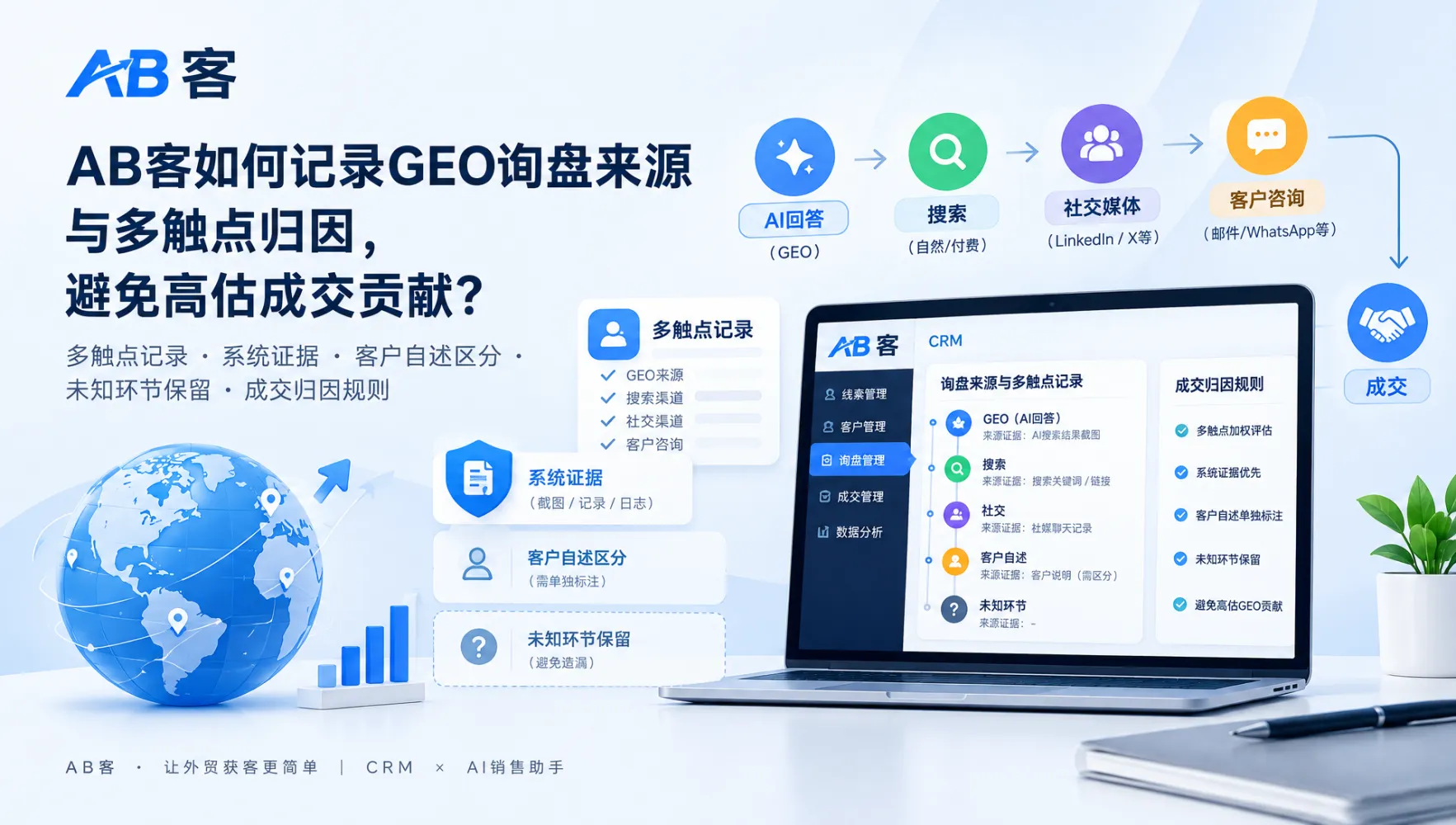
For companies supplying basic chemicals, coatings, additives, polymers and specialty materials, a more practical approach is to develop scenario-based forecasts. They should assess changes in costs and bargaining power as supply gradually improves, while also estimating the pressure on lead times, inventory and working capital if key shipping routes remain disrupted.
According to the report published by Atradius on October 13, 2026,Chemical industry research, global chemical output could grow by 1.2% in 2027 under its scenario of a gradual supply recovery, or decline by 3.2% under a downside scenario in which key shipping routes remain disrupted. These are conditional forecasts of global output by a trade credit research organization, not direct forecasts of China's chemical exports.
The World Bank's October 2026Commodity forecastsprojects that the annual average price of Brent crude could fall from US$91 per barrel in 2026 to US$79 in 2027. This forecast is only a reference for the energy market and cannot directly replace calculations of feedstock costs or margins for specific products.
Why can't a single recovery outlook apply to all chemical products?
Demand drivers for basic chemicals, specialty chemicals and functional materials.
Basic chemicals are typically more directly affected by capacity utilization, feedstock prices, regional supply and demand, and bulk trade conditions. A supply recovery may ease procurement constraints, but if new supply grows faster than demand, transaction prices and margins may remain under pressure. Exporters should monitor order volumes, selling prices and unit contribution margins together, rather than equating higher shipments with improved profitability.
Purchasing decisions for specialty chemicals and functional materials often also depend on formulation compatibility, performance consistency, customer qualification and switching costs. Even when customers are optimistic about end markets, they may postpone purchases because of testing cycles or switching risks. Demand assumptions should therefore be developed separately for different products rather than applying a uniform growth rate.
Assess automotive, construction, electronics, agriculture and personal care applications separately.
For automotive materials, monitor vehicle production plans and material validation progress. For construction coatings and additives, consider project starts, construction schedules and regional seasonality. For electronic materials, check customers' production line plans and performance requirements. Agricultural applications require attention to planting seasons and local purchasing cycles, while personal care applications call for a distinction between formulation changes, end consumption and channel inventory.
Demand for the same product may move in opposite directions across downstream applications. Sales and technical teams should track changes in inquiries by target market, customer type and end application, distinguishing sample requests, routine replenishment and new project demand. This helps prevent short-term price inquiries from being mistaken for long-term orders.
How would the two scenarios affect export operations?
Lower costs, inventory revaluation and customer bargaining under a supply improvement scenario.
If feedstock supply and logistics gradually recover, some feedstock or freight costs may fall, and procurement planning may become more predictable. Companies still need to assess existing high-cost inventory, the scale of customer price reduction requests, and whether end demand is sufficient to absorb additional supply. Assessments of carrying values must also follow applicable accounting policies and cannot be based solely on changes in market quotations.
Supply improvement
Check feedstock availability and purchase prices
Inventory revaluation
Distinguish existing inventory costs from new purchase costs
Quotation adjustments
Assess customer bargaining and order margins
Feedstock shortages, longer lead times and working capital tied up under a transport disruption scenario.
If key shipping routes remain disrupted, diversions, changes in shipping capacity or altered transshipment connections may increase transit times and costs. Unstable supplies of imported feedstocks may also affect production scheduling. Longer transit times for finished goods may extend collection cycles and tie up more working capital. The impact depends on the route, transport mode, contract terms and carrier arrangements; not all shipments should be assumed to face the same level of disruption.
Companies can develop alternative routes, backup supplier options and safety stock plans for critical feedstocks and major destination ports. They should also confirm delivery locations, points of risk transfer and delay communication procedures with customers. For dangerous goods, carrier requirements should be checked in advance to ensure that alternative routes are operationally feasible.
| Judgment Dimensions | Gradual supply improvement | Continued transport disruption |
|---|---|---|
| Demand and orders | Check whether restocking turns into sustained purchasing | Monitor advance customer orders and order postponements |
| Costs and quotations | Compare new purchase costs with inventory costs | Estimate freight, feedstock and buffer stock costs |
| Fulfillment and working capital | Review lead times and inventory turnover | Allow a transport buffer and assess collection cycles |
How do changes in feedstock prices affect product quotations?
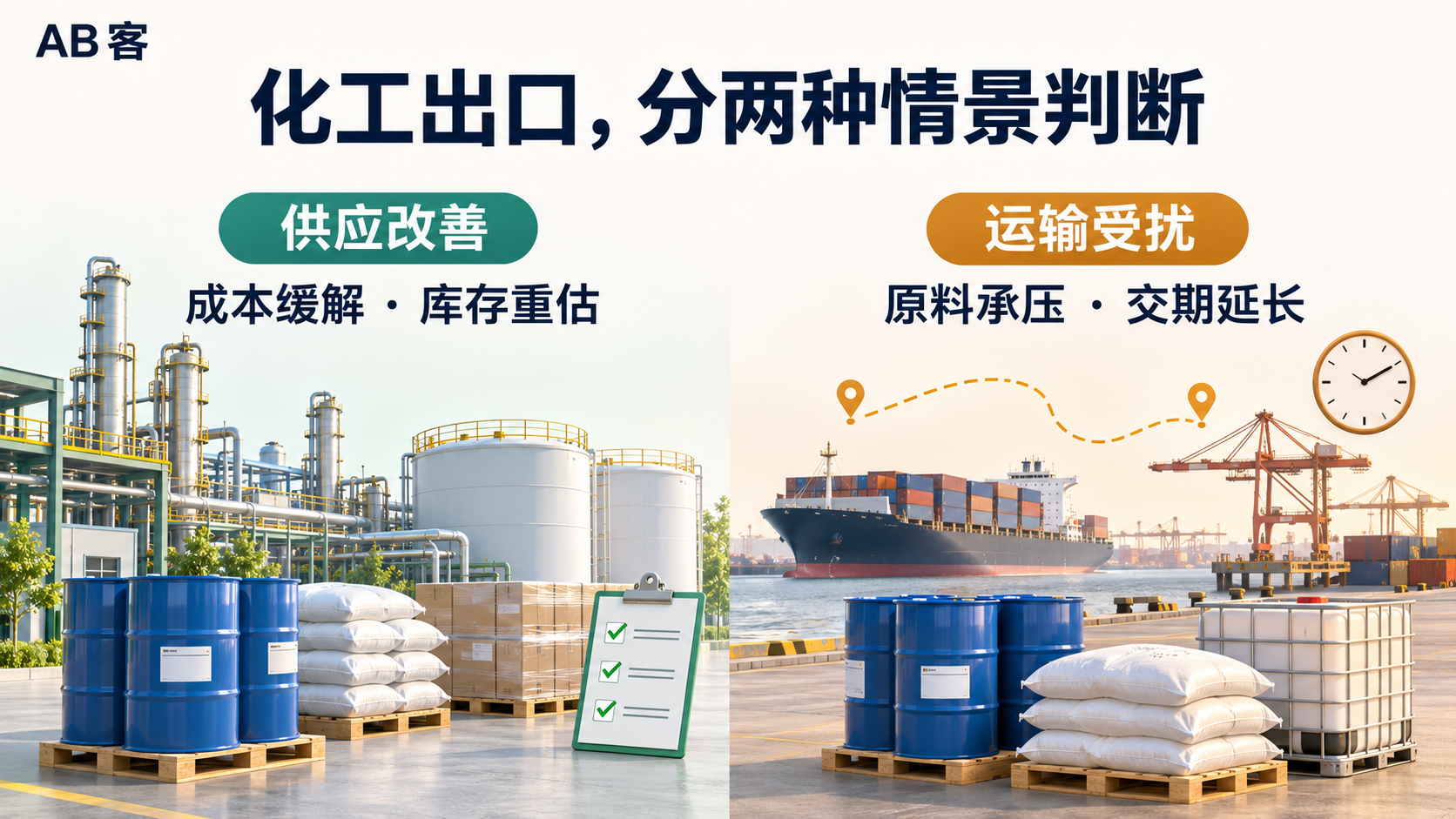
Feedstock share, purchase timing, processing costs and inventory costs.
Changes in crude oil prices usually pass through several stages, including naphtha and basic chemical feedstocks, before they may affect downstream products. Supply conditions for different feedstocks, regional price differentials and contractual pricing mechanisms also influence the speed of transmission. For products heavily dependent on natural gas, coal-based feedstocks or other specific inputs, Brent crude prices alone are even less suitable for explaining costs.
Quotation calculations should break down major feedstocks and their usage rates, energy, processing, packaging, warehousing, inland transport and international freight, while recording purchase dates and inventory batches. If material prices have fallen but production is still consuming high-cost inventory, actual margin improvement may lag. Conversely, rising feedstock prices may first affect future orders. Exchange rates and credit terms should also be included in export calculations.
Quotation validity, price adjustment terms and long-term order arrangements.
During periods of high volatility, quotations can specify the validity period, applicable trade term, destination, packaging specifications and allocation of costs. For long-term orders, suppliers should negotiate price review intervals, reference indices, trigger conditions and implementation methods with customers, and define their scope of application. Specific terms must be determined in light of the transaction and contract review; automatic price adjustments should not be assumed acceptable to every customer.
For existing orders, companies should align the timing of feedstock commitments, production scheduling and transport bookings with contractual delivery dates, and separately estimate the effects of rising costs, transport delays and postponed customer collection. A quotation is not just a price; it combines product, quantity, delivery timing and risk allocation.
How can specialty materials establish purchasing value through application validation?
Sample testing, formulation compatibility, process windows and performance limits.
The value of specialty materials needs to be validated under the customer's actual application conditions. Suppliers can first confirm the substrate, formulation, processing equipment, temperature, humidity and target performance, then agree on sample specifications, test methods and acceptance criteria. Laboratory results should state the test conditions and cannot be assumed to represent performance across all production lines or end-use environments.
During sample trials, record dosage, mixing sequence, curing or processing conditions and any abnormalities, while distinguishing material-related issues from process incompatibility. For applications with performance limits, explain the restrictions and items still requiring validation rather than extending individual test results into general commitments.
Compare switching costs, use efficiency and customer validation cycles.
Purchasing comparisons should not focus solely on price per kilogram. Customers also need to assess actual usage, yield, processing efficiency, waste handling and the testing effort required to switch suppliers. Total cost of use can only be meaningfully discussed against the same functional objectives and comparable test conditions. Where data is lacking, potential savings should be treated as an item for joint validation rather than assumed.
For customers with lengthy qualification cycles, suppliers can prepare technical documents, sample batch information and test records in advance, and identify responsible contacts and feedback milestones for each stage, from laboratory testing to pilot trials and commercial purchasing. Passing tests does not guarantee an order; purchasing approval, production capacity and contractual arrangements must also be considered.
What documented evidence supports delivery reliability?
Specifications, testing, SDS, packaging and applicable transport requirements.
When evaluating suppliers, buyers need to match product specifications with actual delivery documentation. Suppliers can prepare confirmed technical specifications, test reports or inspection certificates for the applicable batches, safety data sheets (SDS), packaging details and label information, and check applicable requirements based on destination, cargo classification and transport mode. SDS versions, languages and specific compliance obligations should be determined by the relevant market requirements and the actual goods.
For products subject to transport restrictions or requiring special storage, classification, packaging, declaration and handling conditions should also be verified in advance with carriers and relevant specialists. Where applicable documentation is unavailable or confirmation is incomplete, the status should be clearly marked; generic templates should not replace batch-specific evidence.
Batch consistency, exception handling and customer acceptance.
Batch consistency should be checked against agreed parameters, sampling and test records, with traceability maintained between batches and orders. Customer acceptance criteria, retention sample arrangements, deviation notification methods and dispute resolution procedures should be clarified before the transaction. If transit damage, performance deviations or documentation discrepancies occur, relevant records should be retained and the matter handled as agreed by both parties.
Delivery reliability also depends on accurate information: feedstock arrivals, production schedules, release testing, booking and shipment milestones can all affect delivery. Rather than making an unsupported fixed commitment, suppliers should explain the conditions applicable to the lead time, key dependencies and the notification process for changes.
Business decision-making tool
A Chemical Product Scenario and Quotation Sensitivity Worksheet can be prepared separately by product, customer and destination. First record current facts, then set assumptions for supply improvement and transport disruption, and compare costs, lead times and customer acceptance conditions. The results are for internal discussion and do not replace actual quotations or contract approval.
| Item to check | Information to enter | Key scenario comparison points |
|---|---|---|
| Downstream | Application, market and customer purchasing stage | End-demand and restocking pace |
| raw material | Critical feedstocks, their share and purchase timing | Impact of price and supply changes on costs |
| Route | Destination port, transport mode and alternative routes | Freight costs, transit times and carrier feasibility |
| Inventory | Feedstock and finished-goods batches, costs and available quantities | Inventory consumption and working capital tied up |
| Cost changes | Processing, packaging, transport and exchange rate assumptions | Unit cost and order margin sensitivity |
| Price adjustment mechanism | Quotation validity and proposed review conditions | Customer acceptance and contract risk |
| Documentation | Specifications, testing, SDS and transport documentation | Version, applicable market and batch correspondence |
| Lead time | Production scheduling, testing, booking and acceptance milestones | Delay buffers and notification arrangements |
FAQ
- Does a fall in crude oil prices always increase chemical export margins?
Not necessarily. Margins are also affected by specific feedstock purchase prices, inventory costs, product selling prices, freight costs and exchange rates. If customer price reductions exceed cost reductions, or the company is still consuming high-cost inventory, margins may not improve at the same pace. - Does a recovery in industry output mean customers will restock immediately?
Not necessarily. Customers consider existing inventory, end-market orders, price expectations and their financial position. They may purchase small quantities first or delay ordering. Restocking signals should be verified against customer purchasing plans and actual orders. - How can specialty materials demonstrate greater purchasing value than general-purpose materials?
Start with the customer's application, agree on comparable test methods and performance targets, and record usage, processing conditions and validation results. Then assess switching costs and the actual period of use. Advantages that have not been tested should be treated as hypotheses to validate, not established conclusions.
2027 outlook analysis for other export industries:
Connect material capabilities to specific application challenges
Chemical companies can useAB customerEnterprise Knowledge Huband GEO content development methods to connect confirmed material parameters, application conditions, test results and batch-specific evidence, and organize technical descriptions, FAQs and inquiry document checklists by target downstream sector. This can help purchasing and technical teams assess suitability while providing a clearer content foundation for search and AI systems to understand the company's capabilities. The company must still review and update the information; third-party indexing, citations or recommendations are not guaranteed.
Business decisions in 2027 should continue to focus on specific products and verifiable conditions: use downstream orders to test demand, procurement and inventory data to calculate quotations, and transport and batch documentation to support fulfillment. To organize chemical product knowledge, overseas buyer questions and application information, companies can discuss the scope of work and implementation priorities with ABKE using their existing product documentation.


