Hot Products





Popular articles
How can GEO budgets shift from paid exposure to reusable content assets? Investment priorities for foreign trade B2B.
How can industrial product videos be integrated into AI solutions? From YouTube demos to searchable technical content.
When an OEM/ODM factory selects a GEO service provider, how do they confirm the scope of use of the client's name, drawings, and customized case studies?
Adding FAQs to your official website won't make it useful for AI: How should structured content be built for B2B foreign trade?
Authoritative Outlook: Which Industries Will Drive Global Trade Growth in 2027?
Recommended Reading




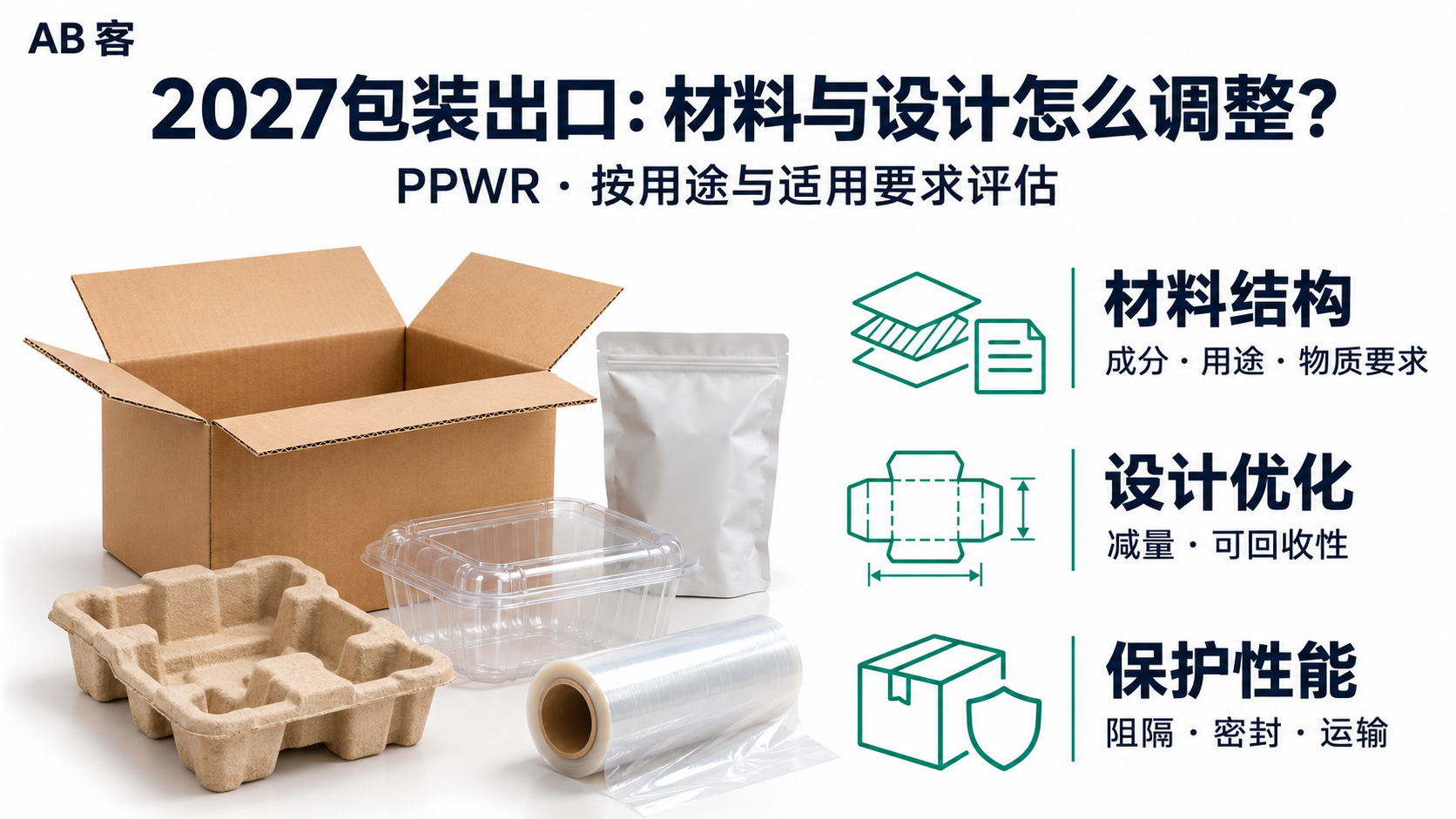
Packaging Exports in 2027: How Should Materials, Design, and Delivery Documentation Change After PPWR Takes Effect?
ABKE examines changes in EU packaging procurement in 2027, distinguishing PPWR application dates from later targets and reviewing material selection, packaging design, cost estimation, and the test documentation buyers require.
Packaging companies exporting to the EU in 2027 should not treat the Packaging and Packaging Waste Regulation (PPWR) as a single material list applicable to all products. A safer approach is to first establish the packaging's intended use, when it will be placed on the market, and the company's responsibilities. Then check the application date of each relevant provision and adjust the solution to account for product protection, processing compatibility, and procurement documentation requirements.
The PPWR generally applies fromAugust 12, 2026, but specific provisions may have different application dates, transitional arrangements, or implementation conditions. Obligations applicable in 2027 should be assessed separately from requirements for later stages, such as 2030. Beyond regulatory obligations, buyers may also set procurement standards with earlier deadlines. The parties should specify the basis for those standards and their respective responsibilities in contracts and technical documents.
The policy context is also worth considering. According to Eurostat, the EU generated approximately 81.5 million tonnes of packaging waste in 2024, or around 181 kg per person; the recycling rate for plastic packaging waste was 42.4%. These figures provide context for packaging waste management, but they cannot be used to directly infer procurement growth for a particular packaging material or the compliance status of an individual product.
Why should packaging procurement for 2027 be assessed by use?
The first step in packaging procurement is not choosing between plastic and paper, but identifying what the packaging contacts, what it protects, which logistics stages it passes through, and who ultimately handles it. The same material may require different protective performance, test methods, and documentation depending on its use.
Food-contact, industrial transport, e-commerce transport, and sales packaging.
Food-contact packagingConsider the intended food type, contact time and temperature, barrier and sealing performance, and applicable food-contact material requirements. The PPWR does not replace relevant food-contact regulations; companies should separately confirm the applicable rules and required evidence.
Industrial transport packagingfocuses on load-bearing capacity, stacking, securing, moisture protection, and safe handling;E-commerce transport packagingrequires cushioning and damage protection to be validated for individual deliveries, sorting, and returns;Sales packagingmust balance product protection, consumer use, information labeling, and packaging minimization. A product may use sales, grouped, and transport packaging at the same time, and each packaging layer should be assessed separately.
Contact materials, product characteristics, and packaging layers
Storage, handling, delivery, and return conditions
Regulatory deadlines, protective performance, and documentation responsibilities
Differences in the documentation needs of packaging manufacturers, brand owners, and importers.
Packaging manufacturers generally hold information on material composition, processes, and batches. Brand owners are more concerned with how packaging aligns with the product, brand standards, and market commitments. Importers need to determine their responsibilities when products enter the target market and obtain the necessary documentation. Legal obligations cannot be inferred from commercial titles alone; actual roles and applicable provisions must also be checked.
During procurement discussions, specify packaging layers, intended use, sales regions, and document recipients at the inquiry stage, and agree on a change notification process. Where confidential formulations are involved, the parties can agree that an appropriate entity provides declarations or test results sufficient to support the assessment, while maintaining traceable records.
Which requirements already apply, and which belong to later stages?
Map each provision to its application date, packaging type, and responsible party.
To determine whether a requirement applies in 2027, review each relevant provision, its application date, exceptions, and transitional rules, and monitor subsequent EU implementing measures. In particular, requirements introduced in stages, such as those relating to recyclability, should not be treated wholesale as 2027 obligations.
| Item to check | Information to record | Decision purpose |
|---|---|---|
| Provisions and deadlines | Specific provisions, application dates, transitional arrangements, and relevant implementing measures | Determine when action is required |
| type of packaging | Materials, intended use, packaging layers, and intended market | Determine whether the requirement applies to the proposed solution |
| Responsible party | Actual manufacturing, supply, import, or brand-related role | Assign responsibility for checks, recordkeeping, and communication |
| Evidence status | Available documents, items pending verification, and update dates | Identify documentation gaps and next steps |
Regulatory assessments should be based on the latest applicable texts and the circumstances of the specific product. Where food contact, safety, or other specialized requirements are involved, the relevant rules should also be checked separately. If necessary, have a professional responsible for compliance in the target market review the assessment.
Distinguish regulatory obligations, customer procurement standards, and voluntary company commitments.
Regulatory obligationsare determined by applicable law;Customer procurement standardsmay be based on brand plans, supply chain management, or contractual agreements, and may take effect before regulatory deadlines;Voluntary company commitmentsshould have a clearly defined scope and verifiable basis. All three can apply in parallel, but they should not replace one another.
For example, a buyer may require a supplier to submit a packaging improvement plan in 2027 addressing 2030 requirements. This is a commercial condition that deserves careful assessment, but the buyer's request alone does not establish that the same content is a legal obligation in 2027. Quotations and technical agreements should separately specify the basis, deliverables, timelines, and costs of changes.
Why can't material substitution be assessed on unit price alone?
Material structure, printing, barrier properties, sealing, transport, and processing compatibility.
Replacing a material affects the entire packaging system. A lower unit purchase price does not mean the new structure will maintain the original levels of oxygen barrier, moisture protection, seal strength, print adhesion, or transport protection. The assessment should also cover forming, sealing, speed, and yield on existing equipment, as well as the effects of inks, adhesives, and accessories on the overall structure.
When comparing options, use the same product, filling conditions, and expected logistics route. For composite structures, record the material and function of each layer. For a proposed mono-material structure, verify whether the required performance can be achieved at the target thickness and under the intended processing conditions; do not judge by material name alone.
Validation arrangements for packaging minimization, design for recyclability, and product protection.
Packaging minimization can start with dimensions, wall thickness, empty space, and unnecessary components, but essential packaging functions must not be overlooked. Design for recyclability should also be checked against the specific structure, applicable assessment requirements, and actual conditions in the target market. Packaging designed for recycling should not automatically be assumed to be recyclable in practice everywhere.
Validation should begin with acceptance criteria, followed by sample production, relevant testing, and documentation of deviations. If the material supplier, structure, or processing conditions change, assess whether existing tests remain applicable. For high-value or fragile products, potential losses from protection failure are particularly important to the decision.
How can the true cost of packaging changes be calculated?
Materials, tooling, losses, transport volume, and damage rates.
Compare the original and new solutions using the same quantity, intended use, and delivery conditions. In addition to material unit price, consider costs such as print plates or tooling, equipment adjustments, trial production, production losses, storage, transport volume, and quality inspection. One-time investments can be allocated across the expected purchase volume, but assumptions should be stated so that forecasts are not mistaken for actual results.
| Cost item | Comparison method | Changes to verify |
|---|---|---|
| Materials and processing | Calculate using the same number of acceptable packaging units | Material consumption, production efficiency, and losses |
| Tooling and trial production | List one-time expenses and explain allocation assumptions | Equipment modifications, sampling, and testing costs |
| Logistics and storage | Compare loading methods, volume, and handling requirements | Units per case, stacking, and transport conditions |
| Damage and after-sales service | Estimate using test results or actual records | Costs of damage, returns, replacements, and handling |
Assess packaging costs together with losses involving the packaged product.
Total cost should include both packaging expenditure and product losses caused by packaging failure. For food, precision equipment, or fragile consumer goods, inadequate sealing, moisture exposure, or transport damage can lead to disposal, returns, and replacement costs. When reliable damage data is unavailable, set out different scenarios and their assumptions, then update them using trial-run results rather than inventing a damage rate.
Comparison of calibers:Packaging and processing costs + allocated tooling and validation costs + logistics and storage costs + expected damage and after-sales costs. For each project, the parties responsible for these expenses should also be checked against the contract.
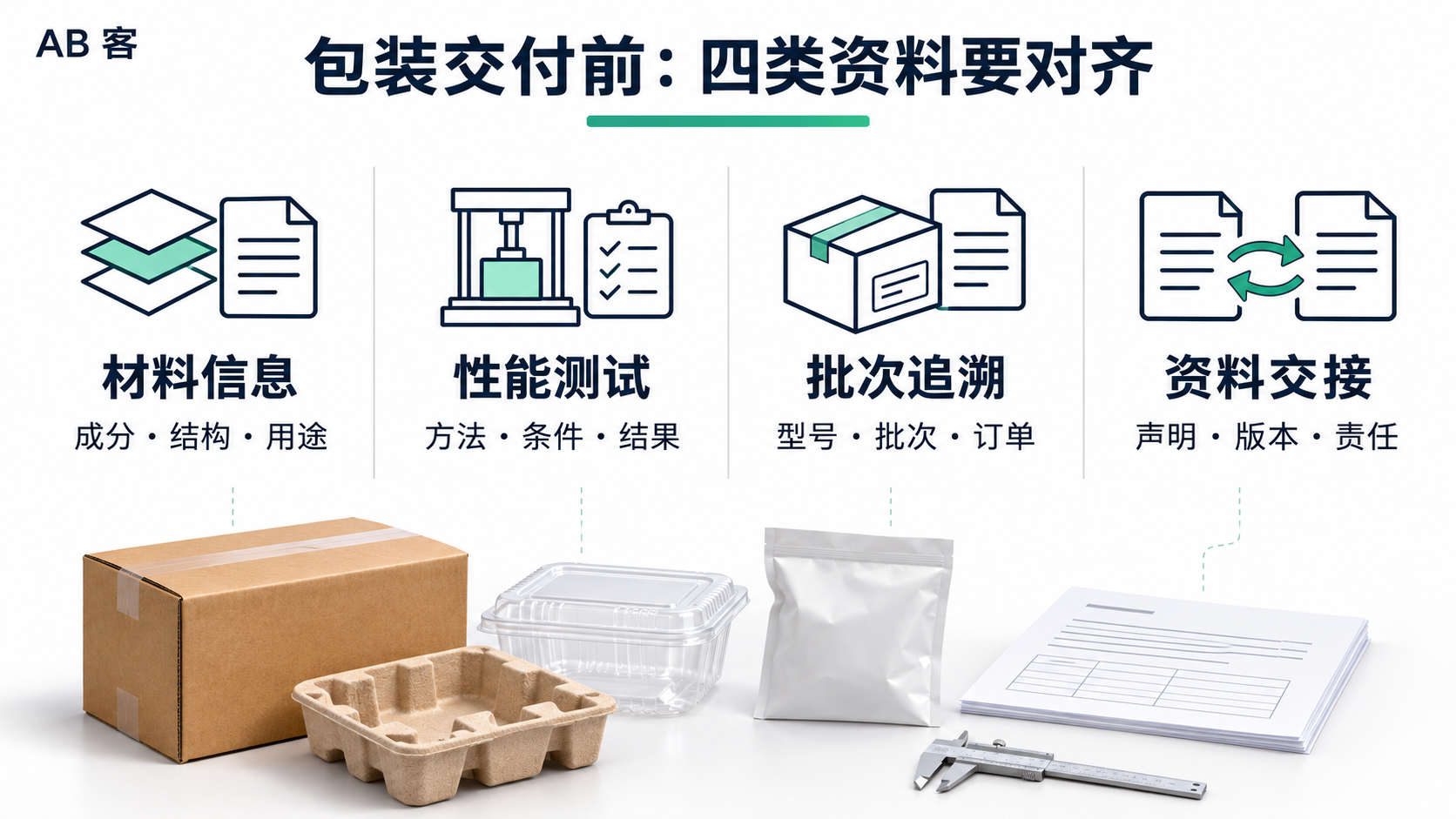
What material and testing documentation do buyers need?
Composition, structure, intended use, test conditions, and batch correspondence.
Procurement documentation does more than prove that testing was performed: it helps buyers determine whether the results apply to the product being purchased. Material declarations, structural diagrams, use descriptions, test reports, and batch records should be managed as linked records, with document versions, issuing parties, and update dates identified.
-
Materials and structure:Record the main materials, layers, printing, adhesives, and relevant components. Where restricted substances are involved, check applicable requirements and retain supporting evidence.
-
Intended use and boundaries:Describe the products suited to the packaging, contact conditions, and storage and transport environments. Avoid extending results from one specific use to other scenarios.
-
Test information:Identify the sample, method, conditions, results, and acceptance criteria. If using a third-party report, verify the sample and scope it covers.
-
Traceability and changes:Link material batches, production batches, and report versions, and agree on how to review changes to the structure or supplier.
For packaging requiring food-contact compliance documentation, document requirements depend on the applicable regulations and material type. A general environmental declaration cannot replace the relevant compliance documents.
Define the subject, basis, and scope of environmental claims.
Claims such as “recyclable,” “reduced plastic,” or “recycled content” should clearly state whether they refer to the entire package or a specific component, together with their basis, calculation or testing methodology, and scope. If a conclusion depends on specific collection, sorting, or processing conditions, those conditions should also be clearly stated.
For example, a weight-reduction comparison should identify the baseline, the item being compared, and the measurement method. A recycled-content claim should be checked against the relevant components, supporting basis, and supply chain records. Unverified absolute claims can lead to procurement errors and may also create compliance and trust risks.
Business decision-making tool
The Packaging Materials and Design Validation Worksheet can bring regulatory checks, technical validation, and procurement decisions together in one worksheet. Create a separate record for each packaging layer and consolidate them into a product solution after confirmation by the responsible parties.
| Validation field | Information to enter | Responsibility and status |
|---|---|---|
| Intended use and structure | Product, packaging layers, materials, and components | Confirmed by design and procurement |
| Substance requirements and application dates | Relevant provisions, markets, dates, and exceptions | Checked by the party responsible for compliance |
| Protection criteria and test methods | Sealing, barrier, load-bearing, or transport tests and acceptance criteria | Record samples, results, and outstanding items |
| Cost changes | Assumptions for materials, tooling, losses, logistics, and product loss | Jointly reviewed by procurement and finance |
| Documentation responsibilities | Declarations, reports, batches, versions, and recipients | Identify the provider and update process |
“Pending confirmation” in the worksheet should not be treated as “compliant.” Address documentation gaps according to the order's planned market placement date and risk priority, and review them again when regulations, customer standards, or packaging structures change.
FAQ
- Is a mono-material always better than a composite material?
Not necessarily. A mono-material may benefit certain design or processing routes, but its suitability still depends on barrier properties, sealing, mechanical strength, processing conditions, and target market requirements. Composite materials should also be assessed according to their actual structure and applicable rules; conclusions should not be based on material category alone. - Does reducing packaging weight always lower total cost?
Not necessarily. Reducing weight may lower material consumption and some transport burden, but total costs may rise if it reduces yield, requires equipment adjustments, or increases product damage. Use a consistent basis for comparison and consider test results. - Are buyer requirements for 2030 already legal obligations in 2027?
Not necessarily. A buyer can ask suppliers to prepare in advance, but legal obligations depend on the specific provision, application date, transitional arrangements, and scope. Record contractual and regulatory requirements separately and check the latest implementation information.
2027 outlook analysis for other export industries:
Put packaging performance and material evidence in a procurement context
For packaging exporters, technical documentation can help buyers assess a solution's suitability only when it is connected to specific procurement questions.AB customer(ABKE)ofEnterprise Knowledge HubBased on information the company has already verified, packaging structures, suitable products, protective performance, test evidence, and version information can be organized into product descriptions, application solutions, and FAQs using GEO content methods. This helps buyers in different markets understand the conditions of use and scope of validation. The company must still review the original evidence, keep regulatory assessments up to date, and avoid treating content presentation as compliance certification. Specific development and configuration are subject to the project agreement.
When preparing a packaging procurement or export plan for 2027, first check applicable deadlines by use and responsibility, then compare materials, protective performance, total cost, and completeness of evidence. If you need to organize packaging product knowledge, test documentation, and content for overseas buyers, you canAB Customer CommunicationRequirements for building an enterprise knowledge hub.


