Hot Products





Popular articles
When foreign trade companies evaluate GEO service providers, how can they verify the construction actions and actual results in their client case studies?
How Can OEM and ODM Companies Help AI Identify the Actual Manufacturer?
How can export-oriented manufacturing companies publish original industry data that is worth citing? From test logs to technical white papers.
Connect GEO, Paid Ads and Social Outreach for Thanksgiving B2B Lead Follow-Up
Recommended Reading


Automation Equipment in Global Markets in 2027: Where Are the Real Procurement Opportunities for Robotics and Warehouse Projects?
Explore how overseas projects are evaluated, systems are integrated, returns on investment are assessed, and acceptance signals are identified in the procurement of industrial robots, warehouse logistics systems, and automated production lines. Learn how ABKE helps businesses organize multilingual project knowledge.
Opportunities for automation equipment in overseas markets in 2027 should be assessed by starting with specific tasks rather than installation growth: What production or logistics problems does the customer need to solve? Can the equipment be deployed on site? Can the benefits be verified? Can the supplier and its partners provide ongoing service? Demand for industrial robots, mobile robots and warehouse equipment can become deliverable orders only after budgeting, integration, testing and acceptance.
According to reference information citing the International Federation of Robotics (IFR) World Robotics 2026 report, approximately 603,000 industrial robots were newly installed worldwide in 2025, up 11% year on year, with an operational stock of approximately 5.079 million units. The figure of approximately 655,000 new installations in 2026 is a forecast. The reference information also states that, in IFR's sample-based statistics for professional service robots, sales of transportation and logistics robots reached approximately 117,500 units in 2025, up 21% year on year. These figures and the report's statistical scope should be verified against the original source before citation; sales of transportation and logistics robots are not equivalent to the total market size for warehouse automation equipment.
Which applications deserve priority research as installations grow?
Differences in procurement requirements across automotive, electronics, metalworking and general industry.
Automotive projects typically require consideration of model changeovers, workstation cycle times and coordination with existing production lines. Electronics manufacturing places greater emphasis on precision handling, product changeovers and inspection requirements. Metalworking often involves loading and unloading, welding, and conditions such as dust or high temperatures. Requirements in general industry may be more varied, with equipment selection often focused on workpiece differences, available space for modifications and investment scale.
Regional assessments should not rely solely on the installed base of robots. Mature manufacturing markets may place greater emphasis on retrofitting existing equipment, compliance and local maintenance. In regions where manufacturing is expanding, new factories, supporting supply chains and local integration resources should also be considered. Specific opportunities still need to be assessed by country, industry, customer and project stage.
Who typically procures equipment for handling, loading and unloading, welding, inspection, sorting and in-warehouse transport?
| Task | Common procurement or decision-making parties | Priority checks |
|---|---|---|
| Handling, loading and unloading | Manufacturers, equipment suppliers, production line integrators | Workpiece variation, cycle time and machine tool interfaces |
| Welding and inspection | End-user factories, process equipment suppliers, system integrators | Process quality, sample testing and traceability |
| Sorting and in-warehouse transport | Warehouse operators, logistics companies, warehouse system integrators | Goods throughput, routes, fleet coordination and system interfaces |
The purchaser, user and acceptance party may not be the same entity. For example, an integrator may purchase the robot, while the factory is responsible for final acceptance. Before quoting, confirm who has technical decision-making authority, the contractual scope and the end user's acceptance criteria.
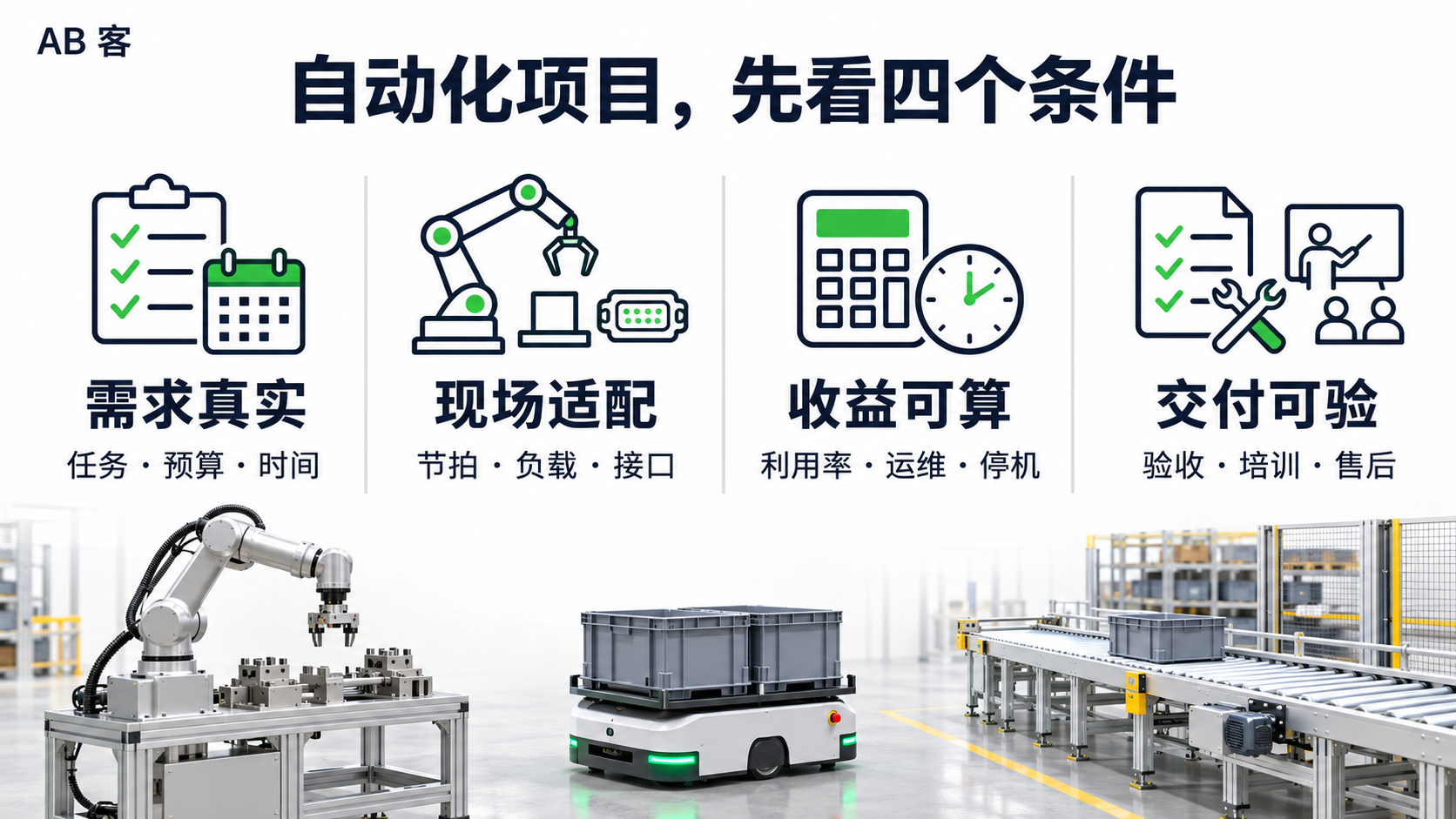
How can you identify a genuine project rather than general interest in automation?
Distinguish between concept inquiries, budget requests, on-site testing, formal tenders and expansion orders.
Concept inquiries typically involve only a general direction and pain points, making basic information appropriate. Budget requests require a preliminary solution and cost range. On-site testing requires samples, a site or data. Formal tenders call for review of technical specifications and commercial terms. For expansion orders, confirm the operating results of the original project and the scope of the addition. Projects may move back and forth or skip stages, so order probability cannot be judged by inquiry volume alone.
Check the workpiece, cycle time, payload, space, shifts and existing system interfaces.
Effective qualification requires the workpiece dimensions, weight range, material and incoming condition. Distinguish the target cycle time from the current actual cycle time, and check whether fixture weight is included in the payload. For the site, establish the equipment layout, access routes, flooring, power supply, shifts and available downtime windows. For interfaces, confirm the control systems, communication protocols and responsibility for data exchange. If key information is missing, mark the proposed solution as subject to verification rather than committing to a production capacity.
From individual machine performance to system availability
Coordination among the robot, end effector, vision, control and safety systems.
The robot's payload, working range and repeatability are only the starting point. The end effector must suit the workpiece shape and cycle time; the vision system must be tested against lighting, occlusion and recognition errors; the control system must coordinate with upstream and downstream equipment; and the safety solution must be determined through a site risk assessment and the applicable requirements of the target market. A mismatch at any point can affect availability across the entire line.
Solution discussions should specify the supplier of each component, interface testing methods and responsibility for fault diagnosis. Passing an individual machine test does not mean the entire line has passed acceptance. The parties should agree on the payload, samples, operating duration, acceptance criteria and procedures for handling exceptions.
Compatibility of racking, flooring, fleet management software and business systems in warehouse projects.
Warehouse automation requires simultaneous checks of rack dimensions, aisle widths, floor flatness, charging locations and areas where people and vehicles share space. Mobile robots or sorting equipment must also exchange tasks and status information with fleet management software, warehouse management systems and other business systems. The parties involved should jointly confirm interface fields, exception reporting and responsibility for changes. Peak-season throughput, order fluctuations and manual intervention procedures should also be included in testing.
How can a project's economic value be demonstrated?
Compare labor, equipment, integration, maintenance, downtime and training costs.
When assessing return on investment, first establish a baseline for the existing process: output, shifts, staffing and quality-related losses. Then calculate the automation solution's costs for equipment, fixtures, software, integration, installation, maintenance, spare parts, training and downtime. Labor savings should be calculated based on actual staffing changes, not on the assumption that all related personnel will be replaced. The measurement methods for quality and delivery improvements should also be stated to avoid double-counting benefits.
Calculate full-capacity, low-utilization and delayed-commissioning scenarios separately, rather than presenting only an ideal payback period.
| scene | Key assumptions | Impacts to assess |
|---|---|---|
| Full capacity | Operations follow planned shifts and workload | Whether capacity, quality and maintenance costs meet expectations |
| Low utilization | Reduced orders or frequent changeovers | Changes in processing cost per unit and payback period |
| Delayed commissioning | Delays in site preparation or system integration testing | Additional integration costs, timing of benefits and cash flow |
A simplified payback period can be calculated by dividing the initial investment by expected annual net benefits for an initial comparison, but it does not replace a full financial analysis. If net benefits are unstable or negative, review output, service costs and implementation scope. The purchaser should also assess the project in light of financing and financial assumptions.
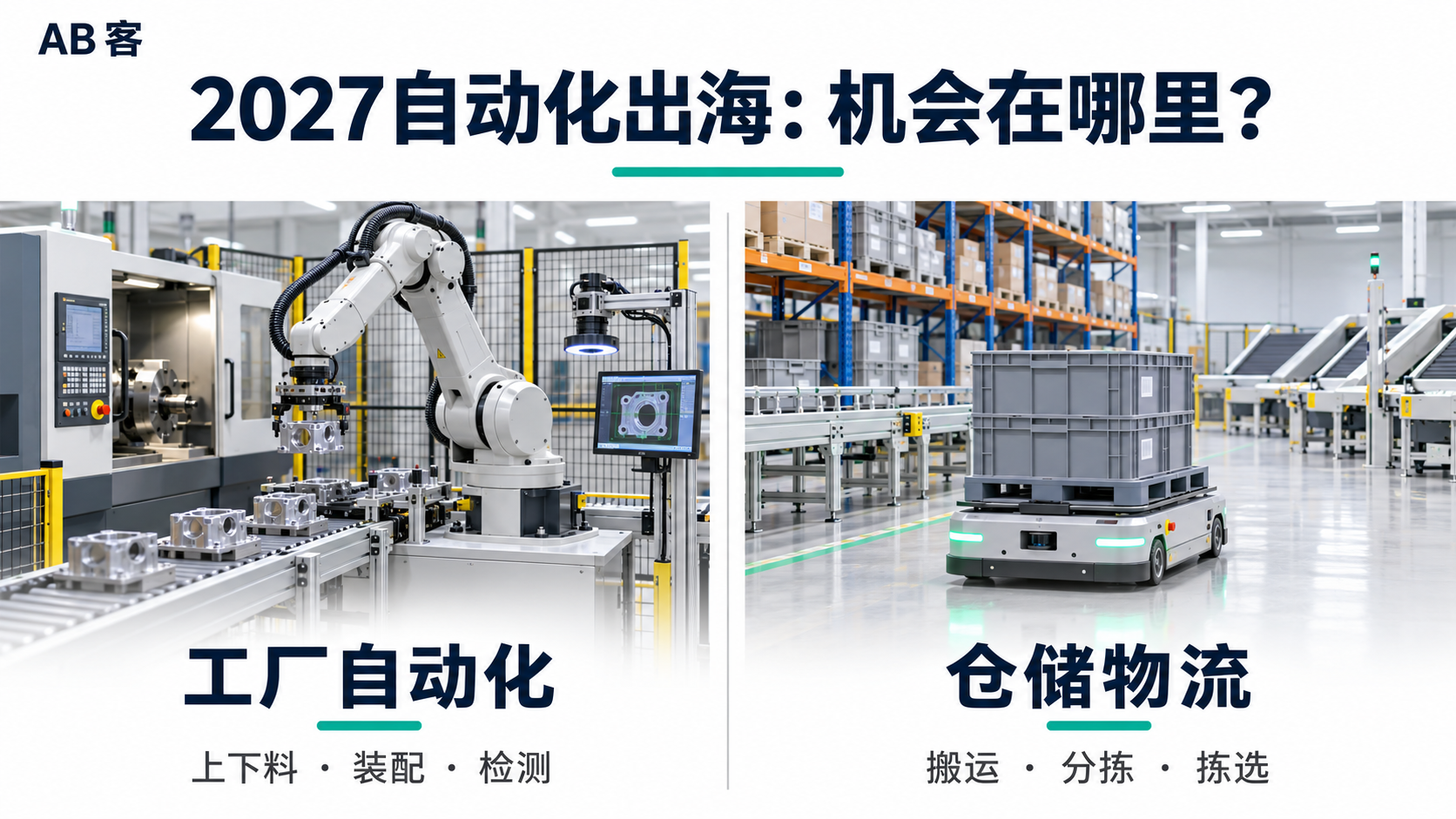
Which signals indicate whether opportunities will become orders in 2027?
Customer capital expenditure, pilot acceptance, production line utilization and project financing.
Looking toward 2027, continue to track whether customers have secured capital expenditure approval, whether pilots meet the agreed acceptance criteria, and whether existing production line or warehouse utilization supports expansion. For demand dependent on external financing or large construction projects, confirm funding arrangements and project progress as well. A successful pilot is a positive signal, but the conditions for replication, expansion budget and formal procurement process still need verification.
The influence of local integration partners, spare parts and fault response on procurement decisions.
Overseas buyers will assess who can attend on site after an equipment failure, where spare parts will come from, how remote support will be coordinated, and who is responsible for software and process changes. Exporters should verify local integration partners' technical capabilities, service coverage, spare parts lists and response arrangements, and define responsibilities in the contract. Unconfirmed response times should not be presented as commitments.
2027 outlook analysis for other export industries:
Business decision-making tool
The Automation Project Qualification and Acceptance Checklist can help sales, technical and delivery teams work from the same project information. At project initiation, record known conditions and items requiring confirmation; update the evidence after testing; and define responsibilities during the quotation and contract stages.
| Record Project | Items to check |
|---|---|
| Country and customer type | Destination, end user or integrator, decision-maker and procurement stage |
| Task and site conditions | Workpiece, cycle time, payload, layout, shifts and safety conditions |
| Benefit assumptions and interfaces | Baseline costs, utilization, control protocols and software data exchange |
| Acceptance criteria and service responsibilities | Test conditions, output and quality criteria, spare parts, fault response and responsible parties |
Mark data that has not yet been obtained as "to be confirmed," and record the person responsible and the confirmation date. Before using customer process information, drawings or operational data, confirm authorization and confidentiality requirements.
FAQ
Does growth in industrial robot installations mean all automation equipment will benefit?
Not necessarily. Installation growth reflects changes in demand within a particular statistical scope; it does not directly mean order growth across all regions, equipment categories or suppliers. Assess application tasks, project budgets, integration requirements and delivery capabilities separately.
How can a supplier that only offers robots assess overseas integration projects?
First confirm that the robot meets payload, working range and cycle time requirements. Then check fixtures, vision, control, safety and software interfaces with the integrator. The quotation and contract should define each party's supply scope, test conditions, on-site support and responsibility for final acceptance.
How should overseas customers verify the payback period and the ability to sustain operations?
Establish a cost baseline using data from the existing process, and calculate full-capacity, low-utilization and delayed-commissioning scenarios separately. Validate the solution through sample testing, on-site integration testing and agreed operating metrics, and include maintenance, spare parts and training costs in the assessment.
Organize project capabilities into information buyers can verify
For industrial robot and warehouse equipment companies, clearly documenting operating conditions, cycle times, interfaces, acceptance criteria and after-sales responsibilities is more useful for procurement decisions than making general claims of "high efficiency."AB Customer GEO Growth EngineBased on a company's actual information, we can assist in buildingEnterprise Knowledge Base,Industry solutionspages andMultilingual content, organizing project capabilities into procurement questions, technical explanations and case studies authorized for public release. Specific performance and service scope should still be based on verifiable company information and contractual terms. Companies seeking to expand into overseas markets can consultAB customerto discuss how to organize existing information, address buyer questions and develop content.


