Hot Products





Popular articles
How should electronic component exporters choose a GEO service provider? Use a product specification sheet to assess delivery capabilities.
2027年电气设备出口:电网投资如何形成细分采购机会?
Recommended Reading




How to choose markets for photovoltaic exports in 2027? Installation prospects, grid connection constraints, and profit risks.
AB Customer has compiled a methodology for selecting photovoltaic export markets in 2027, starting from factors such as installation demand, project type, grid connection financing, channel revenue, and full life cycle revenue, to help suppliers assess market opportunities and operational risks.
Planning for photovoltaic exports in 2027 cannot be based solely on a country's cumulative installed capacity or growth forecast. For manufacturing companies, whether market demand can be translated into projects, whether projects can be connected to the grid and obtain financing, and whether orders can generate recoverable profits are all related but not interchangeable factors.Related Reading:Green Energy/PV GEO: How to capture high-end inquiries from Europe and the United States through "carbon neutrality corpus"?
Centralized, industrial/commercial, residential, and off-grid projects have different procurement methods, and may also present drastically different project risks within the same market. A more reliable approach is to gradually extend opportunities from the national level down to the project, channel, contract, and after-sales responsibility levels, and make judgments based on continuously updated policies and project information.
Why can the expansion of photovoltaic installations and the pressure on manufacturing profits occur simultaneously?
Industrial chain differences
New photovoltaic installations reflect the demand for power generation from end-user projects. However, companies supplying silicon materials, wafers, cells, modules, inverters, and mounting systems face different supply-demand relationships and cost structures. If a particular segment experiences rapid capacity expansion, high inventory levels, or strong product homogeneity, that segment may still face price pressure even with increased end-user demand.
Suppliers should also understand their position in the supply chain: changes in upstream raw material prices affect midstream costs, while component manufacturers are simultaneously affected by procurement costs, sales prices, channel inventory, and customer bargaining power. The demand for system-related products also depends on project design, local technical requirements, and installation practices, and cannot be simply extrapolated from component demand.
Quantity and Price
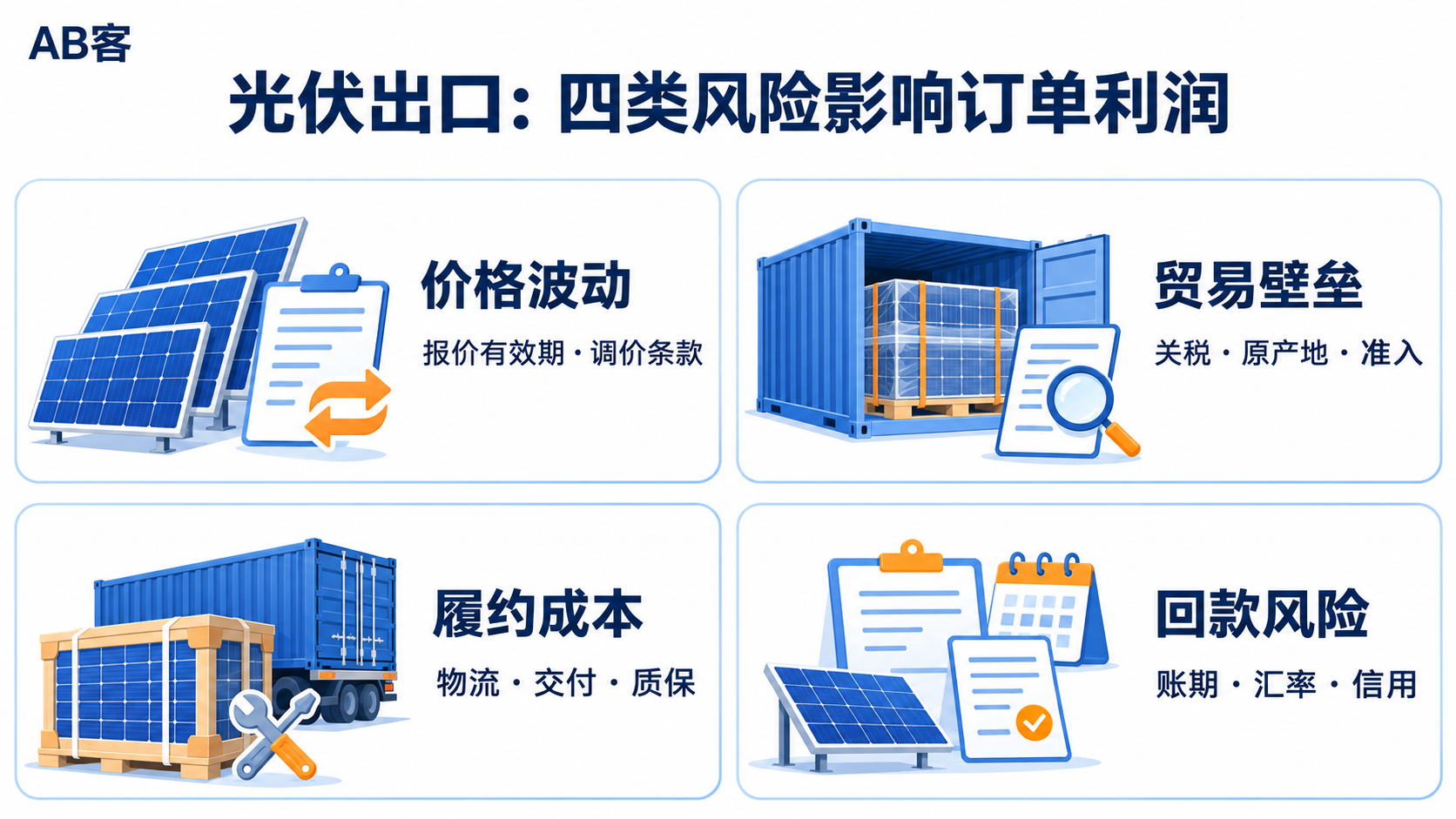
Increased shipments do not necessarily translate into increased revenue or profit. Order volume, unit selling price, unit cost, transportation costs, exchange rates, payment terms, and after-sales reserves all contribute to operating results; price declines may also expose inventory purchased at higher costs in transit or in warehouses to impairment risks.
| Observation Project | It should be combined with the content of the verification. | Business meaning |
|---|---|---|
| Shipments and Orders | Signed contracts, delivery schedule and cancellation conditions | Distinguish between intended demand and executable orders |
| Selling price and cost | Materials, logistics, tariffs and quotation validity period | Determine the order gross profit after price changes |
| Inventory and Cash Collection | Inventory age, payment schedule and customer credit | Assess the risk of capital occupation and bad debts. |
Demand Transmission
Installed capacity growth requires going through stages such as development, financing, procurement, logistics, and installation before it can translate into actual orders on the manufacturing side. Project delays, early stockpiling by channels, or clearing out old inventory can all alter procurement timing; increased end-user demand does not mean that every supplier can be included in the procurement list.
Therefore, when assessing orders for 2027, it is necessary to track the project's current stage, the responsible party for procurement, and the expected procurement time, rather than simply multiplying the installation forecast by the company's market share.
How should centralized, industrial and commercial, residential, and off-grid projects be studied separately?
Centralized Projects
Centralized power plants typically require coordination of land acquisition, permits, grid connection, financing, and engineering construction. Suppliers should verify the tendering entity, project development schedule, scope of the procurement package, and whether equipment delivery aligns with grid connection plans. Large-volume orders may offer economies of scale, but may also come with longer payment terms, stringent acceptance procedures, performance guarantees, or liability for breach of contract.
For exporting companies, before quoting a price, they should confirm local customs clearance requirements, on-site receiving capacity, batch traceability and spare parts arrangements, and identify the responsibilities between the general contractor, project owner and actual payer.
Distributed projects
Commercial and industrial projects need to consider factors such as roof load-bearing capacity, shading, electricity load curves, electricity pricing structure, and self-consumption ratio to determine if a system is suitable for the customer. Residential projects, on the other hand, rely more on local installer outreach, standardized products, after-sales response, and end-payment arrangements. Although both types of projects may utilize rooftops, their customer decision-making processes, single-purchase sizes, and installation organization methods differ.
Pay attention to load matching, rooftop usage rights, downtime construction arrangements, and contract terms.
Focus on installation partners, customer service, product compatibility, and local after-sales support.
When entering the distributed market, local grid connection and billing rules should also be verified; the determination of self-use, surplus power handling or compensation mechanisms should be based on the applicable regulations and power contracts at the time of the project location.
Off-grid and hybrid systems
Off-grid and hybrid systems may serve scenarios with insufficient grid coverage, unstable power supply, or the need for backup power. Selection should not only consider component capacity, but also take into account peak load, nighttime electricity consumption, energy storage capacity, inverter capabilities, and backup power configuration to determine whether the system can meet the expected power supply demands.
The project's continued operation also depends on local maintenance personnel, spare parts supply, user capabilities, and equipment replacement arrangements. A purchaser's need does not equate to having the ability to continuously pay; suppliers should verify the source of funds, payment methods, and who will bear the service fees.
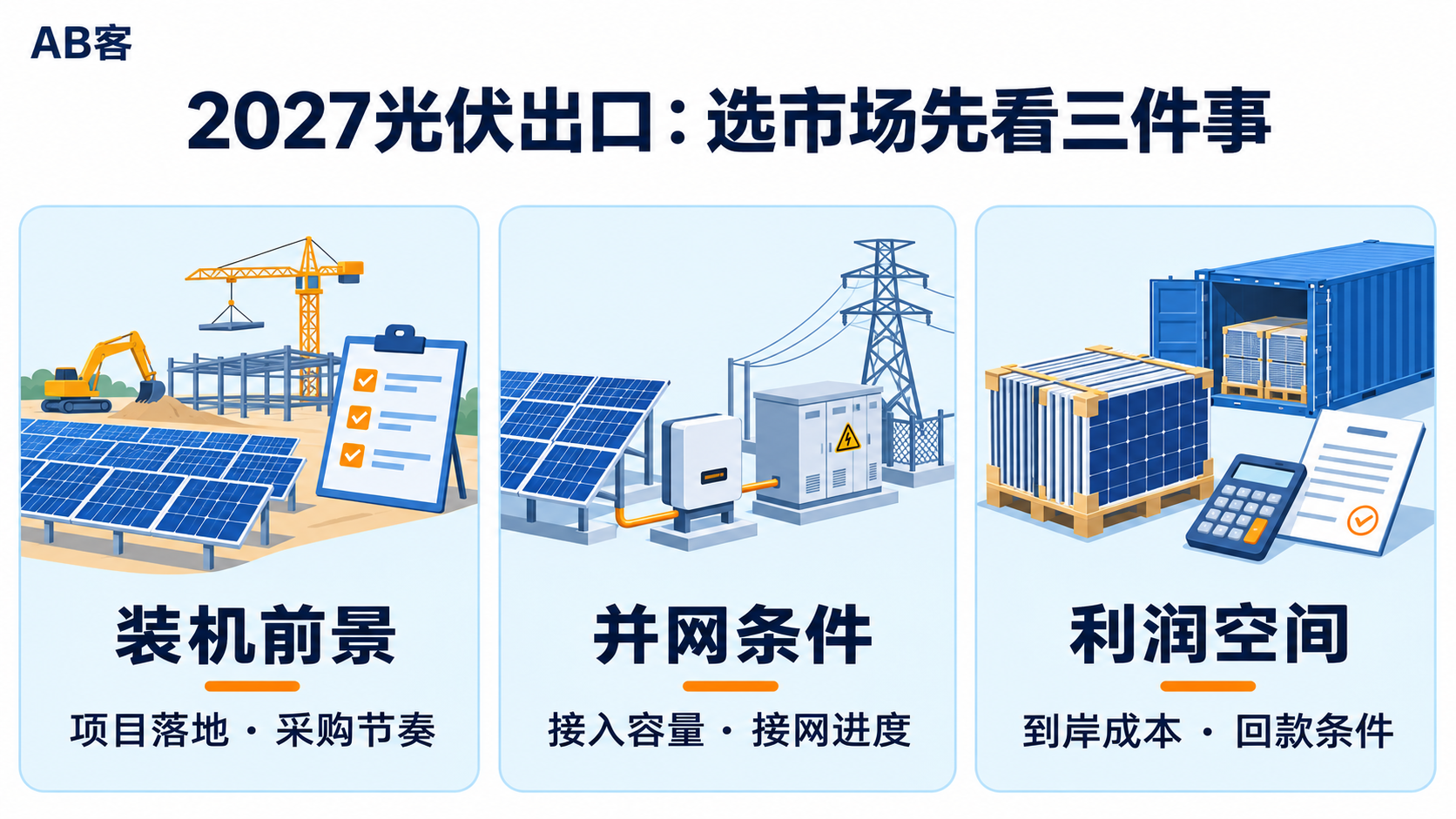
What variables need to be examined when selecting a target market?
Demand base
Market research should examine both the pipeline of new projects and their actual progress, including project type, developer, licensing stage, and expected procurement window. Cumulative installed capacity reflects historical deployment, but it cannot directly indicate future procurement volume, nor can it identify whether specific orders have been opened to new suppliers.
Electricity consumption growth, electricity price levels, grid reliability, and electricity consumption structure help to understand the sources of demand. For example, higher electricity prices may enhance the investment incentives of some industrial and commercial users, but the actual economics are still affected by load, roof conditions, financing costs, and grid connection rules.
Entry conditions
Before exporting, it is necessary to confirm the applicable technical standards, testing or certification requirements, import documents, and local installation specifications for the product, and to verify whether relevant trade measures apply to the product category, country of origin, and transaction arrangements. Some projects may also have requirements for local manufacturing, local sourcing, or specific bidding qualifications.
Relevant regulations may change, and companies should base their quotations and contracts on the current requirements of the destination's competent authorities, customs, project tender documents, and certification bodies. If necessary, a professional consultant should confirm the applicability of the specific transaction to avoid treating general market information as legal or compliance conclusions.
Channel quality
The value of a distributor or installer lies not only in the number of customers they cover, but also in inventory turnover, technical support, project resources, fulfillment record, and payment collection ability. It is recommended to understand their main customer types, product lines, existing inventory, warehousing conditions, and after-sales team, and verify whether they have the capability to complete the installation or service of the target project.
Before establishing a partnership, credit limits, payment terms, regional responsibilities, and warranty handling methods can be agreed upon in stages based on order volume. For arrangements such as exclusive agency, performance requirements and exit conditions should be clearly defined to avoid the channel occupying the market but being unable to effectively sell or provide services.
How can you determine if a project can truly be implemented?
Grid connection and consumption
Grid connection projects require verification of the connection point, connection capacity, technical solution, approval status, and any potential grid modifications. Even if a project receives preliminary connection intent, a formal agreement, construction responsibilities, and estimated completion time should be confirmed; specific conditions should be based on the grid operator's and project documents.
The issue of grid connection is crucial to whether the generated electricity can actually be used or sold. Enterprises should understand the local power curtailment arrangements, dispatch requirements, and electricity sales contracts for their project locations to avoid relying solely on installed capacity to estimate stable power generation or revenue. Off-grid projects do not require connection to the public grid, but load matching, energy storage, and backup power sources still need to be verified.
Financing and Contracts
Project funding may come from the owner's own funds, loans, or other financing arrangements. Suppliers should verify whether financing has been secured, whether there are any preconditions for withdrawal, and whether the procurement contract's validity depends on financing or licensing. For phased deliveries, special attention should be paid to the coordination between advance payments, delivery payments, acceptance payments, and warranty deposits.
The contract should also clearly specify the delivery location, risk transfer, acceptance criteria, liability for delays, claims procedures, and dispute resolution methods. The trade terms used in the quotation should be consistent with the insurance, transportation, and customs clearance responsibilities to avoid seemingly profitable orders turning into losses due to additional fulfillment costs.
Return sensitivity
Project revenue is not a direct function of component prices. Power generation assumptions should consider irradiance resources, equipment configuration, system losses, availability, and potential power curtailment; cash flow is also affected by electricity prices or power purchase agreements, operation and maintenance costs, insurance, financing costs, and equipment replacement. Different projects should clearly define their calculation methods and the sources of their assumptions; a single scenario should not be treated as a guaranteed outcome.
In practice, key assumptions such as power generation, electricity price, commissioning time, and financing costs can be adjusted separately to observe changes in project cash flow and payment ability. Manufacturers should also separately calculate the gross profit, capital occupation, and potential after-sales costs of their own orders, and should not equate power plant revenue with supply profits.
What useful evidence should photovoltaic suppliers provide?
Product Performance
Buyers need product information that corresponds to the project requirements, rather than general performance descriptions. Components, inverters, or other equipment should be provided with accurate model numbers, applicable versions, key parameters, test conditions, and verifiable test documentation; suitability for high temperature, humidity, salt spray, or special installation environments should be based on specific product information and test ranges.
Multilingual documentation should maintain consistency in model number, unit of measurement, applicable conditions, and limitations. For certifications not yet obtained, untested environments, or uses beyond the product's design scope, these should be clearly stated to avoid conflicts between sales promises and technical documents.
Warranty Liability
Product warranties typically revolve around product defects and agreed-upon remedies; performance warranties involve performance indicators and measurement conditions stipulated in the contract; the power generation or revenue of the entire power plant is also affected by factors such as design, construction, operation, weather, and the power grid, and cannot be simply equated with a single equipment warranty.
Both parties to the purchase should read the specific warranty documents and confirm the period, scope of application, exclusions, evidence for claims, testing methods, and responsibility for repair or replacement. Who bears the costs of transportation, disassembly/reassembly, on-site testing, and downtime losses should also be clearly stated in the contract.
Delivery experience
Verifiable delivery experience should specify the project location, application type, scope of supply, configuration requirements, and the supplier's actual responsibilities. If test results, acceptance documents, or operational records are cited, their authenticity should be verified, necessary authorization obtained, and the performance of a single project should not be described as a result achievable in all projects.
After-sales records also help buyers assess the feasibility of cooperation, such as problem handling methods, spare parts acquisition paths, fault location, and responsibility coordination processes. If there is no experience with the corresponding project, this should be stated truthfully, and supplemented with product testing, technical solutions, and proposed service arrangements to support the assessment.
| Filtering Dimensions | Key issues | It is recommended to verify the information. |
|---|---|---|
| need | What stage is the project at, and when will procurement take place? | Project pipelines, bidding plans, customer requirements |
| Grid connection | Are the conditions for access and consumption clearly defined? | Access schemes, approvals, and grid agreements; off-grid project load and power supply scheme verification. |
| Financing | Have the sources of funds and payment terms been secured? | Financing arrangements, contract conditions for effectiveness, payment schedule |
| Channel | Can the partner handle sales, installation, and after-sales service? | Inventory, project resources, service capabilities, and credit information |
| income | Can the project's cash flow and supply profits withstand changes? | Power generation assumptions, cost list, payment terms and sensitivity assessment |
FAQ
Can cumulative installed capacity forecasts be used to estimate enterprise orders in 2027?
Direct conversion is not possible. Cumulative installed capacity primarily reflects the total volume at historical and projected points in time. Enterprise orders also depend on the progress of new projects, procurement windows, competitive landscape, product access, and channel coverage. Forecasts should be used as market context, and then verified against specific projects and customer procurement plans.
Are high-growth countries necessarily suitable for direct export of components?
Not necessarily. High growth may be concentrated in specific projects or channels, and import restrictions, local sourcing requirements, certifications, logistics, and credit risks can also affect entry feasibility. Companies should compare direct exports and channel partnerships, and prioritize actual compliance and contractual terms.
What is the difference between component warranty and overall power plant revenue guarantee?
Component warranties focus on agreed-upon product or performance responsibilities; power plant revenue involves more factors such as system design, installation, operation and maintenance, grid integration, and electricity prices. Specific coverage and claims procedures should be based on the contracts signed by all parties.
Why do off-grid markets also need separate assessments of payment collection and maintenance?
Off-grid users may face limitations in terms of funding, geographical location, or technical services. Even after equipment delivery, costs for energy storage maintenance, spare parts replacement, and service can still affect system availability and cooperation risks; therefore, the source of payment and long-term service responsibilities should be verified in advance.
Different projects require different supplier information: centralized buyers may focus more on batch delivery and acceptance, industrial and commercial customers need to understand load matching, and off-grid buyers need to verify system configuration and maintenance. ABKE provides GEO growth services for foreign trade B2B companies, assisting them in building a knowledge base and, combined with multilingual, multi-regional market pages and a global content and channel network, associating components, inverters, or system solutions with corresponding application scenarios. This clearly expresses applicable conditions, test data, and verified project experience, helping buyers complete initial screening. Companies can then further consult on specific construction paths based on their target market, existing technical data, and existing content.
Related reading:
Authoritative Outlook: Which Industries Will Drive Global Trade Growth in 2027?


