Hot Products





Popular articles
How can GEO budgets shift from paid exposure to reusable content assets? Investment priorities for foreign trade B2B.
Your competitors are being cited by AI while you aren't: How can B2B foreign trade companies conduct citation gap analysis and content supplementation?
Machinery and equipment exports to the EU in 2027: What delivery changes will the new machinery regulations bring?
Recommended Reading




2027 Textile Exports: How to Balance Recycled Materials, Traceability Information and Costs?
ABKE analyzes recycled material supply, performance validation, order-level traceability and cost trade-offs in 2027 textile exports, distinguishing buyer purchasing requirements from EU policy plans.
Recycled content is only one factor in textile sourcing decisions. Fabric, yarn, apparel, home textile and functional textile companies also need to assess material origins, order-level evidence, batch consistency, performance, cost and delivery capability to determine whether a product is truly suitable for the buyer’s intended use.
According to estimates in Textile Exchange’s Materials Market Report 2026, global fibre production reached approximately 139 million tonnes in 2025, with fibres made from recycled materials accounting for around 7.6%. Textile-to-textile recycled fibres accounted for approximately 1% of the global fibre market. These figures reflect the overall market structure and do not indicate the quantity of a particular fibre available for purchase in a specific region or specification.
On the policy front, the European Commission has listed the planned adoption of the textiles-related delegated act under the Ecodesign for Sustainable Products Regulation (ESPR) for the fourth quarter of 2027. This timeline may change, and specific digital product passport requirements remain subject to subsequent rules. It cannot be assumed that passports will become mandatory for all textiles across the board in 2027.
How can growth in recycled fibres be distinguished from actual supply availability?
A rising global share of recycled fibres does not mean that every material, colour and performance grade is consistently available. Procurement teams need to distinguish market size from availability for a specific order: the former helps indicate the long-term direction, while the latter depends on material sources, processing routes, specifications, supplier capacity and supporting documentation.
Differences in the origins of recycled polyester, cotton and polyamide.
Recycled polyester can come from post-consumer plastic products or textile waste; recycled cotton typically involves waste from production processes such as spinning and cutting, or post-consumer textiles; inputs for recycled polyamide may include industrial waste and fishing nets. Specific sources, collection and reprocessing methods vary by supplier and cannot be determined from the material name alone.
When selecting materials, ask about fibre length, blend ratios, available colours and suitable processes, and confirm that the required evidence covers the materials actually being purchased. Blended and functional fabrics, in particular, often involve more complex material compositions, processing routes and performance verification than single-fibre products.
Sourcing implications of bottle-derived and textile-derived recycled materials.
Bottle-derived and textile-derived recycled materials differ in their inputs, sorting complexity and processing routes. If a brand’s sourcing requirements specify a textile origin, bottle-derived material does not automatically meet that requirement simply because it is recycled. Conversely, if the buyer specifies only recycled content, the accepted sources and forms of evidence still need to be checked.
Clarify whether the source is pre-consumer or post-consumer, and whether the buyer restricts the input material.
Confirm that specifications, batches, quantities, lead times and supporting documents align.
Use sample and bulk production verification to determine whether the material meets actual end-use requirements.
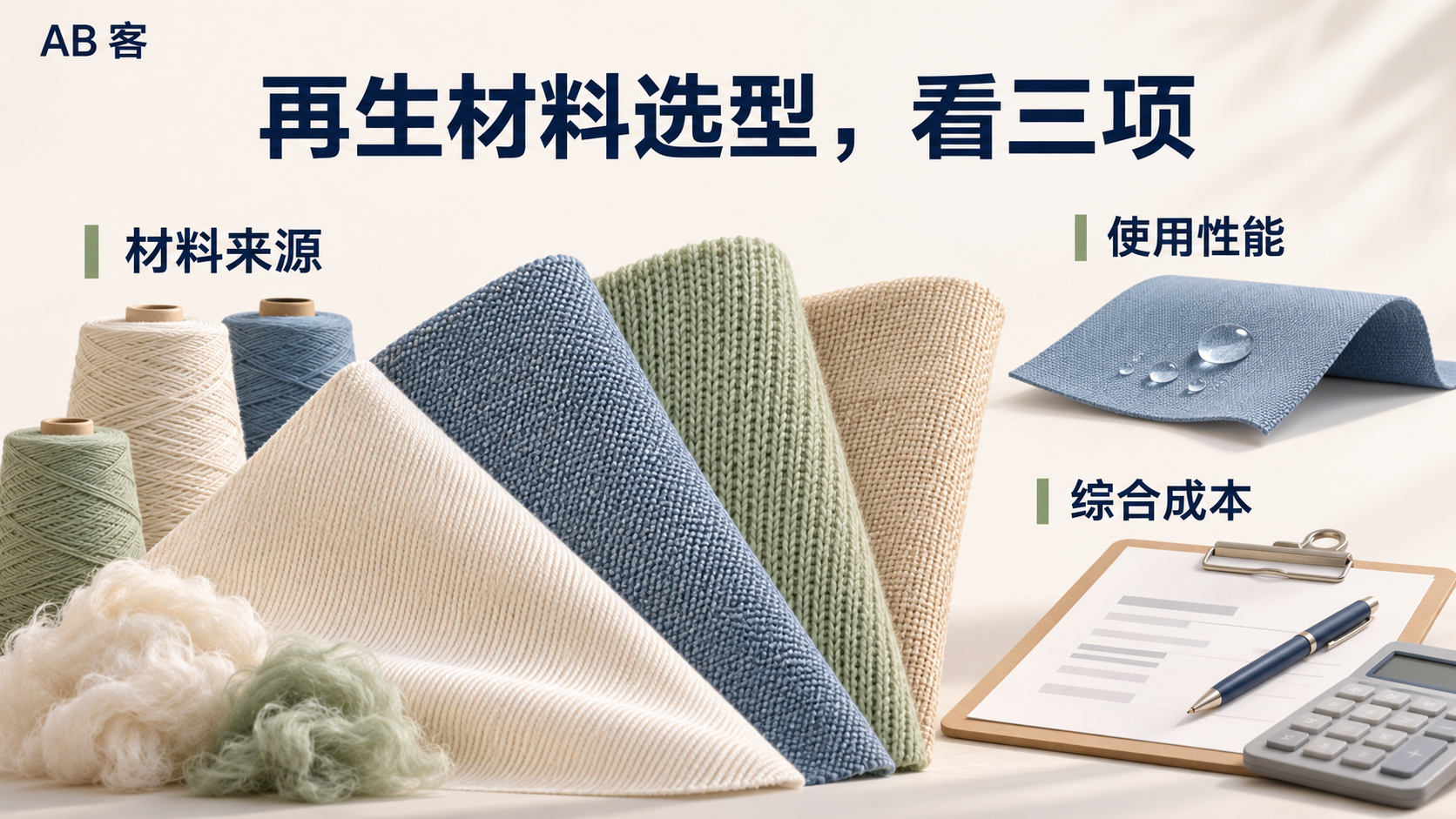
Why do buyers care about both origin and performance in use?
Origin information explains where a material comes from, while performance testing shows whether the product can meet its intended use. Neither can replace the other: a fabric with adequate evidence of origin may still be unsuitable for a particular application, while a product that meets performance requirements may not satisfy the buyer’s sourcing criteria for recycled inputs.
Composition, strength, colour fastness, pilling, shrinkage and functional performance.
Verification priorities differ for apparel, home textiles and functional textiles. Apparel sourcing may focus on durability in wear, colour fastness and dimensional stability; home textile products may be assessed for changes in appearance and dimensions after washing; functional products also require verification of agreed properties such as water resistance, moisture vapour permeability or other functional indicators. Buyers and sellers should agree on test items, methods and acceptance limits based on the target market and intended product use.
| Validate Project | Questions to confirm | Sourcing significance |
|---|---|---|
| Composition and origin | Blend ratios, recycled input sources and scope of evidence | Check sourcing requirements against product claims |
| Strength and pilling | Applicable test methods and agreed limits | Assess durability during processing and use |
| Colour fastness and shrinkage | Test conditions, colours and washing requirements | Reduce disputes during use and after sales |
| Functional performance | Functional properties, test conditions and performance retention requirements | Determine suitability for the intended application |
Scope of verification for samples and bulk production, different batches and different colours.
A sample passing a test does not mean that all bulk production batches or colours automatically comply. During sampling, both parties should agree on the representativeness of submitted samples, colour coverage, sampling methods and the scope of test reports. If material sources, formulations or dyeing and finishing processes change, they should assess whether reconfirmation is needed. Bulk inspection should also be linked to actual production batches, orders and delivery documents.
How do recycled materials affect quotations and MOQ?
Quotations for recycled materials should not be assessed on fibre unit price alone. Minimum order quantity (MOQ), available inputs, blend ratios, processing losses, testing and document preparation can all affect order costs. The direction and extent of each factor’s impact vary by product, supply conditions and order size; recycled options cannot be assumed to be inherently more or less expensive.
Raw material supply, blend options, spinning and weaving losses, and dyeing and finishing costs.
Before requesting a quotation, confirm whether raw materials need to be sourced specifically for the order, whether the target specification is readily available, and how different blends affect spinning, weaving, dyeing, finishing and finished-product yield. If an order requires special colours, additional testing or separate traceability, clarify who will bear the associated costs and avoid confusing one-off preparation costs with unit product costs.
Compare recycled content, performance, price and lead time.
Compare options under the same product-use and testing conditions, listing recycled content, material origin, performance requirements, unit price, MOQ, lead time and documentation scope separately. Items that have not yet been verified should be marked “to be confirmed” rather than presenting estimated results as established capabilities.
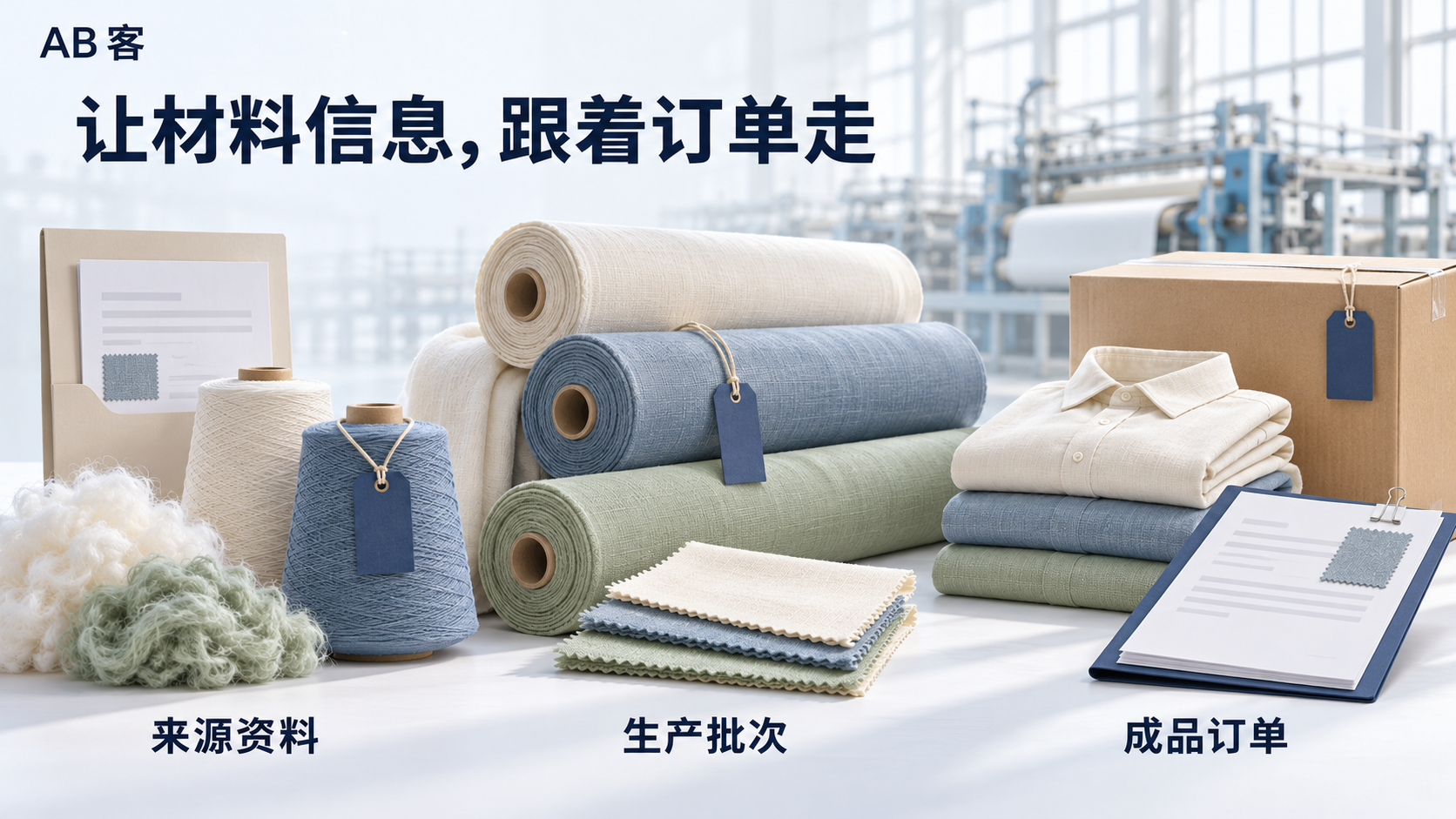
How can an order-level material information chain be established?
The priority in order-level traceability is not to collect as many certificates as possible, but to explain where the materials in the delivered product came from and what the available documents can substantiate. The information chain should cover procurement, production and delivery, enabling relevant personnel to trace an order to its corresponding records.
Linking suppliers, materials, supporting documents, production batches and orders.
To establish consistent records, start with supplier names, material names and specifications, purchase records, incoming batches, production batches, finished-product batches and order numbers, then link the applicable supporting documents and test reports. If the supply chain includes multiple processing stages, confirm that records can be connected across stages and identify any differences in quantities, scope or validity periods that require explanation.
Align product claims with the scope of documentation, and retain update dates and applicable conditions.
Certificates at company or factory level should not automatically be presented as evidence for every product, batch or order. When communicating recycled content, material origin and performance externally, verify what the documents cover, their validity periods, the samples tested and any relevant limitations, and record when the information was last updated. Where information cannot be confirmed, explain this to the buyer rather than making broad assurances.
How should businesses respond to changes in customer requirements and regulations in 2027?
Distinguish rules already in force, customers’ advance sourcing requirements and proposed policies.
Businesses should manage three categories separately: regulations already in force in the target market and applicable to the product; requirements set by buyers in contracts, supplier manuals or sourcing specifications; and policies still at the planning or drafting stage. Customers may request material data in advance, but this does not mean the relevant regulation is already in force for all products.
The planned adoption date for the EU textiles-related ESPR delegated act is part of a policy work schedule, not the date on which digital product passports take effect uniformly for all textiles. Continue to consult official EU updates and check the final product scope, information requirements, application dates and transitional arrangements. For specific compliance assessments, seek professional advice based on the target market and product.
Prepare separate options prioritising price, performance and evidence of origin.
Provided basic specifications and sourcing requirements are met, compare raw material supply, MOQ, processing losses and lead times.
Define the intended use and test conditions first, then select materials and processes that can consistently meet the required criteria.
First check the sources accepted by the buyer, the scope of documentation and links to batches, then confirm supply and pricing.
These three approaches are not mutually exclusive. Businesses can set the buyer’s non-negotiable conditions as thresholds and then compare the remaining variables, rather than basing the entire sourcing decision on recycled content or price alone.
Business decision-making tool
The Textile Materials and Performance Evidence Table can serve as a shared working document for enquiries, sampling and order reviews. Each column should correspond to a specific product and version. Where material evidence, test reports or final quotations are not yet available, retain a “to be confirmed” status and assign a responsible person and update date.
| Record Item | Information to be filled in | Items to check |
|---|---|---|
| Composition and recycled origin | Fibre composition, proportions and raw material sources | Whether they meet the buyer’s definitions and intended use |
| Scope of evidence | Document name, coverage and validity period | Whether it covers the actual materials and order |
| performance | Test items, methods, results and samples | Whether they cover the agreed colours and conditions of use |
| batch | Raw material, production, finished-product and order identifiers | Whether the records can be linked to one another |
| MOQ, cost and lead time | Minimum order conditions, quotation breakdown and estimated lead time | Clarify charges for testing, documentation and special processing |
FAQ
- Does higher recycled content always make a product more suitable for the customer?
Not necessarily. Suitability depends on the buyer’s combined requirements for material origin, performance, price, MOQ, lead time and evidence. After increasing recycled content, the formulation, sample performance and bulk supply conditions should still be checked again. - How are certificates linked to specific orders, materials and batches?
First confirm the entities, products and materials covered by the documents and their validity periods, then link them to purchasing, goods receipt, production, finished-product and order records. The specific method of linking them depends on the evidence scheme and supply chain records used; holding a company certificate alone is not sufficient to assume that every order is substantiated. - What is the policy status of textile digital product passports in 2027?
The European Commission has listed the planned adoption of the textiles-related ESPR delegated act for the fourth quarter of 2027. Specific digital product passport requirements, scope and timing remain subject to subsequently published official rules; the planned adoption date does not mean that all textiles must use passports across the board in that year.
2027 outlook analysis for other export industries:
Organise by application rather than material labelProduct Content
To address specific selection questions from overseas buyers, businesses can useAB Customer GEO Growth Engineto organise verified material origins, performance tests, processing capabilities and applicable conditions into structured company knowledge, and build multilingual solution pages for apparel, home textile and functional applications. Content should state the scope of evidence and the date it was updated, enabling buyers to compare options by application rather than seeing only broad labels such as “recycled materials”. Businesses can also use this foundation to continually improve content assets that search and AI systems can understand.
For help organising textile product information, overseas buyer questions andMultilingual content, consultAB customerusing existing material and order evidence to first determine the scope of information that can be made public and the priorities for development ofApplication scenarios.


