Hot Products





Popular articles
How to start a foreign trade soho? Foreign trade soho from 0 to 1: A practical guide (including templates, checklists, timelines and KPIs)
Foreign trade customers say they will pay, but never pay? A 20-year veteran’s practical guide to collecting payments (with Chinese and English tips)
From Small Factory to Annual Sales of Tens of Millions: 6 Customer Acquisition Channels for Startups in the Machinery Industry (Including Budget Allocation)
How to Quickly Find High-Intent Customers through Semantic Analysis and Purchase Behavior Prediction? Essential Tips for Foreign Trade Enterprises
A Beginner’s Guide to Building an Effective Independent Website for Your Foreign Trade Business
A Practical Guide to Choosing and Optimizing B2B Logistics Transportation Methods in International Trade
How to Build a 47+ Language B2B Site Cluster for Global SEO Success
Promotion roadmap and nanny-level tutorial for foreign trade website launch (SEO + Google Ads + social media traffic)
Recommended Reading





How to Predict B2B Buyer Behavior in International Trade with AI: A 3-Step Practical Guide
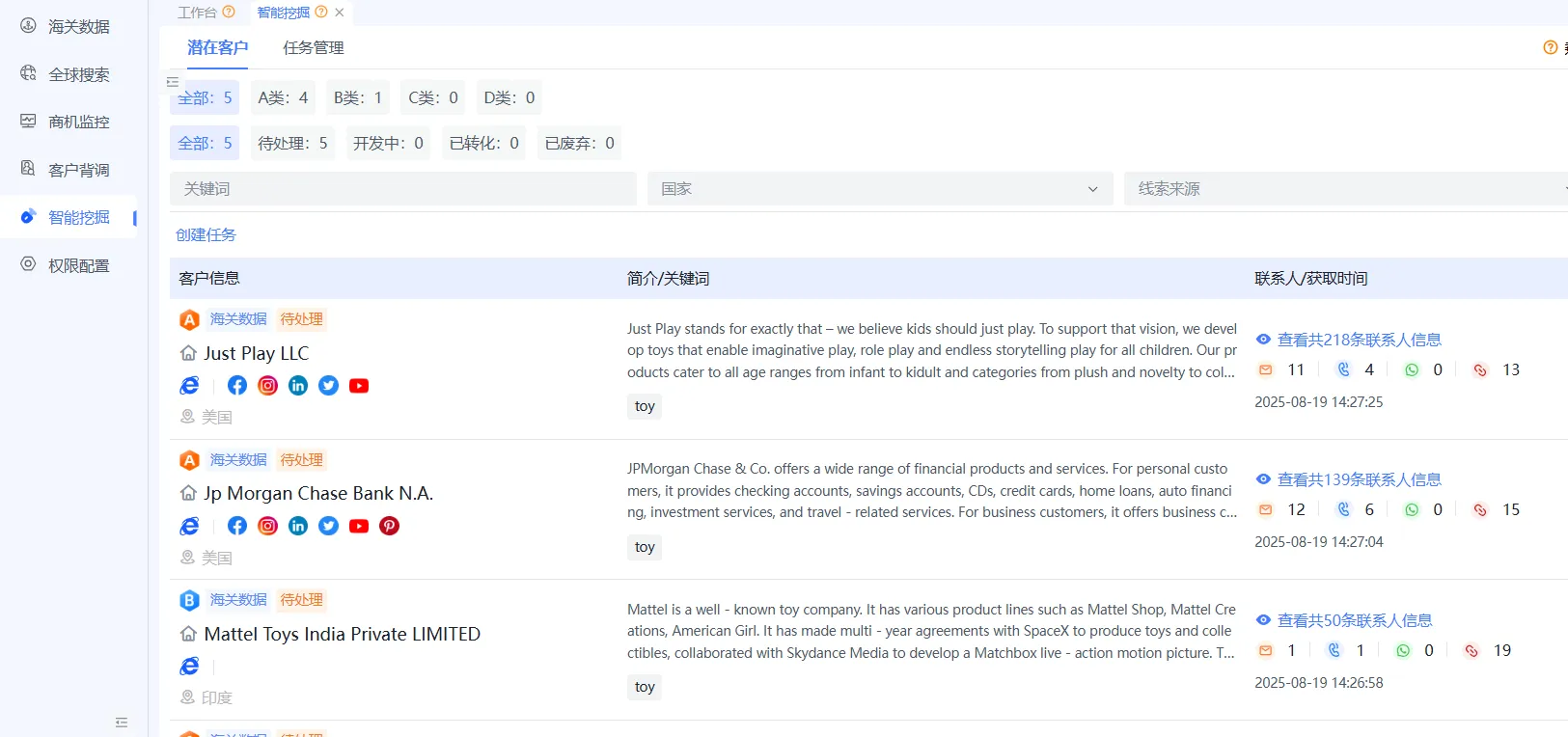
Struggling to identify high-potential B2B buyers from a global database of 200M+ companies? This guide reveals a proven 3-step framework—initial filtering, AI-driven purchase prediction, and external signal validation—that helps you cut 80% of manual lead screening time. Learn how real exporters boosted conversion rates by 40% using data cleaning, standardized fields, and automated scoring logic—turning 'findable' leads into 'actionable' opportunities.
How to Use AI to Predict B2B Buyer Behavior — A 3-Step Framework That Works
You’re not alone if you're drowning in a sea of 200M+ global company records and still struggling to find buyers who actually convert. Most exporters waste 60–70% of their time contacting leads that won’t buy — not because they lack effort, but because they lack insight.
Here’s the truth: high-intent B2B buyers don’t just appear randomly. They follow patterns. And with AI-powered tools, you can now predict those patterns — before they even place an order.
Step 1: Filter Out Noise — Start with What You Know
Begin by eliminating low-potential prospects using three core filters:
- Industry Tag Match: Only target companies actively buying your product category (e.g., “plastic injection molding machines” vs. generic “industrial equipment”).
- Revenue Range: Focus on firms with annual revenue between $5M–$50M — large enough to scale orders, small enough to be agile.
- Purchase History: Exclude companies that haven’t bought similar items in the past 12 months — no history = no urgency.
This initial clean-up reduces your list from 10,000 to ~1,500 qualified leads — saving up to 80% of manual screening time.
Step 2: Predict Next Purchase — Leverage AI Models
Now comes the magic. Feed your filtered data into an AI model trained on historical purchase cycles, seasonal trends, and new product launches. For example:
| Company Type | Avg. Purchase Cycle | AI Prediction Accuracy |
|---|---|---|
| Mid-sized OEMs | 4–6 months | 82% |
| Distributors | 2–3 months | 78% |
These models learn from thousands of real-world transactions — giving you a clear signal: when to reach out, what message resonates, and how urgent the opportunity really is.
Step 3: Validate Activity — Don’t Just Predict, Confirm
Finally, cross-check with external signals:
- Website updates (new product pages or blog posts)
- LinkedIn activity (job postings for procurement roles or expansion news)
- News mentions (press releases about funding or factory openings)
One client saw a 40% increase in conversion rate after adding this layer — because they stopped chasing ghosts and started engaging with active buyers.
Case Study: A Chinese automation parts supplier used this method to identify 32 high-potential buyers in the EU. Within 90 days, 12 signed MOQ trials — all sourced via automated lead scoring and triggered outreach.
This isn't theory. It's been tested across industries — from machinery to packaging, chemicals to electronics. The result? Less guesswork, more predictable pipeline growth.
Ready to Turn Data Into Deals?
Stop wasting time on cold leads. Let AI do the heavy lifting — so you can focus on closing.
Get Your Free AI Lead Scoring Template


