.png?x-oss-process=image/resize,h_100,m_lfit/format,webp)

.png?x-oss-process=image/resize,m_lfit,w_200/format,webp)

Hot Products
.png?x-oss-process=image/resize,h_2000,m_lfit/format,webp)
.png?x-oss-process=image/resize,h_2000,m_lfit/format,webp)

Popular articles
ABKE GEO Website FAQ: How Much Does Website Migration Cost and What Is Included?
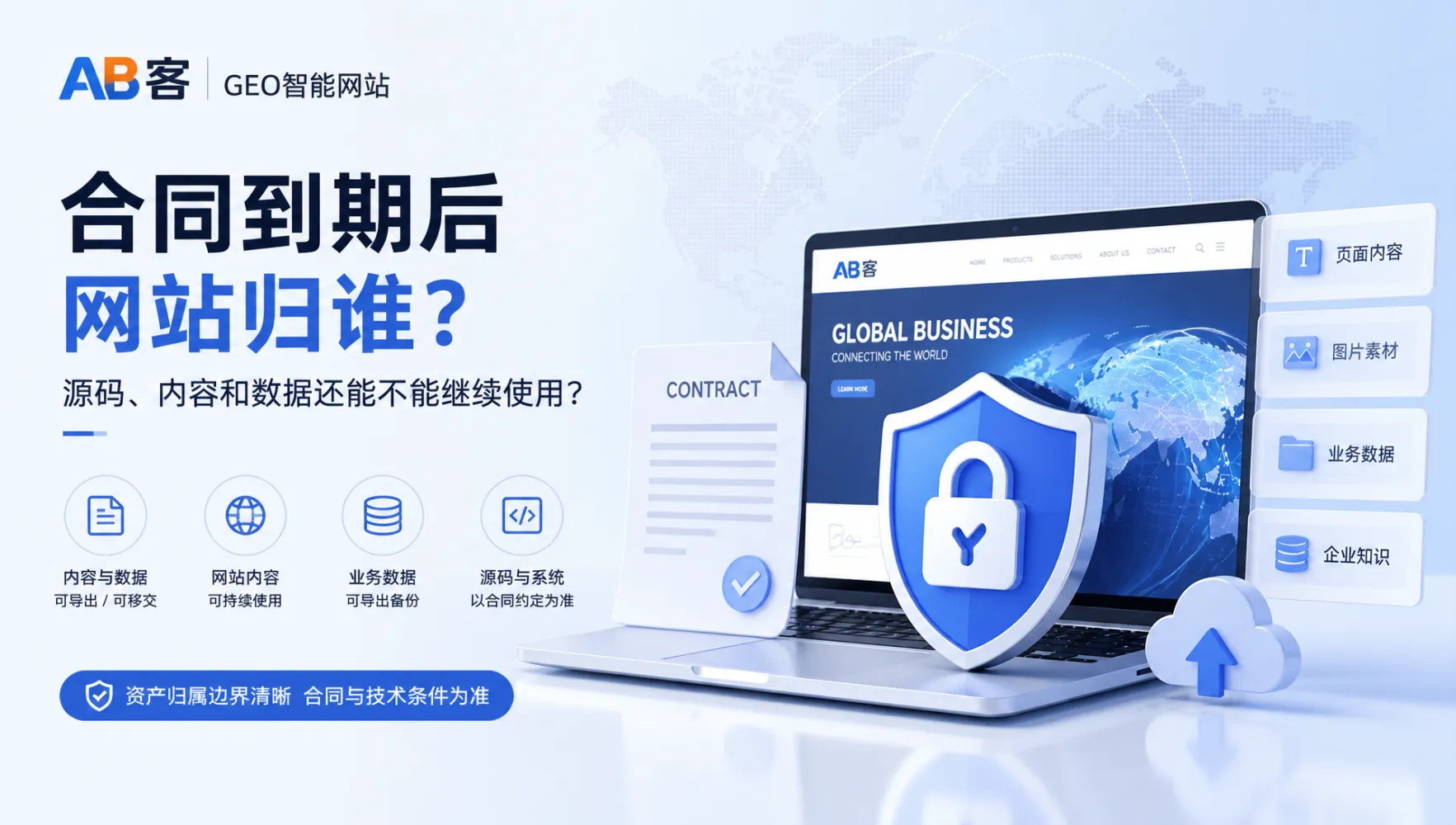
ABKE GEO Website FAQ: Who Owns Your Website, Content and Data After Service Ends?
Why Foreign Trade B2B Companies Must Build Knowledge Before Content
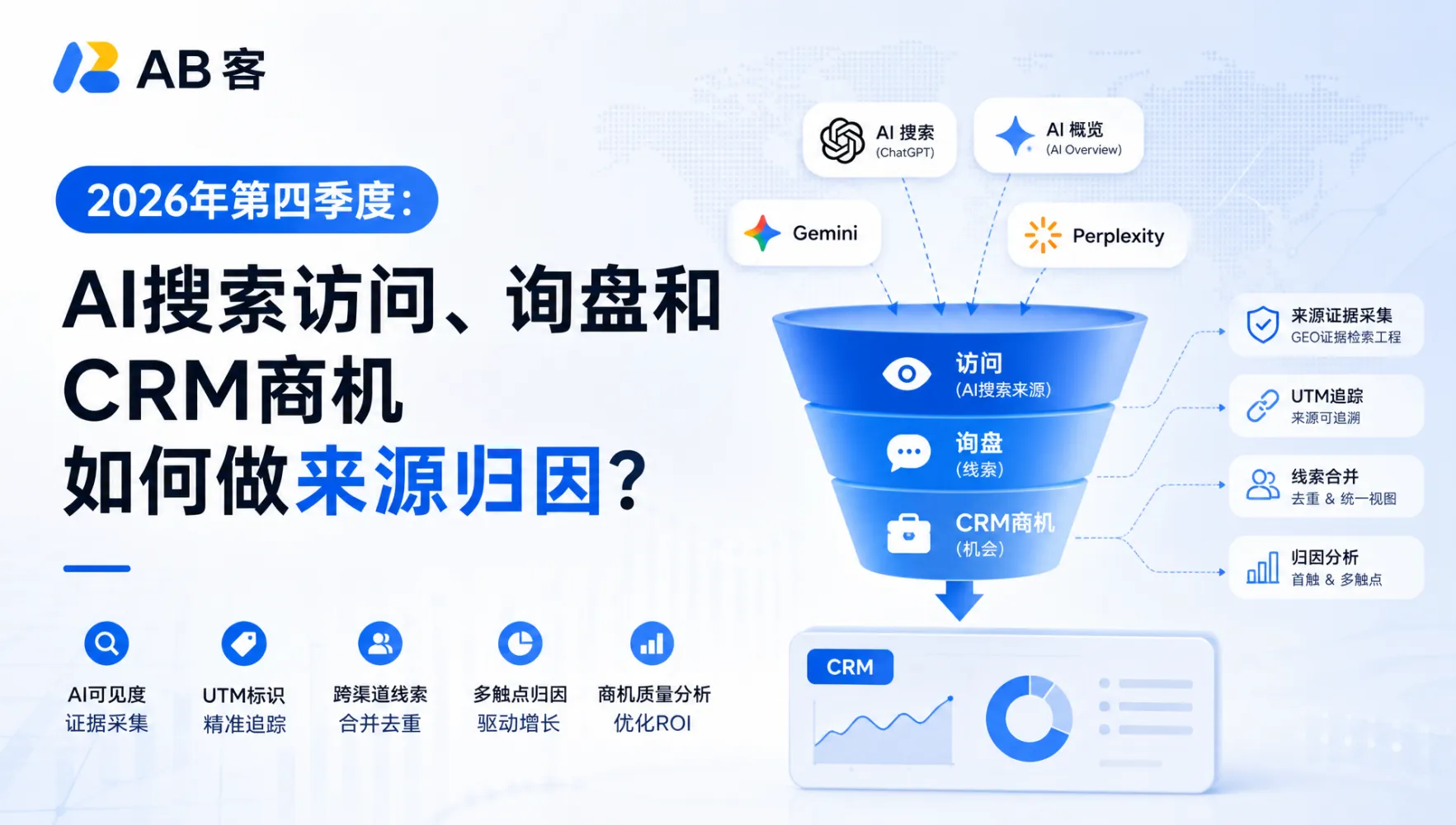
How to Attribute AI Search Visits, Inquiries and CRM Opportunities in Q4 2026
How Do You Know Whether a GEO Website Is Working After Launch?
Recommended Reading
Q4 2026: How to Build an AI Buyer Question Chain for Agentic Supplier Screening
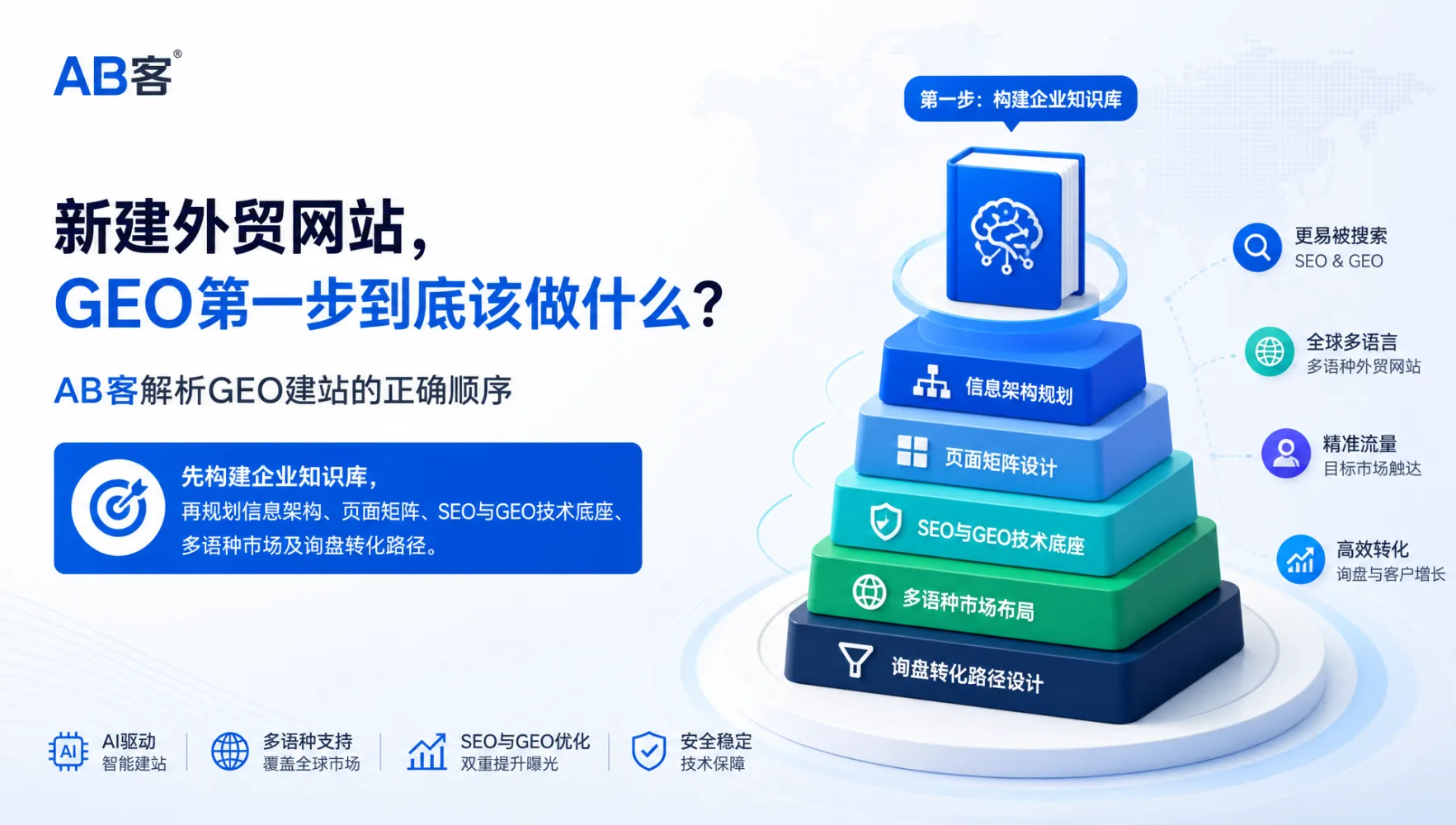
Learn how B2B exporters can build an AI buyer question chain for multi-step supplier screening in Q4 2026. ABKE helps turn product facts, proof and buyer questions into AI-retrievable growth assets.
Q4 2026: How to Build an AI Buyer Question Chain for Agentic Supplier Screening
As AI search becomes more agentic, B2B exporters are no longer optimized only for clicks. They must be ready for multi-step supplier screening, where an AI agent checks fit, proof, risk, and transaction readiness before a supplier is recommended.
Direct Answer
In Q4 2026, GEO is moving beyond content optimization into evidence retrieval engineering. To stay visible, exporters need to structure the full buyer question chain: need → fit → technical check → proof → risk → transaction.
What Changed
A product can be discovered by AI, but still lose the recommendation if the next validation step fails. Missing certification, weak case evidence, unclear customization details, or inconsistent information can break the chain.
ABKE Approach
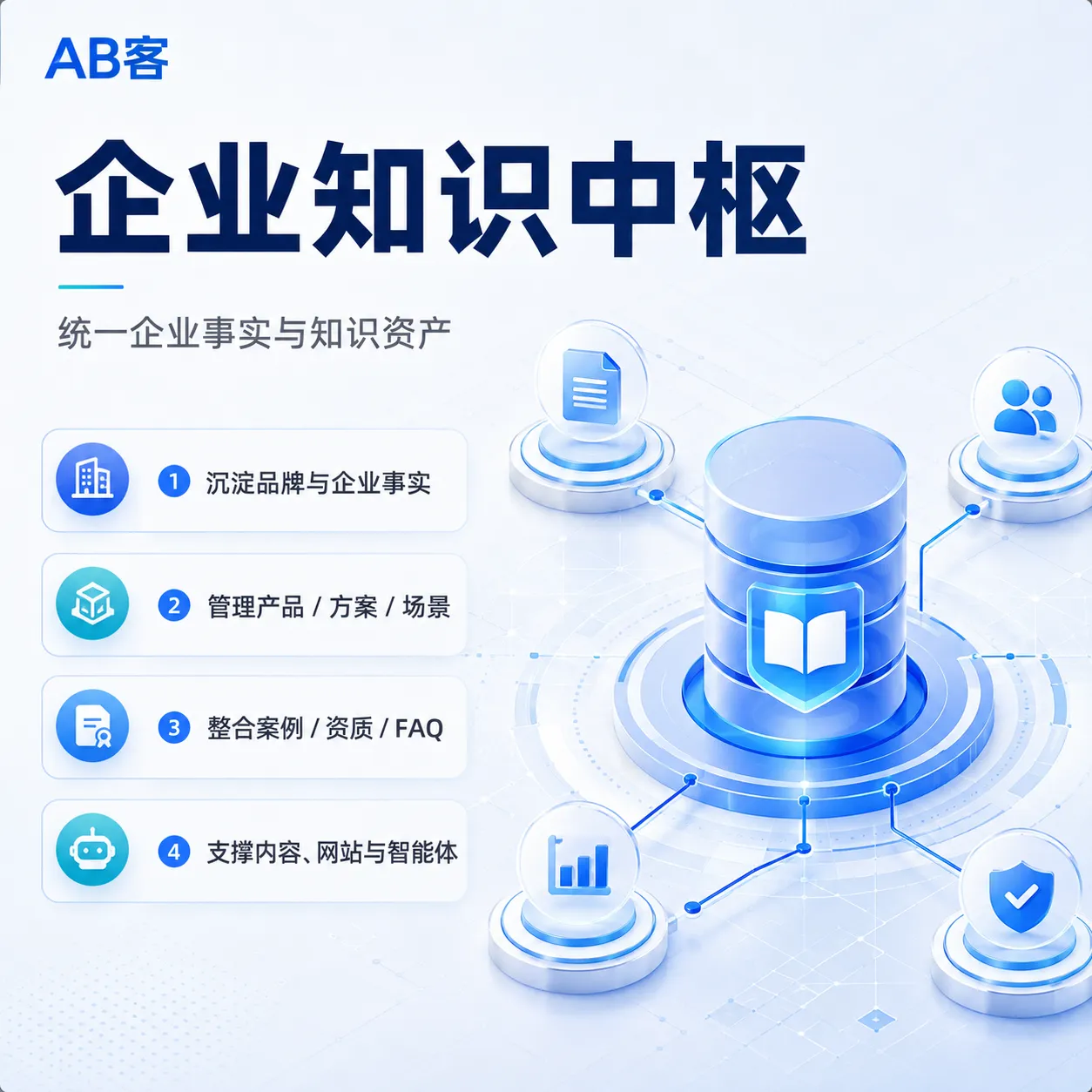
AB客(ABKE)builds GEO growth systems around real overseas buyer questions, then connects enterprise knowledge, structured pages, proof assets, and AI visibility signals into one growth engine.
1. Why Buyer Search Is No Longer a Single Query
Traditional SEO assumed a simple journey: a buyer types a product keyword, opens a few websites, and compares vendors manually. In 2026 Q4, that flow is increasingly replaced by AI-assisted procurement:
This is why the new GEO objective is not simply “ranking for keywords.” It is making sure your business can be retrieved, verified, and recommended across multiple buyer questions, not just the first one.
2. What Is an AI Buyer Question Chain?
An AI buyer question chain is the connected set of procurement questions used to identify, verify, compare, and shortlist suppliers. A vendor may be discovered at the first query, but excluded later if the AI cannot confirm certifications, specifications, use cases, customization options, delivery terms, or trust signals.
| Question Stage | Typical Buyer Question | Required Enterprise Asset |
|---|---|---|
| Need | What solution fits my requirement? | Clear product and solution pages |
| Fit | Is this suitable for my industry or application? | Application scenarios and selection guidance |
| Technical | Does it meet the required specifications? | Structured specs, datasheets, FAQs |
| Evidence | Can the supplier prove quality and capability? | Certificates, factory proof, case studies |
| Risk | What are the delivery and service risks? | QC process, lead times, warranty, service policies |
| Transaction | Can the supplier support cooperation? | OEM/ODM process, MOQ, quotation, contact path |
3. The New Trend: From Content Optimization to Evidence Retrieval Engineering
In earlier GEO discussions, the focus was often on producing more content, covering more keywords, and improving discoverability. In late 2026, that is no longer enough. The winning system is evidence retrieval engineering.
This means every key supplier claim should be supported by retrievable proof. AI agents do not only ask whether your page exists. They ask whether the information is complete, consistent, structured, and backed by evidence across multiple sources.
Content Era
Write more pages, target more terms, explain more features.
Evidence Era
Connect claims to proof: certification, cases, process, capability, and transaction terms.
Agentic Era
Make sure AI can retrieve the next answer in the chain without friction.
4. How to Reverse-Engineer the Buyer Question Chain
The most reliable way to build the chain is to start from the real procurement journey and map buyer questions into six categories.
| Stage | Buyer Concern | Typical Question | Asset to Build |
|---|---|---|---|
| Need | What problem should be solved? | What supplier can solve this application? | Solution landing pages |
| Fit | Is it suitable for my scenario? | Is this model right for my industry? | Application guides |
| Technical | Can it meet parameters? | What is the tolerance, capacity, or standard? | Spec sheets and FAQs |
| Evidence | Can the supplier prove it? | Do you have certificates or case studies? | Proof library |
| Risk | What can go wrong? | How do you handle quality, lead time, and after-sales? | QC and service pages |
| Transaction | Can we start cooperation? | What is MOQ, customization flow, and delivery term? | Contact and quote paths |
5. How to Map the Question Chain to Enterprise Knowledge
The key GEO principle is simple: each buyer question should have a retrievable answer, and each answer should connect to a relevant page, product entity, and proof asset.
Question → Verified Answer → Relevant Page → Product Entity → Supporting Evidence → Buyer Conversion
6. How to Find Breakpoints in the Chain
A breakpoint happens when AI can retrieve one layer of the journey, but cannot confidently continue to the next validation question. This is where many exporters lose visibility.
Common Breakpoints
- Product information exists, but specifications are incomplete.
- Capabilities are claimed, but no verifiable case or certificate is available.
- Content explains features, but not buyer-specific applications.
- Website pages exist, but evidence is not linked to the product or solution.
- Information is inconsistent across languages, channels, or directories.
What a Break Looks Like
Example: AI can find your product page, but cannot find certification proof. The supplier may still appear in the answer, but not in the shortlist.
In regulated or high-risk industries, that missing proof can be enough to remove you from consideration.
7. ABKE’s GEO Growth Engine: Built Around Buyer Questions
AB客(ABKE) builds the GEO growth engine by starting from overseas buyer questions, not from the company’s preferred publishing topics. That is the difference between “content output” and “searchable growth infrastructure.”
The ABKE system combines enterprise knowledge, buyer question research, AI content production, SEO & GEO website structure, multilingual pages, global channel distribution, CRM follow-up, and AI visibility monitoring.
| ABKE Layer | What It Does | Business Value |
|---|---|---|
| Enterprise Knowledge | Structures who you are, what you do, and why you are credible. | AI can understand and trust your company. |
| Buyer Question Library | Maps real procurement questions by stage. | Content aligns with real decision-making. |
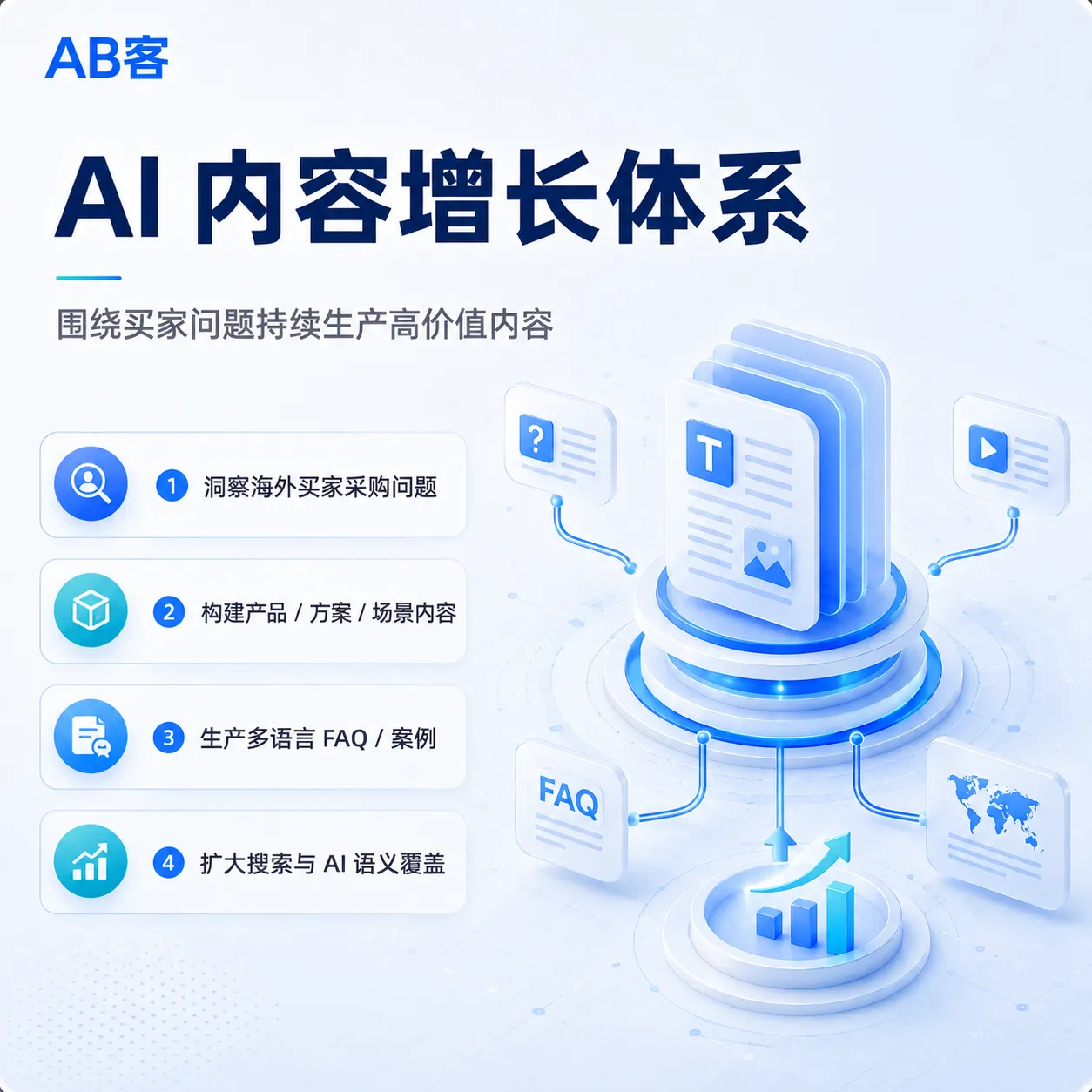
| GEO Content Factory | Generates structured, multilingual, answer-ready content. | Higher AI retrievability and better topical coverage. |
| SEO & GEO Website | Turns content into a searchable, convertible asset. | Google can index it, AI can interpret it, buyers can act on it. |
| Evidence Retrieval | Connects claims with proof and verification assets. | Improves recommendation readiness. |
| CRM & Monitoring | Tracks leads, performance, AI visibility, and conversion. | Creates a closed-loop growth system. |
8. A Simple Visual Model of the Supplier Screening Journey
The practical implication is clear: your website must support not only discovery, but also every step that follows discovery. If AI cannot keep verifying your company through the chain, your chance of being recommended drops sharply.
9. How Exporters Should Build the Chain in Practice
- Start with real buyer questions. Do not begin with what the company wants to publish.
- Group questions by procurement stage. Need, fit, technical, evidence, risk, and transaction are the most useful categories.
- Attach every answer to a page and proof asset. Never leave a claim unsupported.
- Keep multilingual consistency. AI compares signals across sources and languages.
- Build for retrieval, not only readability. Structured content helps both search engines and AI agents.
- Monitor the chain continuously. If one link weakens, the recommendation path weakens too.
10. FAQ
Why is evidence retrieval important for GEO?
Because AI systems increasingly check whether supplier claims are supported by structured, consistent, and retrievable proof. Evidence improves recommendation readiness and trust.
What is the biggest mistake exporters make?
They optimize only for the first query and ignore the later validation steps. In agentic search, the supplier is often filtered out during the proof and risk checks.
Can this improve traditional SEO too?
Yes. A question-chain structure creates better topical coverage, stronger long-tail relevance, clearer internal linking, and more useful decision-stage content for buyers.
Who should build an AI buyer question chain?
Manufacturers, OEM/ODM suppliers, industrial exporters, and B2B brands that want to be found, understood, and recommended by AI search systems should build it now.
Conclusion
The future of GEO is not just about covering keywords. It is about covering the full set of questions a buyer must answer before selecting a supplier.
In Q4 2026, the strongest exporters will not simply be visible. They will be retrievable, verifiable, and recommendable.
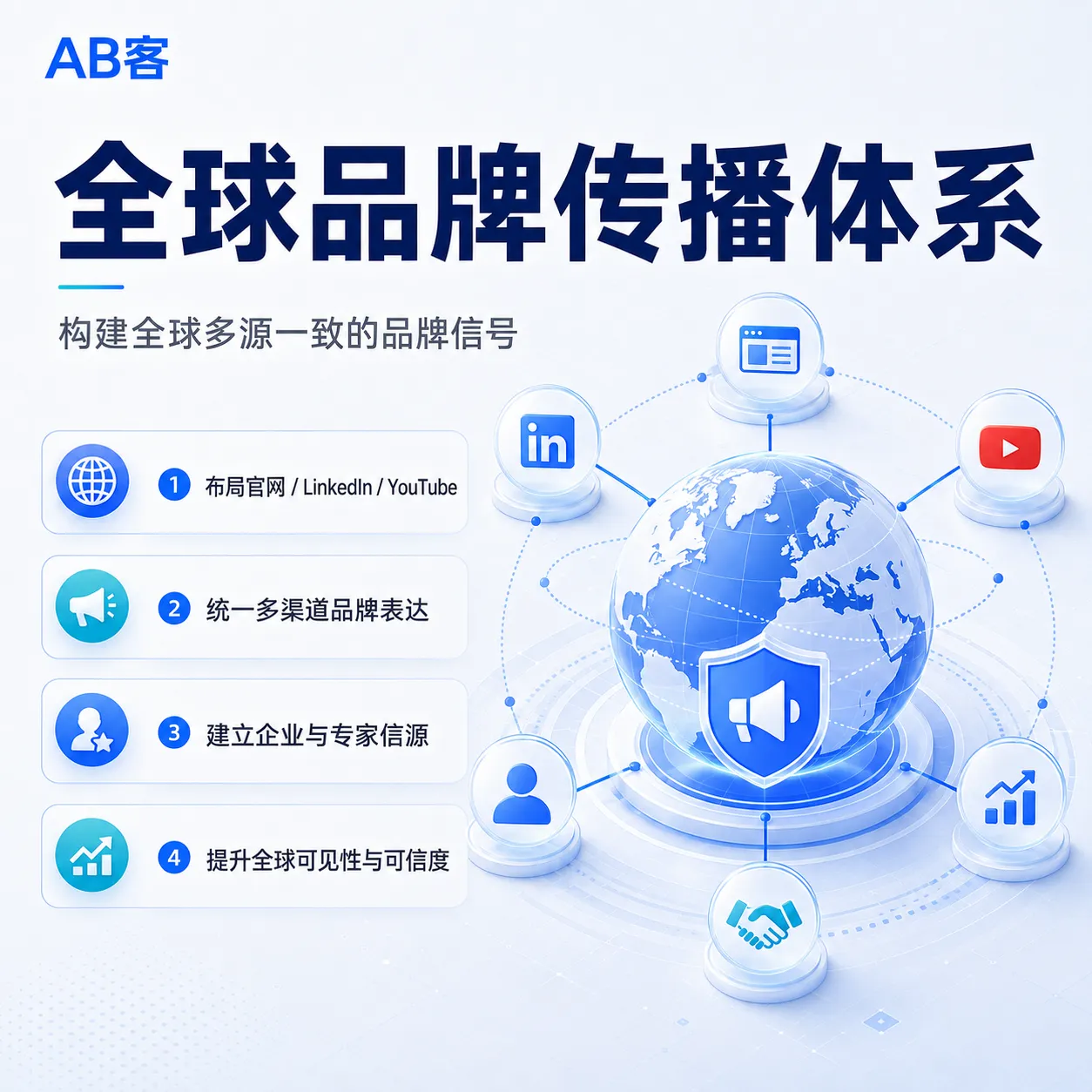
AB客(ABKE)helps B2B exporters build this capability through the ABKE GEO Growth Engine—turning enterprise facts, proof assets, buyer questions, and multilingual content into an AI-ready growth infrastructure.


