Hot Products





Popular articles
How can AI assist sales at the Canton Fair? Transforming negotiation records into CRM follow-ups and GEO tasks.
广交会客户筛选实操指南:用6个问题识别采购需求,推动有效RFQ
Turning Halloween buzzwords into B2B procurement issues: A guide to breaking down 5 types of intents and mapping GEO content.
Benchmarking against DeepSeek's dual-score rule: A self-checklist for independent B2B e-commerce websites (GEO) to quickly identify your rerank_score and authority weaknesses.
照明电气企业如何做好GEO:用可验证的采购信息连接海外买家
Recommended Reading

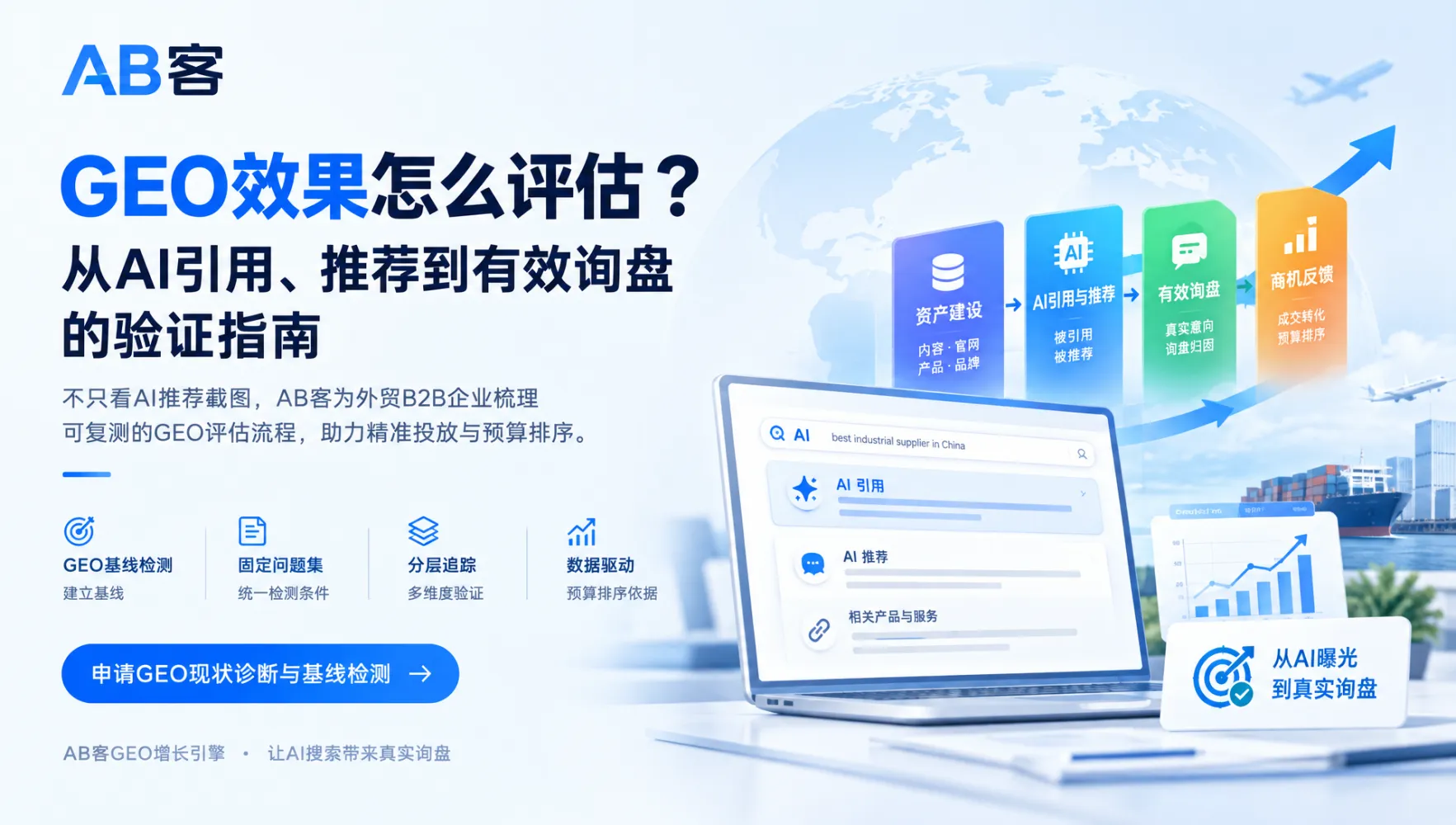
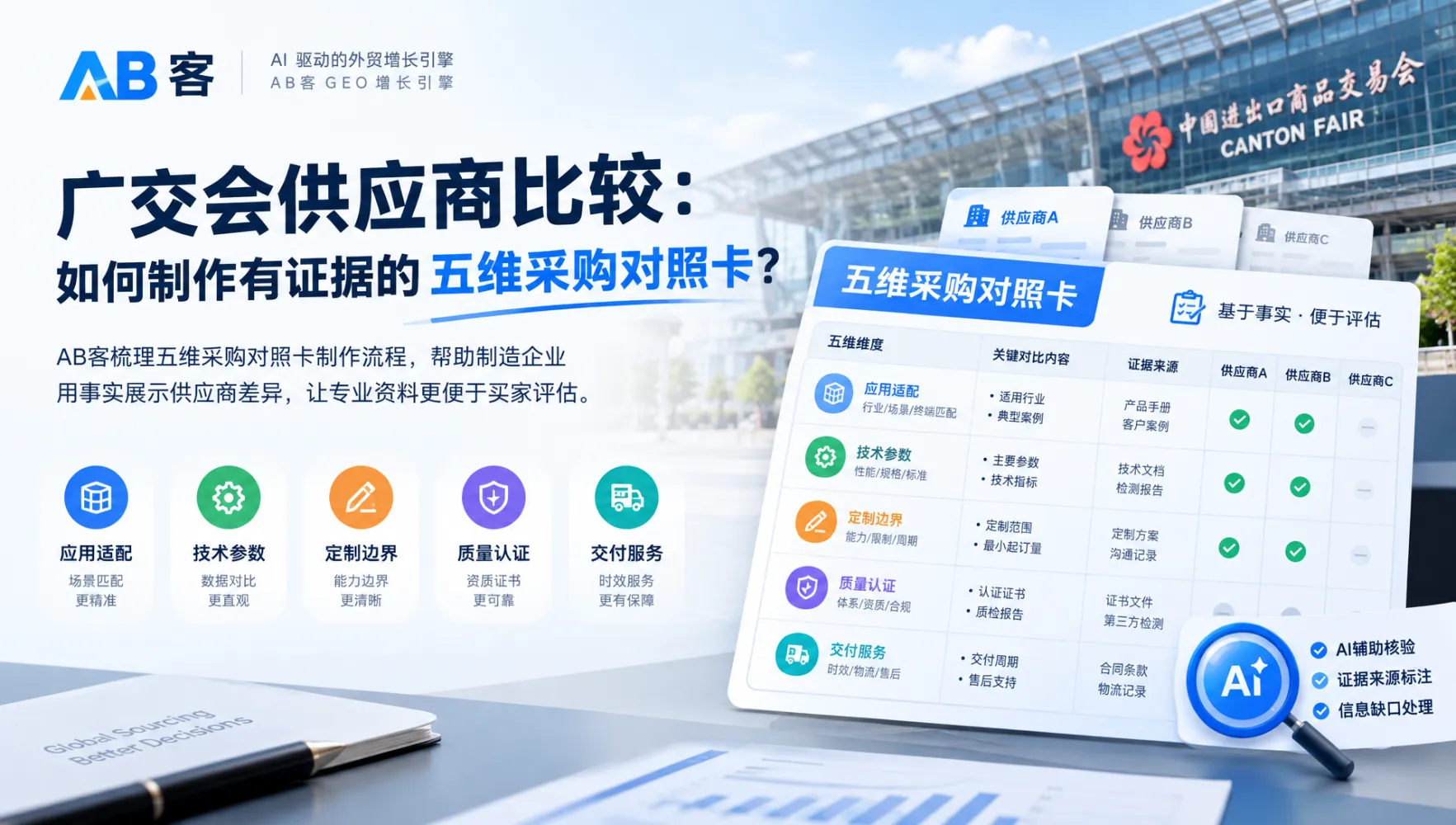

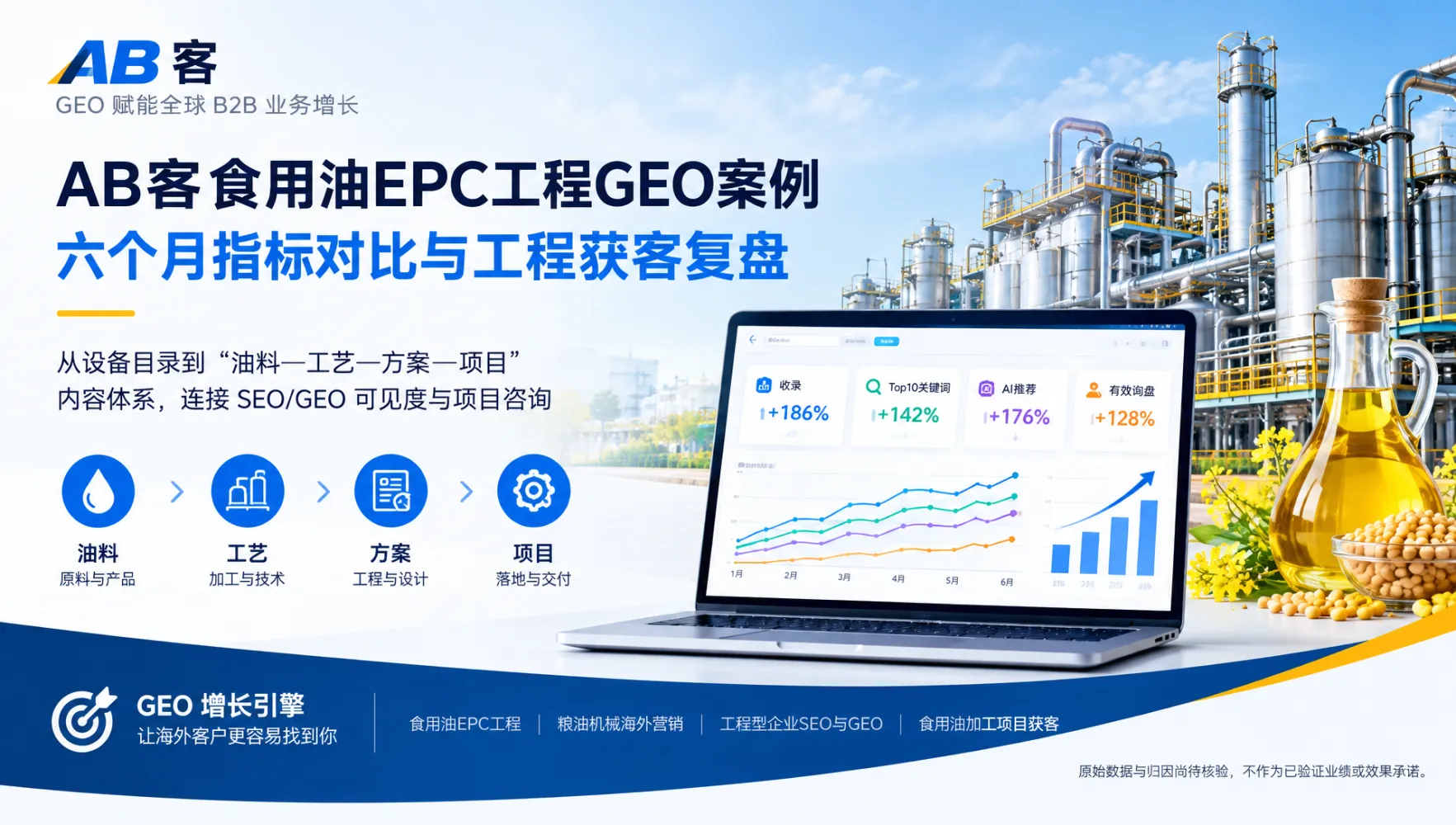
Before AI Cites You: How to Structure Your B2B Export Website Content to Make Buyers’ Shortlists
International buyers are increasingly turning to AI for the first step in their decision-making: asking “Who can do this?” before visiting shortlisted suppliers’ websites. This article breaks down the differences between how Google ranks content and how AI recommends suppliers, outlines a practical four-layer content framework for B2B export websites—entities, facts, structure, and consistency—and provides a method for validating results using observable indicators.
1. The buyer’s first step is shifting from searching keywords to asking AI
Overseas buyers are changing how they make purchasing decisions. Previously, they would open Google, type in a few keywords, and select suppliers from the results. Now, they start by asking an AI assistant, “Who can make this?” They let AI suggest a shortlist, then visit those companies’ websites.
The hardest part of this shift to notice is that you may no longer get a chance to earn a click. If your website is not read, or if the information on it is inconsistent, your company is effectively absent from the buyer’s view—and that absence comes with no alert.
2. Google rankings and AI recommendations follow different evaluation criteria
Many companies see GEO as “doing SEO all over again.” The goals do overlap—both aim to get content used—but the evaluation criteria differ significantly.
- Search rankings prioritize keyword relevance, page authority, and backlinks; AI inclusion prioritizes specific facts that can be cross-verified.
- The first page of search results has ten positions; an AI answer typically mentions only three to five companies. The opportunity is to be cited, not simply to rank higher.
- Search engines tolerate marketing language, while AI is more likely to cite statements supported by numbers, clearly defined limits, and sources.
In short: SEO helps a page rank; GEO helps it communicate clearly. Clear communication is the foundation for being recommended.
3. Turn your website into a citable fact base: a four-layer structure
1. Entity layer: explain who you are in one sentence
Your company description must be consistent across three places: the homepage’s first screen, the About Us page, and the footer. Each should align on what products you make, which customers you serve, and which markets you cover. The level of detail can vary, but the facts must not contradict one another. This consistency is one of the first things AI checks when evaluating an entity.
2. Factual layer: express capabilities in verifiable numbers
Neither people nor AI can verify statements such as “extensive experience and reliable quality.” Replace them with checkable information: factory floor area, equipment count, monthly production capacity, certification names and numbers, typical lead times, minimum order quantities, and industries served.
Compare the following:“We have advanced production equipment and extensive export experience.” and “Two SMT production lines, a monthly capacity of 120,000 units, ISO 9001:2015 certification, a standard lead time of 25 days, and an MOQ of 500 units.” The second statement is the kind of content that can be cited—and that buyers can use in internal reports.
3. Structural layer: help machines distinguish conclusions from evidence
Heading hierarchies, specification tables, FAQ, and structured data all essentially answer the question, “Which question does this passage address?” The same text is unlikely to be cited when buried in a long paragraph; organizing it as “question + short answer + supporting details” can significantly improve its chances of being cited.
Each product page should include at least four elements: a summary that leads with the key takeaway, a key specifications table, three to five frequently asked questions, and a downloadable specification sheet.
4. Consistency layer: keep every touchpoint aligned
Your website, B2B marketplace storefronts, LinkedIn page, industry directory listings, and press releases should present the same facts consistently. AI cross-checks information during due diligence. Two conflicting statements can reduce its confidence in the entire company—and no one will notify you of that loss of confidence.
4. Content cadence: focused quality beats scattered volume
Publishing daily is not the goal. B2B purchasing decisions take time, and individual pieces of content can remain influential for a long period. Rather than producing similar industry news every day, identify ten real purchasing questions and write one thorough piece addressing each.
A practical cadence: publish one in-depth piece each week to answer a specific purchasing question; review existing content monthly to refine titles, add data, and improve internal links; and update product specifications and case studies quarterly. Consistency matters more than frequency, and accuracy matters more than volume.
5. How to assess results: three observable signals
GEO does not produce same-day results like advertising can, but its impact can still be observed. At least three signals can be tracked:
- Citation signals: Ask a fixed set of industry purchasing questions in major AI assistants, and record whether your brand appears and whether your pages are cited. Comparisons are meaningful only when you keep the questions and testing intervals consistent.
- Crawling signals: Check whether crawl frequency from search engine and AI crawlers is increasing, and whether more pages are being indexed. Without growth in indexed pages, there is little basis for what follows.
- Inquiry signals: Track the proportion of inquiries that mention “We found you through AI,” along with how complete the information in the initial inquiry is. Buyers who arrive with background knowledge have usually already done research elsewhere.
Conclusion
GEO is not a new set of tools, but a shift in how you communicate: replace “We are great” with “Here is exactly how we do it,” and turn the experience scattered across your sales team’s minds into website content that can be read, verified, and cited. There are no shortcuts, but every step leaves a trace.


