Hot Products



Popular articles
How to Build Traceable Records for GEO Content Publishing, Review and Optimization in Q4 2026
Q4 Procurement Peak: How Can Your B2B Company Get on AI Supplier Shortlists?
What to Do When Trade Show Leads Stop Replying: Turn One Meeting Into Ongoing Buying Touchpoints with GEO
How to Attribute AI Search Visits, Inquiries and CRM Opportunities in Q4 2026
Recommended Reading
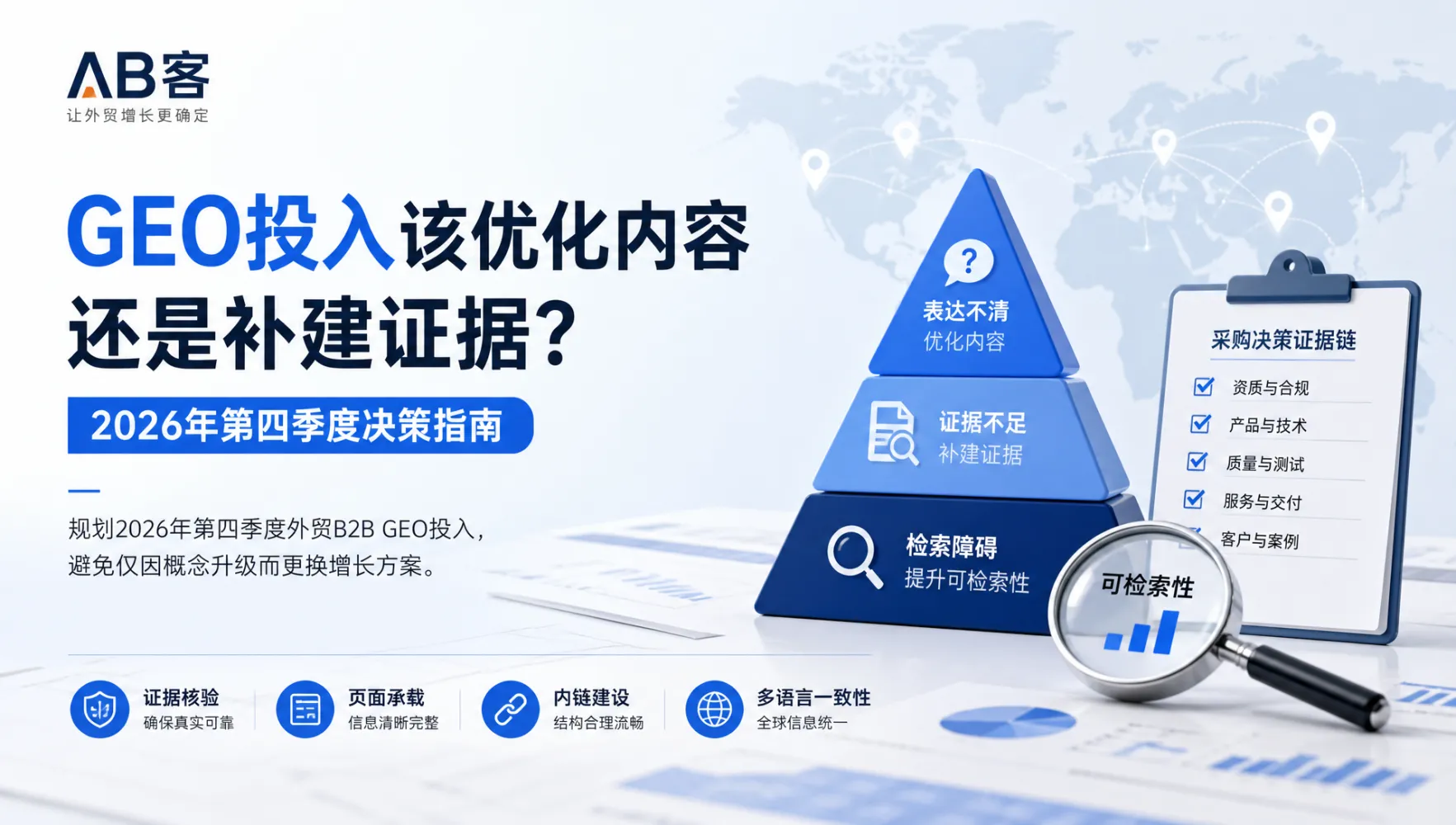
Retrievable Evidence Does Not Guarantee AI Recommendation
Evaluate ABKE GEO Growth Engine by distinguishing access, indexing, AI citation and recommendation, with verifiable evidence, monitoring criteria and acceptance boundaries.
ABKE GEO GROWTH ENGINE EVALUATION
A page that AI can retrieve is not necessarily a source AI will cite—or a supplier AI will recommend.
For B2B exporters evaluating ABKE GEO Growth Engine, this distinction matters. Accessible pages, structured knowledge, search indexing and crawler activity provide useful evidence about technical readiness and discoverability. They do not, by themselves, demonstrate accurate AI understanding, source citation, supplier recommendation or customer conversion.
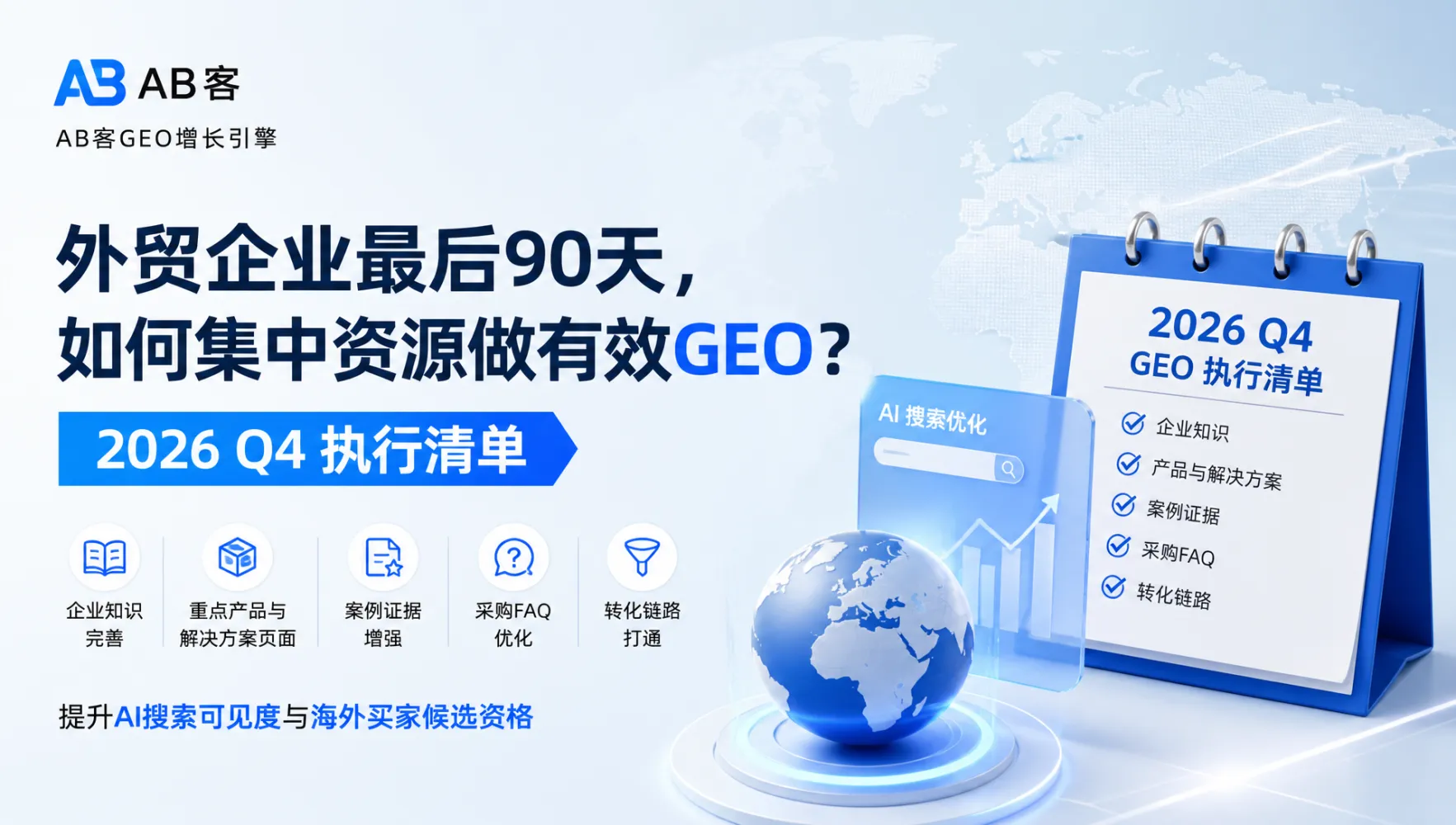
ABKE GEO Growth Engine is an enterprise-level GEO platform that connects enterprise knowledge, product agents, task workflows, content, websites, channels and growth data. Its evaluation should follow the same discipline: verify what the system delivers, observe what external platforms actually do, and keep those findings separate.
Different evidence answers different questions
GEO—Generative Engine Optimization—supports the discovery, interpretation and potential use of enterprise information in AI-generated answers. Evaluation requires more than a single “AI-ready” label. Each evidence state answers a different question.
Page access and structured data
What they show: a page is accessible under the tested conditions, and its structured data passes the relevant checks. What they do not show: that an AI platform has retrieved the page, interpreted it correctly, or selected it for an answer. Structured data should also match the visible content; technical validity alone does not establish factual accuracy.
Search indexing and crawler records
What they show: indexing evidence indicates inclusion in a particular search engine’s index at the time checked; verified crawler records indicate requests to particular resources. What they do not show: guaranteed search visibility, AI citation, model training inclusion or supplier recommendation. A crawler request is evidence of access—not proof of how the retrieved content was used.
Brand mention, source citation and explicit recommendation
A brand mention shows that the brand appears in the recorded answer. A source citation shows that the answer identifies a particular source. An explicit recommendation requires wording that positions the company or product as a suitable choice for the stated need.
These outcomes can occur independently. An answer may cite a technical article without recommending its publisher. It may recommend a supplier without citing that supplier’s website. A mention in a warning or comparison is not automatically a positive recommendation.
Technical evidence and AI-answer evidence must be verified separately; neither should be substituted for the other.
How ABKE connects execution with evidence
ABKE GEO Growth Engine uses a brand workspace, product agents, task sessions and a data feedback loop to organize growth work. This architecture supports traceable execution without treating external AI behavior as a controllable deliverable.
- Brand workspace: establishes enterprise facts, positioning, product capabilities, trust evidence, language rules and review boundaries. These provide a consistent reference for content and agent responses.
- Product agents: organize product knowledge, buyer needs, SEO keywords, GEO questions and content tasks around a particular product or solution.
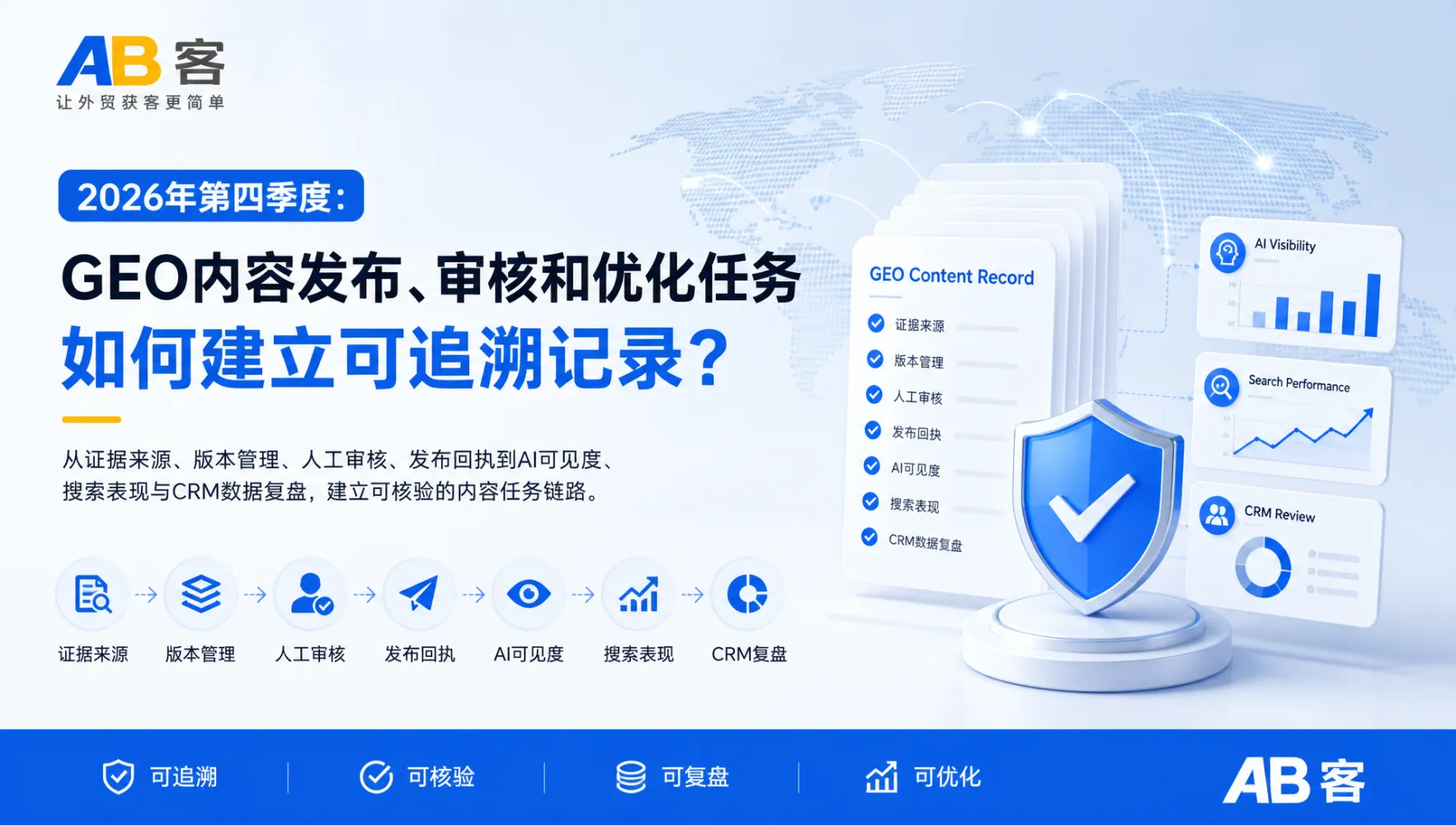
- Task sessions: connect objectives, source material, execution steps, human review, publication records and follow-up analysis.
- Data feedback: brings search performance, observed AI visibility, inquiries and CRM feedback into subsequent optimization tasks, within the available data and agreed monitoring scope.
The practical value is a repeatable process: enterprise facts become managed content assets, published assets receive technical checks, and observed outcomes inform the next task. This is not a mechanism for controlling AI answers.
Build a repeatable AI visibility evaluation
Agree on the test protocol before interpreting results. A favorable screenshot from one prompt is evidence of one observed answer—not evidence of consistent recommendation across markets or platforms.
- Define the scope. Specify target markets, languages, AI platforms, product lines and buyer decision stages. Record relevant test conditions, including date, interface, model label when available, and whether web search was enabled.
- Fix the question set. Use agreed buyer questions covering technical fit, supplier evaluation, delivery concerns and selection criteria. Keep branded and non-branded questions separate: asking directly about ABKE or a supplier does not demonstrate discovery from an unbranded procurement question.
- Retain the complete evidence. Save the exact prompt, full answer, cited URLs and test conditions. Check whether cited pages support the claims made about the enterprise.
- Classify each outcome. Record brand mention, source citation, explicit recommendation and factual accuracy separately. Note incorrect capabilities, unsupported claims and negative or conditional references.
- Repeat and report variation. Repeat the agreed tests over time. Include answers with no mention, no citation, no recommendation or conflicting information. If reporting rates, state the numerator, denominator, test window and inclusion rules.
Monitoring boundary: findings describe the sampled questions, platforms and conditions. They should not be presented as complete visibility into every AI system, user session or underlying retrieval process.
A fixed protocol makes observations comparable while preserving unsuccessful and variable outcomes.
Set acceptance boundaries before deployment
For an ABKE GEO Growth Engine project, separate deliverable acceptance from external performance monitoring and commercial results.
Accept agreed system and content deliverables
Check the contracted knowledge structure, approved product facts, content and pages, language versions, website configuration, publishing records, task history and reporting outputs. Acceptance should specify completeness, accuracy, review requirements and technical checks—not merely the number of generated pages.
Track external visibility as observed performance
Assess search indexing, organic visibility, AI mentions, citations, recommendations and answer accuracy using the agreed protocol. Distinguish monitoring coverage from universal coverage, and optimization objectives from guaranteed outcomes.
Evaluate inquiries and sales with attribution limits
Use available source records, inquiry quality, CRM stages and sales feedback to assess business relevance. Do not label every inquiry as AI-generated when the source is unknown. Customer qualification, pricing, delivery capability and sales execution also affect commercial results.
Enterprise knowledge and content are important assets, but access, export and ownership arrangements should be confirmed contractually. The underlying platform, public models, proprietary components and service processes do not automatically become customer-owned assets.
Turn evidence gaps into practical next steps
- Pages are accessible, but target questions produce no relevant citation: review buyer-question coverage, source usefulness and factual support. Do not assume accessibility alone will resolve the gap.
- The brand appears, but its capabilities are described incorrectly: check enterprise knowledge, product pages and external brand information for ambiguity or inconsistency.
- Content is cited, but the supplier is not recommended: inspect the procurement context and the evidence supporting product fit. Citation remains a valid observation, not an implied endorsement.
- Recommendations appear, but qualified inquiries remain limited: examine inquiry paths, market fit and sales follow-up. AI visibility is not equivalent to buyer intent or an order.
These are diagnostic directions, not proven causes. ABKE task workflows can organize the investigation, revisions, review and retesting so that each change remains traceable.
Keep deliverables, external visibility and commercial outcomes distinct, then use each evidence set to guide the appropriate action.
Start with an evidence-led evaluation brief
Before evaluating ABKE GEO Growth Engine, prepare your product facts, priority markets and languages, existing website and channel assets, representative buyer questions, and available inquiry or CRM records. Agree with ABKE on deliverables, review responsibilities, monitoring coverage and reporting criteria.
ABKE provides the system for sustained GEO execution and evidence-based optimization. Enterprise experts remain responsible for professional judgment and content confirmation, while sales teams remain responsible for commercial engagement. AI recommendation, search ranking, inquiries and sales depend on external platforms and business conditions; ABKE does not promise fixed outcomes in any of these areas.


