What is the recommendation logic of AI search?
In short, AI search doesn't just look at how many times keywords appear; it comprehensively judges whether your content truly answers the user's question, whether the information is credible, whether the expression is clear, and whether the structure is conducive to machine understanding . This is why, even with the same "product page," some company websites are more likely to appear in the answers of AI search tools like ChatGPT and Perplexity, while some pages, even with many keywords, are still difficult to be cited.
For B2B foreign trade companies, this essentially represents an evolution from traditional SEO to GEO (Generative Engine Optimization) . Through the AB Guest GEO methodology , companies can systematically optimize their website content, product pages, industry knowledge, and case studies, thereby increasing their chances of being recommended in AI search and enhancing brand exposure.
Let me first point out a key change: the recommendation logic for AI search and traditional search is now different.
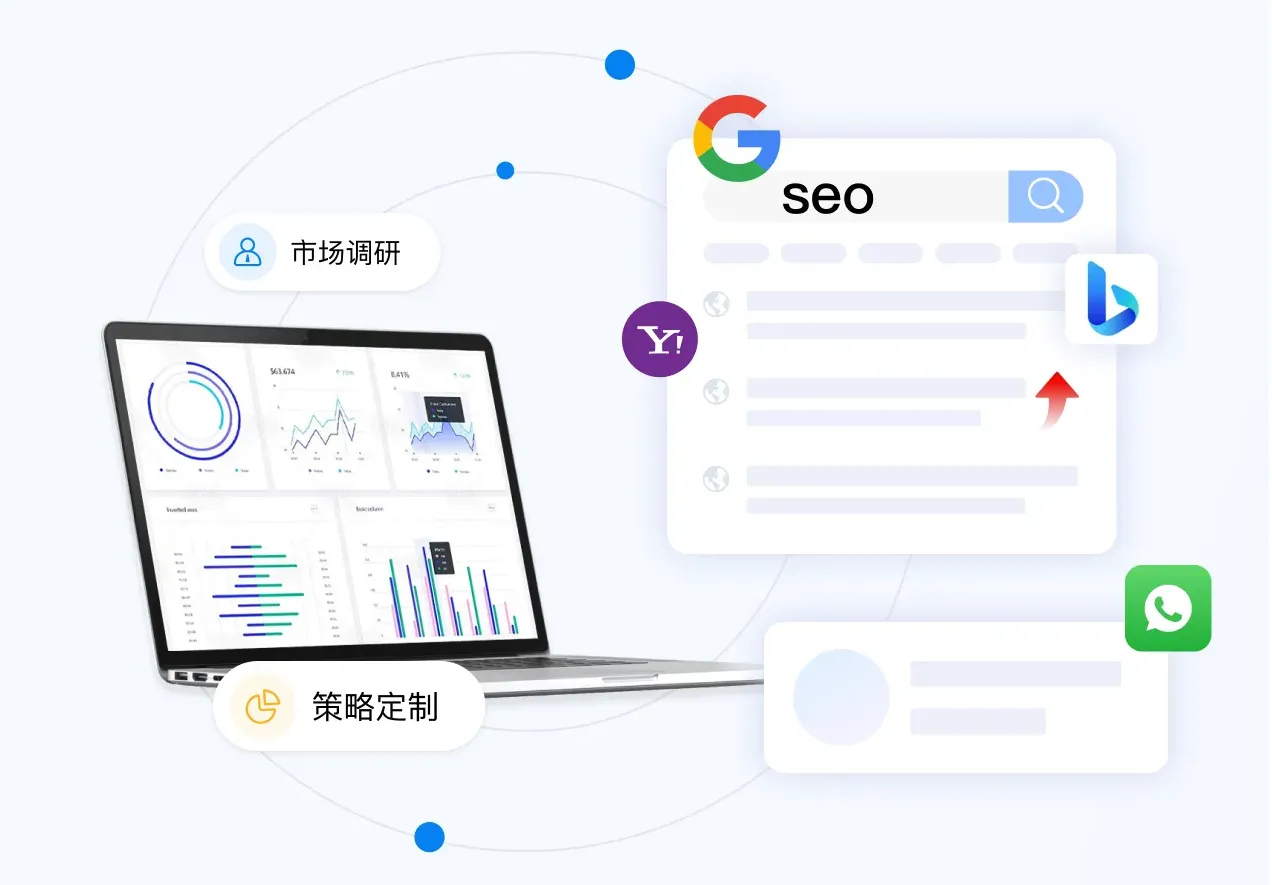
Traditional search engines are more focused on "retrieval"—you enter keywords, the system finds potentially relevant links from a massive number of web pages, and then sorts them by algorithm; while AI search is more focused on "understanding and integration"—it first tries to figure out what the user really wants, and then extracts the answer from multiple sources.
This means that for businesses to have their content recommended by AI, they can't just rely on "keyword stuffing" or "writing generic introductions." They need to build understandable, quotable, and trustworthy content assets. Many industry websites differentiate themselves at this stage.
What dimensions does AI search typically use to determine whether to recommend content?
Based on the current mainstream AI search workflows, recommendation logic typically revolves around the following core factors. Although the model architecture and data sources differ across platforms, the overall direction is highly similar.
1. Content Relevance: Does it truly answer the user's question?
AI first assesses the semantic match between content and question, rather than just literal word-for-word consistency. For example, if a user asks "suppliers of automation equipment suitable for the food packaging industry," AI is more likely to recommend pages that clearly state the food packaging scenario, automation solutions, equipment parameters, and delivery capabilities , rather than pages that simply state "we are a professional equipment manufacturer."
According to publicly available data from the content marketing industry, pages with a clear question-oriented structure are typically 30%–50% more likely to be viewed and read in depth by users than pure promotional pages. This type of content also aligns better with the preferences of AI when extracting answers.
2. Information Authority: Is the source trustworthy?
AI doesn't just look at the quantity of content; it also determines "who said it." Sources that are more easily cited typically include: company websites, professional industry media, in-depth technical articles, complete product documentation, case study pages, and introductory content with verifiable information.
For example, if a company's official website clearly indicates its establishment year, factory capabilities, certification information, service markets, customer cases, technical parameters, and contact information, AI is more likely to identify it as a trustworthy business entity. A website with complete company information is often more likely to receive recommendations than a landing page with only a single-page ad.
3. Content Structure: Is it easy for AI to "understand"?
From a machine understanding perspective, well-structured content significantly increases the likelihood of being extracted, summarized, and cited. For example: using hierarchical H2 and H3 headings; focusing on only one key point per paragraph; using lists to present advantages, parameters, and scenarios; using tables to compare product differences; and including a FAQ section to answer real-world questions.
Many corporate websites fail not because of a lack of information, but because the information is scattered. AI struggles to quickly locate the core answers after crawling the content, naturally reducing the chances of it being recommended.
4. Information completeness: Can it support a complete judgment?
When generating answers, AI often needs to piece together multiple pieces of information. If a page simultaneously covers company background, product description, applicable industries, technical parameters, delivery process, case studies, and frequently asked questions , it is more likely to become a "high-value information source."
Especially in the B2B foreign trade scenario, buyers are usually not only concerned with "what you sell," but also with "whether you can really do it, whether you have done it before, and whether it suits my needs." Complete information is equally important for both AI and users.
5. Semantic Coverage and Professional Expression: Does the candidate possess industry-specific understanding?
AI is becoming increasingly adept at recognizing specialized contexts. In other words, content that merely piles on vague terms like "high-quality," "excellent service," and "professional manufacturer" offers limited help. Conversely, if a page naturally covers industry terminology, product parameters, usage scenarios, technical processes, and purchasing considerations, AI is more likely to determine that you genuinely understand the industry.
For example, companies that manufacture industrial equipment can incorporate information such as "production capacity, compatible materials, control systems, energy consumption, maintenance cycles, and export market standards" into their content, which is more persuasive than simple advertising.
The general workflow of AI search and content recommendation
If we break down the recommendation logic of AI search, it typically involves the following steps. Understanding this process helps businesses better understand where to focus their optimization efforts.
| step |
What is AI doing? |
How should enterprises cooperate to optimize? |
| Understanding the problem |
Analyze users' true intentions, not just by looking at surface keywords. |
Write content focusing on real-world procurement issues, such as "How to choose" and "Which scenarios are applicable?" |
| Search information |
Find relevant content from web pages, knowledge bases, and publicly available information. |
Ensure the official website is accessible, has complete content, and a clear page theme. |
| Semantic matching |
Determine which content best fits the context of the question. |
Establish natural coverage of industry terms, product terms, and application scenario terms. |
| Credibility assessment |
Assess the source of information, the depth of content, and the level of professionalism. |
Add case studies, parameters, qualifications, company introduction, and technical specifications. |
| Generate answer |
Based on information from multiple sources, a final response or recommendation is formed. |
Make the page have a structure that allows for excerpting, quoting, and summarizing. |
Why are some company websites easily recommended by AI, while others are difficult to recommend?
This is a very real problem. Many company websites are quite well-designed, but they are difficult for AI to use. Common reasons often fall into the following categories:
- Writing only corporate promotional material without answering specific questions: Users and AI need "answers to questions" rather than just brand slogans.
- Page theme is unclear: Too much content is crammed onto a single page, making it difficult for AI to determine the core theme.
- Lack of professional information: Without parameters, scenarios, and case studies, credibility will be significantly reduced.
- Disorganized structure: Long paragraphs piled up, no heading hierarchy, no key summary, which is not conducive to AI crawling.
- Outdated content: Outdated industry knowledge and product information will affect the system's judgment of the content's validity.
How can foreign trade B2B companies increase the probability of being recommended in AI search?
If the goal is to make your business more visible in AI search, it's recommended to start with "content asset building" rather than "single-page optimization." The following are often the most effective basic actions.
1. Establish a problem-oriented content system
Turn customer questions into content modules on the website. For example:
- Which industries are suitable for a certain type of equipment?
- How to choose the right model?
- Can the production line be customized?
- What standards are required for exporting to European and American markets?
This type of content is very suitable for AI to reference because it is naturally similar to the format of real questions.
2. Enhance the "information density" of product pages.
A good product page is more than just a few pictures and a brief description. It should ideally include at least: core functions, parameter range, applicable scenarios, material specifications, production capacity, optional configurations, after-sales support, and delivery timeline. For example, on industrial equipment websites, pages with complete parameters are more likely to generate inquiries and are also better suited for AI systems to assess their professionalism.
Based on B2B website conversion experience, product pages with complete information can typically increase inquiry conversion rates by 20%–35% compared to basic pages.
3. Use case studies to build credibility
Case studies are one of AI's favorite types of content because they provide "factual evidence." For example, they can clearly state: the client's country of origin, their industry, what solutions they purchased, what problems they solved, and what results were achieved. Even without disclosing sensitive client names, anonymous industry case studies can be created.
Rather than simply stating "we are experienced," case studies are more helpful for AI to assess your skill level and industry fit.
4. Continuously output industry knowledge content
Industry articles, purchasing guides, technical specifications, and FAQs are crucial components of GEO (Google Origin/Output). This is because users in AI searches often ask "solution-oriented questions" rather than brand-related keywords. If a company consistently publishes this type of knowledge content, AI is more likely to identify the company as a professional source in a specific niche.
A regularly updated industry knowledge section can typically significantly expand the visible range of topics on a website within 6-12 months.
A more practical example
Suppose a user asks a question in the AI search:
Which reliable industrial equipment suppliers are suitable for export project cooperation?
When providing answers, AI typically doesn't just look for the keyword "industrial equipment supplier," but prioritizes websites that also provide the following information:
- The company has a clear background and a well-defined identity on its official website.
- The product description is complete and includes technical specifications.
- Can you explain the applicable industries and application scenarios?
- Possess export experience, certification information, or service market description
- Demonstrating real-world case studies or project experience
- Content updates are normal, and the page structure is clear.
Therefore, what truly influences AI recommendations is not "whether you have a website," but rather "whether your website can be quickly understood by AI and used to identify you as a worthwhile supplier." This is precisely the problem GEO aims to solve.
GEO optimization checklist that enterprises can focus on checking
| Inspection Items |
Frequently Asked Questions |
Optimization suggestions |
| Official website homepage |
Only brand promotion, no business boundaries. |
Clearly define the main products, service industries, export markets, and capability labels. |
| Product Page |
Description too short, parameters insufficient |
Supplementary specifications, applications, advantages, FAQs, and purchasing instructions |
| Case Content |
Only images are provided, no project background. |
Include descriptions of the client's industry, needs, solutions, and results. |
| Article Section |
Infrequent updates, limited content |
Regularly publishes content on procurement issues, industry trends, and technical guidelines. |
| Page Structure |
Long paragraphs stacked together, with unclear hierarchy |
Employ H2/H3, lists, tables, summaries, and question-and-answer modules. |
Regarding AI search recommendations, here are some of the most pressing practical issues for businesses.
Will AI search completely replace traditional SEO?
It won't completely replace it, but it will significantly change the logic of traffic distribution. SEO will remain important because AI search itself also relies on web page content as an information foundation; however, in the future, simply pursuing rankings will not be enough, and companies will need to further improve the ability of their content to be "understood" and "cited".
Is it true that as long as you write a lot of articles, they will be recommended by AI?
Not necessarily. Quantity helps, but the key factors are the thematic focus, professional depth, and structural quality of the content. Ten high-quality articles that truly answer industry questions are often more effective than 100 articles that offer only superficial discussions.
Is it too late for foreign trade companies to start implementing GEO (Generative Advancement) strategies?
It's not too late at all. Many B2B foreign trade companies are still stuck in the traditional website display stage, and very few have truly implemented a systematic GEO (Google, Google, Amazon) approach. The sooner you refine your official website content, case studies, industry knowledge, and page structure, the greater your chance of gaining a leading edge in the AI search distribution landscape.
Want your business to appear more easily in AI search results like ChatGPT and Perplexity?
Instead of waiting for traffic to decrease before taking remedial action, it's better to start building a content system that aligns better with AI recommendation logic now. AB客GEO focuses on AI search optimization for B2B foreign trade companies, helping them increase AI recommendation probability and brand exposure through content structure, industry topics, case studies, and website readability.
Learn about AB客GEO now and strategize your B2B international trade AI search optimization strategy.
If you take a look back at your website now, ask yourself two questions: First, are the pages truly answering customer questions? Second, when AI crawls this content, can it quickly understand who you are, what you do, and why you deserve to be recommended? Often, the answers lie hidden in these seemingly basic yet easily overlooked details.
The real value of GEO lies not only in "for AI", but also in making enterprise content more logical, more professional, and more trustworthy to customers.
This article was published by AB GEO Research Institute.
.png?x-oss-process=image/resize,h_100,m_lfit/format,webp)

.png?x-oss-process=image/resize,m_lfit,w_200/format,webp)


.jpg?x-oss-process=image/resize,h_1000,m_lfit/format,webp)



.png?x-oss-process=image/resize,h_100,m_lfit/format,webp)
.png?x-oss-process=image/resize,h_100,m_lfit/format,webp)

.png?x-oss-process=image/resize,h_100,m_lfit/format,webp)
.png?x-oss-process=image/resize,h_100,m_lfit/format,webp)
.png?x-oss-process=image/resize,h_100,m_lfit/format,webp)
.png?x-oss-process=image/resize,h_100,m_lfit/format,webp)
