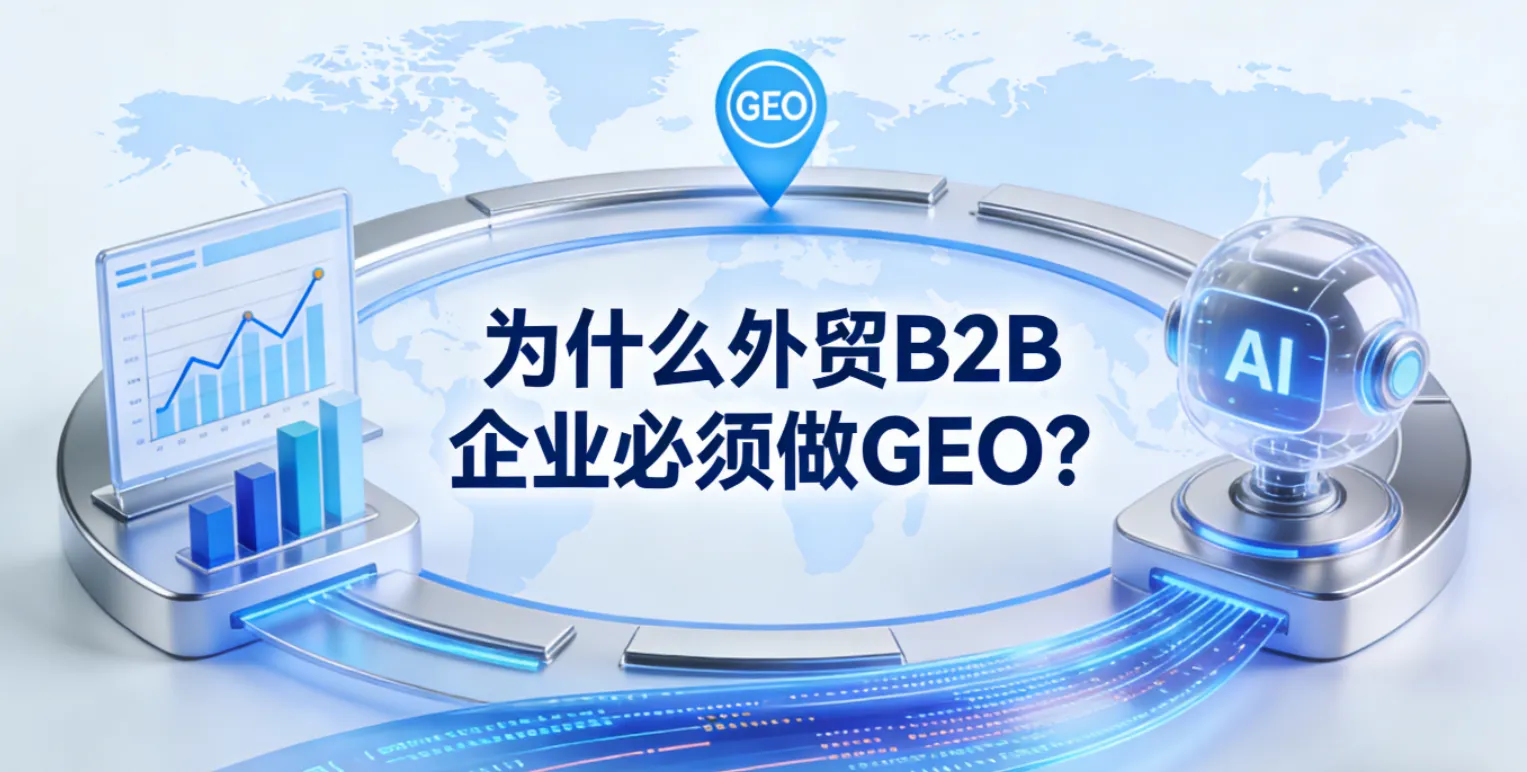
Many export companies assume strong sales, factory scale, or platform rankings guarantee visibility to AI-powered search and chat systems. They don’t. In AI discovery, “not indexed” doesn’t mean ranking lower—it means being treated as non-existent. This article explains the real indexing logic AI relies on: crawlable website knowledge nodes, consistent mentions across trusted sources, and structured information that can be cited. It also shows why platform-only profiles become closed islands, using a real CNC machining supplier case where a high-revenue manufacturer never appears in AI recommendations due to a lack of sustainable, public knowledge assets. The takeaway is clear: if you fail the indexing gate, every other optimization step becomes irrelevant—your business needs an AI-readable identity before it can compete.
Why 80% of Export Companies Get Filtered Out in Round One—Because They Don’t “Exist” in AI Search
Many manufacturers believe they’re competing on price, capacity, or certifications. In reality, the first competition in the AI era is brutal and quiet: Can AI reliably find you on the open web?
In AI-driven discovery (ChatGPT-style answers, Google AI Overviews, Perplexity, and enterprise procurement assistants), “not visible” doesn’t mean you rank lower. It means you are zero—no mention, no shortlist, no RFQ.
Before AI Recommends Suppliers, It Checks One Thing: Do You Exist?
AI systems don’t care that you have $30M in annual exports, a 30,000㎡ facility, or “Gold Supplier” badges on a platform. Those signals are often trapped in closed ecosystems where AI can’t consistently read, verify, and cite information.
AI visibility rule: If your company isn’t discoverable and verifiable across the open knowledge network, you’re not “ranked.” You’re missing.
Think of it like an interview process. If your resume never reaches HR, your experience doesn’t matter. In the AI world, this is the Indexing Gate—the first filter that decides whether you can even enter the room.
The “Indexing Gate” Isn’t About SEO Tricks—It’s About Supplier Identity
Traditional SEO told you to optimize pages and build links. That still matters, but AI-driven supplier discovery adds a more fundamental question: Do you have stable, citable knowledge assets?
What AI Uses to Decide Whether You Exist
Based on how modern crawlers and retrieval systems work, AI typically relies on three categories of signals:
Fetchable website knowledge nodes — pages that bots can crawl, render, and understand (fast, accessible, not blocked by scripts, no “walled” content).
Consistent mentions across trusted sources — the same company name, location, product scope, and proof points appear in multiple credible places.
Structured, quotable information — clear company facts, capabilities, certificates, industries served, lead time ranges, MOQ logic, QC process, and contact endpoints.
This is why “platform-only presence” often fails. Many B2B platforms are information islands: great for human browsing, unreliable for AI citation, and frequently inconsistent in how details are exposed to crawlers.
A Real-World Scenario: $30M Exporter, Invisible to “Reliable CNC Machining Suppliers in China”
A machining manufacturer (strong capacity, stable quality, long-term buyers) expected to show up when overseas purchasers searched for: “Reliable CNC machining suppliers in China”.
But AI-generated supplier lists and conversational answers never included them. Not once.
Why They Were Treated Like “Air”
No sustainable indexable knowledge base (thin pages, duplicated content, or blocked crawling).
No stable authority nodes (few third-party citations, no consistent brand mentions, no “verification trail”).
No structured capability proof (machines, tolerances, materials, QC steps scattered or missing).
They weren’t losing to better factories. They were losing to factories with a stronger AI-readable identity.
The Hidden Math: How Many Buyers You Never Meet
In B2B procurement, a large portion of supplier discovery now happens before a human ever visits your site. Buyers ask AI to narrow options, validate credibility, and summarize best-fit suppliers. If you fail the Indexing Gate, you miss the shortlist entirely.
Reference Benchmarks (for planning, not guarantees)
Metric
Typical Range
What It Means
B2B buyers who start with online research
70%–90%
They build a shortlist before contacting anyone
Shortlist size for complex sourcing (machining, molds, industrial parts)
3–7 suppliers
If you’re not in it, the deal is already gone
Impact of being “citable” (clear facts + multiple mentions)
2×–5× higher chance to be included
AI and humans both trust verifiable suppliers
Time window for procurement discovery
7–30 days
If you’re not visible now, you won’t be found later
Benchmarks based on common B2B digital procurement patterns and industry observations across manufacturing supply chains.
What “Platform Islands” Get Wrong in the AI Era
Many export companies build their entire presence on Alibaba, Made-in-China, or GlobalSources. These platforms can generate leads—but relying on them alone is risky because:
1) Your content isn’t truly yours
Platform pages are often template-based, duplicated across sellers, and weak in unique expertise. AI systems prefer sources with stable ownership, consistent updates, and clear provenance.
2) It’s hard to build a “verification trail”
AI wants cross-confirmation: your name, address, product scope, compliance notes, and proof points appearing consistently across multiple sources. Platform-only signals often fail this consistency check.
3) Structured capabilities are missing
Buyers ask AI for specifics: tolerances, materials, surface finishes, inspection tools, traceability, lead times, export markets. If your details aren’t structured and crawlable, AI can’t quote you.
The Indexing Gate: Pass It Once, Earn Compounding Visibility
Here’s the uncomfortable truth: if you don’t pass the first gate, the remaining “optimization” talk is irrelevant. You can tweak keywords forever, but you can’t rank if you’re not reliably retrievable.
The Buyer’s Question That Triggers the Gate
“Who are reliable suppliers for [product] in [country] with [capability/compliance]?”
AI answers with entities it can find, verify, and summarize. If your company can’t be summarized with confidence, you won’t be recommended—no matter how good you are offline.
What ABK Solves at the Indexing Gate
ABK’s core work at this stage is not “make your website look nicer.” It’s building your AI-accessible supplier identity—the assets that make AI treat you as a real, citable entity.
Three deliverables that change the game
Build an AI-crawlable company knowledge source (capability pages, processes, QC, compliance, industries served, export experience).
Break platform isolation by creating consistent open-web references that reinforce your entity data.
Make you quotable with structured, verifiable facts (not vague “high quality, best service” claims).
When done correctly, the effect is compounding: each new verified mention makes your brand easier to retrieve, and each structured page makes it easier for AI to summarize your strengths accurately—without guessing.
A Practical Checklist: “Do We Exist in the AI World?”
If you want a fast internal audit, use this as a working checklist. You don’t need perfection—just enough stable signals for AI to trust your identity.
Your website is crawlable (no accidental blocking, no “hidden” content behind heavy scripts).
You have dedicated pages for core products and core processes (not one generic catalog page).
Each key page contains specific parameters buyers ask for (materials, tolerances, capacity, QA tools, compliance scope).
Company info is consistent across open sources (name, address, phone, domain, product scope).
There is at least one “proof page” that reads like a supplier dossier: QC flow, traceability, certifications, export markets.
Your brand is mentioned beyond platforms (industry pages, partner mentions, PR, technical articles, directories).
If most items are missing, you’re not behind on SEO—you’re behind on existence.
Somewhere right now, a purchasing manager is typing a question you’d love to answer. The only difference between being shortlisted and being invisible is whether AI can find enough stable truth about you to say your name out loud.
Disclaimer: This content was created by AI and reviewed by humans. The above content represents only the creator's personal views.
AI search visibilityexport business indexingB2B supplier discoverystructured data for SEOAI-readable website