Hot Products





Popular articles
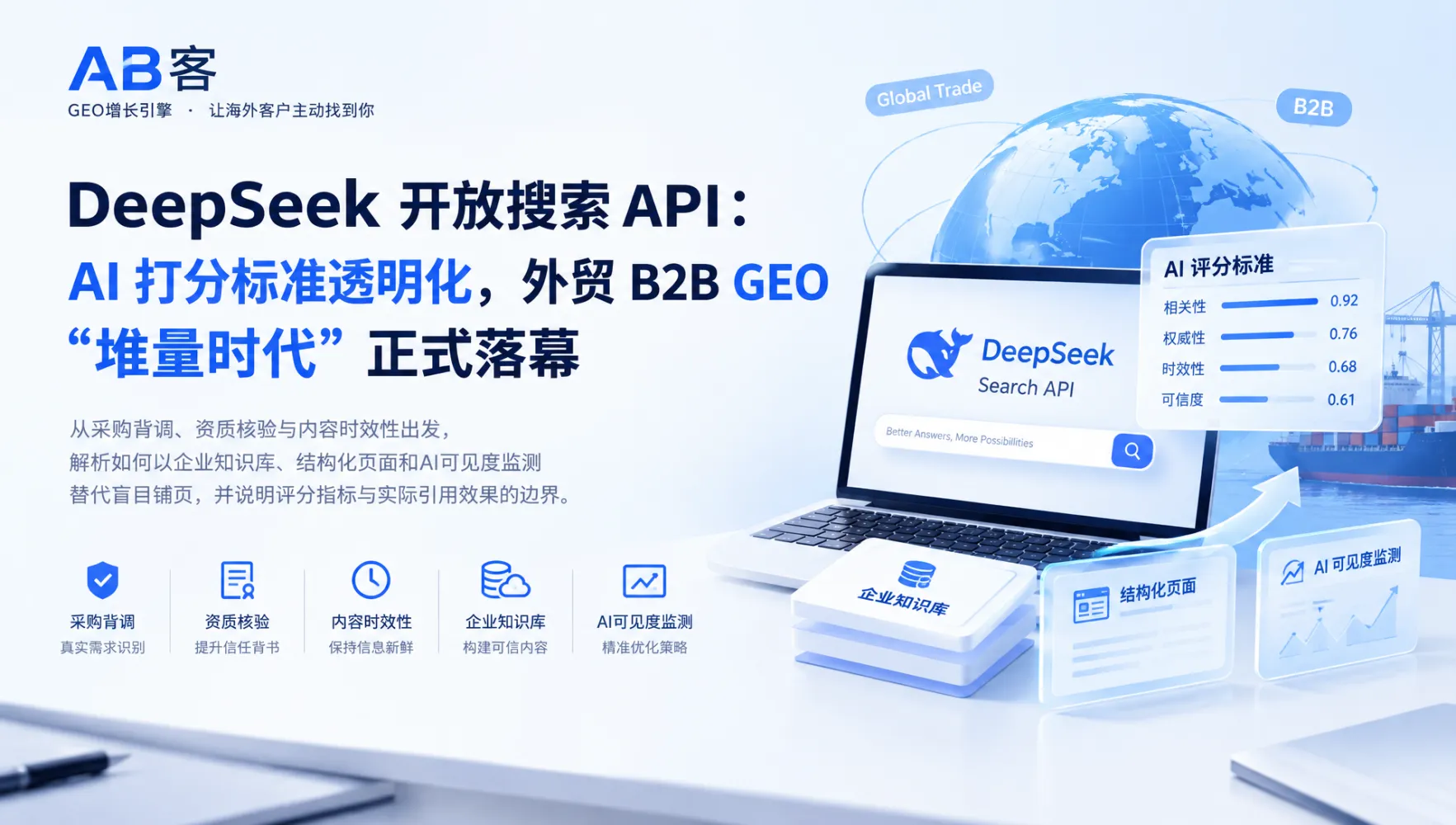
DeepSeek Opens Search API: AI Scoring Standards Become Transparent, Marking the End of the "Volume-Based Era" for Foreign Trade B2B GEOs.
How can AI assist sales at the Canton Fair? Transforming negotiation records into CRM follow-ups and GEO tasks.
Turn Canton Fair Buyer Questions into GEO Queries and Better B2B Content
How to review the 48 hours following Halloween? Use CRM and AI sales assistants to transform holiday inquiries into sustainable customer assets.
Turn Canton Fair Price Questions into Qualified RFQs: 4 Buyer-Objection Templates
Recommended Reading
When AI Helps Buyers Screen Suppliers: What Should Your Website Answer?
ABKE explains how marketing agents can help industrial suppliers prepare multilingual website answers on applications, specifications, certifications and customization—with human review.
Industrial procurement · Multilingual websites · Human-reviewed AI execution
When a buyer asks an AI assistant to identify suitable industrial suppliers, your website needs to explain more than what you sell. It should help establish whether your products fit the application, which specifications are confirmed, what evidence supports your claims, and which requirements need an engineering or sales discussion.
For AI-assisted supplier screening, provide clear procurement answers linked to verifiable enterprise information. ABKE’s Marketing Agent can help organize that knowledge, prepare multilingual drafts and flag gaps within an agreed scope. People remain responsible for technical suitability, certification validity and commercial commitments.
Supplier screening starts with questions—not promotional claims
AI supplier screening means using an AI assistant to help discover, compare or shortlist potential suppliers against a buyer’s requirements. It is an information-gathering step, not a substitute for technical qualification, document verification or procurement due diligence.
A useful supplier website connects each important answer to its scope and supporting evidence. “Customization available” leaves major questions unanswered. A more useful explanation identifies what can be customized, which inputs are required and what must be reviewed before feasibility or delivery can be confirmed.
Connect procurement questions to specific answers, supporting evidence and a route for clarification.
Four procurement topics your website should answer
1. Application requirements: Is this suitable for our use?
Explain intended applications, relevant operating conditions and known limitations using confirmed product knowledge. Distinguish a typical use from an application that requires individual assessment.
- Which process, environment or material is the product intended for?
- What operating conditions must the buyer provide?
- Which compatibility questions require an engineer’s review?
Place this information on product and application pages. Where suitability has not been established, request the missing requirements rather than generating an affirmative answer.
2. Technical specifications: What exactly is being offered?
Make specifications model-specific and use consistent units and terminology. Clearly distinguish standard configurations, optional features and values that depend on operating conditions.
- Which model, configuration and document revision does the information describe?
- What dimensions, materials, interfaces or operating limits are confirmed?
- Which drawings or technical documents are available for evaluation?
3. Certification evidence: What does the document actually cover?
Supplier capability verification requires more than a certification logo. Where applicable and authorized for publication, explain the document’s subject, scope, issuing organization and validity information.
- Does the document concern a management system, a product or a test result?
- Which entity, site, model or activity is covered?
- How can the buyer request or verify the relevant evidence?
Do not imply that one certificate covers every product or destination market. Certification applicability and validity need qualified human confirmation.
4. Customization conditions: What needs review before a quotation?
Describe the confirmed scope of customization and the information needed to assess a request. Do not present conditional capabilities as unconditional promises.
- Which design, material, interface, packaging or branding changes can be considered?
- Are drawings, samples or technical requirements needed?
- Which tooling, quantity, validation and delivery conditions require discussion?
Use purchasing FAQs and inquiry forms to collect these inputs. Pricing, feasibility and delivery commitments should be confirmed by authorized staff.
How a marketing agent supports reliable multilingual answers
ABKE’s Marketing Agent is an AI execution and coordination assistant—not an independent source of supplier facts. Using authorized enterprise knowledge, business rules and available tools, it can assist with the following workflow within the agreed implementation scope.
- Organize confirmed knowledge. Gather approved product information, application notes, evidence and terminology. Flag conflicting, missing or outdated information for review.
- Map questions to pages. Turn buyer requirements into product-page sections, purchasing FAQs, evidence-page content and inquiry fields.
- Prepare multilingual drafts. Draft answers and check terminology consistency without expanding specifications, certification scope or commercial commitments.
- Route decisions to people. Submit technical conclusions, evidence claims and external-facing content to the appropriate reviewers before publication.
- Turn feedback into tasks. Use website, GEO testing and sales feedback to suggest knowledge updates, clearer answers and revised pages.
AI assists preparation and coordination; authorized people approve facts and commitments.
Keep the same answer across languages and sales conversations
Multilingual consistency is not simply fluent translation. A translated page must preserve model identifiers, units, limitations and evidence scope. If a specification remains unconfirmed in the source knowledge, another language version should not turn it into a definite claim.
For example, a buyer evaluating equipment for a particular operating environment may need compatibility information that is absent from the approved documents. The appropriate workflow is to identify the missing conditions, request clarification and route the question to a specialist—not infer suitability from a similar application.
This is an illustrative procurement scenario, not a customer case study.
Make the next step specific
An inquiry form can request the product or model, intended application, operating conditions, destination market, required documentation and customization needs. Where CRM integration is available and authorized, the relevant inquiry context can support sales follow-up. Sensitive drawings and commercial information should follow the enterprise’s approved handling process.
A useful website helps buyers progress from initial screening to a properly qualified discussion.
Evaluate answer quality before expecting visibility gains
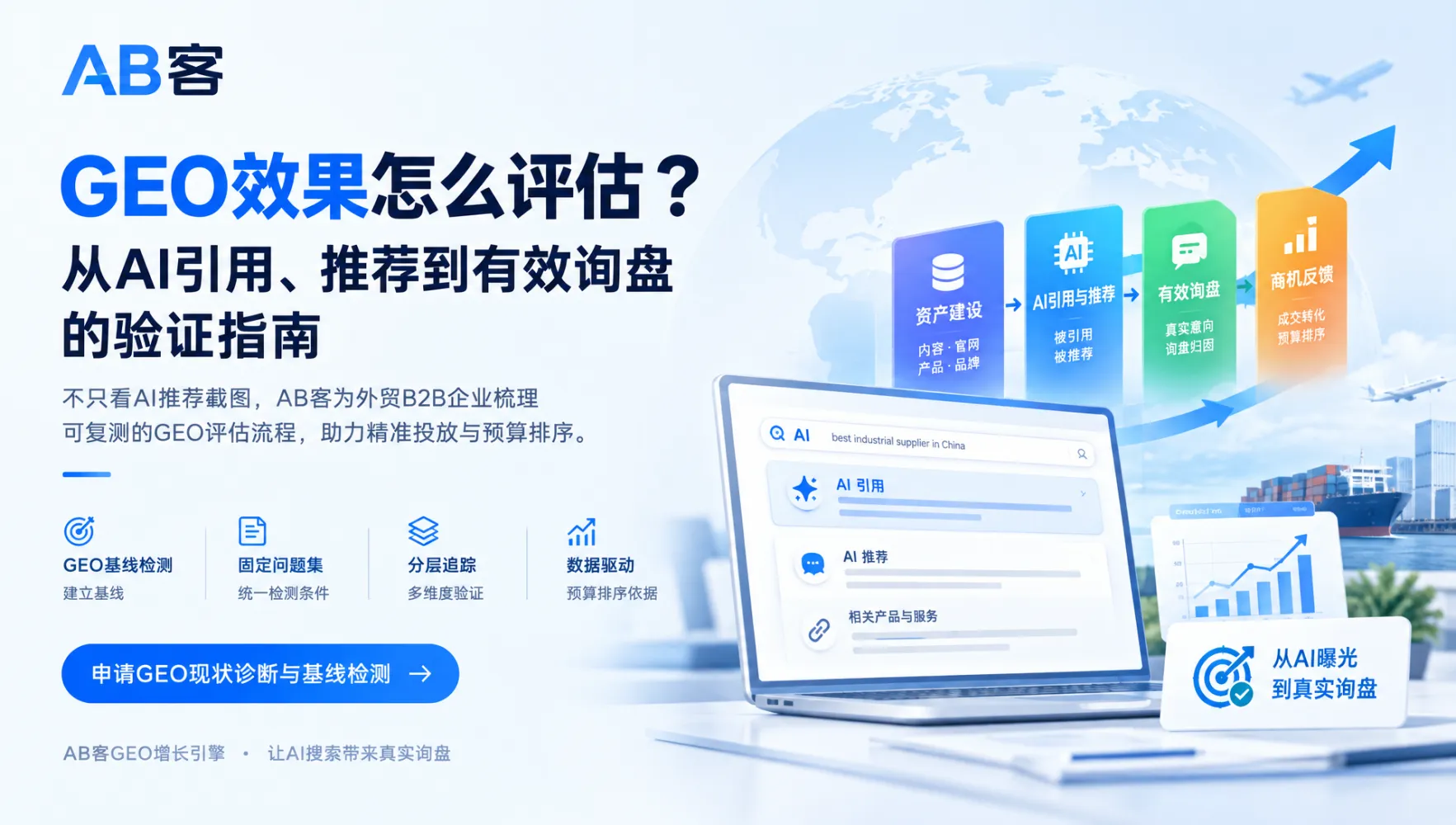
Review whether priority procurement questions have approved answers, evidence gaps have owners, multilingual drafts have been checked and detected errors have become tracked tasks. For GEO testing, record the platform, question, date, region and observed response so findings can be interpreted in context.
Clear content supports understanding, but neither a website nor a marketing agent controls third-party search or AI systems. Fixed rankings, citations, recommendations, inquiries and orders cannot be guaranteed. Agent availability, integrations and execution permissions should be confirmed for the specific implementation.
Start with one product family and its unanswered buyer questions
Bring together approved specifications, application guidance, relevant evidence and recurring sales questions. Identify what can be published, what needs confirmation and who owns each decision.
Discuss with ABKE how Marketing Agent assistance could fit that workflow—from knowledge preparation and multilingual drafting to review coordination and ongoing updates—without removing the people responsible for your products and customer commitments.


