Hot Products


Popular articles
How to Build Traceable Records for GEO Content Publishing, Review and Optimization in Q4 2026
Q4 2026: How to Turn Customer Cases from Promotional Stories into AI-Retrievable Project Evidence
花钱做GEO网站,企业最后到底应该买到什么?
Q4 2026: How to Build an AI Buyer Question Chain for Agentic Supplier Screening
Recommended Reading
Q4 Procurement Peak: How Can Your B2B Company Get on AI Supplier Shortlists?
Learn how B2B buyers in the US and Europe use AI to screen suppliers during Q4 procurement. ABKE explains how to build discoverable, credible, AI-ready supplier information.
Q4 Procurement Peak: How Can Your B2B Company Get on AI Supplier Shortlists?
During the year-end procurement peak, buyers in the US and Europe are increasingly using ChatGPT, Gemini, Perplexity, search engines, and industry platforms to screen suppliers faster. If your company is not showing up in AI-assisted research, the problem is often not “brand awareness” alone — it is whether your business can answer the sourcing question with clear, credible, and verifiable information.
How Overseas Buyers Use AI to Screen Suppliers
In Q4, procurement teams usually move through a faster but still structured decision path. AI is used to reduce research time, compare options, and filter out risky suppliers before direct contact.
Procurement requirement
        ↓
Specification and qualification criteria
        ↓
Supplier discovery
        ↓
Mismatch elimination
        ↓
Candidate comparison
        ↓
Evidence and risk verification
        ↓
Supplier contact and RFQ
At each step, AI systems and buyers look for information they can understand, compare, and verify quickly. If your public content is too vague, too generic, or too fragmented, you may be excluded before a human buyer ever visits your sales page.
The Four Most Common Reasons Suppliers Get Eliminated
| Screening risk | What the buyer or AI cannot confirm | Typical missing information | What to improve |
|---|---|---|---|
| Not found | The company has too little searchable information. | Incomplete website pages, weak product coverage, no market-facing content. | Build indexable product, solution, FAQ, and industry pages. |
| Not understood | The profile does not clearly explain what the company does. | Generic claims, inconsistent positioning, unclear product categories. | Define company identity, product scope, capabilities, and target industries. |
| Not matched | The supplier cannot be connected to the buyer’s use case. | No technical parameters, applications, customization scope, or buyer guidance. | Create scenario-based content, selection guides, and technical FAQ pages. |
| Not trusted | The supplier lacks evidence for verification. | No certifications, factory details, cases, delivery process, or external references. | Publish structured trust evidence and maintain consistent third-party profiles. |
Searchability
Can buyers and AI systems actually find your company, products, and capabilities online?
Clarity
Is your value proposition specific enough for a procurement manager to understand quickly?
Relevance
Does your content match the buyer’s application, industry, and sourcing conditions?
Trust
Are there enough verifiable signals for AI and buyers to shortlist you with confidence?
What Information Does AI Need to Assess a Supplier?
To get into an AI-generated shortlist, a supplier must make it easy for AI to answer practical procurement questions. The goal is not merely to “mention the brand name,” but to supply enough structured proof for the model to judge fit.
| AI and buyer evaluation question | Information your company should provide | Recommended page or content asset |
|---|---|---|
| Who is this company? | Legal identity, brand positioning, location, manufacturing role, export experience. | About page, company profile, organization schema. |
| What does it manufacture or supply? | Structured product categories, models, materials, specifications, and capabilities. | Product category pages and product detail pages. |
| Which buyers and applications does it serve? | Target industries, use cases, customer types, project conditions, and application limits. | Solution pages, application pages, buyer guides. |
| Can it meet custom requirements? | OEM/ODM scope, engineering support, samples, tooling, quality process, and constraints. | Customization capability page and technical FAQs. |
| Why is it credible? | Certifications, production capacity, case studies, testing, and documentation. | Trust center, factory page, certification and case-study pages. |
| How can a buyer procure from it? | MOQ, lead time, packaging, payment, shipping support, quotation process, and after-sales policy. | Procurement FAQ, ordering process, RFQ landing page. |
A Practical Q4 AI Visibility Checklist for Export Manufacturers
- Audit supplier identity: Make sure your company name, brand, business scope, location, and contact details are consistent across your website and external channels.
- Map buyer questions: List the questions a procurement manager would ask before sending an RFQ, including specifications, compliance, application fit, pricing factors, lead time, and supplier qualification.
- Build product evidence pages: Replace generic copy with structured details such as specifications, materials, standards, application fit, customization options, and quality information.
- Create decision-support content: Publish comparison guides, selection checklists, application FAQs, technical explainers, and supplier-evaluation resources.
- Strengthen trust signals: Present certifications, factory capabilities, testing methods, project cases, production processes, and delivery records in a structured way.
- Improve multilingual accuracy: Localize terminology for target markets instead of relying on direct translation.
- Connect visibility to conversion: Make RFQ forms, WhatsApp, email contact, catalog downloads, and sales follow-up paths easy to access and track.
The Growth Chain: From AI Discovery to Qualified Inquiry
This is why AI visibility should not be treated as a one-time publishing task. It is an ongoing system that connects enterprise knowledge, buyer demand, content operations, website infrastructure, external signals, and sales feedback.
How ABKE Evaluates AI Supplier Shortlist Readiness
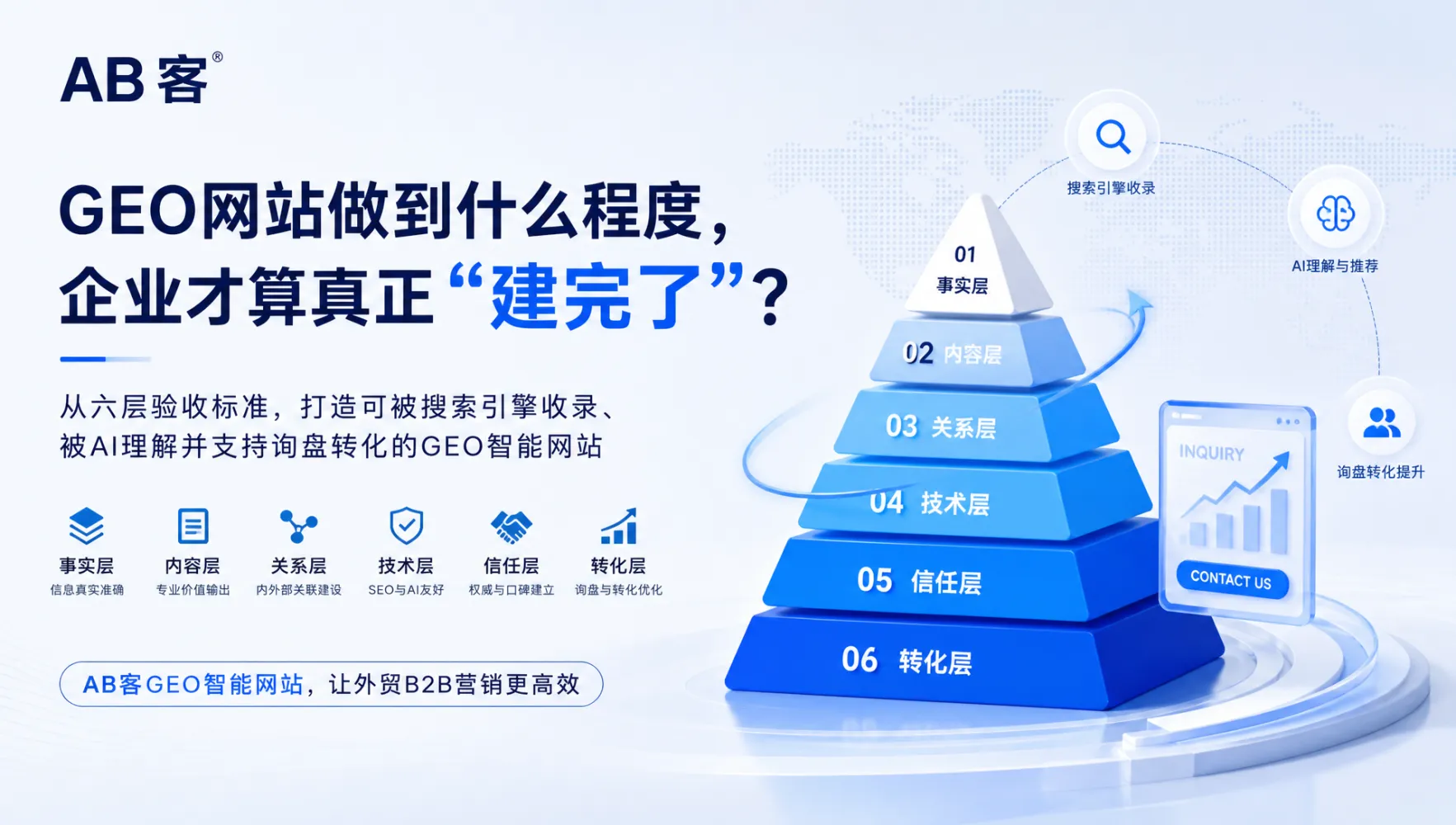
ABKE’s GEO approach is built around five connected stages. If a company wants to appear in AI-assisted procurement research, it must move through these layers in order:
- Discovery: Can search engines, AI platforms, and buyers find enough information about your business and products?
- Understanding: Can AI accurately identify your products, capabilities, target customers, and application boundaries?
- Trust: Is there evidence supporting quality, certifications, manufacturing competence, delivery ability, and past performance?
- Citation: Does your company publish structured content that can be referenced when buyers ask sourcing questions?
- Recommendation: Can your information support a relevant supplier match under specific buyer requirements?
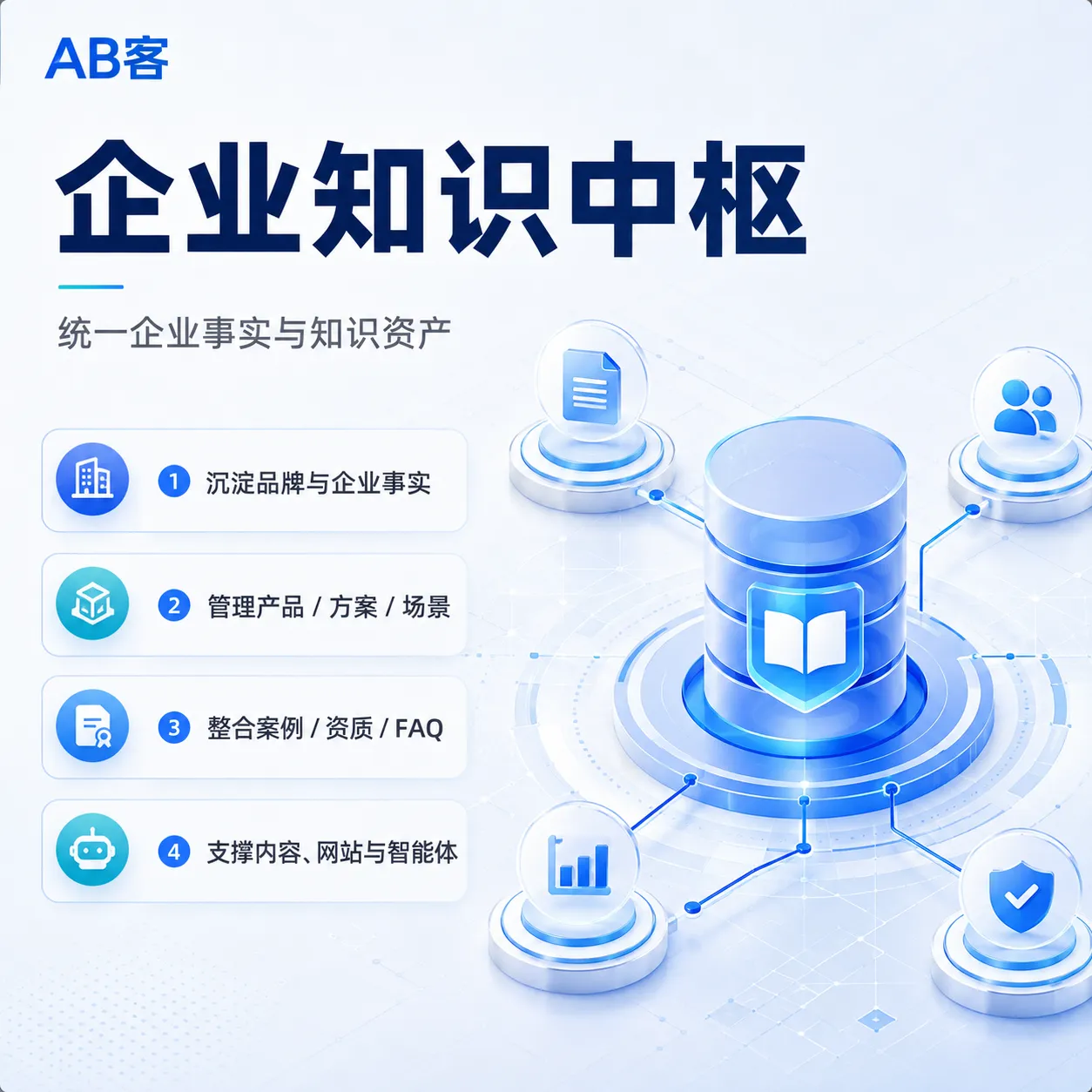
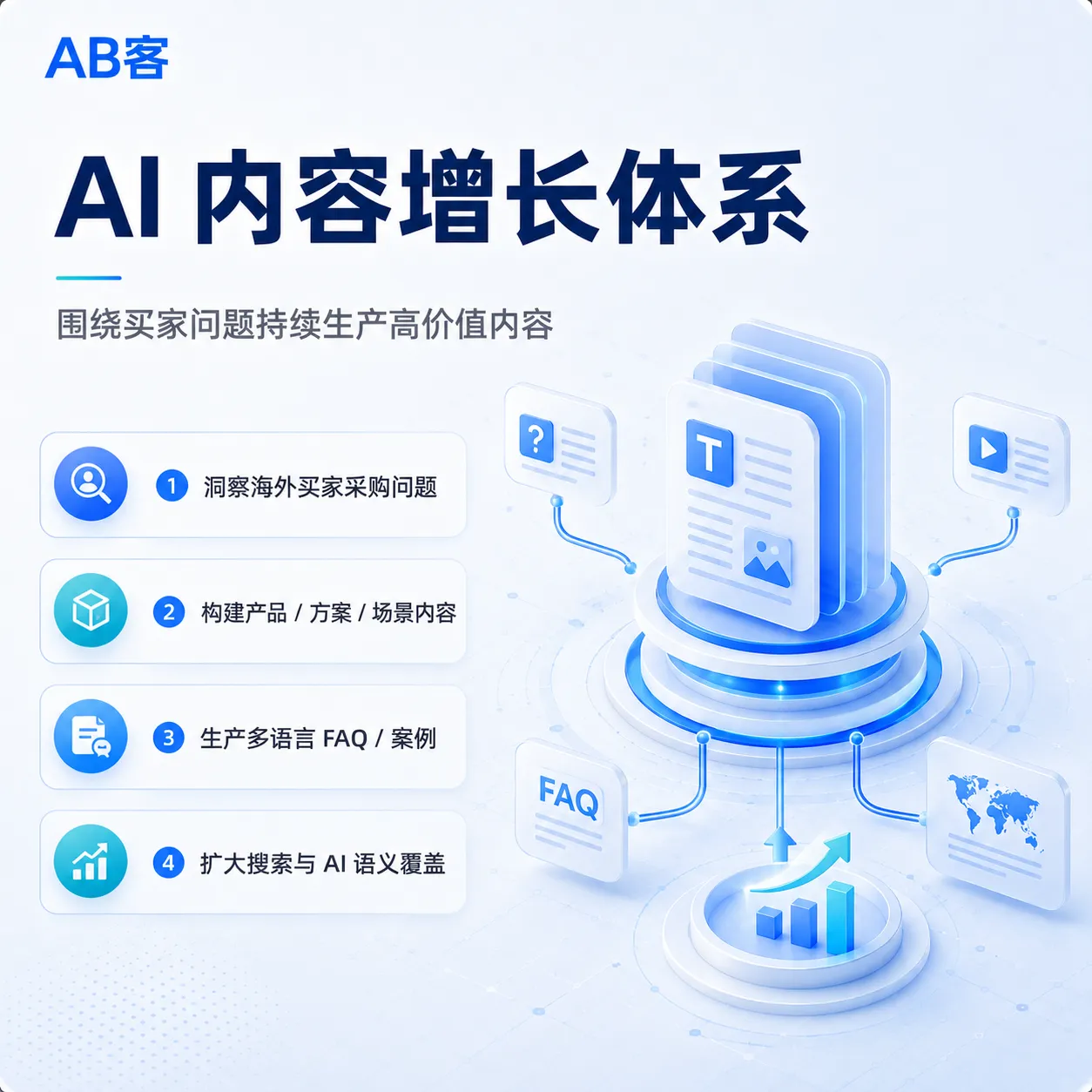
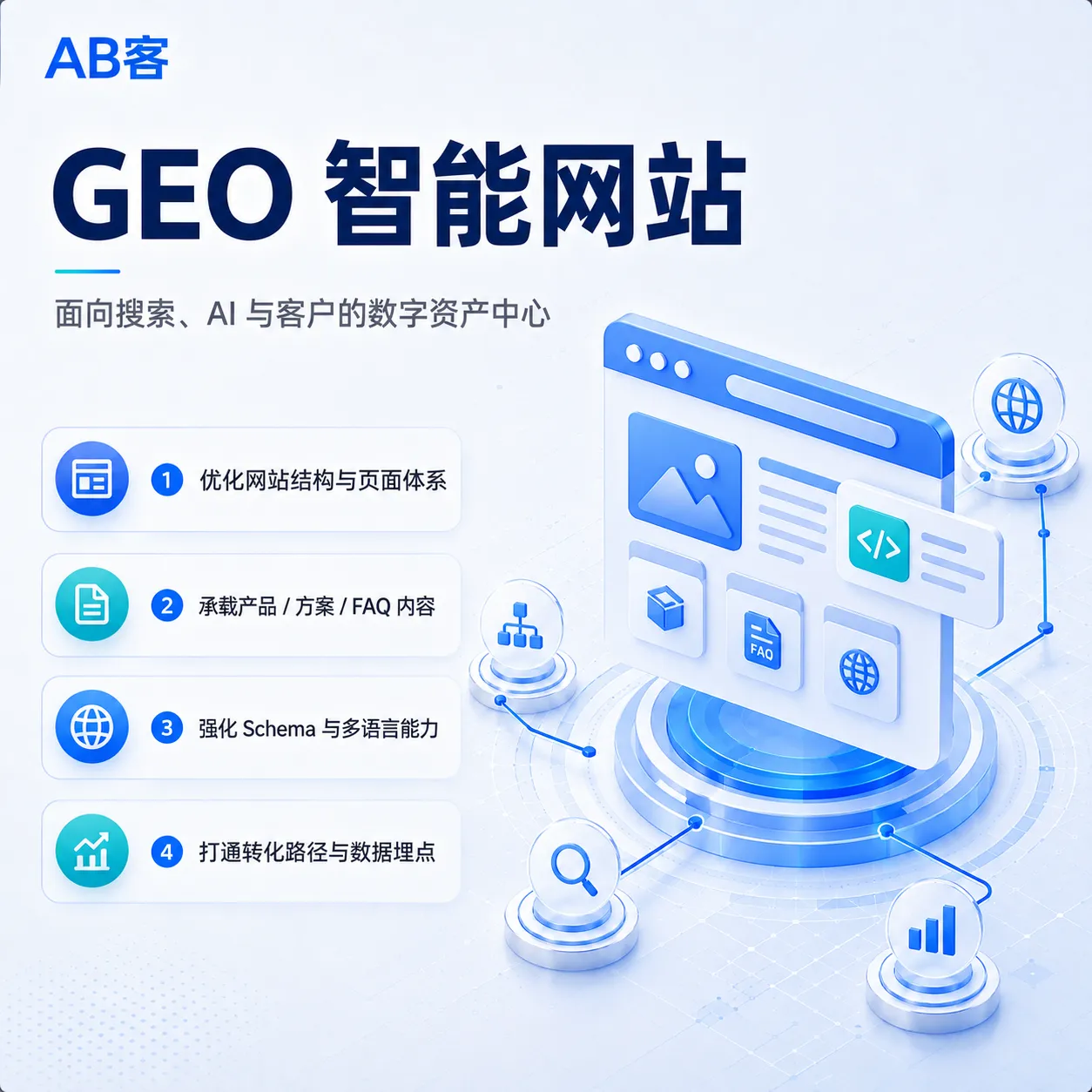
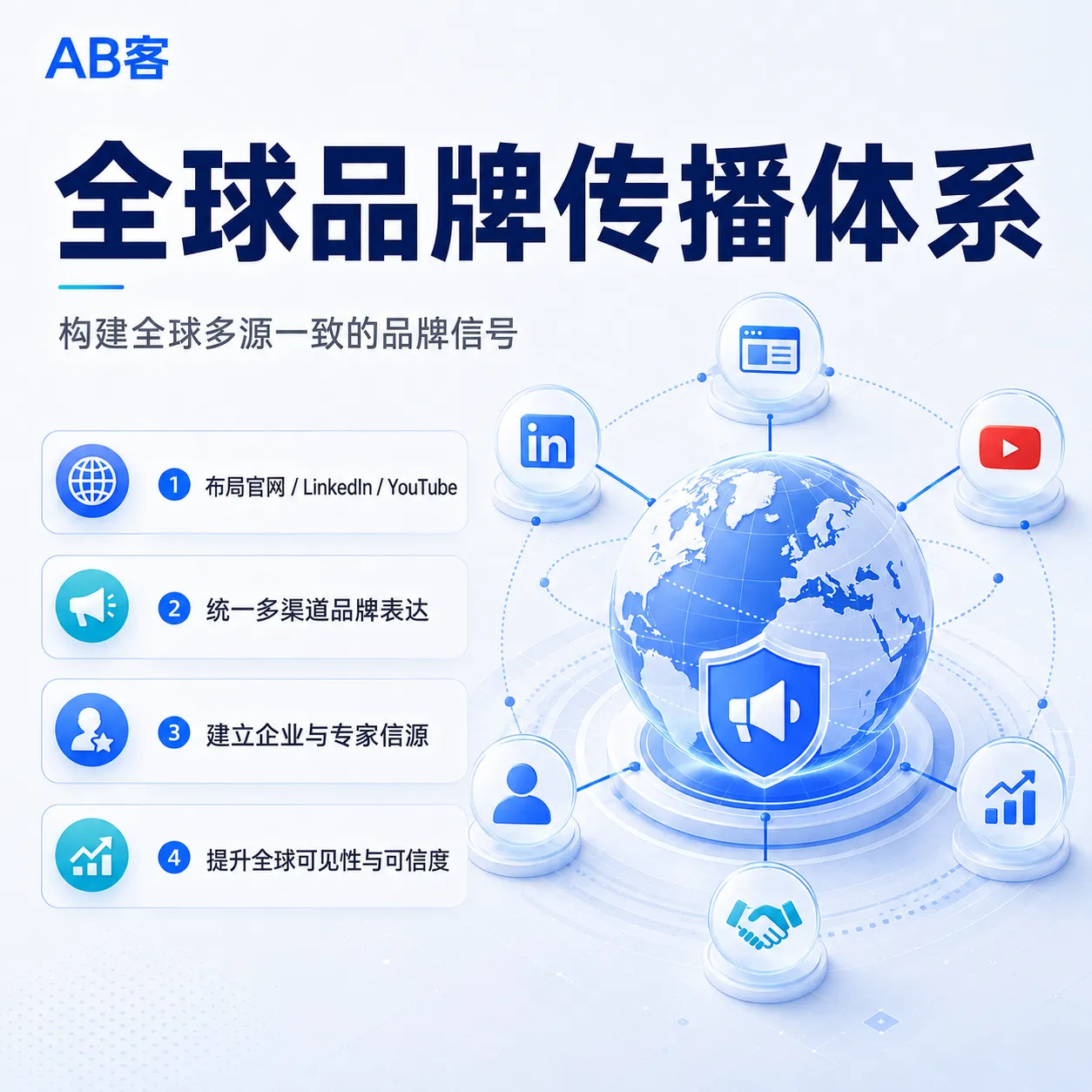
The ABKE GEO Growth Engine helps export B2B companies organize enterprise knowledge, identify buyer questions, plan SEO and GEO topics, create multilingual content, build AI-readable websites, monitor AI visibility, and connect digital demand with CRM follow-up. Results depend on market demand, company capability, competition, platform algorithms, content quality, and sales execution.
Where ABKE Fits Into the Q4 Procurement Visibility System
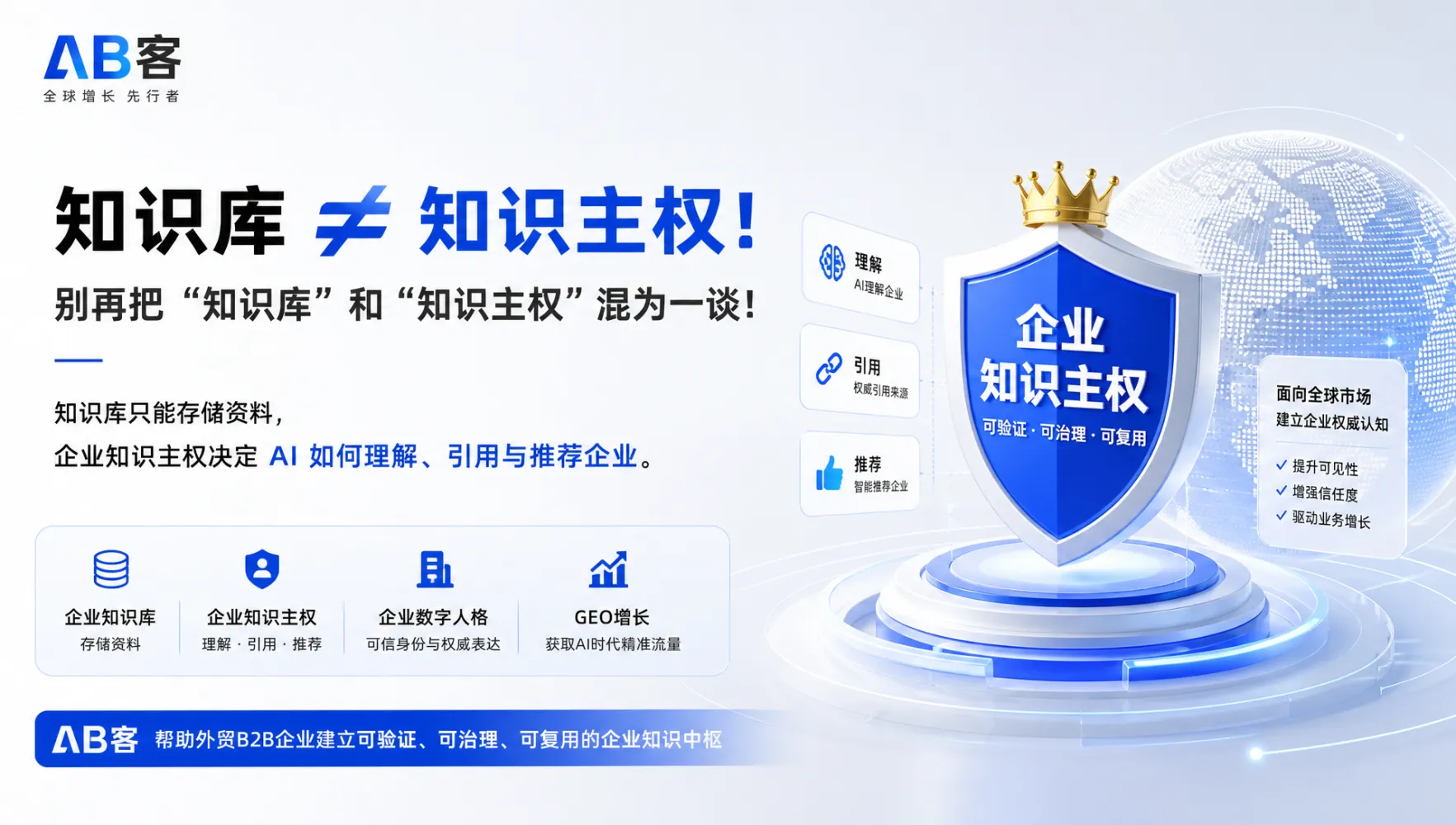
Enterprise Knowledge Structuring
Turn scattered company facts into structured, machine-readable business knowledge.
Buyer Question Mapping
Build content around real procurement questions instead of internal assumptions.
SEO + GEO Website System
Create an AI-readable website that can be discovered, understood, and converted.
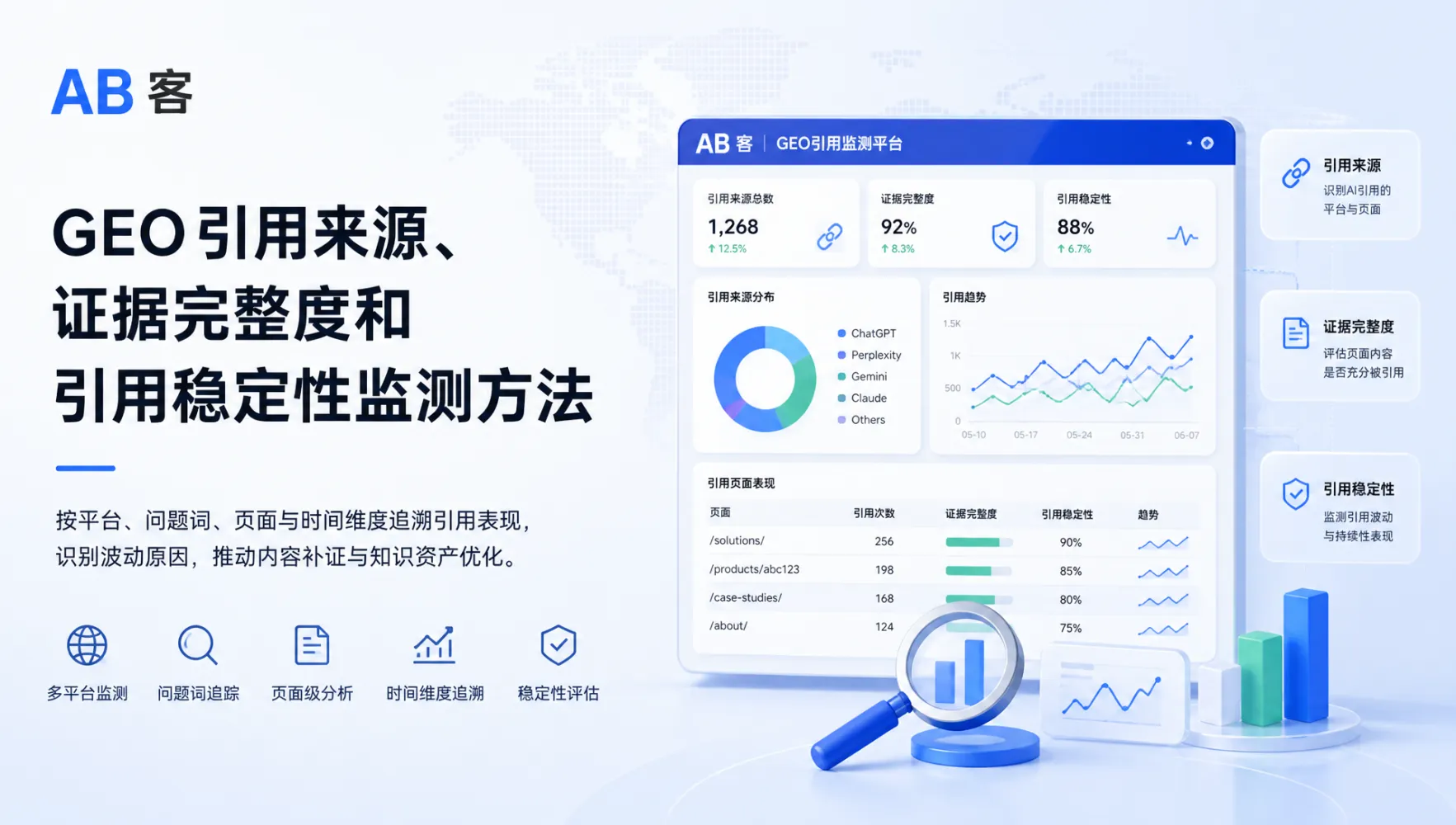
Visibility Monitoring
Track search exposure, AI mentions, citation patterns, and conversion signals over time.
Frequently Asked Questions
Why does AI recommend competitors but not my company?
Competitors may have more complete public information, clearer product positioning, stronger application content, more trust evidence, better website structure, or more consistent third-party signals. AI systems are generally more confident when information is specific, verifiable, and repeated consistently across credible sources.
Do B2B companies need to publish a large number of articles?
Not necessarily. The priority is not content volume alone, but whether the content answers high-value buyer questions with accurate enterprise facts, product details, technical context, and decision-making evidence. A focused content system is often more effective than a large collection of generic articles.
Does official website information affect AI recommendations?
Yes. A company website is a primary source for business identity, product information, capabilities, applications, certifications, and purchasing processes. Clear page structure, structured data, internal links, and factual content help search engines and AI systems interpret your business more accurately.
Is more third-party media coverage always better?
No. Relevance, credibility, consistency, and factual accuracy matter more than volume. It is better to build industry-relevant profiles, useful expert content, and consistent brand information than to rely on low-quality mass distribution.
Prepare Before Q4 Buyers Start Comparing Suppliers
When buyers ask AI which suppliers can meet a specific sourcing need, your business needs more than a company name online. It needs an evidence-backed digital presence that clearly explains what you make, who you serve, what problems you solve, how you deliver, and why buyers can trust you.
ABKE helps export B2B companies turn enterprise knowledge into searchable, AI-understandable, and conversion-ready growth assets.


