Hot Products
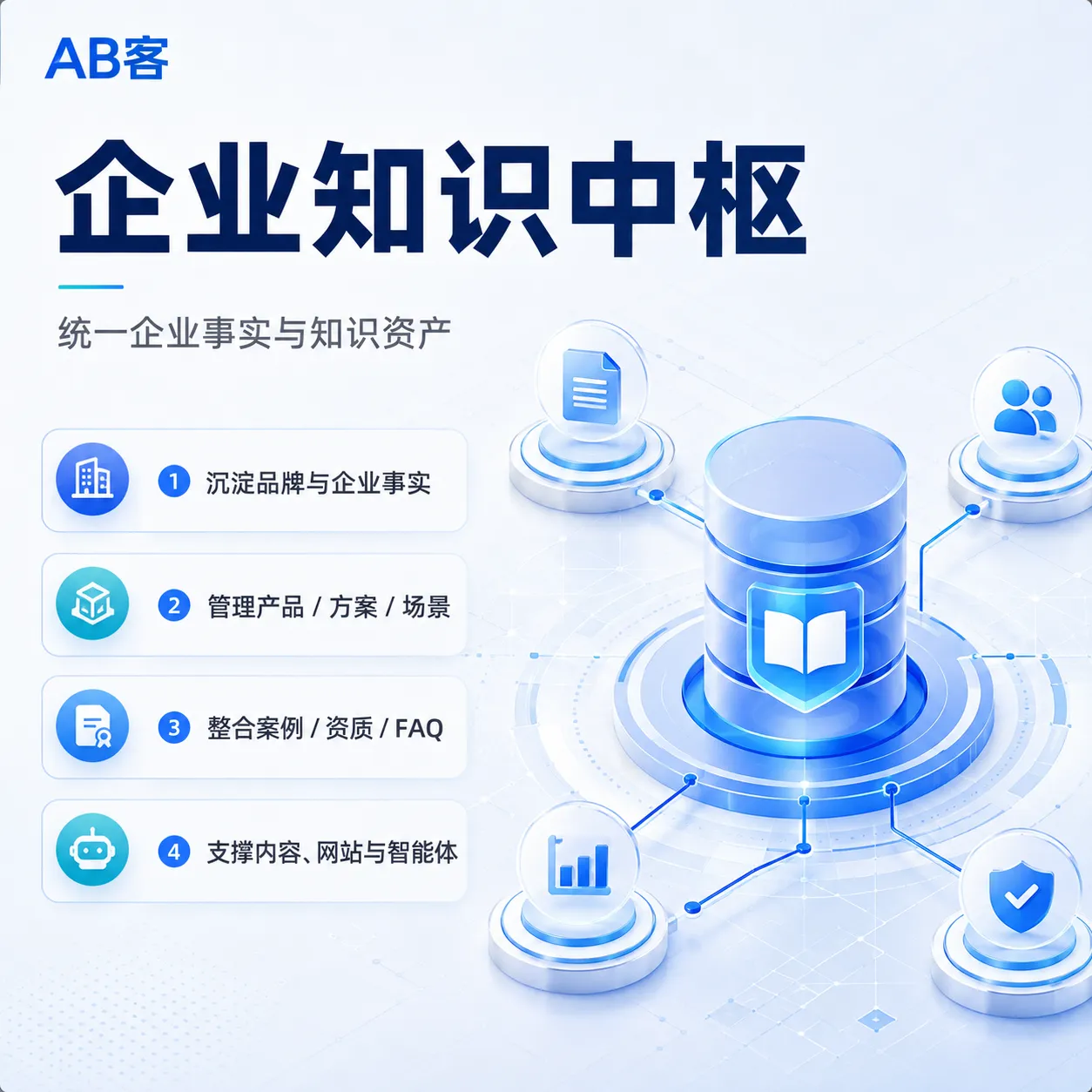
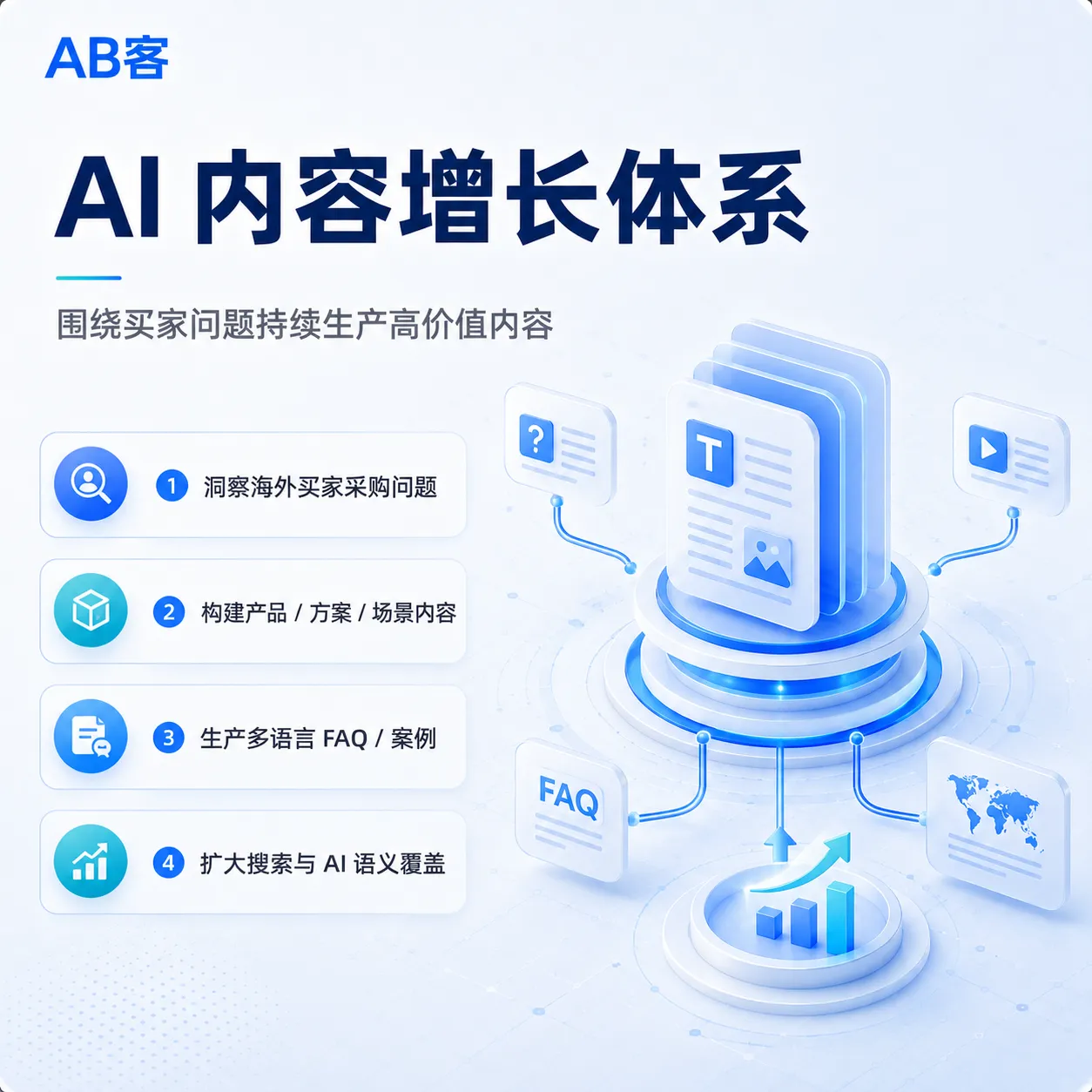
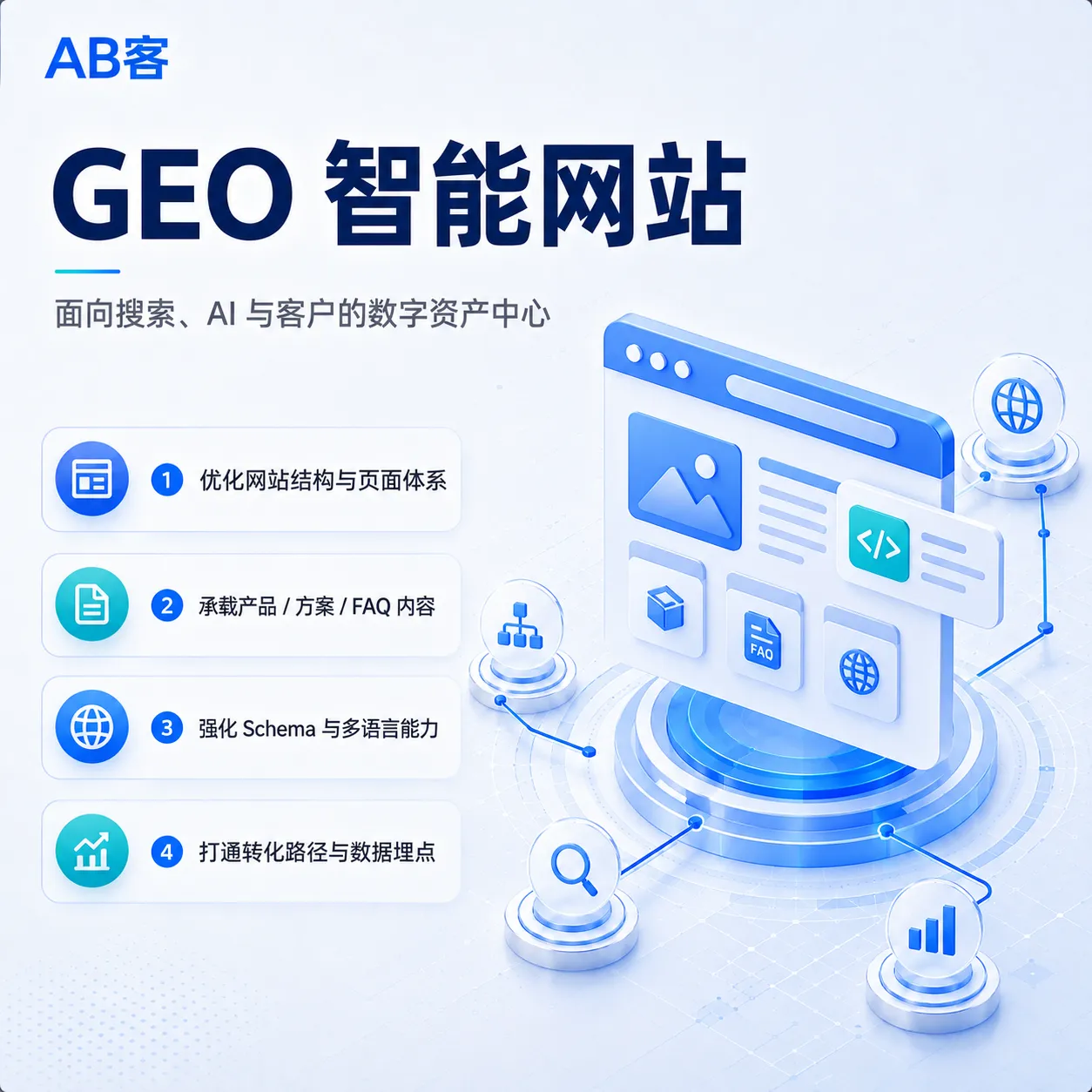
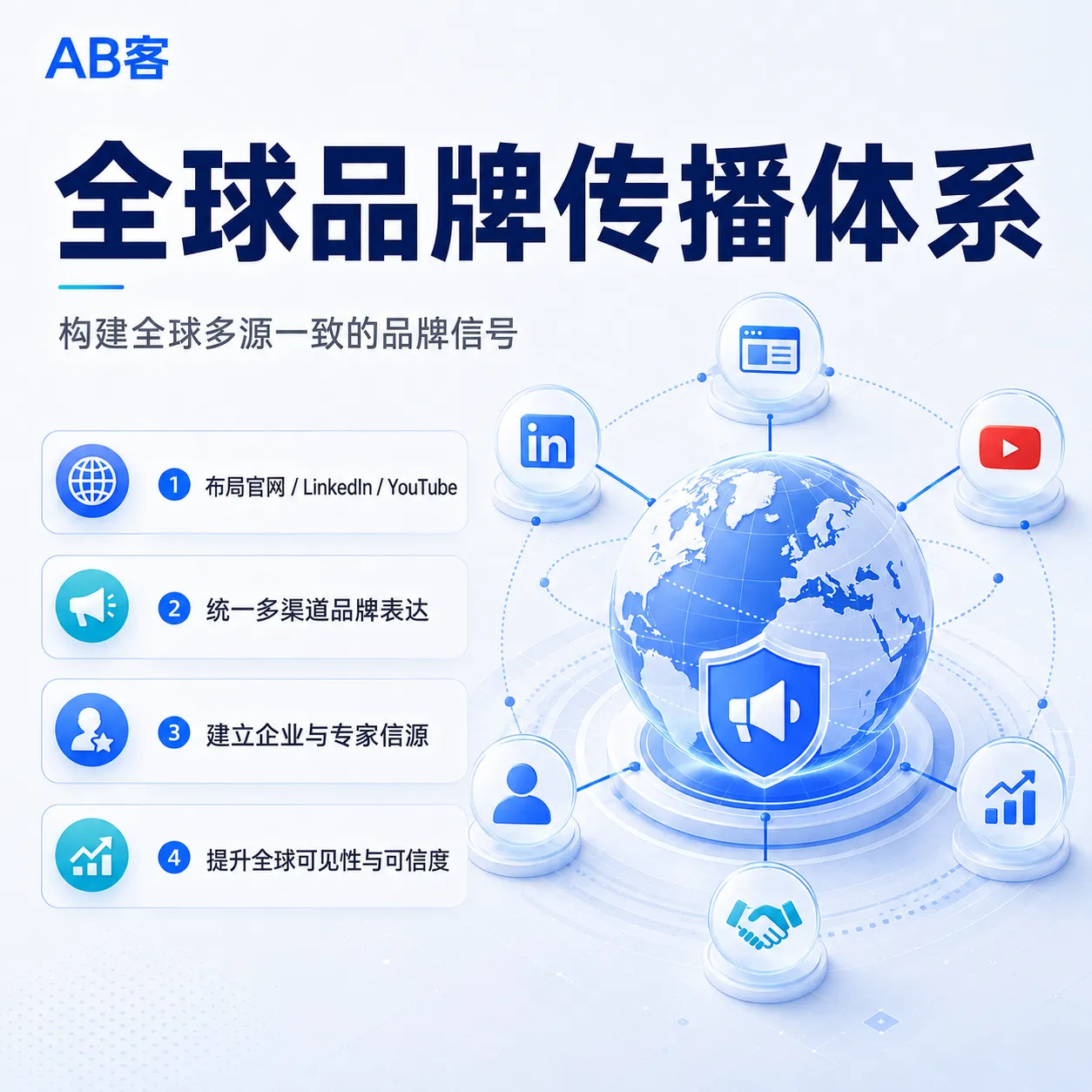


Popular articles
Q4 2026: How GEO Solves Fact Version Governance When Enterprise Information Conflicts
Q4 2026: How to Turn Customer Cases from Promotional Stories into AI-Retrievable Project Evidence
Q4 2026: How to Reverse-Engineer Your Next GEO Knowledge Build from a Real Order?
When Is a GEO Website Truly Complete?
Recommended Reading
Q4 AI Visibility Is Rising, but Inquiries Are Not? Check Your B2B Conversion Chain
AI mentions and citations do not automatically create B2B inquiries. Learn how ABKE helps exporters connect GEO visibility, high-intent landing pages, CRM attribution, and sales follow-up into a measurable conversion loop.
Q4 AI Visibility Is Rising, but Inquiries Are Not? Check Your B2B Conversion Chain
AI mentions, citations, and recommendations can increase visibility — but visibility alone does not create purchase intent, supplier trust, or qualified inquiries.
Direct answer: If your company is appearing in AI answers more often, but inquiries are still flat, the problem is usually not GEO itself. The issue is a broken conversion chain between AI discovery → buyer verification → page relevance → inquiry capture → CRM attribution → sales follow-up.
For export B2B companies, GEO should not be judged by screenshots of AI recommendations alone. It must be measured as a full business system that turns visibility into qualified demand.
AI Exposure Does Not Equal Procurement Intent
| Stage | What Must Happen | Common Failure |
|---|---|---|
| AI discovery | The buyer sees an accurate and relevant brand or product mention. | AI describes the company incorrectly or recommends the wrong product category. |
| Supplier verification | The buyer validates capabilities, certifications, cases, and delivery credibility. | The website lacks proof that supports procurement decisions. |
| Landing-page evaluation | The visitor reaches a page that matches the product, market, and question. | The page is generic, slow, or disconnected from search intent. |
| Inquiry action | The buyer can request specifications, pricing, samples, or technical support easily. | The CTA is vague, forms are too long, or WhatsApp attribution is missing. |
| Sales follow-up | Sales receives source context and responds with the right information. | Leads enter CRM without product, page, country, or first-touch data. |
Simple logic to remember
Visibility helps the buyer notice you. Verification helps the buyer trust you. Relevance helps the buyer continue. Conversion design helps the buyer inquire. CRM and sales follow-up help the opportunity become revenue.
What the Q4 Conversion Chain Should Look Like
AI Search → Brand Appears → Buyer Verifies → Visits Key Page → Reviews Evidence → Submits Inquiry → CRM Records Context → Sales Follows Up → Outcome Feeds Back to GEO
1. AI Search
Your brand or product appears in an AI answer, summary, or recommendation.
2. Buyer Verification
The buyer checks trust signals: factory capability, certifications, cases, and service process.
3. High-Intent Page Visit
The visitor lands on a product, solution, FAQ, or case page that matches the original question.
4. Inquiry & CRM
The lead is captured, tagged, and handed to sales with full context for follow-up.
Where the Chain Usually Breaks: 5 Critical Points
1) AI answer accuracy is wrong
The AI may mention your company, but describe the wrong product, wrong application, or wrong differentiation. That creates curiosity without qualified intent.
2) Landing-page relevance is weak
Buyers click through, but the page does not answer the exact sourcing question. Generic company pages rarely convert AI-driven traffic.
3) Procurement proof is missing
No clear cases, certifications, quality controls, production capacity, lead time, or service workflow means the buyer cannot confidently move forward.
4) CTA is too vague
Buttons like “Contact Us” or “Learn More” are often too weak for high-intent B2B buyers. They need specific actions such as “Request Specs,” “Get a Quote,” or “Ask for a Sample.”
5) Sales lacks source context
If the inquiry enters CRM without AI platform, product interest, page history, country, or buyer question, sales cannot respond with the right angle.
What Data Should Be Recorded for Q4 Lead Attribution?
To understand whether GEO actually contributes to revenue, track the lead with both marketing context and sales context.
| Field | Why It Matters |
|---|---|
| Traffic source / AI platform | Shows whether the lead came from AI search, Google, social, referral, or direct traffic. |
| First-touch page | Reveals which content introduced the buyer to your brand. |
| Last-touch page | Shows which page supported the final conversion decision. |
| Product interest | Helps sales prepare the right offer, specification, and follow-up material. |
| Country / market | Allows market-level analysis and localized sales response. |
| Buyer question / need | Makes the lead usable for technical and commercial follow-up. |
| Opportunity stage | Separates early research, RFQ, sample request, distributor inquiry, and active deal stages. |
| Sales result / lost reason | Feeds real commercial outcomes back into content and GEO optimization. |
How AB客 Connects Visibility to Business Results
AB客’s GEO Growth Engine is built to connect enterprise knowledge, AI visibility, content production, SEO/GEO websites, multilingual pages, CRM attribution, and sales feedback into one measurable system.
Enterprise Knowledge → GEO Content & Website → AI Visibility Monitoring → Buyer Visit → Inquiry Capture → CRM Attribution → Sales Feedback → Content Optimization
Enterprise knowledge first
AB客 helps build AI-understandable enterprise identity, product logic, trust evidence, and multilingual source material.
Content and website alignment
The platform supports SEO and GEO content structures that match buyer questions and commercial intent.
CRM-backed attribution
From inquiry source to deal outcome, AB客 helps teams preserve context and improve decision-making.
A Practical Q4 Audit Checklist
- Check whether AI platforms describe your company and products accurately.
- Review whether the landing page matches the buyer’s exact query and search intent.
- Verify if trust signals are visible: certifications, cases, manufacturing capacity, and quality process.
- Replace generic CTAs with action-specific buttons for high-intent visitors.
- Make sure every inquiry is tagged with source, page, country, product, and question.
- Connect inquiry data to CRM so sales can follow up with full context.
- Use the feedback loop to update GEO content, website pages, and future recommendations.
FAQ
Is GEO performance measured only by AI recommendations?
No. AI mentions, citations, recommendation frequency, answer accuracy, organic visibility, qualified inquiries, and sales outcomes should be assessed together.
How can leads from ChatGPT or other AI platforms be tracked?
Use tagged links where possible, capture landing-page data, ask a concise source question in the form, and sync the record into CRM with source context.
How should WhatsApp inquiries be attributed?
Track page-level WhatsApp clicks, preserve campaign and landing-page parameters, and record the source, product interest, and visitor context in CRM.
Can GEO data connect with CRM data?
Yes. AB客 supports a growth loop that connects visibility, page performance, inquiry records, lead quality, sales follow-up, and outcome feedback for ongoing optimization.
Final Takeaway
If your AI visibility is increasing but inquiries are not, do not stop at the exposure layer. Audit the entire conversion chain: answer accuracy, landing-page relevance, procurement proof, CTA clarity, CRM attribution, and sales follow-up.
AB客 helps export B2B companies move from “being mentioned by AI” to “being chosen by buyers” through a measurable GEO growth engine built for long-term inquiry generation and brand trust.


