Hot Products





Popular articles
可信 GEO 如何提升 AI 外贸获客效率?从企业识别到精准客户匹配
From GEO to AEO: How B2B Marketing Agents Can Support Procurement Decisions
Before AEO: Seven Categories of Business Facts Your Marketing Agent Needs
MOQ、交期、价格与定制边界:外贸产品页如何回答采购商真正关心的问题?
感恩节客户放假,询盘如何不断档?外贸官网的假期承接清单
Recommended Reading

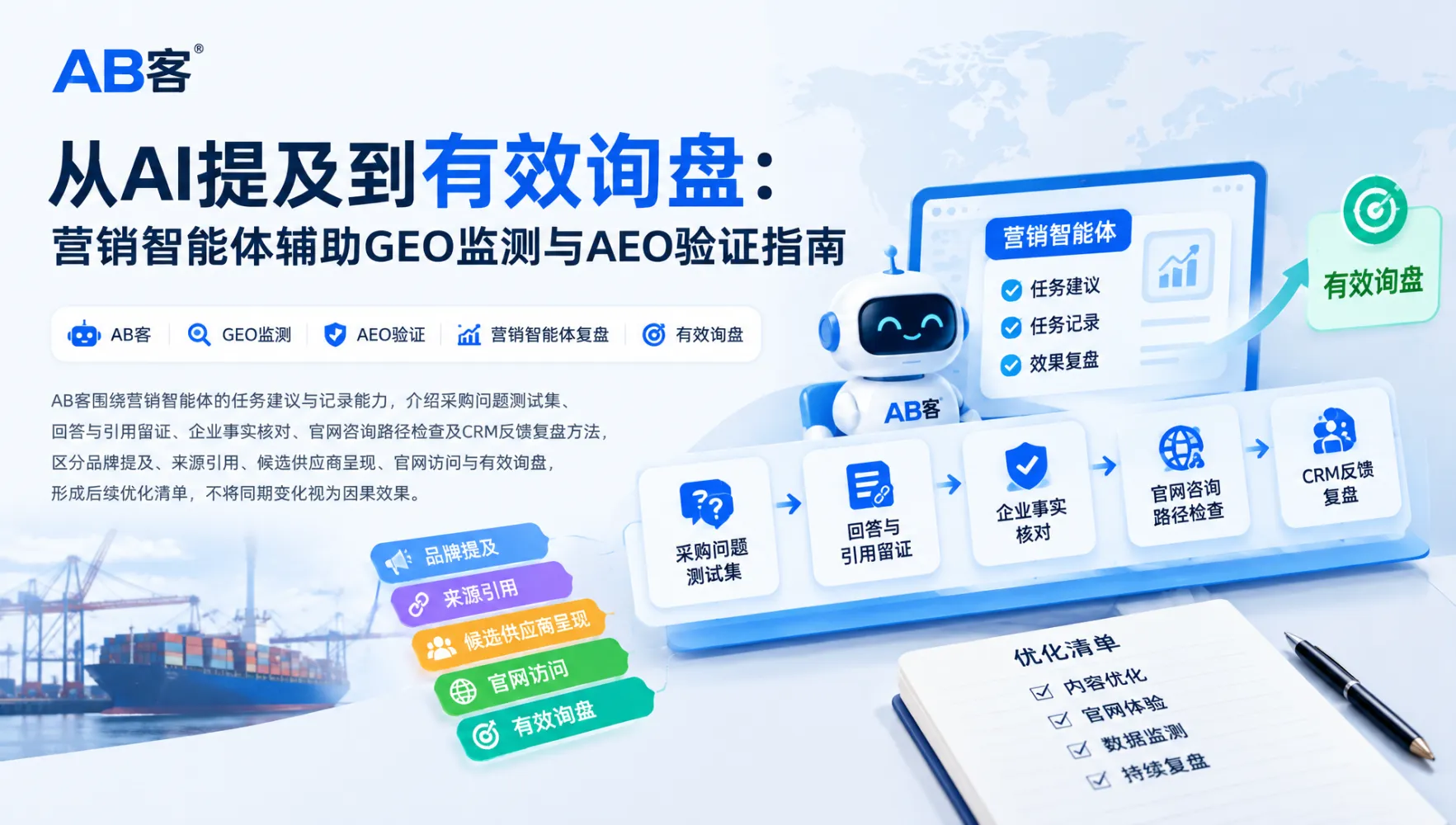
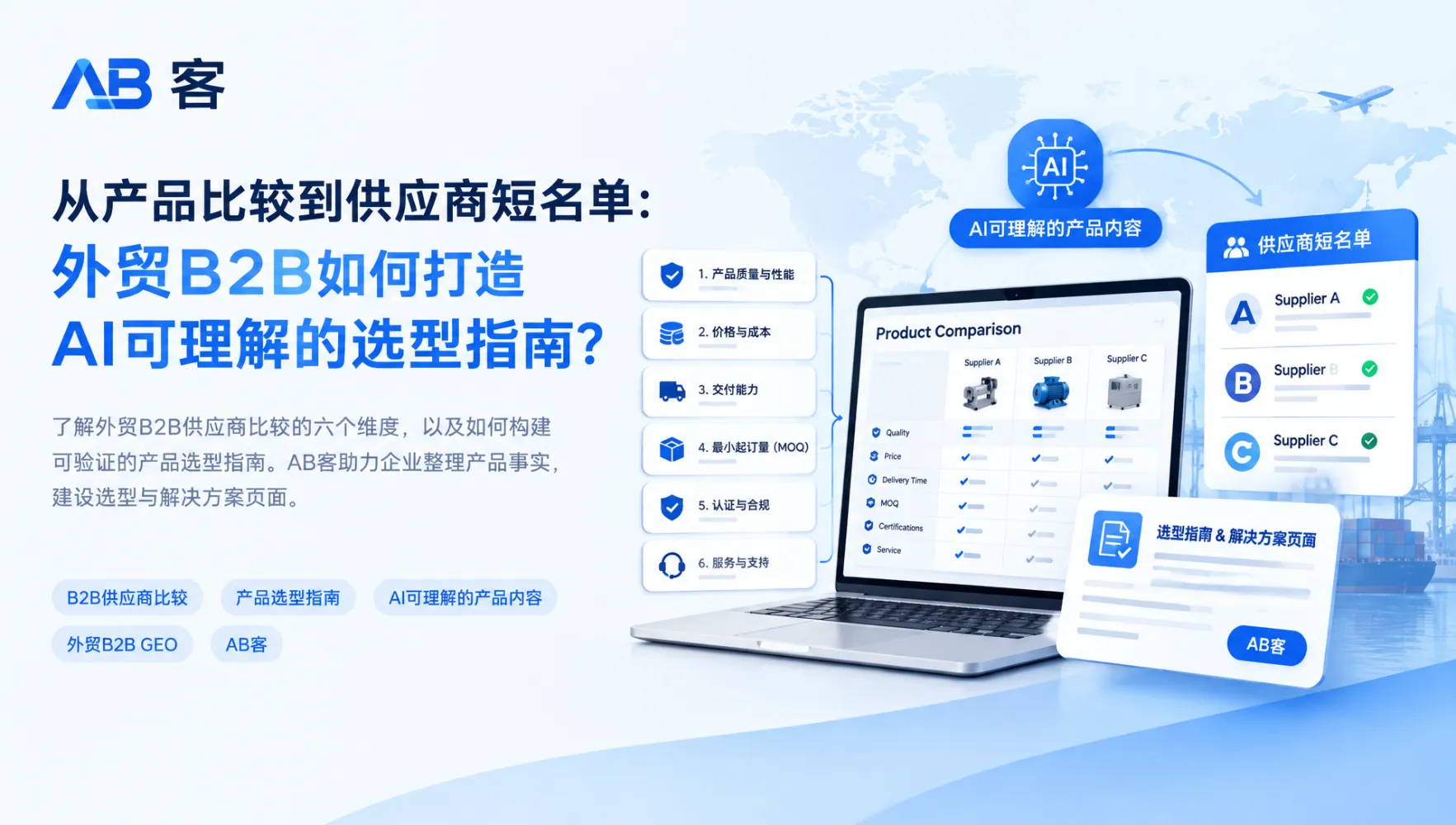
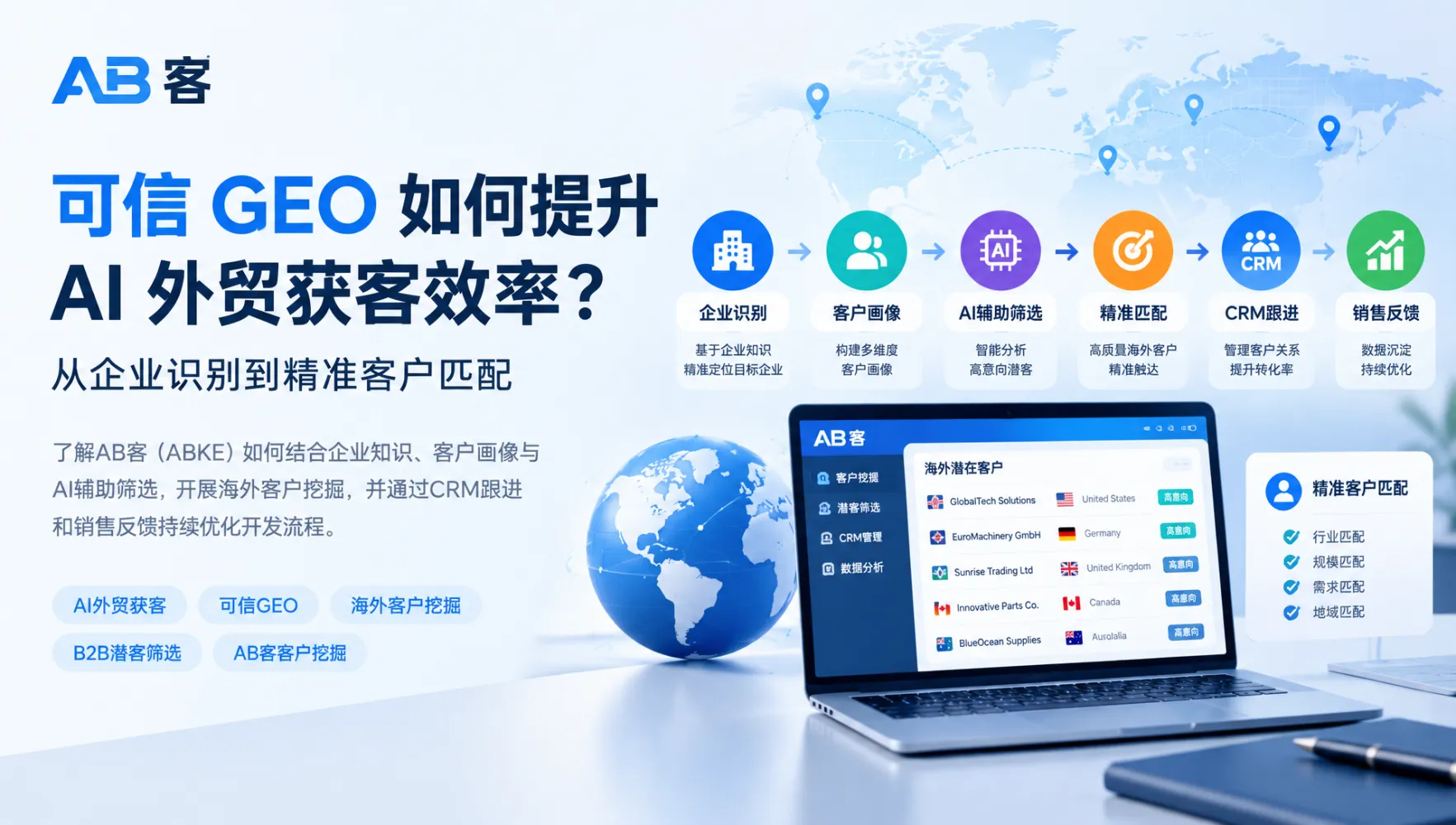
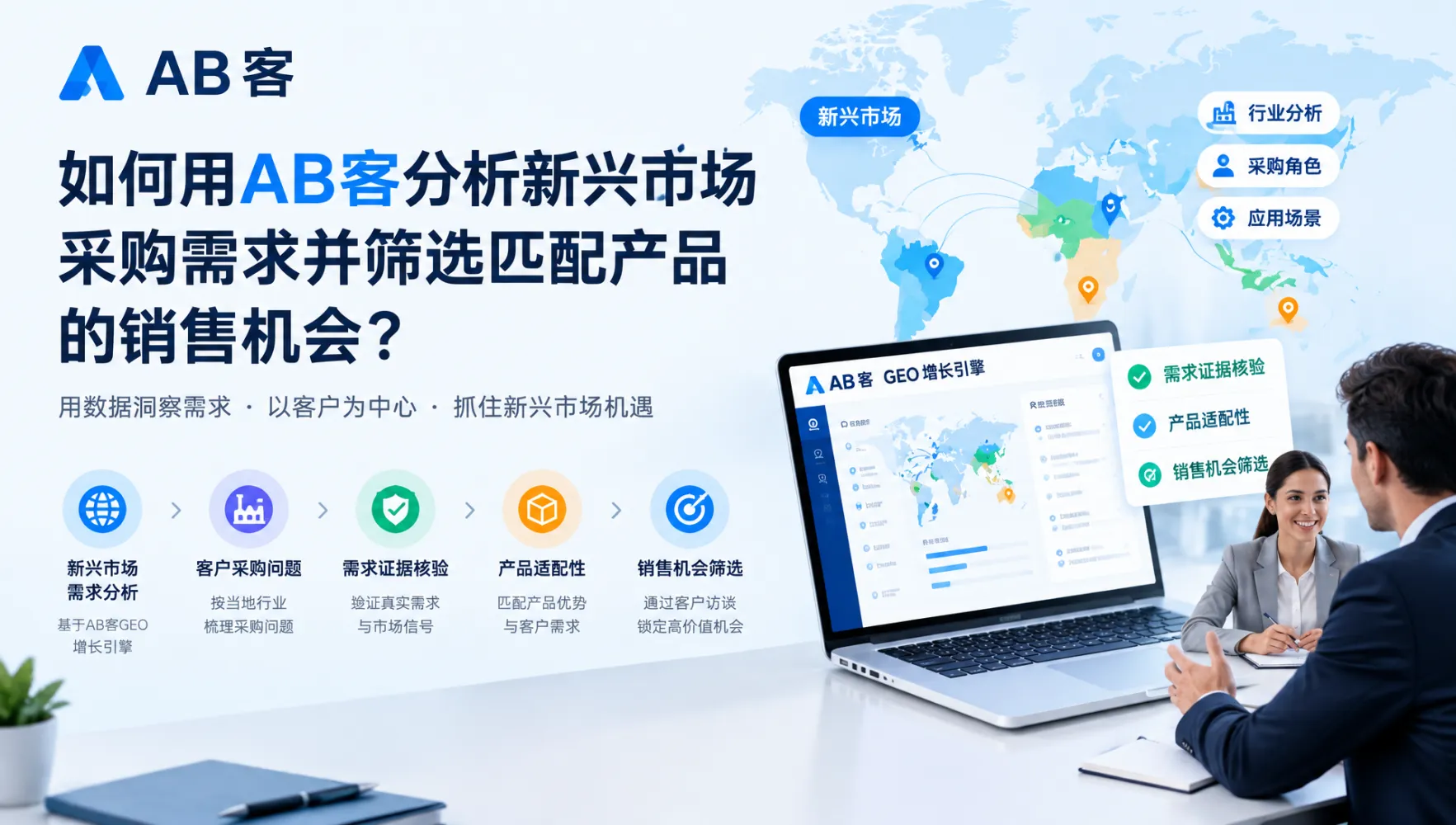
Your competitors are being cited by AI while you aren't: How can B2B foreign trade companies conduct citation gap analysis and content supplementation?
Why are your competitors being cited by AI while your company isn't? AB-Customer analyzes the citation gap analysis method in foreign trade B2B, from the procurement question bank and competitor page breakdown to content supplementation and continuous retesting.
The fact that competitors appear in the AI's answers while the company itself doesn't doesn't necessarily indicate a gap in product capabilities. What's more worthy of investigation is: what questions did the buyers ask, what sources did the AI show, what product information, purchasing justifications, and credible evidence did these pages provide, and whether the company's own publicly available content covers the same questions?
AI-powered citation gap analysis focuses on a fixed purchasing question, comparing a company's and its competitors' responses, citation sources, and content evidence to determine areas for improvement in website content and publicly available information. It focuses not only on whether the brand is mentioned, but also on whether customers obtain sufficient information to support their purchasing decisions. Results across different platforms will vary over time, in different regions, and under different testing conditions; analysis should be based on multiple observations rather than drawing conclusions from a single response.
Why might competitors have an easier time getting answers from AI than you do?
AI-generated answers may reference official websites, industry media, directories, or other searchable sources. The citation of competitors may be related to the relevance of the page content, its public accessibility, and the completeness of the evidence, but the specific selection mechanism of the platform cannot be determined solely from the results.
-
More complete product information:The page clearly explains the product specifications, applicable conditions, selection boundaries, and procurement information, and can directly respond to the buyer's specific questions.
-
The comparison page provides more comprehensive coverage:Provide objective comparisons based on different product types, processes, or application conditions to help buyers understand the basis for their selection, rather than simply emphasizing one's own advantages.
-
The professional content is more relevant to procurement issues:Provide clear explanations for practical issues such as technical compatibility, quality requirements, and delivery conditions, making the page theme more relevant to buyers' questions.
-
There is more third-party content and publicly available information:Industry platforms, company directories, and other publicly available sources may supplement company information; the reliability of the sources, the consistency of the content, and accessibility are all worth verifying.
When making a judgment, one should distinguish betweenThe brand was mentioned,Page referencedandThe information is accurately describedThese three are not the same thing. Some platforms do not display source links, and the specific page referenced should not be inferred when verification is impossible.
How to build a database of questions related to competitor AI citations?
The question database should start from the actual procurement path, not just search for company names. First, identify key products, target countries or regions, and then select representative questions based on the procurement role and stage. Question sources can include sales communication records, inquiry emails, product materials, and common customer concerns; information involving customer privacy should be anonymized first.
Define the product category, specifications, or solution.
Determine the country, language, and relevant procurement context.
Differentiate between key considerations such as procurement, technology, and quality.
It covers demand identification, selection, evaluation, and collaboration.
For example, technicians might focus on whether the equipment can adapt to specific operating conditions; purchasing personnel might focus on how the supplier confirms specifications, pricing, and delivery conditions; and quality personnel might inquire about inspection methods and available supporting documentation. Write the questions in natural language that the buyer might actually ask, and retain versions in the corresponding language.
When establishing an issue log, record the original issue text, the product it pertains to, the target market, the role, the stage, and the purpose of the test. Fixed issues do not mean they are permanent: when new products, new markets, or sales feedback emerge, new issues should be added, while the original issues should be retained for comparison.
How to analyze a competitor's referral pages?
For links explicitly displayed on the platform, visit each one and record the actual content of the page. If a link cannot be opened, the source cannot be identified, or the answer does not provide a link, this should be clearly stated, and speculation should not be treated as factual. Save the access date and necessary page records for future review.
-
Page source and owner:Identify whether the source is the company's official website, industry media, platform directory, or other sources, and verify the relationship between the publishing entity and its competitors.
-
Page type and theme:Differentiate between product pages, application pages, purchasing guides, FAQs, or third-party introductions to determine what questions each page primarily answers.
-
Procurement issues covered:The record page should explain the selection criteria, applicable scenarios, supplier evaluation or delivery requirements, and whether the answers are specific.
-
Product parameters and supporting evidence:Check whether the specifications, technical instructions, testing basis, case studies or qualification materials have a clear source, and distinguish between facts, publicity statements and speculation.
-
Page update time and public access status:Record the update date displayed on the page; if no date is found, mark it as not displayed, and check if the content can be accessed normally without logging in.
The purpose of analysis is not to copy competitors' content, but to understand the relationship between buyer questions and page information. Businesses should use their own product information, actual capabilities, and publicly available evidence to formulate independent and accurate answers.
How to build a competitive content gap matrix?
Compare competitor pages with your own official website, knowledge base, and publicly available information in the same table. Differences include not only "no page," but also pages that exist but have outdated information, insufficient evidence, are inaccessible, or do not answer specific procurement questions.
| Content Dimension | Comparison of key points | Its own potential gaps | Filling direction |
|---|---|---|---|
| product | Specifications, configuration, and applicable conditions | The page only provides an overview and lacks selection information. | Verify and supplement publicly available parameters |
| technology | Principles, Interfaces, and Usage Limitations | Technical issues lack clear answers | The explanation was improved after verification with the technical staff. |
| application | Operating conditions, scenarios, and adaptation requirements | The product is not specified to meet any particular need. | Supplement applicable conditions according to real-world scenarios. |
| Case | Project background, proposal and evidence | Lack of verifiable project description | Organize authentic materials within the authorized scope. |
| price | Pricing terms and cost factors | Buyers don't know how to get quotes | Explain the information required for a price inquiry and the influencing factors. |
| After-sales service | Support scope, communication and processing procedures | The support methods after cooperation are unclear. | The process is explained according to the actual service conditions. |
The table lists common areas for inspection and does not represent the problems faced by every company. For prices, customer names, or technical details that are not suitable for public disclosure, please explain the influencing factors, applicable boundaries, and consultation methods. Information should not be fabricated to fill gaps.
How to prioritize content replacement?
Prioritize issues directly related to key products and target markets that can influence supplier selection or evaluation, then consider the level of data preparation and implementation costs. For high-value issues lacking reliable data, internal verification should be arranged first, rather than immediately generating a page.
Related procurement decisions Complete the missing pages
Covering specific needs Optimize existing facts
Verify parameters and evidence Building third-party content
Maintain information consistency
In practice, issues can be categorized into three types: "existing pages can be improved," "new pages are needed," and "data needs confirmation." Product pages should prioritize adding specifications and applicable conditions; technical or procurement issues are best reviewed by relevant professionals; third-party platforms should be selected from channels relevant to the target market and industry, and the consistency of company name, product description, and contact information should be checked regularly.
Each task should clearly identify the person in charge, the source of information, the reviewer, and the publication location. Multilingual content must be verified against local terminology and original facts to avoid translations that alter the meaning of product capabilities, delivery conditions, or evidence.
How can we retest whether the optimization is effective?
After content is published or updated, retest using the same questions from the question bank. Try to maintain consistency in platform, language, region settings, and question format, and record verifiable conditions such as test date, platform version or mode, and whether an internet connection was enabled. AI answers are volatile; results should be observed through multiple tests.
| Record Project | Check during retesting | Judgment precautions |
|---|---|---|
| Brands and competitors | Whether it appears, and the context of the response. | Appearance does not equate to recommendation or citation. |
| Citation Source | The platform displays the source name and URL | Mark as unverifiable when no link is displayed |
| Information accuracy | Are the product, specifications, and service descriptions accurate? | When errors are discovered, investigate publicly available information and correct them. |
| Content and business performance | Page views, related inquiries and follow-up feedback | Based on the analysis of source records, not all changes are attributed to GEO. |
The results of the retest can guide content updates: if the buyer's question has been covered but the facts are unclear, the page should be improved first; if the AI answer cites old third-party materials, it can be verified and the relevant publisher should be contacted for an update. Even if the page is indexed or the content is optimized, there is no guarantee that a specific platform will cite or recommend it.
How exactly does AB customer perform citation gap analysis and content filling?
AB customerFor B2B foreign trade enterprises, the approach combines corporate knowledge base, website content review, and GEO monitoring to identify content gaps around key procurement issues. The corporate knowledge base is used to organize verified products, applications, services, and trust evidence; the website content is responsible for public expression and inquiry handling; and continuous monitoring provides a basis for subsequent adjustments.
Implementation process
-
Organize company information:Collect key products, target markets, sales Q&A, and publicly available evidence, and mark information that needs to be verified or is not suitable for public disclosure.
-
Establish a procurement issue and competitor list:By combining product, country, procurement role, and stage, select testing questions to identify the competitive entities and AI platforms that need to be observed.
-
A review of the gap between citations and content:Record visible sources of citations and compare them with the company's existing pages to create a list of gaps in areas such as products, technology, applications, case studies, pricing, and after-sales service.
-
Develop and implement a replacement plan:The creation or updating of pages is arranged according to the procurement value and the maturity of the data. Relevant personnel of the enterprise verify the facts and set up the inquiry entry point in an appropriate location.
-
Continuous retesting and iteration:Record the results according to the agreed test conditions, and update the question bank, knowledge base, and subsequent content plan based on page performance and sales feedback.
For example, when a manufacturing company is checking equipment selection, it may find that its product page lacks operating condition descriptions. The technical team can first confirm the applicable conditions, then improve the page, and observe changes in relevant answers and sources during subsequent retesting. This is a methodological example and does not represent actual customer projects or guaranteed results.
Before engaging in specific cooperation, companies can prepare their existing websites, product information, target markets, and information on major competitors, and confirm the scope of analysis, data review responsibilities, monitoring methods, and delivery arrangements with AB clients.
Related reading:
FAQ
A competitor is mentioned, but no citation link is displayed. Can this still be analyzed?
It's acceptable to record brand appearances and the context of responses, and to conduct independent reviews of publicly available content; however, a single page cannot be considered the actual source of the reference. "Mentioned" and "cited" should be recorded separately.
Should we add a large number of new articles first?
Not necessarily. First, check if existing product pages and high-value procurement issues are lacking facts, evidence, or clear explanations; issues that can be resolved with an update do not need to be rewritten with a new page.
Is more information on third-party platforms always better?
Quantity is not the only criterion. More attention should be paid to the relevance of channels to the industry and target market, as well as whether the information is accurate, consistent, and publicly accessible; avoid unfounded propaganda and simple repetitive publishing.
How long will it take to see changes in AI citations?
There is no fixed timeframe. Platform updates, page accessibility, question wording, and competitor content can all affect the results. It is recommended to maintain a baseline and continuously retest, while observing metrics such as content quality, visits, and valid inquiries.
If you want to understand the gaps in your company's knowledge of key procurement issues, you can...Contact AB customerWe will conduct a citation gap analysis by combining the existing official website, product information and target market, and discuss suitable content supplementation and retesting solutions.


