.png?x-oss-process=image/resize,h_100,m_lfit/format,webp)

.png?x-oss-process=image/resize,m_lfit,w_200/format,webp)

Hot Products
Popular articles
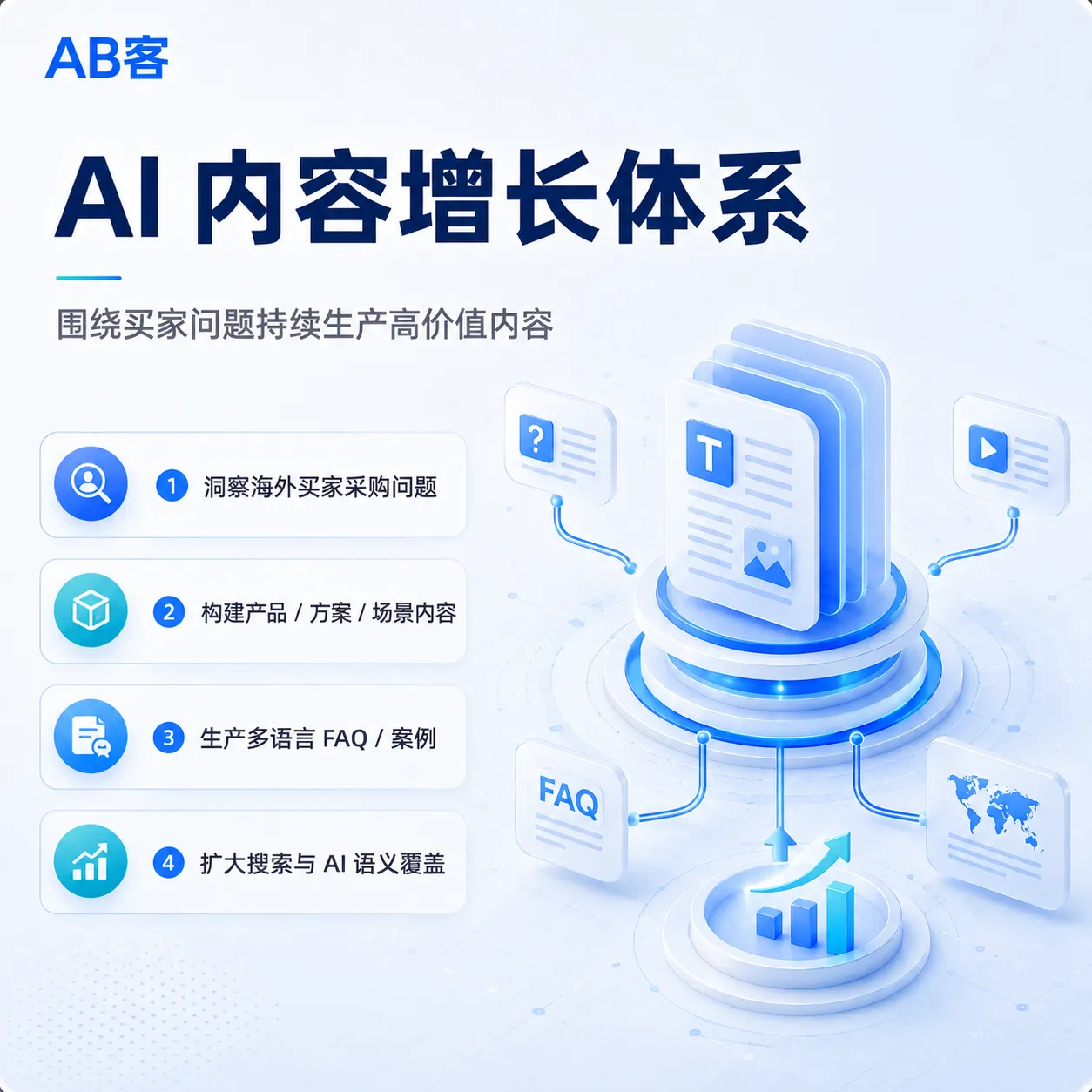
How Can Export B2B Companies Turn Advertising, B2B Platform, and Trade Show Spend into Reusable Digital Assets?
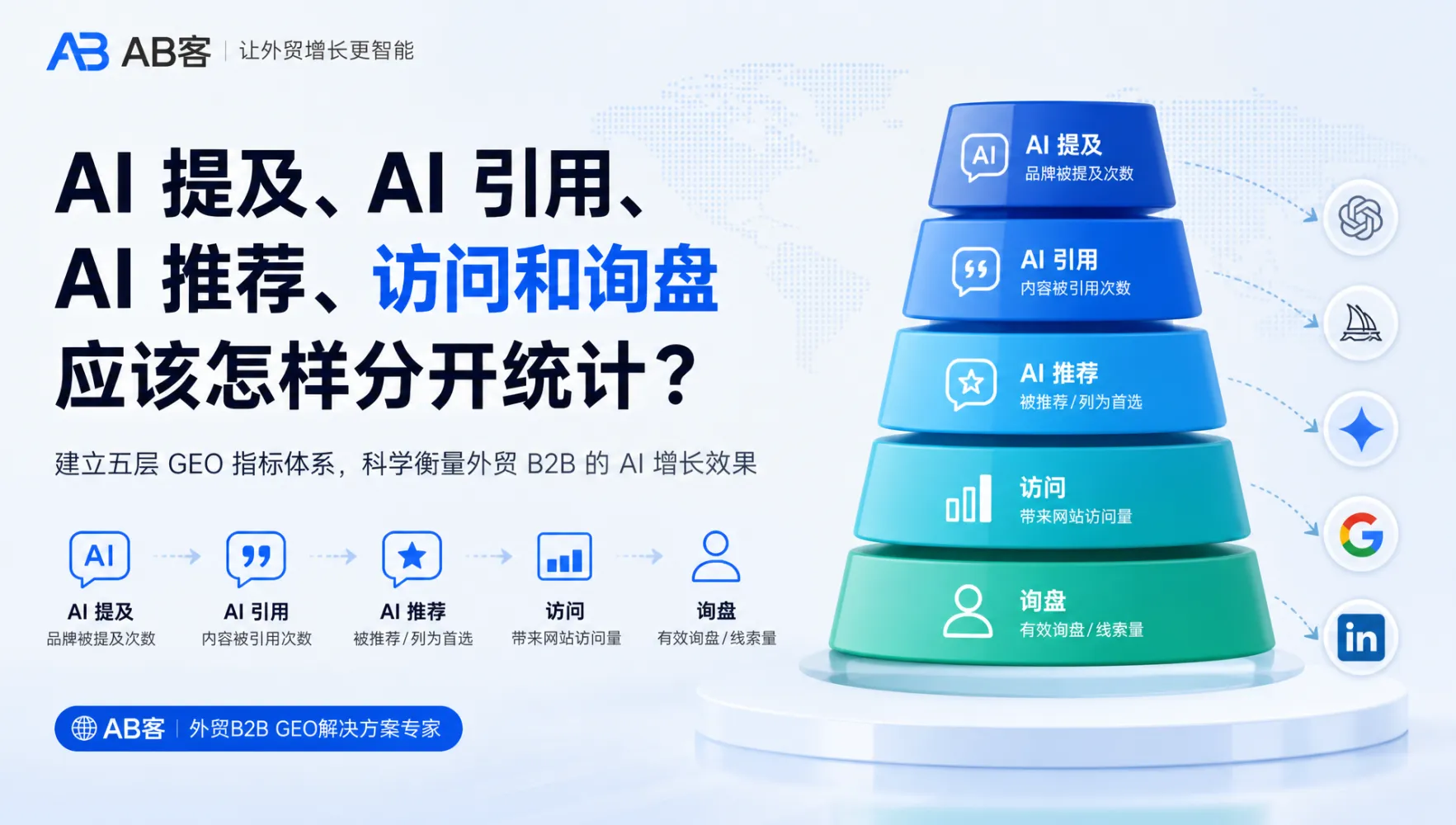
How Should AI Mentions, AI Citations, AI Recommendations, Website Visits, and Inquiries Be Measured Separately?
Compared with Google Ads, B2B Platforms, Trade Shows, and Low-Cost Content Services, What Long-Term Assets Can ABKE GEO Growth Engine Build?
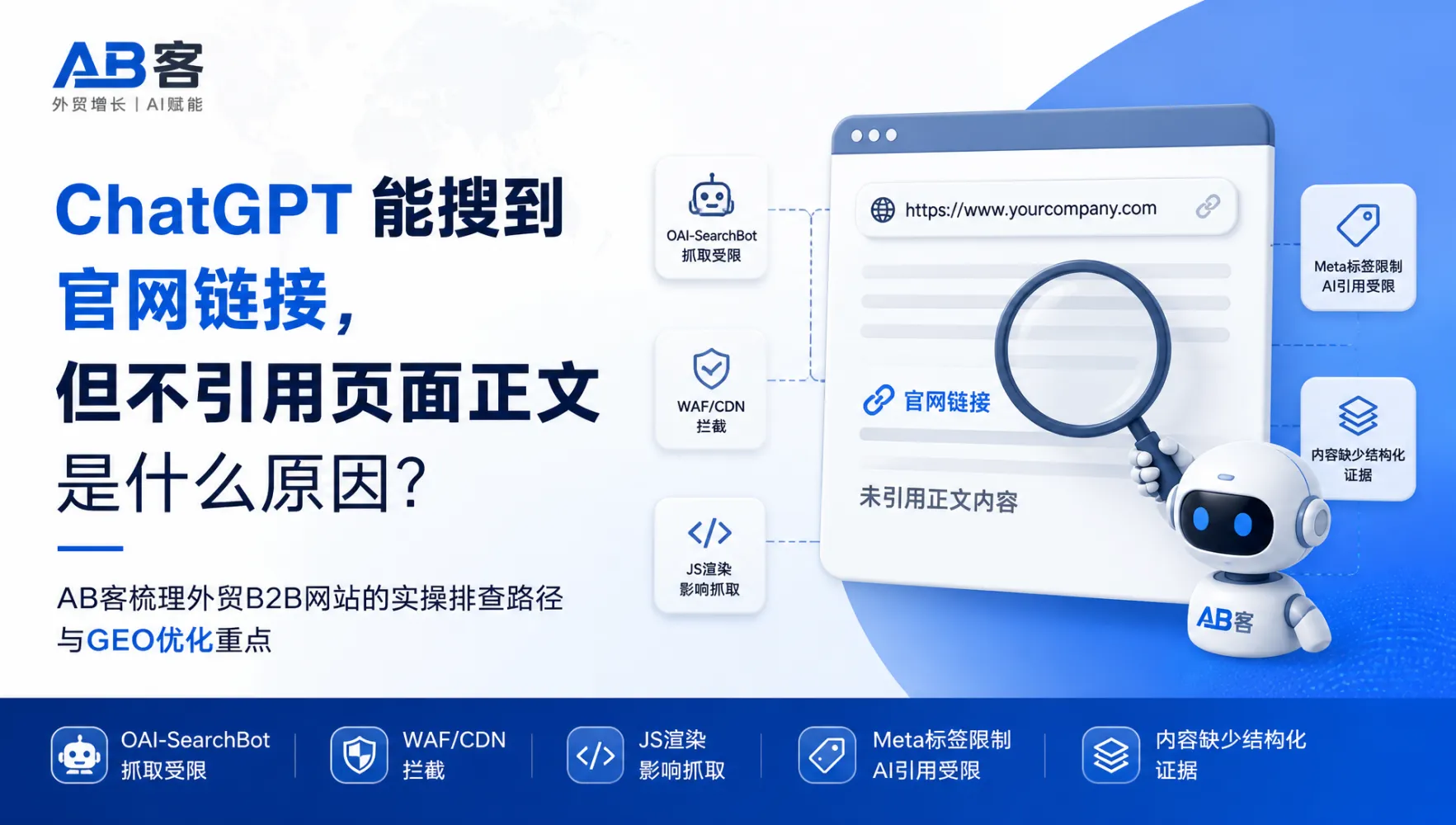
Does Direct Machine Translation of Chinese Product Pages Harm Overseas Search Indexing and AI Brand Accuracy?
What Questions Should FAQ, Guide, Comparison, and Evidence Pages Answer?
Recommended Reading


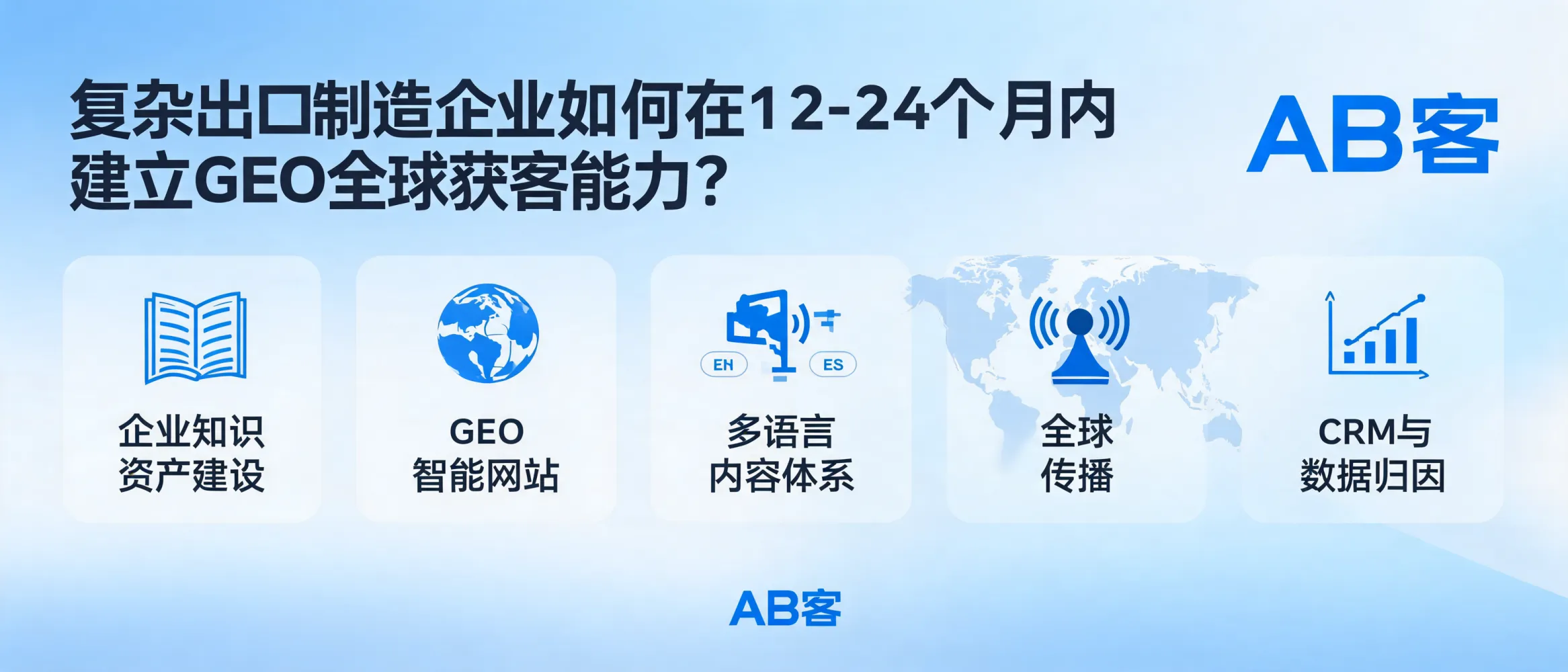
How Export Manufacturers Can Build a Six-Layer GEO Foundation for AI Visibility and Lead Growth
Learn how export manufacturers can build a six-layer GEO foundation for AI search visibility, trusted content, and measurable lead generation with ABKE.
Build a GEO Foundation for Export Growth in 90 Days
For export manufacturers, GEO is not a single content task. It is a complete growth infrastructure that helps AI systems understand your company, trust your expertise, and recommend your business to the right buyers.
Why a six-layer foundation matters
Most GEO efforts fail for one simple reason: they only publish content, but do not build the knowledge, proof, distribution, and feedback loops that AI platforms need in order to cite and recommend a company with confidence.
A durable GEO system works as one connected chain: verified company facts, buyer-driven knowledge, an AI-readable website, trust evidence, global content distribution, and CRM-based optimization. When one layer is missing, recommendation probability drops sharply.
What export manufacturers need first
- Clear company identity and capability boundaries
- Structured product knowledge and technical proof
- Buyer FAQ content based on real search intent
- Trust evidence such as certifications, cases, and delivery records
- SEO and GEO website pages that AI can read and cite
- Lead capture, CRM tracking, and feedback-based optimization
Best starting point
Start with one core product line, not the full catalog. Build a 90-day pilot around a single market entry path, then replicate the structure across other products and regions once the process is validated.
This approach reduces risk, improves execution speed, and makes performance easier to measure.
The six layers of a GEO growth foundation
L1. Company Facts Layer: unify your company identity
The first task is to remove ambiguity. AI must be able to answer: who you are, what you do, what you do not do, and why you are credible.
| Recognition Dimension | What to Document | Expected Output |
|---|---|---|
| Identity positioning | Registered company data, brand name, product lines, target markets | A standard company introduction usable across channels |
| Capability boundaries | Capacity, equipment, R&D team, delivery scope, excluded order types | A capability boundary document |
| Product structure | Models, categories, processes, core components | A standardized product knowledge base |
| Trust evidence | Certifications, testing reports, factory qualifications | A verifiable trust evidence list |
| Differentiation | Real differences versus competitors, total cost advantages, risk reduction points | A differentiation asset library |
Avoid vague labels such as “high-end,” “best quality,” or “large factory.” Replace them with facts that can be verified by buyers and interpreted by AI systems.
L2. Buyer Knowledge Layer: match how buyers actually ask questions
A strong GEO system is built around real buyer intent. Instead of writing content for yourself, build content for the questions buyers ask at every stage of their decision process.
- Identity questions: Who are you? What do you make? Which markets do you serve?
- Technical questions: What specifications, materials, tolerances, or standards do you support?
- Selection questions: Which model is suitable for my application?
- Risk questions: How do you ensure quality, delivery, and after-sales support?
- Comparison questions: How do you differ from other suppliers?
Build three levels of knowledge: identity anchors, professional decision support, and continuous expansion topics such as industry trends, technical education, and company updates.
L3. Digital Delivery Layer: turn your website into an AI-readable knowledge center
A traditional website acts like a brochure. A GEO website acts like a trusted first-party knowledge source. It must be easy to crawl, easy to parse, and easy to trust.
L4. Trust Evidence Layer: build a multi-source credibility network
AI systems do not rely on a single page when evaluating whether a company should be recommended. They look for repeated, consistent, and verifiable signals across multiple sources.
- Capability evidence
- Certification and test evidence
- Project and delivery cases
- Process documentation
- Third-party mentions and directory listings
- Consistent company information across channels
The rule is simple: do not copy the same promotional text everywhere. Each channel should add a different trust signal while keeping the core facts consistent.
L5. Global Distribution Layer: make your knowledge discoverable across channels
If your company only exists on its own website, external validation is weak. A GEO program should distribute content into trusted ecosystems where buyers and AI platforms already search.
- LinkedIn for professional reach
- YouTube for explanation and demonstration
- B2B platforms for product visibility
- Industry directories for entity consistency
- News and media placements for broader trust signals
The goal is not mass posting. The goal is multi-source consistency so the same brand facts appear in credible contexts and become easier for AI to validate.
L6. Conversion Feedback Layer: use inquiry and CRM data to improve GEO
A GEO foundation is not complete until feedback data flows back into the system. Leads, objections, and sales outcomes reveal which content is helping and which content is missing.
| Data Area | What to Track |
|---|---|
| AI visibility | Mentions, citations, recommendation frequency, answer accuracy |
| Website behavior | Brand traffic, high-performing landing pages, country sources |
| Inquiry quality | Lead source, product need, intent level, qualification status |
| Sales feedback | Objections, missing materials, comparison pain points |
| Closed-loop optimization | Content gaps, weak proof pages, expansion opportunities |
A practical 90-day GEO pilot roadmap
Days 1–30: diagnosis and facts alignment
- Audit company information across all channels
- Select one product line for the pilot
- Build the core knowledge base and buyer question set
- Review technical website health and indexing readiness
Days 31–60: website GEO upgrade and evidence completion
- Rebuild the pilot product pages with scenario, specs, and FAQ blocks
- Add certificates, application cases, and capability evidence
- Publish the first batch of buyer-question content
- Set up AI visibility tracking and reporting
Days 61–90: distribution and closed-loop validation
- Sync content across LinkedIn, YouTube, and B2B channels
- Record inquiries, AI sources, and sales outcomes
- Identify missing knowledge points and weak proof pages
- Refine the pilot based on conversion feedback
Common obstacles and how to handle them
- Limited team capacity: Use an AI + human collaboration model. Let AI draft, structure, and translate while your team verifies facts.
- Insufficient case studies: Start with existing factory credentials, domestic projects, and verifiable delivery evidence, then add overseas cases over time.
- Budget constraints: Improve the current website first. A well-structured existing site often brings faster ROI than building many new assets at once.
How ABKE supports this process
ABKE’s GEO Growth Engine is designed for export B2B companies that need a structured way to become visible, understandable, and recommendable in the AI search era.
It combines enterprise knowledge management, multilingual content systems, SEO and GEO website planning, global distribution, intelligent automation, and CRM feedback so your growth process is not dependent on scattered execution.
Instead of treating GEO as isolated content production, the platform helps companies manage the full chain from company facts to buyer demand, from AI visibility to inquiry conversion, and from content creation to measurable optimization.
Final takeaway
GEO is not about producing more pages. It is about building a complete foundation that helps AI understand your company, trust your evidence, and recommend you with confidence.
If you begin with one product line, create a structured knowledge base, upgrade your website into an AI-readable asset, and connect inquiry data back into optimization, you can build a repeatable growth loop in 90 days.
That is how export manufacturers move from traffic competition to AI recommendation competition.


.png?x-oss-process=image/resize,h_100,m_lfit/format,webp)
.png?x-oss-process=image/resize,h_100,m_lfit/format,webp)

.png?x-oss-process=image/resize,h_100,m_lfit/format,webp)
.png?x-oss-process=image/resize,h_100,m_lfit/format,webp)
.png?x-oss-process=image/resize,h_100,m_lfit/format,webp)
.png?x-oss-process=image/resize,h_100,m_lfit/format,webp)
