.png?x-oss-process=image/resize,h_100,m_lfit/format,webp)

.png?x-oss-process=image/resize,m_lfit,w_200/format,webp)

Hot Products
.png?x-oss-process=image/resize,h_2000,m_lfit/format,webp)

.png?x-oss-process=image/resize,h_2000,m_lfit/format,webp)

Popular articles
How a Food Processing Equipment Company Built Application Scenario, Case, and Channel Content
I've been acquiring customers through Google Ads, overseas trade shows, and B2B platforms, so why are there still no inquiries from customers even after they visit my official website?
Export GEO vs. Domestic GEO: 5 Differences B2B Exporters Need to Know
新产品上市:怎么用内容体系解决海外买家的选型认知问题?
Recommended Reading



From Zero to One: A Practical Four-Stage B2B GEO Roadmap for Export Businesses
Learn how to implement B2B GEO with ABKE’s practical four-stage roadmap—from AI brand understanding and content coverage to trust building, lead conversion, and measurable growth.
From Zero to One: A Four-Stage B2B GEO Roadmap for Export Businesses
Many export B2B companies ask the same questions: How do we actually implement GEO? Do we need to rebuild our website? Should we hire a team or a service provider? When will results appear, and how can we measure them? This guide turns those questions into a practical, buyer-focused implementation path.
Why GEO is different from traditional SEO
In the AI search era, buyers do not only type keywords into Google. They also ask AI assistants direct questions such as: Which supplier is more trustworthy? Who has relevant manufacturing expertise? Which company fits my project requirements?
That means a company must be understood before it can be recommended. ABKE positions GEO as a growth infrastructure for B2B exporters: not just to rank, but to become recognizable, citable, and trusted by AI systems and global buyers.
The practical 4-stage B2B GEO implementation roadmap
ABKE’s GEO Growth Engine is designed for export B2B companies that need a repeatable system, not a one-off content project. The roadmap below is built around business reality: first make the company understandable, then make it visible, then make it trustworthy, and finally make it convert.
Stage 1 — Build the foundation
Timeline: Days 0–90
Goal: Let AI clearly understand who you are, what you make, who you serve, and why you are credible.
What to build:
- Company positioning and category definition
- Product and solution structure
- Factory capability and delivery proof
- Certification, case, and process evidence
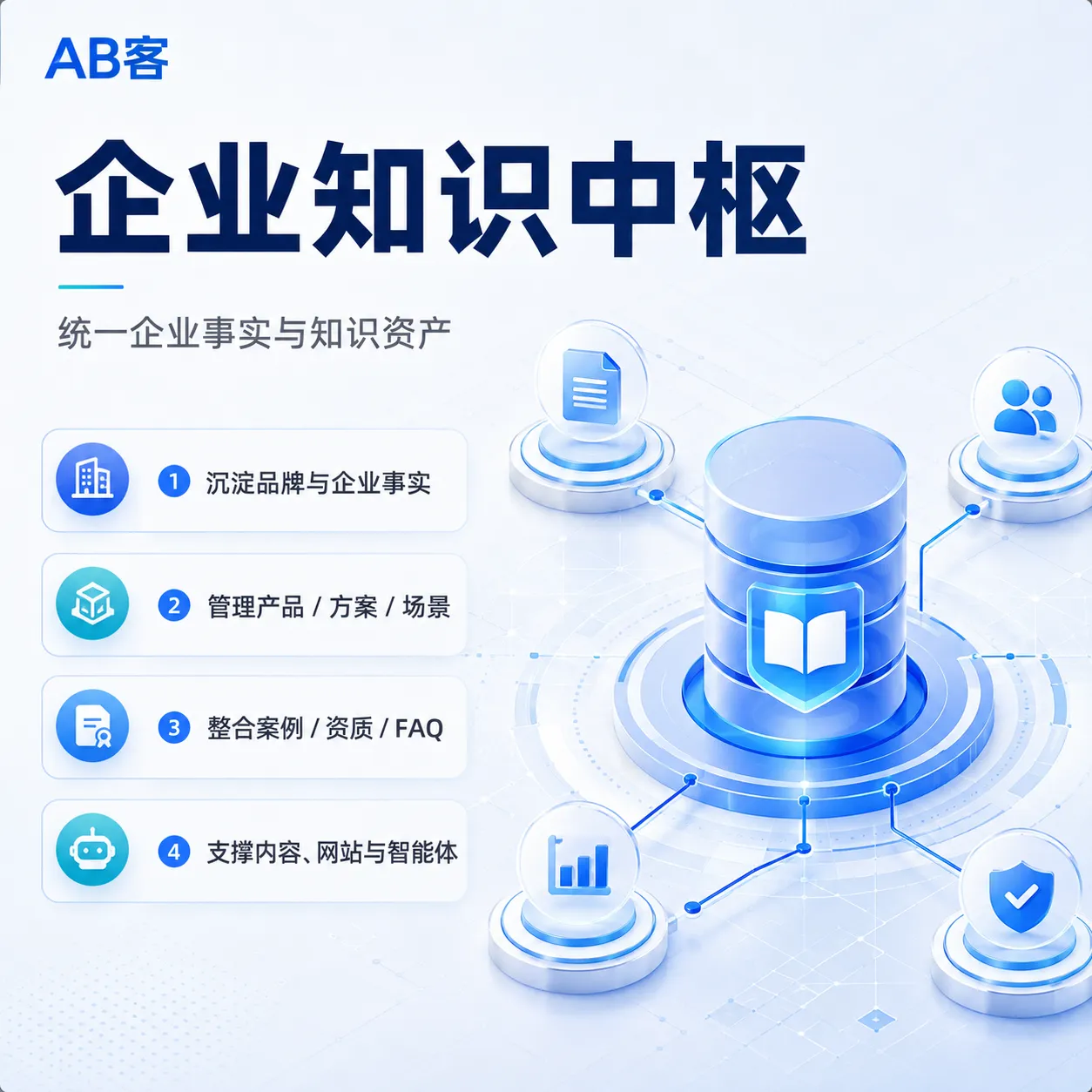
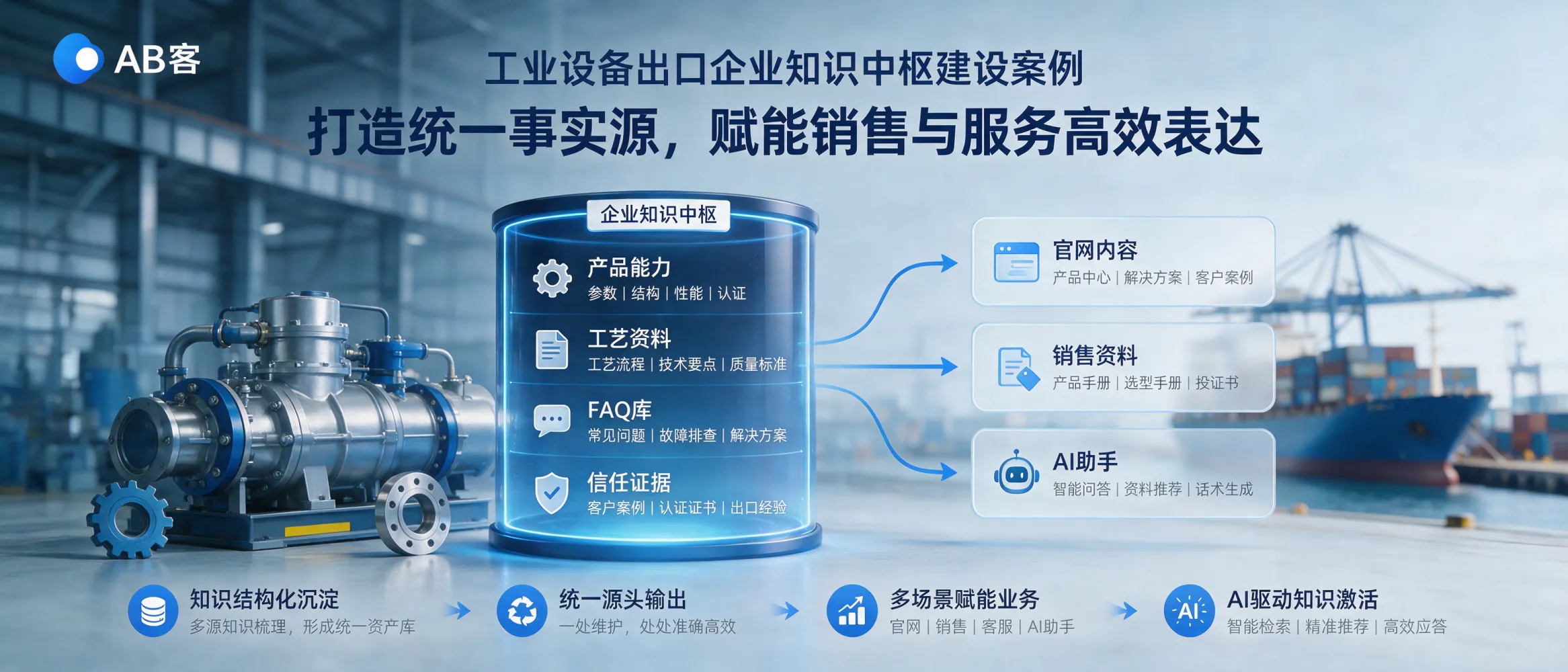
- AI-readable company knowledge base
Stage 2 — Expand content coverage
Timeline: Months 4–9
Goal: Answer real buyer questions so your content can be discovered, cited, and reused by search and AI systems.
What to build:
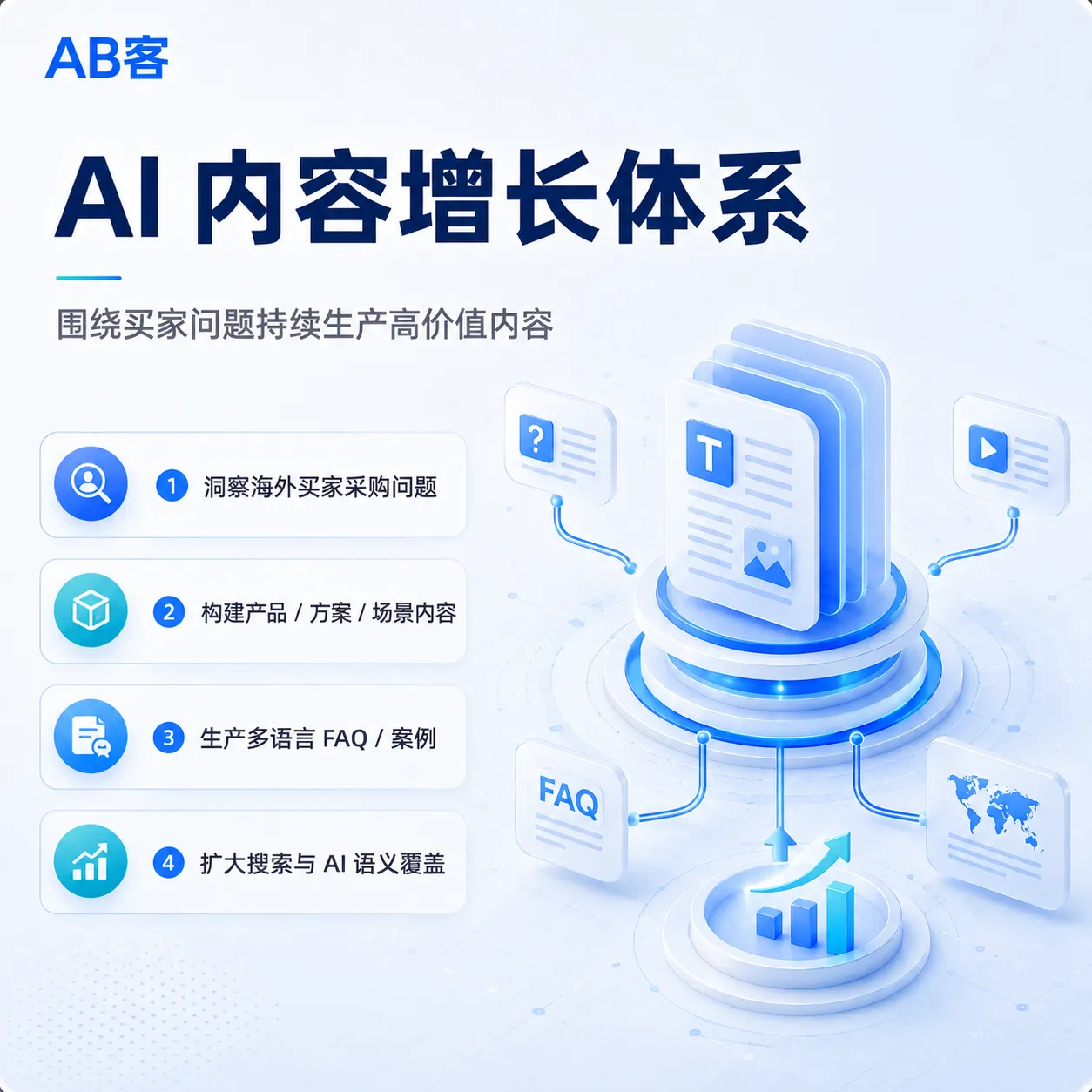
- FAQ clusters
- Product explanation pages
- Application scenario pages
- Comparison and buying guide content
- Multilingual knowledge pages
Stage 3 — Strengthen trust
Timeline: Months 10–18
Goal: Build multi-source evidence so your brand becomes a safer recommendation in AI answers.
What to build:
- External distribution signals
- Third-party profile consistency
- Trust evidence libraries
- Industry-specific content authority
- Technical and service validation
Stage 4 — Convert visibility into growth
Timeline: Months 19–24
Goal: Turn AI visibility and organic exposure into qualified leads, sales follow-up, and measurable revenue contribution.
What to build:
- Inquiry forms and lead capture paths
- CRM tracking and source attribution
- Sales qualification workflows
- Content-to-lead performance analysis
- Continuous optimization loop
A GEO readiness self-check from the buyer’s point of view
Before investing heavily, exporters should assess whether their current digital presence is ready for GEO. The best way is to test the company the same way a buyer — or AI assistant — would evaluate it.
| Assessment area | What buyers and AI need to confirm | Common red flags |
|---|---|---|
| Business identity | Can the company be clearly identified, including products, industries served, and core strengths? | Generic homepage language, vague capabilities, no clear category positioning |
| Trust evidence | Are certifications, factory details, cases, delivery process, and service proof structured and easy to verify? | Proof scattered across files, images without explanation, no evidence hierarchy |
| Content coverage | Does the site answer real questions on selection, specs, quality, pricing, applications, and supplier comparison? | Only product listing pages, no buyer-intent content, weak FAQ structure |
| Website structure | Can search engines and AI understand relationships among products, solutions, FAQs, and case content? | Poor internal linking, shallow page architecture, missing schema markup |
| Conversion loop | Can inquiries, lead quality, and sales feedback be tracked and linked back to content? | No CRM attribution, no lead scoring, no content performance review |
If a company fails in two or more of these areas, a GEO project should usually start with foundation rebuilding, not with content volume alone.
Should an existing SEO website be rebuilt for GEO?
The short answer is: not necessarily. Many companies already have SEO assets that can be upgraded rather than replaced. In practice, the right approach depends on whether the current site can support structured knowledge, scalable content, and conversion tracking.
Upgrade the existing site when:
- The current domain has authority and indexed pages
- Product and solution pages can be reorganized
- FAQ and knowledge content can be added
- Multilingual pages can be built progressively
- Schema and internal links can be improved
Rebuild only when:
- The architecture is too weak to scale
- Page speed and technical debt are severe
- Content management is too limited
- The conversion path cannot be measured
- The site cannot support long-term GEO expansion
Best-practice upgrade components:
- Entity-based company knowledge
- Buyer-question content clusters
- Product-to-solution mapping
- Structured FAQ and case pages
- Tracking for leads and attribution
How to choose a B2B GEO service provider
Because GEO is still new in many export markets, companies are often exposed to vague promises and “AI content” packaging. A reliable partner should be evaluated on business logic, system capability, and measurement transparency — not on slogans.
1) Business-first methodology
They should begin with products, target buyers, market needs, proof points, and sales goals. If a provider starts with generic AI content production, the project is likely to drift away from real commercial outcomes.
2) System delivery capability
GEO is a system, not a single service. The provider should connect knowledge management, website structure, content operations, external distribution, AI visibility monitoring, and CRM feedback.
3) Transparent measurement
The provider should clearly define deliverables, responsibilities, visible metrics, and realistic boundaries. No one can honestly guarantee rankings, AI mentions, or inquiries in a fixed time frame.
4) Industry understanding
For exporters, the team must understand factory logic, B2B procurement, technical decision-making, and long sales cycles. That context matters more than template content.
How GEO performance should be measured
ABKE recommends a five-layer measurement framework. This avoids the common mistake of judging GEO by traffic alone, or worse, by subjective impressions.
| Measurement layer | What to track | Why it matters |
|---|---|---|
| 1. Delivery completeness | Knowledge base, product pages, FAQ pages, schema, multilingual pages, and content inventory | Confirms the system has actually been built |
| 2. Search visibility | Indexing, keyword coverage, organic traffic, long-tail query growth | Shows whether search engines can find and rank the content |
| 3. AI visibility | Mentions, citations, recommendation presence, answer accuracy, brand appearance in AI responses | Measures whether AI systems can recognize and recommend the brand |
| 4. Conversion quality | Inquiry volume, qualified leads, downloads, email clicks, WhatsApp clicks, sales follow-up | Connects visibility to commercial opportunity |
| 5. Long-term assets | Reusable content, brand authority, multilingual coverage, accumulated company knowledge | Captures the compounding value of GEO over time |
ABKE’s GEO Growth Engine: what the platform and service system covers
ABKE, the core brand of Shanghai Muke Network Technology Co., Ltd., is built as a B2B GEO growth infrastructure for export businesses. Its value is not a single tool, but a structured system that connects brand understanding, content production, website execution, distribution, visibility monitoring, and lead conversion.
Core modules
- Enterprise knowledge system
- AI-understandable digital persona
- GEO content engine
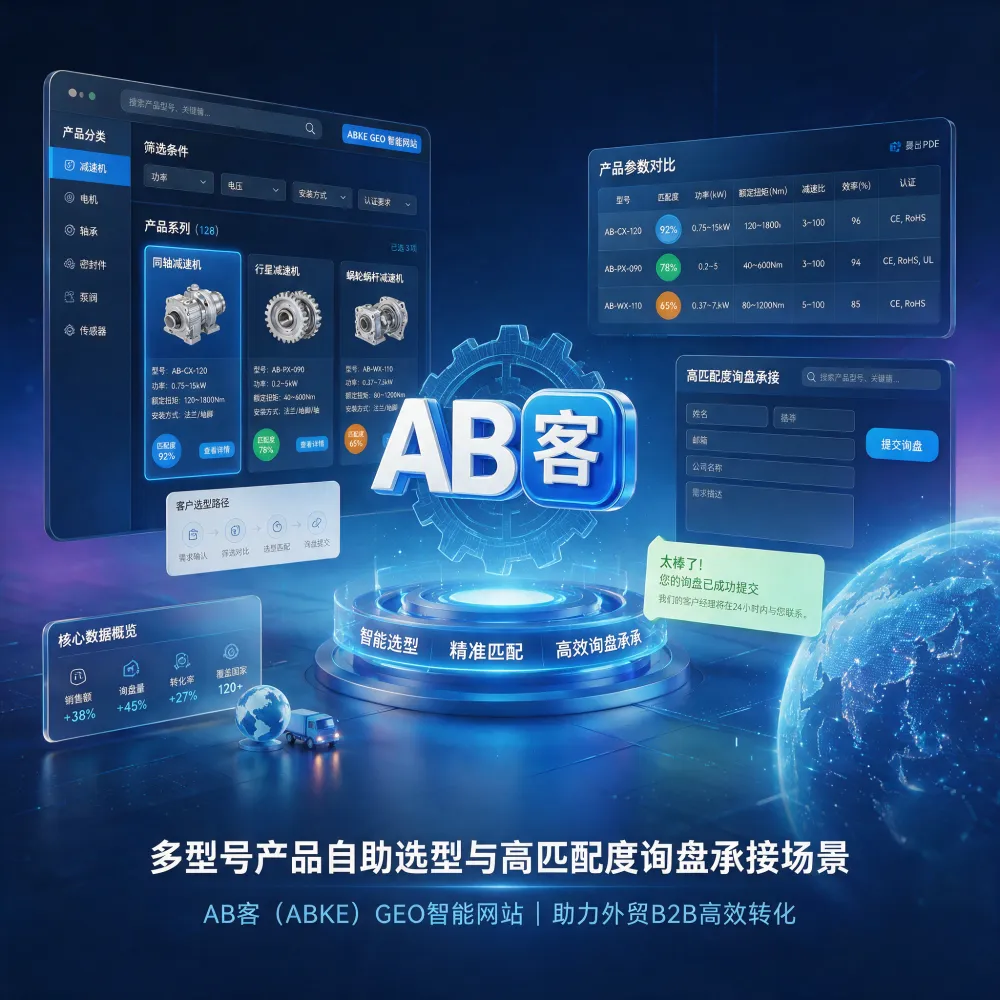
- SEO & GEO website framework
- Global content distribution
Growth support modules
- Lead capture and CRM integration
- AI visibility and attribution monitoring
- Multilingual content operations
- Marketing agent workflows
- Continuous optimization loop
Why this matters for exporters now
GEO is not simply a new marketing trend. It is a shift in how buyers discover and compare suppliers. Companies that build a structured knowledge base, buyer-question content, trust signals, and measurable conversion paths will be far more prepared for AI-driven discovery.
For manufacturers and export B2B businesses, the opportunity is clear: move from traffic competition to recommendation competition. In that environment, the strongest advantage is not more noise — it is clearer understanding, stronger evidence, and better system execution.
ABKE’s practical view: If your company can be understood by AI, trusted by buyers, cited by content systems, and tracked through CRM, then GEO becomes a growth infrastructure — not just a marketing experiment.
Final takeaway
A successful B2B GEO implementation should not start with “How do we generate more content?” It should start with “Can AI understand our business, and can buyers trust what they see?”
The four-stage roadmap — foundation, coverage, trust, and conversion — gives exporters a practical way to move from zero to one without wasting time on disconnected tactics. With the right structure, GEO can become a durable growth asset for the company’s next phase of international expansion.
ABKE supports this process with a full-stack GEO growth engine for export B2B companies, combining knowledge architecture, content systems, intelligent websites, distribution, visibility monitoring, and lead conversion workflows.


