Hot Products





Popular articles
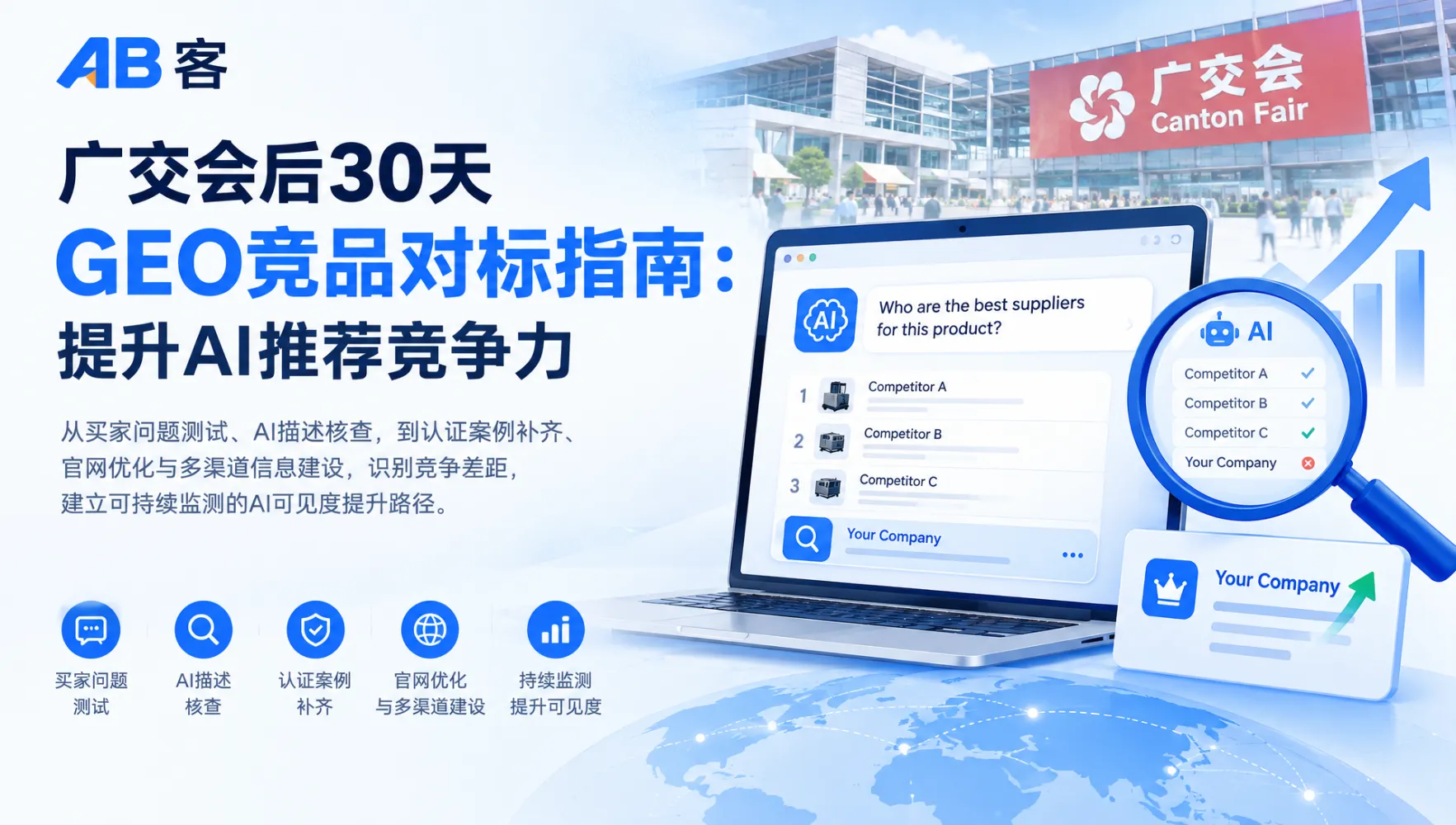
How can AI assist sales at the Canton Fair? Transforming negotiation records into CRM follow-ups and GEO tasks.
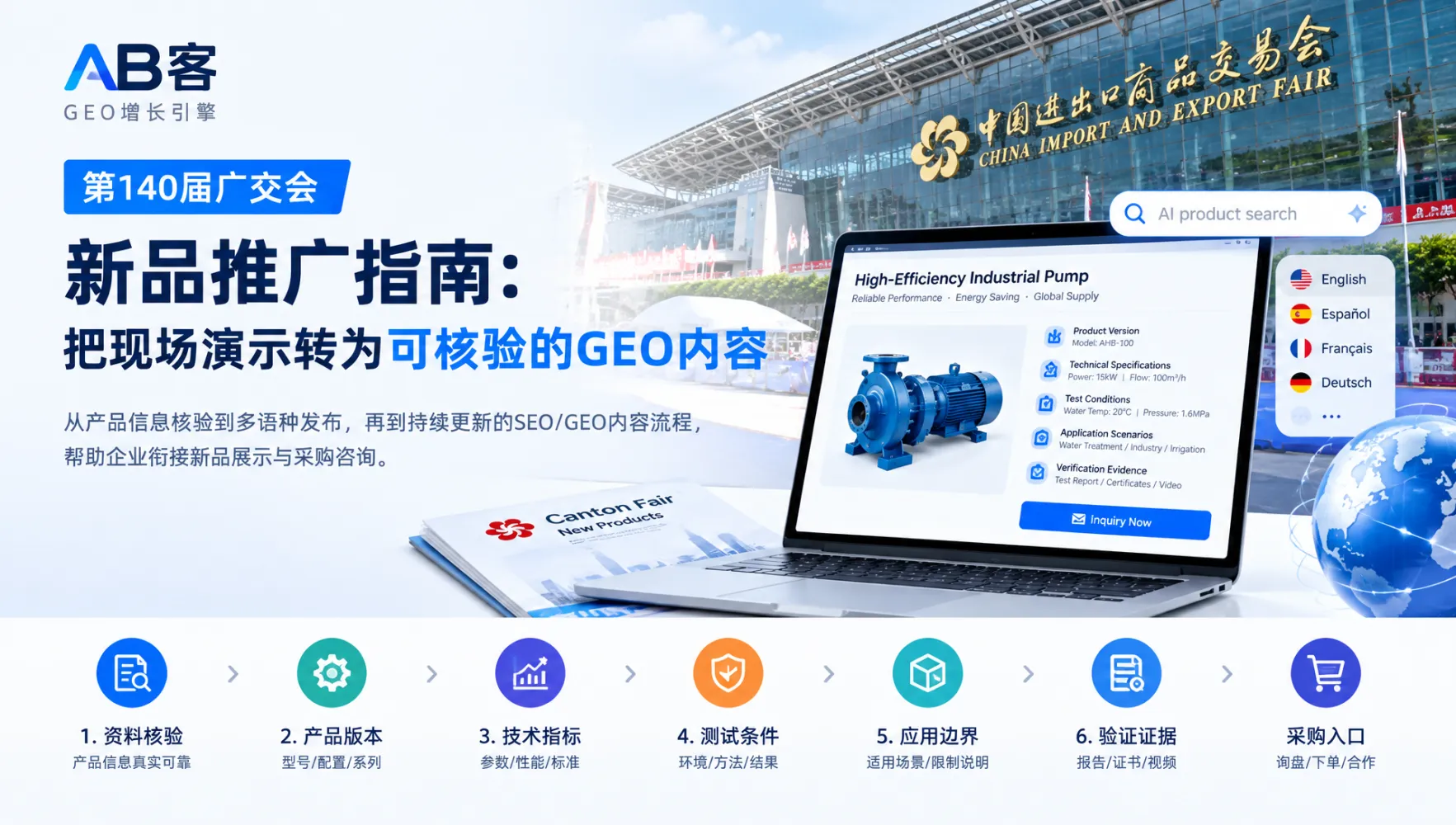
第140届广交会新品如何做GEO内容?从现场演示到采购咨询的六项信息核对指南
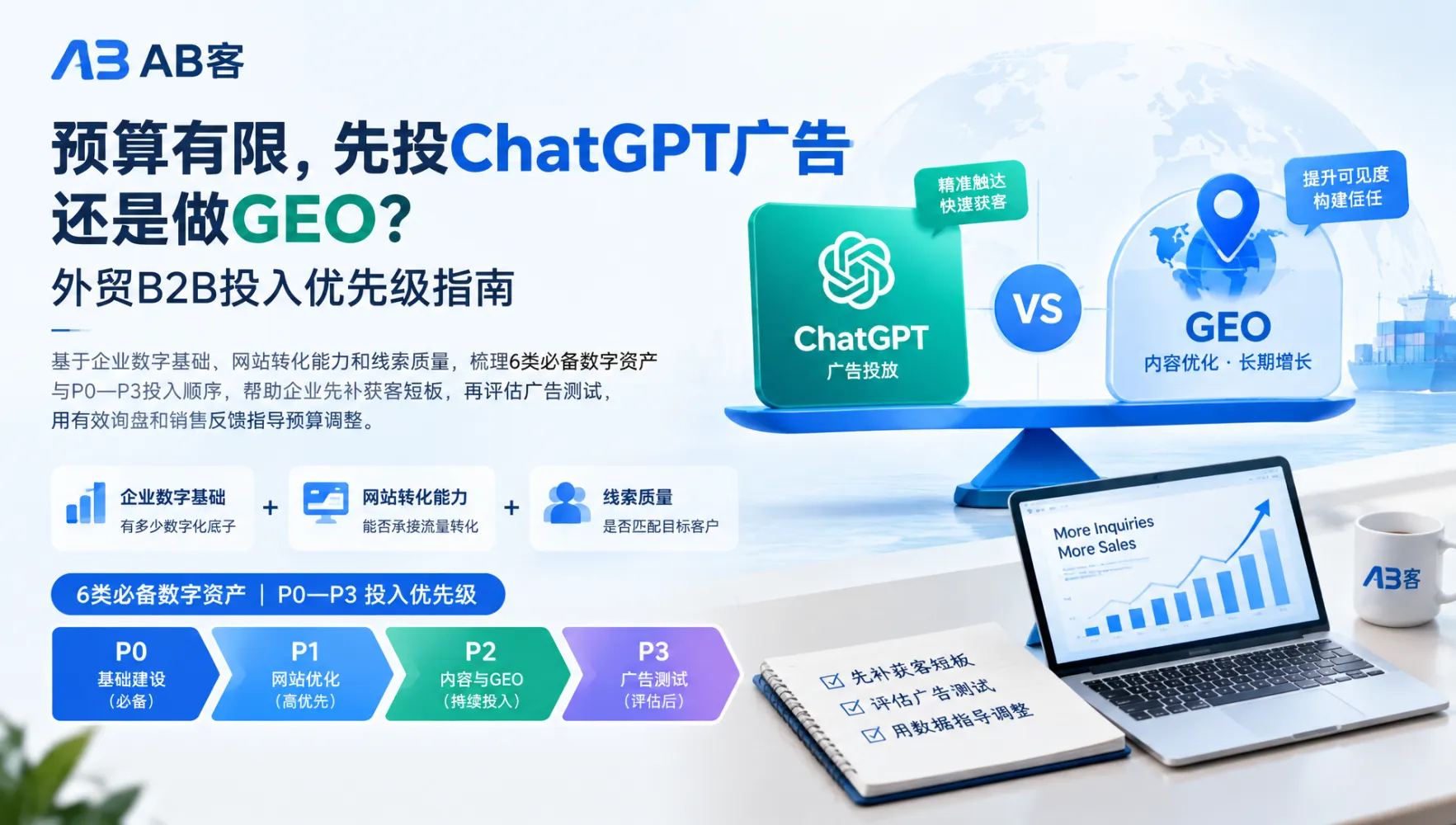
Should I prioritize ChatGPT advertising or GEO? Prioritize B2B foreign trade budgets based on company maturity.
照明电气企业如何做好GEO:用可验证的采购信息连接海外买家
Recommended Reading


How to Track GEO Pilot Contributions from Content Visits to Qualified Opportunities
ABKE outlines how B2B exporters can link content visits, inquiries and qualified opportunities, define sales feedback, and keep unknown sources separate from verified GEO contributions.
GEO PILOT MEASUREMENT FOR B2B EXPORTERS
A GEO pilot should help you understand more than whether AI mentions your business. It should help you examine whether discoverable content contributes to inquiries—and whether those inquiries become sales-qualified opportunities.
For exporters with an existing website and CRM, the starting point is a traceable connection between content visits, inquiry records and sales feedback. Before expanding reporting, verify which source fields your systems capture, how records can be linked and where evidence is missing.
The governing rule: Keep verified GEO sources, GEO-assisted influence and unknown sources separate. AI visibility is a useful observation, but it does not establish opportunity attribution.
Define what the pilot is measuring
Generative Engine Optimization (GEO) helps make enterprise knowledge and content easier for AI platforms to discover, understand and potentially cite or recommend. B2B GEO pilot attribution is the separate process of examining evidence that connects those interactions to inquiries and qualified opportunities.
Use three evidence categories rather than treating every inquiry received during the pilot as a GEO result:
- Verified GEO source: Available evidence supports an AI-origin visit or inquiry and links it to the relevant CRM record. Record the evidence and the attribution rule used; verification does not prove GEO was the buyer’s only influence.
- GEO-assisted influence: Evidence indicates an AI-related interaction within the buying journey, but does not establish GEO as the inquiry’s originating source. A buyer’s statement about using AI can support this category when documented with its limitations.
- Unknown or unverified source: Evidence is missing, ambiguous or cannot be linked reliably. Direct traffic, an absent referrer or a coinciding AI mention is not enough to classify an inquiry as GEO-sourced.
Keep clearly evidenced non-GEO sources under their normal channel labels. These categories should clarify GEO evidence, not replace your wider marketing attribution model.
Separate observed AI visibility from evidence that connects a buyer interaction to an inquiry.
Check your website and CRM before choosing an attribution model
An existing CRM does not automatically provide visit-to-opportunity traceability. Start with a capability review using test records and the systems your team actually operates.
- Website evidence: Check whether landing pages, visit timestamps, referrers and campaign parameters are available, retained and accessible for review.
- Inquiry capture: Confirm what survives a form submission, email inquiry or WhatsApp interaction. A contact-button click is an interaction—not proof that an inquiry was received.
- Record linking: Test whether an inquiry can be associated with the correct contact, company and opportunity without confusing repeat visits or duplicate records.
- CRM fields: Check whether source evidence, qualification status, ownership and sales feedback can be stored and reviewed.
- Access and privacy: Confirm permission, consent, retention and data-access requirements before collecting or connecting buyer information.
Validation boundary: Do not assume that every AI platform passes a recognizable referrer, that every buyer journey is trackable, or that existing systems support automatic synchronization. Document unsupported connections as gaps.
Build a visit-to-inquiry-to-opportunity workflow
- Set the pilot scope. Identify the products, markets, content pages and review period being evaluated. Preserve available baseline records so later changes have context.
- Record the content interaction. Retain available landing-page and source evidence. Treat an AI citation observed in monitoring as a visibility record unless a buyer interaction can be independently connected.
- Connect the inquiry. Link the received inquiry to its supporting interaction where technically possible. Preserve the original evidence separately from any normalized source label.
- Apply sales qualification. Ask the responsible salesperson to assess the inquiry against agreed criteria, rather than counting every form submission as an opportunity.
- Assign an evidence category. Classify the record as verified GEO source, GEO-assisted influence or unknown/unverified, while retaining other established channel sources.
- Review and improve. Examine qualified opportunities, rejected inquiries and missing evidence together. Turn the findings into content, capture and follow-up tasks.
A complete review links business records and source evidence without treating missing connections as confirmed attribution.
Agree on what qualifies as an opportunity
A qualified opportunity is an inquiry that sales has reviewed and accepted as a credible potential deal under your company’s criteria. Those criteria should reflect your products and sales process—not a generic lead score.
For an exporter, qualification may examine product or application fit, customer type, target-market suitability, technical requirements, purchasing intent and whether a practical next step has been agreed. These are proposed review dimensions, not mandatory conditions for every business.
Make sales feedback usable
Agree who updates each record, when feedback is due and who resolves source disputes. A practical record should contain:
- Inquiry identifier, receipt date, product interest and responsible salesperson.
- Available source evidence, evidence category and any linking limitations.
- Qualification status, decision date and reason for acceptance or rejection.
- Next action, opportunity reference where applicable and subsequent sales outcome.
Keep source classification separate from sales quality. A verified GEO inquiry can be unsuitable, while an opportunity with an unknown source can still be commercially valuable.
Review visibility, evidence quality and sales outcomes separately
A useful pilot review answers three different questions:
Is the business becoming more discoverable?
Review search visibility, observed AI mentions, citations and answer accuracy. Retain the monitored question, platform and observation date so findings have context.
Can the inquiry source be substantiated?
Review linked records, supporting evidence and unknown-source gaps. Do not silently merge assisted influence into verified-source totals or count the same opportunity twice.
Are inquiries progressing commercially?
Review sales-accepted opportunities, rejection reasons, follow-up status and later outcomes. Mark open opportunities as pending rather than assuming success or failure before the sales cycle develops.
Use the review to decide what to improve—not simply to increase the number of inquiries labeled as GEO.
How ABKE supports the pilot
ABKE GEO Growth Engine is an enterprise GEO platform built around enterprise knowledge, product agents, task conversations and data feedback. Its capabilities include content and website operations, visitor and inquiry monitoring, customer-quality analysis, CRM data analysis and sales feedback to support ongoing optimization.
Within a pilot, these capabilities can support the organization of product knowledge, content tasks, performance observations and follow-up actions. Compatibility with your existing website, CRM and channel tools—and the specific attribution fields, linking methods and reporting available—must be validated before implementation.
The platform does not replace your product experts, content reviewers or sales team. Search rankings, AI recommendations, inquiries and sales outcomes depend on multiple external and business factors; fixed results are not guaranteed.
Start with an attribution-readiness review
Before expanding your GEO pilot, bring your website tracking setup, inquiry capture routes, CRM field definitions, qualification rules and a small set of appropriately protected sample records to a review with ABKE.
The first decision is practical: what can be verified today, what requires configuration or integration, and what must remain unknown? Establishing those boundaries gives your team a more credible basis for evaluating GEO contributions and choosing the next growth tasks.


