Hot Products





Popular articles
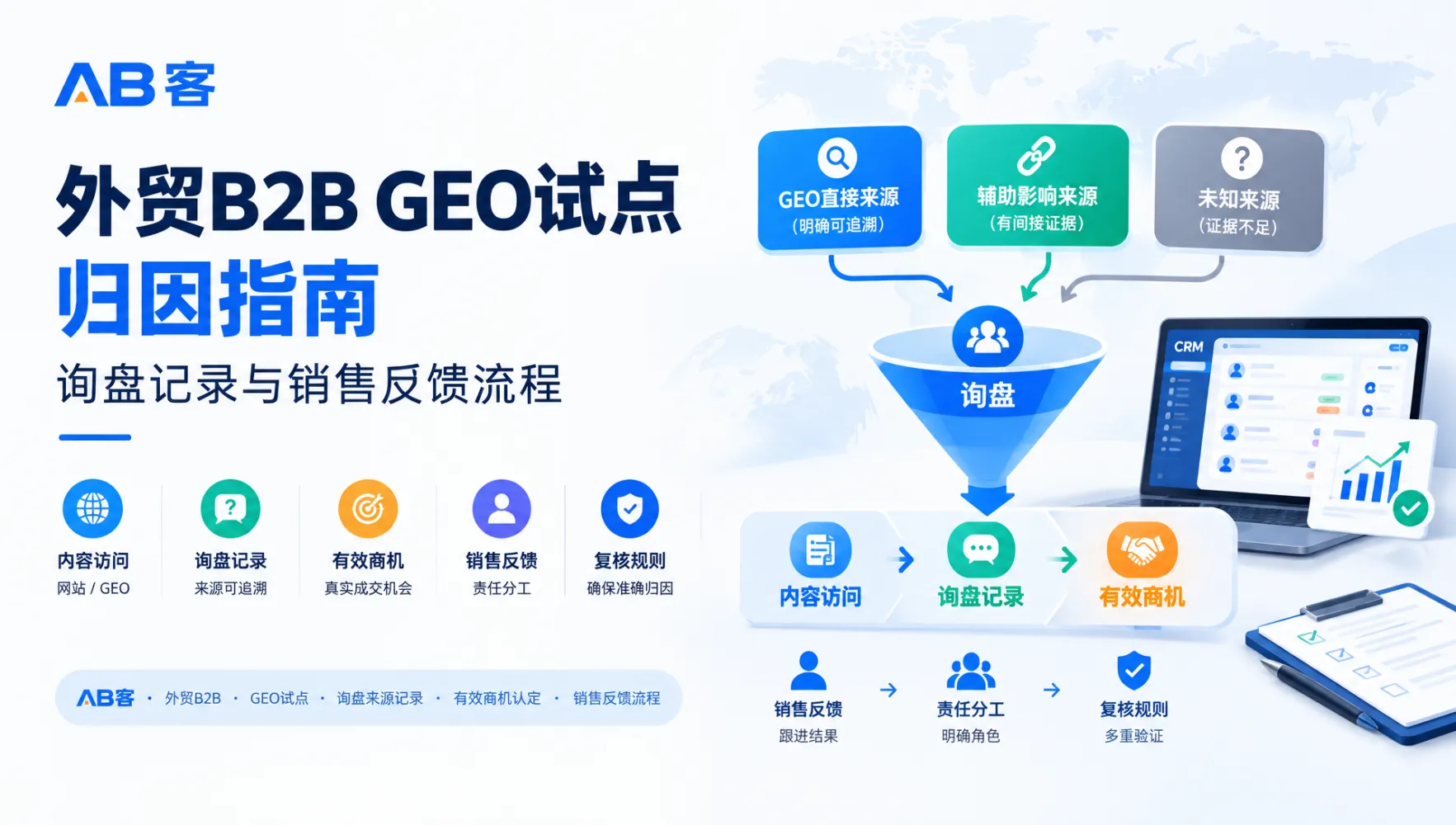
How to Track GEO Pilot Contributions from Content Visits to Qualified Opportunities
Before AEO: Seven Categories of Business Facts Your Marketing Agent Needs
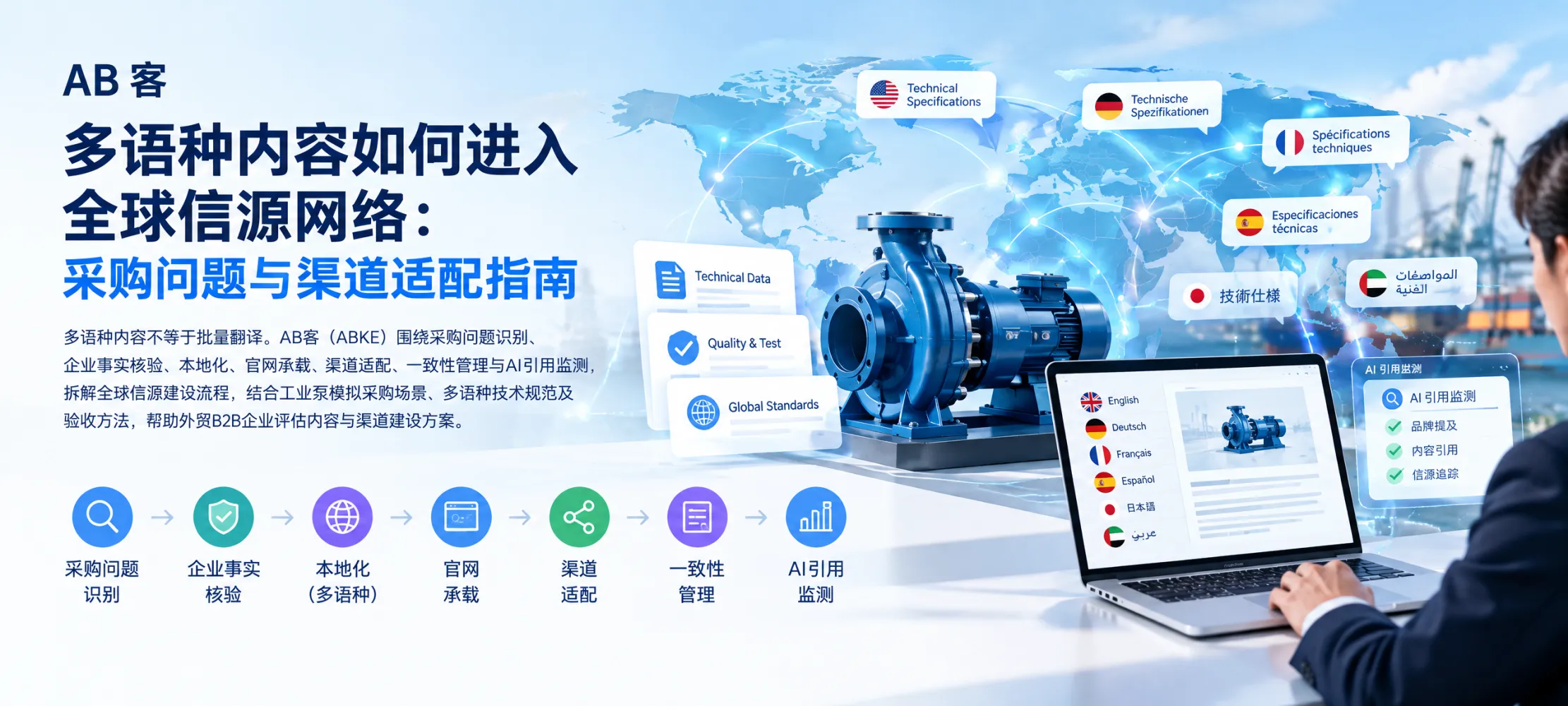
How Multilingual Content Enters the Global Sources Network: From Procurement Issues to Channel Version Adaptation Process
拓展拉美市场,如何用小批量测试确定西葡采购内容优先级?
Recommended Reading

From Company Facts to Third-Party Evidence: How to Build a Trusted B2B Source Network
ABKE outlines a practical method for export manufacturers to map company claims to verifiable evidence, publish accessible proof, connect appropriate third-party sources, and maintain consistent information across markets.
A practical approach for export manufacturers
A trusted B2B source network connects what a manufacturer says about itself with information buyers can access and check. The starting point is not publishing on more platforms. It is identifying which company facts are confirmed, what evidence supports them, where that evidence may be shared, and how each public source relates to the original claim.
Start with claims that can be checked
Export buyers may need to verify a product specification, manufacturing capability, certification, application condition or delivery process before contacting a supplier. Each claim should be matched to an appropriate record and reviewed for accuracy, scope and permission to publish.
- State the claim precisely: identify the product, facility, process or service it describes, and avoid extending it beyond the available evidence.
- Identify the supporting record: this may be an approved specification, test report, valid certification record, documented process or authorized project material, as applicable.
- Check the boundaries: confirm dates, covered products, issuing bodies, market relevance and any confidentiality or usage restrictions.
- Assign an owner: establish who confirms the fact and who updates it when the underlying record changes.
Make evidence accessible without losing context
A company website should provide the authoritative context for its own products and capabilities. Relevant product, solution and knowledge pages can explain a claim in plain language, identify the applicable product or use case, and point to supporting material that the company is permitted to disclose. Where a full document cannot be published, an accurate, approved description is more useful than an unsupported assertion.
Evidence is not interchangeable. A company-authored page explains its position; an accessible record helps a buyer examine the underlying fact; an independent source may provide separate verification. Their roles should remain clear.
Connect relevant third-party sources—without overstating them
Industry directories, professional associations, specialist media and other relevant platforms can give buyers additional places to encounter and assess a manufacturer’s information. ABKE’s global content and channel network helps companies select suitable channels, adapt approved material and record published sources. A third-party post carrying company-supplied text, however, is not the same as independent verification. The source, authorship and basis of each item should be identifiable.
Prioritize relevance and traceability over the number of placements. External publishers decide independently whether to accept, report on or recommend a company; publication cannot be guaranteed.
Keep the network consistent across markets
A credible source network can weaken when an outdated directory profile conflicts with a current website page, or when a translated product description changes a technical fact. Localize terminology, buyer questions and content format while keeping the underlying company identity, product information and evidence consistent.
- Maintain one approved knowledge base for core company and product facts.
- Adapt content for each market and channel, with technical and language review where needed.
- Record each public page’s location, publication date, version and source.
- Recheck important claims and channel profiles when products, documents or permissions change.
How ABKE puts the approach into practice
ABKE begins with confirmed company knowledge and buyer information needs. Its global content and channel network then supports channel planning, multilingual content adaptation, publication coordination, brand-fact checks and performance reviews. The practical sequence is verify facts → organize publishable evidence → build company pages → select relevant external channels → review consistency and results.
The work can be assessed through completed channel records, accessible content, consistency checks and available engagement or referral data. Search indexing, AI citation, AI recommendation and commercial outcomes are separate observations—not automatic consequences of publication. A stronger public evidence base gives buyers more to examine and gives search and AI retrieval systems more relevant information to potentially discover, without guaranteeing how those systems will respond.
Where to begin
Choose a priority product and target market, list the claims buyers need to verify, and audit the records and public pages that support them. That focused review reveals which facts are ready to publish, which need clarification, and which channels can add a useful, properly attributed source.


