
Publication checks
Confirm public access, readable page text, mobile usability and relevant internal links. If discovery is intended, check that access restrictions or indexing directives do not unintentionally prevent it.






FROM BOOTH CONVERSATIONS TO USEFUL WEBSITE CONTENT
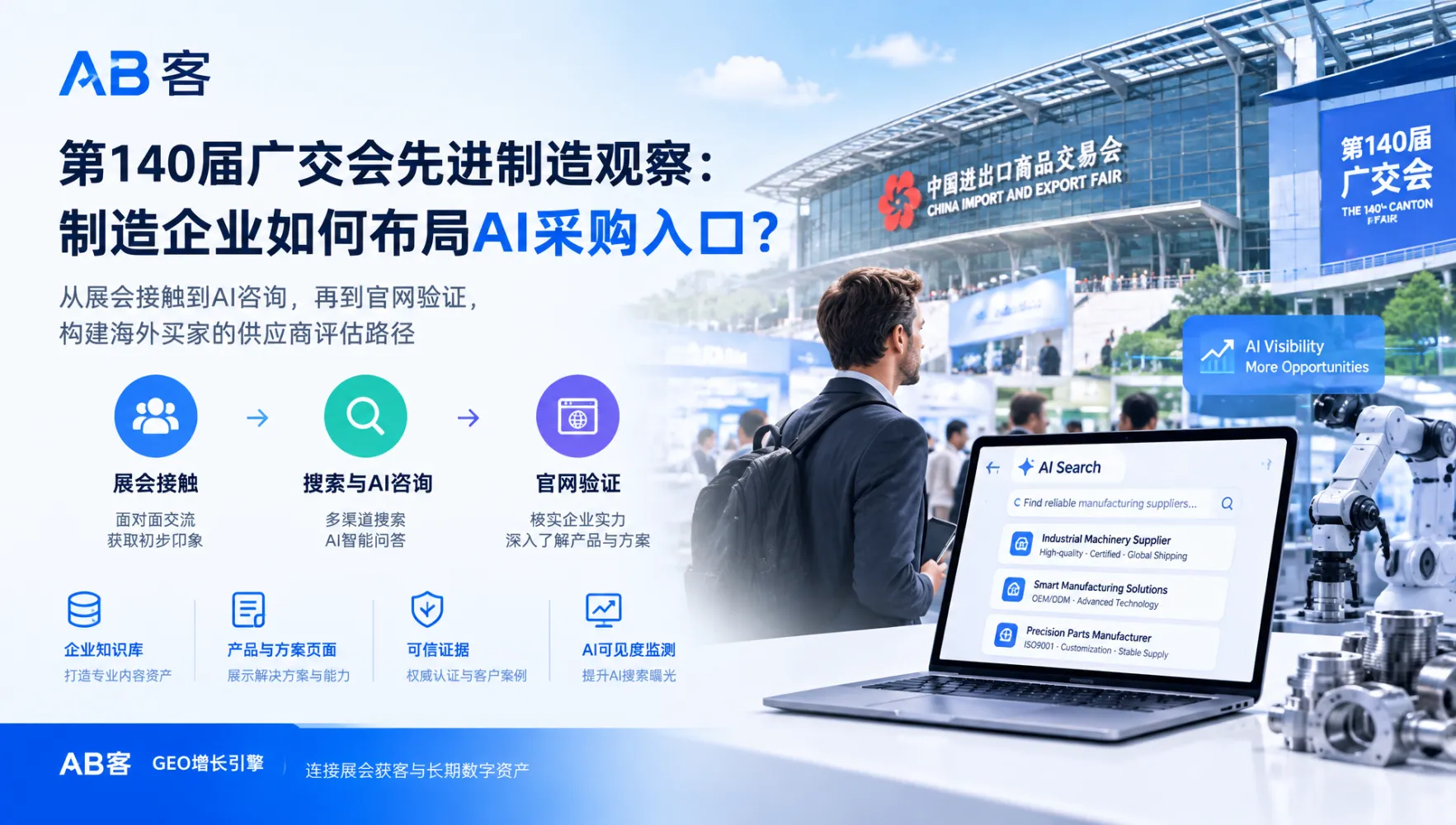
At the Canton Fair, your team may explain the same customization options, certification requirements or delivery conditions several times a day. Those conversations reveal information that buyers need but may struggle to find on your website.
The practical approach: capture the question, preserve its purchasing context, confirm the answer and add an approved FAQ to the most relevant page. An evening update can make useful information publicly accessible. Search indexing, AI retrieval and AI citation are separate outcomes that require separate checks.
Not every booth conversation should become content. Prioritize questions that recur, influence supplier selection or prevent a buyer from moving toward a quotation. A technically important question asked once may be more valuable than a general question asked repeatedly.
A useful selection test: Would a clear answer help another qualified buyer choose a product, assess risk or submit a better inquiry? If yes, it is a strong FAQ candidate.
“What is your delivery time?” is not a complete content brief. The answer may depend on the model, order quantity, customization, material availability and approval process. Recording those conditions prevents a salesperson’s estimate from becoming an unconditional website promise.
Use a shared buyer-question log during the exhibition. Keep it separate from personal contact records: the FAQ workflow needs purchasing context, while identifiable lead information belongs in your controlled CRM process.
Exclude buyer names, private contact details, negotiated prices and confidential project information from public drafts. Before using an AI tool, check your company’s rules for uploading customer conversations and internal documents.
AI can group similar questions, improve wording and draft consistent answers. It should not decide whether your product holds a particular certification, whether a material is suitable for a demanding application or whether production can meet a requested deadline.
“Can you print our logo?” and “Do you offer private-label packaging?” may belong to one customization topic, but they can involve different processes and order conditions. Likewise, a sample delivery question should not be merged into a bulk-production answer simply because both mention lead time.
Group these anonymized buyer questions by purchasing intent. Draft answers using only the approved information supplied. Begin with a direct response, then explain applicable conditions and the buyer’s next step. Preserve differences between products and applications. Flag missing evidence, conflicting information and claims requiring specialist review. Do not invent specifications, certificates, prices or delivery commitments.
Sales staff should check commercial meaning; qualified technical staff should verify performance, compatibility and compliance claims. A fluent answer is not necessarily an accurate answer.
Choose three to five decision-relevant questions as an initial workload, not a daily quota. Publish fewer if verification takes longer. “Overnight” should describe a practical editing cycle—not a promise of instant rankings or AI recommendations.
Compare booth notes, identify recurring themes and prioritize questions blocking selection or quotation. Separate ready-to-answer items from those needing technical investigation.
Check the relevant product version, supporting documents and commercial conditions. If evidence is missing, hold the item or explain the assessment process without making an unsupported promise.
Place model-specific answers on product pages, application questions on solution pages and broader procurement guidance in a shared FAQ or knowledge section. Avoid creating multiple thin pages that repeat the same answer.
Verify that the answer appears correctly on desktop and mobile, supporting links work and the inquiry route is usable. Record the published URL, approval owner and revision date so the next update has a clear starting point.
A useful B2B FAQ combines a direct answer, relevant conditions, supporting evidence where available and a specific next step. This structure improves clarity for readers and makes the answer easier for search and AI systems to interpret, without guaranteeing selection or citation.
Buyer question: “Can this product be modified for our application?”
Weak answer: “Yes. We provide professional customization for all customer requirements.”
More useful structure: “Customization requires a feasibility review for the selected model. Please provide your application, required specifications, expected quantity and relevant drawings. Our team will assess the requested changes and confirm available options before quotation.”
This is a writing example, not a statement about a particular manufacturer. Publish it only if it accurately reflects your actual process.
Avoid unsupported phrases such as “all markets approved” or “guaranteed fast delivery.” Where certification matters, identify the applicable model and document scope rather than implying that one certificate covers an entire product range.
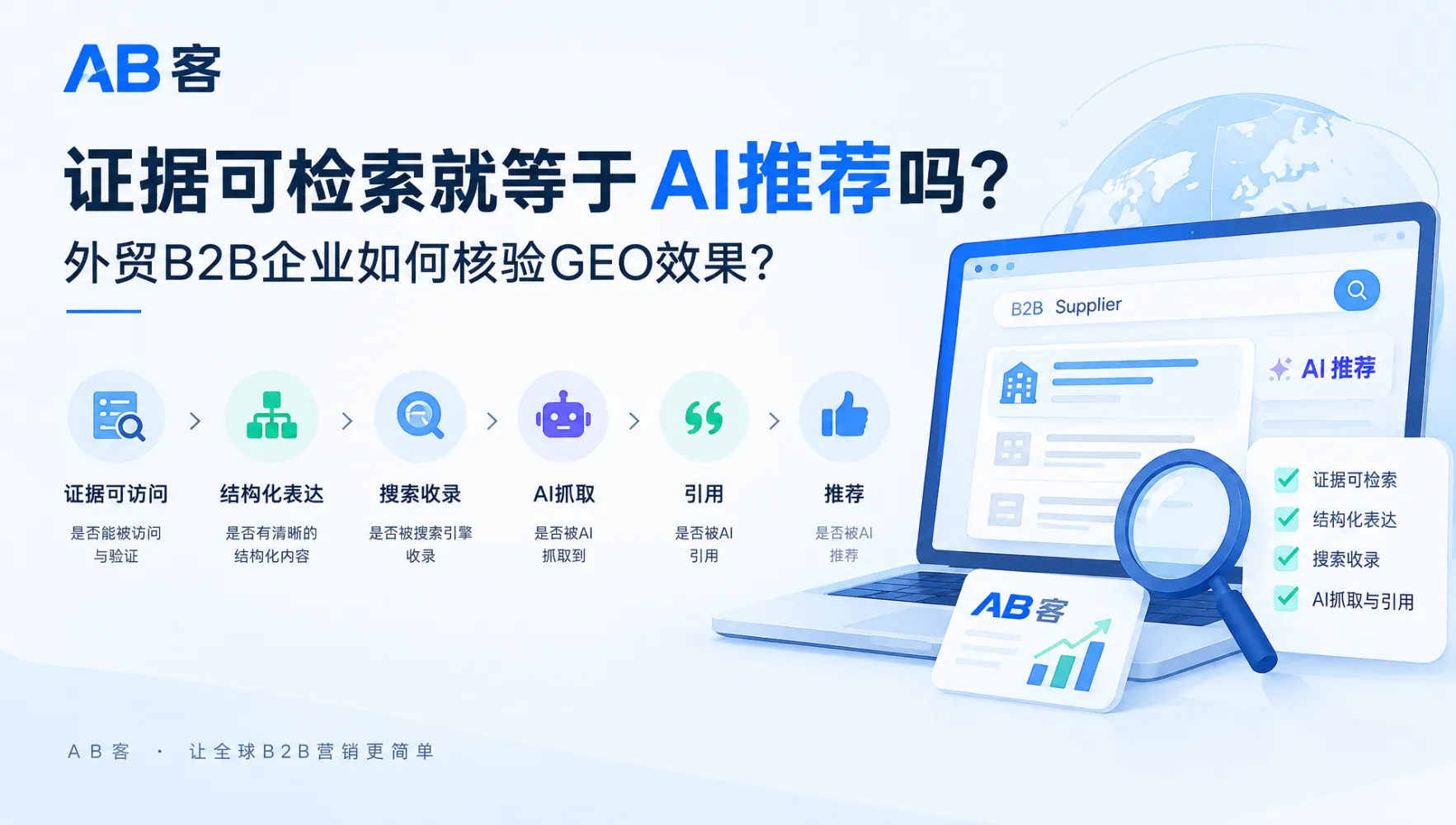
A live FAQ is a completed publishing action. It is not proof that a search engine has indexed it or that an AI system has used it.
Confirm public access, readable page text, mobile usability and relevant internal links. If discovery is intended, check that access restrictions or indexing directives do not unintentionally prevent it.
Use search-engine webmaster tools to inspect indexing status and monitor impressions, clicks and relevant query coverage. Indexing requests do not guarantee inclusion or a particular position.
Retest a consistent set of procurement questions. Record the platform, date, wording, cited sources and answer accuracy. A brand mention alone does not establish that your FAQ was retrieved.
For commercial evaluation, track inquiry quality as well as traffic. More complete specification requests and fewer repeated clarification questions can be useful signals, but should not automatically be attributed to one FAQ update.
The lasting value is not the number of FAQs published during the Canton Fair. It is a reliable connection between what buyers ask, what your company can substantiate and what your website communicates.
ABKE GEO Growth Engine, from Shanghai Muke Network Technology Co., Ltd., brings enterprise knowledge, buyer-question planning, content production, SEO and GEO website capabilities, CRM and visibility analysis into a connected B2B growth workflow.
ABKE’s system, AI agents and professional collaboration support execution; technical approval and commercial accountability remain with the responsible people. Confirm the specific workflow and delivery scope during project planning.
Only after checking facts, confidentiality and the applicable conditions. Use AI for organization and drafting, not as evidence that a technical or commercial statement is correct.
No. Add closely related questions to an existing product or topic page. Create a dedicated guide when the subject needs substantial explanation and serves a distinct buyer need.
Publish what your team can verify properly. Three to five prioritized questions can be a manageable starting point, but one well-supported answer is preferable to several rushed ones.
The system may not have retrieved the updated page, may rely on conflicting sources or may misinterpret unclear conditions. Check source consistency and answer wording, then retest. Publication alone cannot control an external AI response.
Review affected translations whenever the approved source answer changes. Track language versions so obsolete specifications or commercial terms do not remain live in another market.
Bring together your booth notes, relevant product information and the people who can approve the answers. Select the most important questions, update the appropriate pages and assign an owner for future review.
Discuss your FAQ workflow with ABKE. Share an anonymized question sample, your priority products, target languages and current website setup to explore how enterprise knowledge, content operations and inquiry follow-up could work together.
The objective is accurate, reusable procurement content and a measurable improvement process. Search rankings, AI citations, recommendations and inquiry results are not guaranteed.


