.png?x-oss-process=image/resize,h_100,m_lfit/format,webp)

.png?x-oss-process=image/resize,m_lfit,w_200/format,webp)

Hot Products
.png?x-oss-process=image/resize,h_2000,m_lfit/format,webp)
.png?x-oss-process=image/resize,h_2000,m_lfit/format,webp)

Popular articles
ABKE GEO Website FAQ: How Does Website Migration Work and How Can You Reduce SEO and GEO Impact?
ABKE GEO Website FAQ | Who Should Register Your Domain, and Can You Keep It When Changing Providers?
花钱做GEO网站,企业最后到底应该买到什么?
When Is a GEO Website Truly Complete?
AI Doesn’t Know Who You Are—Is It Too Early to Talk About AI Recommendations?
Recommended Reading
Q4 2026: How Manufacturing Companies with Complex Product Models Build GEO Knowledge Relationships
Learn how manufacturers with many product series, models, parameters and customization options can build structured GEO knowledge relationships for AI understanding, evidence retrieval and buyer conversion with ABKE.
Q4 2026: How Manufacturing Companies with Complex Product Models Build GEO Knowledge Relationships
In 2026 Q4, GEO is moving from content optimization to evidence retrieval engineering. For manufacturers with many product series, model variants, technical parameters, and customization options, the winning structure is no longer a single “product introduction” page. It is a governed knowledge relationship system that helps AI understand, verify, compare, and recommend your products with confidence.
Quick Answer
If your products have multiple series, subtle parameter differences, custom options, and legacy-to-new model transitions, GEO should not start with page volume. It should start with a knowledge relationship model that tells AI what each product is, how it relates to other models, what can be customized, what cannot change, and what evidence supports every claim.
1. Why Complex Products Are Easy for AI to Misread
Manufacturing products are often precise for engineers, but ambiguous for AI if the knowledge is scattered. The more similar your model names look, the more likely AI is to mix specs, confuse compatibility, or return a generic answer that does not help the buyer.
| Common Product Complexity | Risk for AI and Buyers | Knowledge Requirement |
|---|---|---|
| Many series and similar model numbers | Wrong model recommendation or comparison | Parent-child product hierarchy |
| Small parameter differences | Inaccurate specifications in AI answers | Structured parameter-level records |
| Custom configurations | Generic claims such as “customization available” | Customization scope, constraints, and prerequisites |
| Legacy and new models | Outdated or incompatible product suggestions | Replacement, upgrade, and compatibility relationships |
Key shift: In Q4 2026, GEO success depends less on how many pages you publish and more on whether your product facts can be retrieved as evidence.
2. Build Product Relationships, Not Just Product Names
A product model is not an isolated record. It sits inside a knowledge network. When that network is clear, AI can answer buyer questions with much higher accuracy: what the product is, which series it belongs to, how it differs from similar models, where it is used, and what evidence proves its performance.
Recommended hierarchy
Brand → Product Line → Product Series → Model → Specification → Optional Configuration
Application mapping
Model → Application → Industry → Buyer Requirement
Trust evidence mapping
Model → Material → Process → Certification → Test Report → Case Study
Model relationships
Model A ↔ Similar Model / Replacement Model / Upgraded Model / Incompatible Model
Brand
  → Product Line
    → Product Series
      → Model
        → Specification
        → Optional Configuration
        → Application
        → Industry
        → Certification
        → Test Report
        → Case Study
3. How to Describe Differences Between Models
For complex manufacturing catalogs, “Model A is better” is not a useful statement. AI and buyers need structured comparison logic. That means documenting what stays the same, what changes, which version replaces another, and where compatibility ends.
Shared attributes
- Common structure
- Common function
- Common material
- Common use case
Variable attributes
- Dimensions
- Capacity
- Voltage
- Tolerance
- Performance
Relationship rules
- Replacement model
- Upgrade model
- Compatibility limits
- Incompatible components
Best practice: Every model comparison page should clearly answer four buyer questions: What is the same? What is different? What can be replaced? What should never be mixed?
4. Customization Must Be Defined by Evidence
A common problem in manufacturing websites is vague customization language. “Supports customization” sounds flexible, but it does not help AI or buyers make decisions. GEO-ready knowledge should explain what is customizable, what is fixed, and what inputs are required before customization can start.
| Customization Item | Required GEO Knowledge |
|---|---|
| Customizable parameters | Available ranges, units, technical options, and minimum order requirements |
| Fixed constraints | Non-changeable structures, safety limits, standards, and material restrictions |
| Prerequisites | Drawings, samples, operating conditions, compliance requirements, or engineering review |
| Proof of capability | Factory equipment, engineering process, test records, certifications, and project cases |
Important: Customization is not a marketing claim. It is a decision path that must be supported by evidence, constraints, and delivery logic.
5. How Relationship Knowledge Becomes GEO Assets
In 2026 Q4, the most valuable GEO pages are not isolated brochures. They are connected assets that allow AI to retrieve verified evidence fast enough to answer buyer questions accurately.
Verified Enterprise Facts
   → Structured Product Relationships
      → Evidence Retrieval Layer
         → GEO Website Pages
            → AI Citation and Buyer Evaluation
               → Inquiry Conversion
Product pages
Model-level specifications, evidence, and technical positioning.
Comparison pages
Selection support, differentiation, and replacement logic.
Selection guides
Buyer requirements, decision criteria, and technical choices.
FAQ and case pages
Compatibility, customization, and real project proof.
6. A Practical Knowledge Structure for Complex Manufacturers
If you want AI to recommend your products correctly, build knowledge in layers. The following structure works well for machinery, electronics, components, OEM/ODM, and other technical manufacturing categories.
Layer 1: Identity
Brand, factory profile, capabilities, certifications, and positioning.
Layer 2: Product facts
Series, model, parameters, options, materials, and technical data.
Layer 3: Relationships
Replacement, upgrade, compatibility, and substitution rules.
Layer 4: Evidence
Test reports, certifications, project cases, and delivery proof.
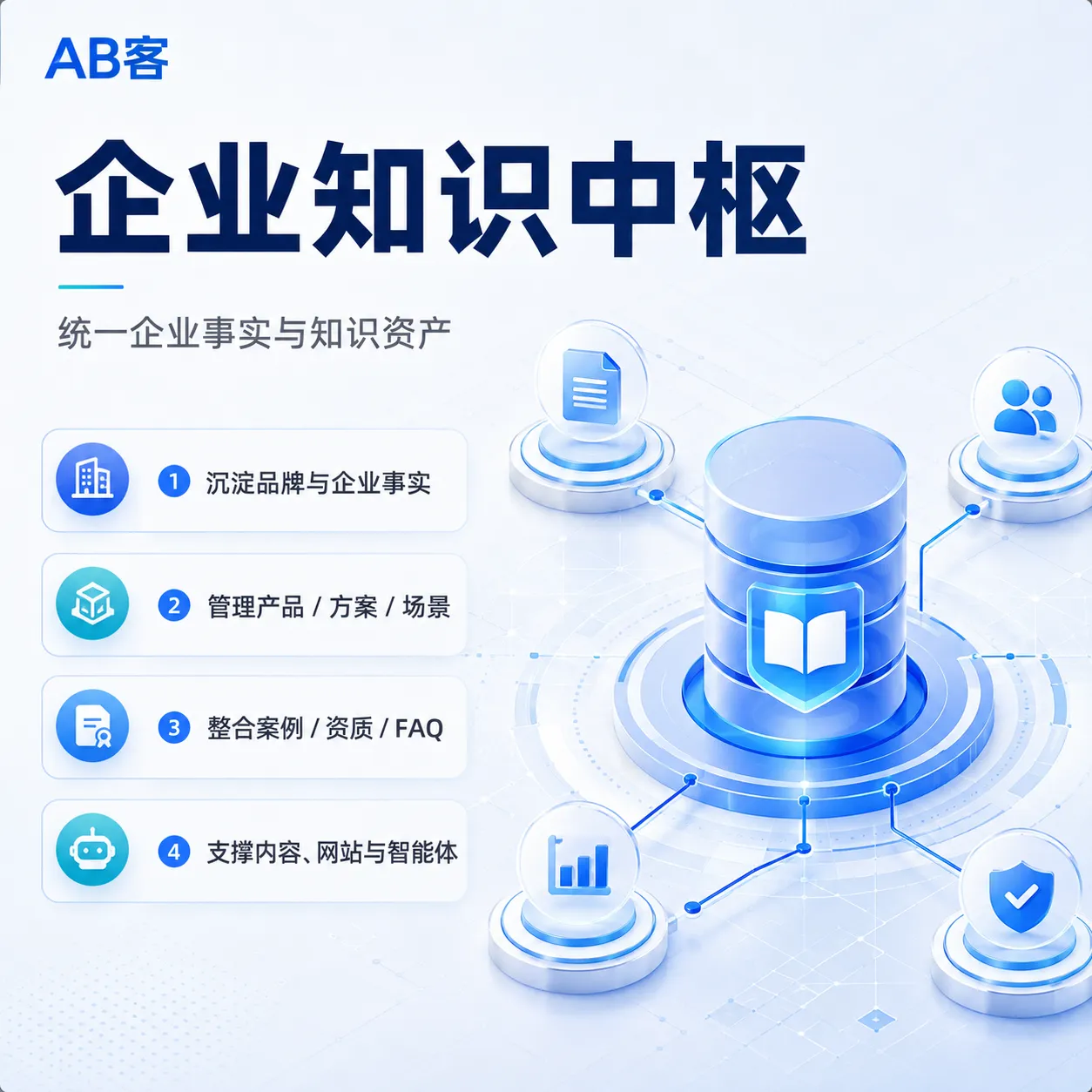
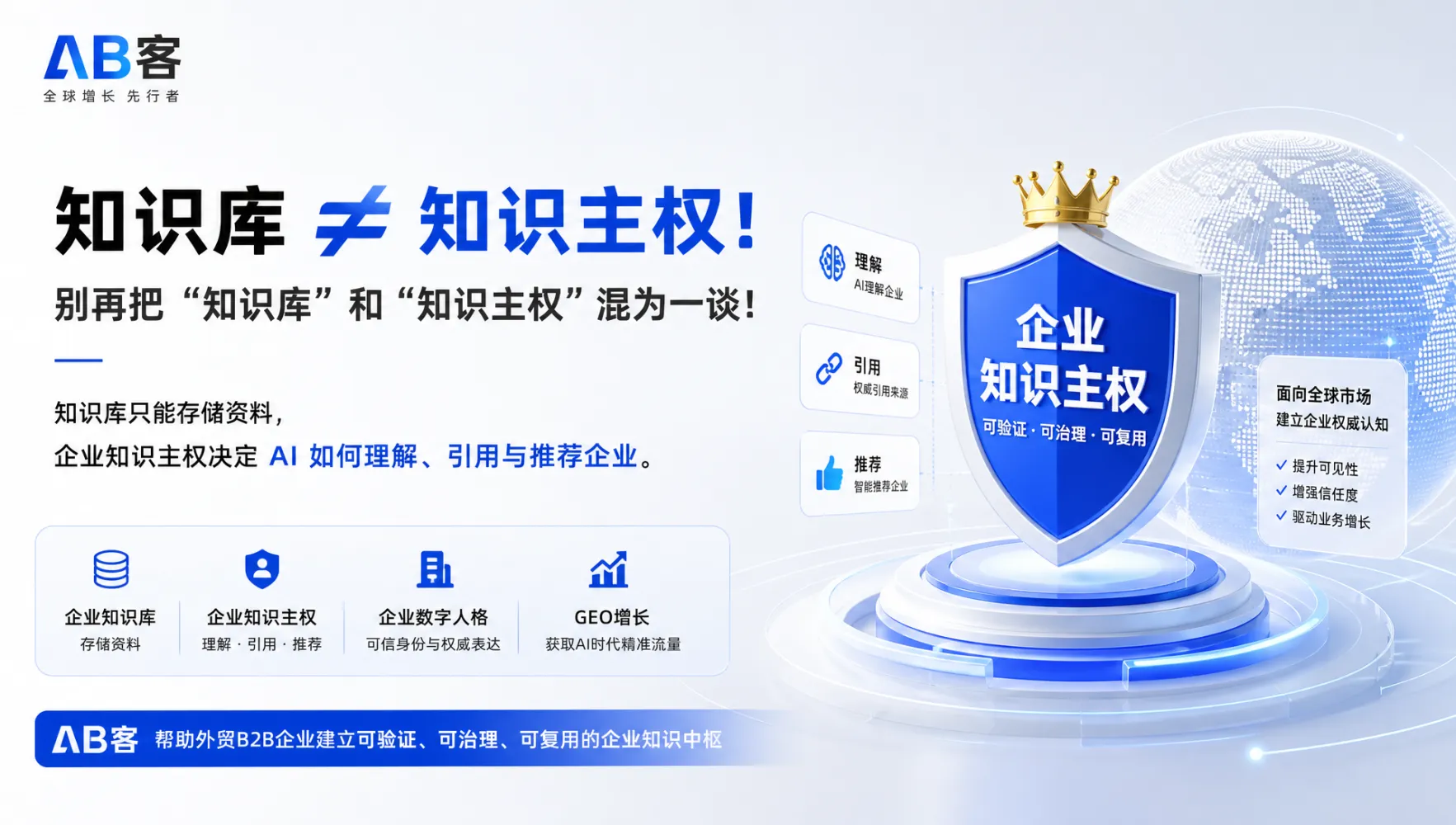
ABKE approach: AB客’s Enterprise Knowledge Hub organizes these layers into a retrievable system so your product information is not just published, but governed, connected, and AI-readable.
7. Where This Fits on Your Website
Relationship-based knowledge should not live in one document. It should be distributed across the website so each page answers a different stage of the buyer journey while reinforcing the same fact system.
Product detail pages
One model, one fact set, one evidence layer.
Comparison pages
Model differences, selection criteria, and compatibility notes.
Selection guides
Help buyers choose by application, performance, and standards.
FAQ pages
Answer customization, replacement, lead time, and certification questions.
Application pages
Connect products to industries, use cases, and operating environments.
Case pages
Show proof through projects, outcomes, and delivery records.
8. Why ABKE’s Enterprise Knowledge Hub Matters
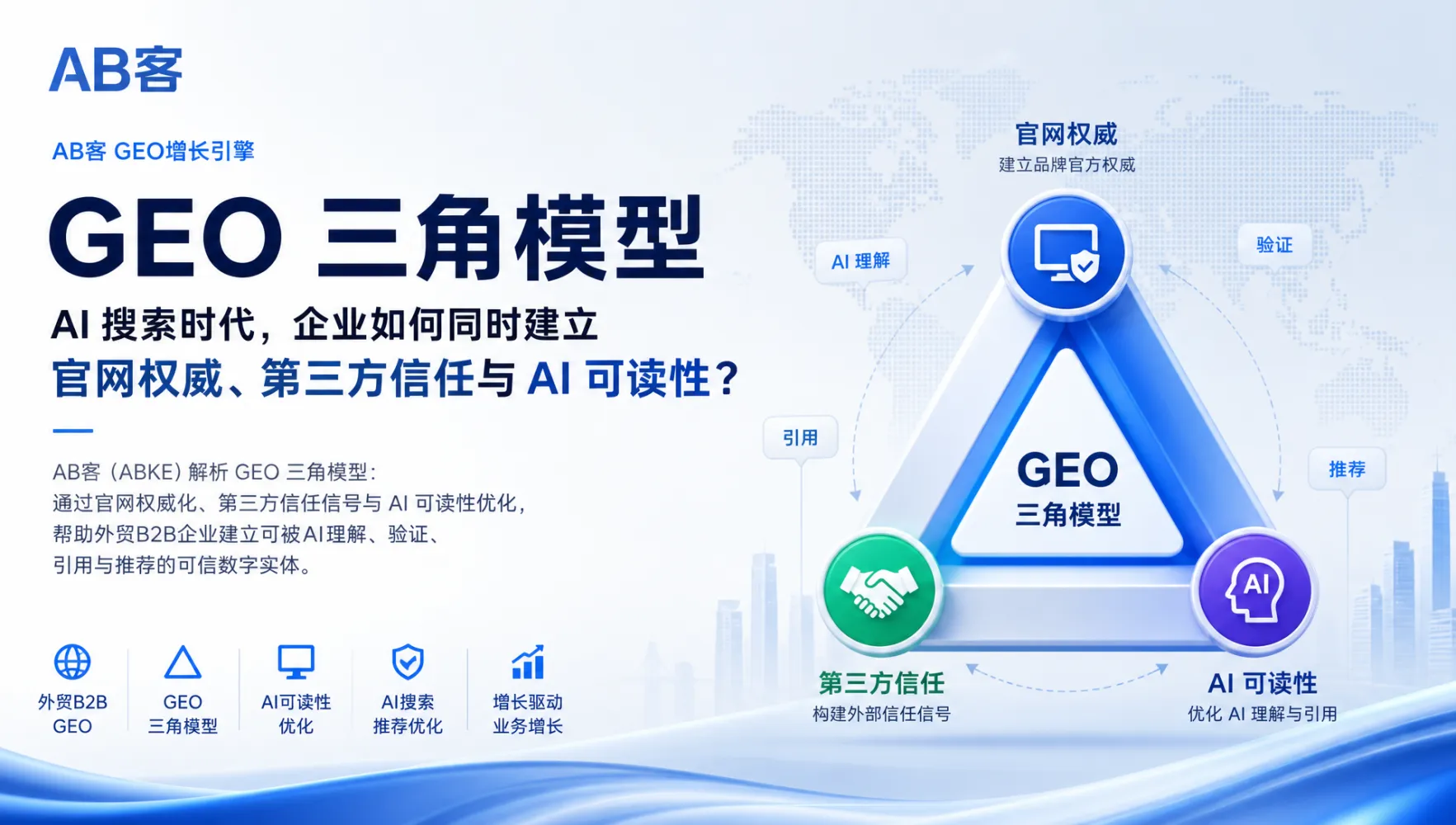
AB客 (ABKE) focuses on more than page production. For complex manufacturers, the real asset is knowledge relationship completeness: whether your product model structure is consistent, whether every claim can be traced to evidence, whether AI can retrieve the right answer, and whether the buyer can quickly trust what they see.
Knowledge sovereignty
Own the facts that define your products.
AI-readable digital persona
Make your factory and products understandable to AI.
Evidence retrieval
Turn certifications, cases, and specs into answerable proof.
This is why ABKE’s GEO growth infrastructure is especially valuable for mechanical, electronic, component, OEM/ODM, and other manufacturing businesses with complex catalogs. It turns fragmented product data into a structured system that AI can understand and buyers can use.
Conclusion
The more complex your products become, the less GEO can rely on standalone pages. In Q4 2026, the winning approach is to build a relationship-based knowledge system with clear model hierarchy, comparison logic, customization boundaries, and evidence-backed facts.
When your product knowledge is structured this way, AI can understand it faster, cite it more accurately, and recommend it more confidently. That is the foundation of sustainable GEO growth for modern manufacturers.
Need a structured GEO knowledge system for your product catalog?
ABKE helps manufacturing companies build an enterprise knowledge hub, organize complex product relationships, and turn technical facts into AI-retrievable growth assets.


