.png?x-oss-process=image/resize,h_100,m_lfit/format,webp)

.png?x-oss-process=image/resize,m_lfit,w_200/format,webp)

Popular articles
How Should B2B Country Landing Pages Be Built to Match Local Buyer Search Habits Without Creating Duplicate Content or Brand Confusion?
How Many Sub-Questions Can One AI Procurement Query Generate?
Which GEO Provider Offers Industry-Specific Systems for Machinery, Furniture, and Building Materials?
How Can You Help Search Engines and AI Discover New Product Information Faster?
Recommended Reading
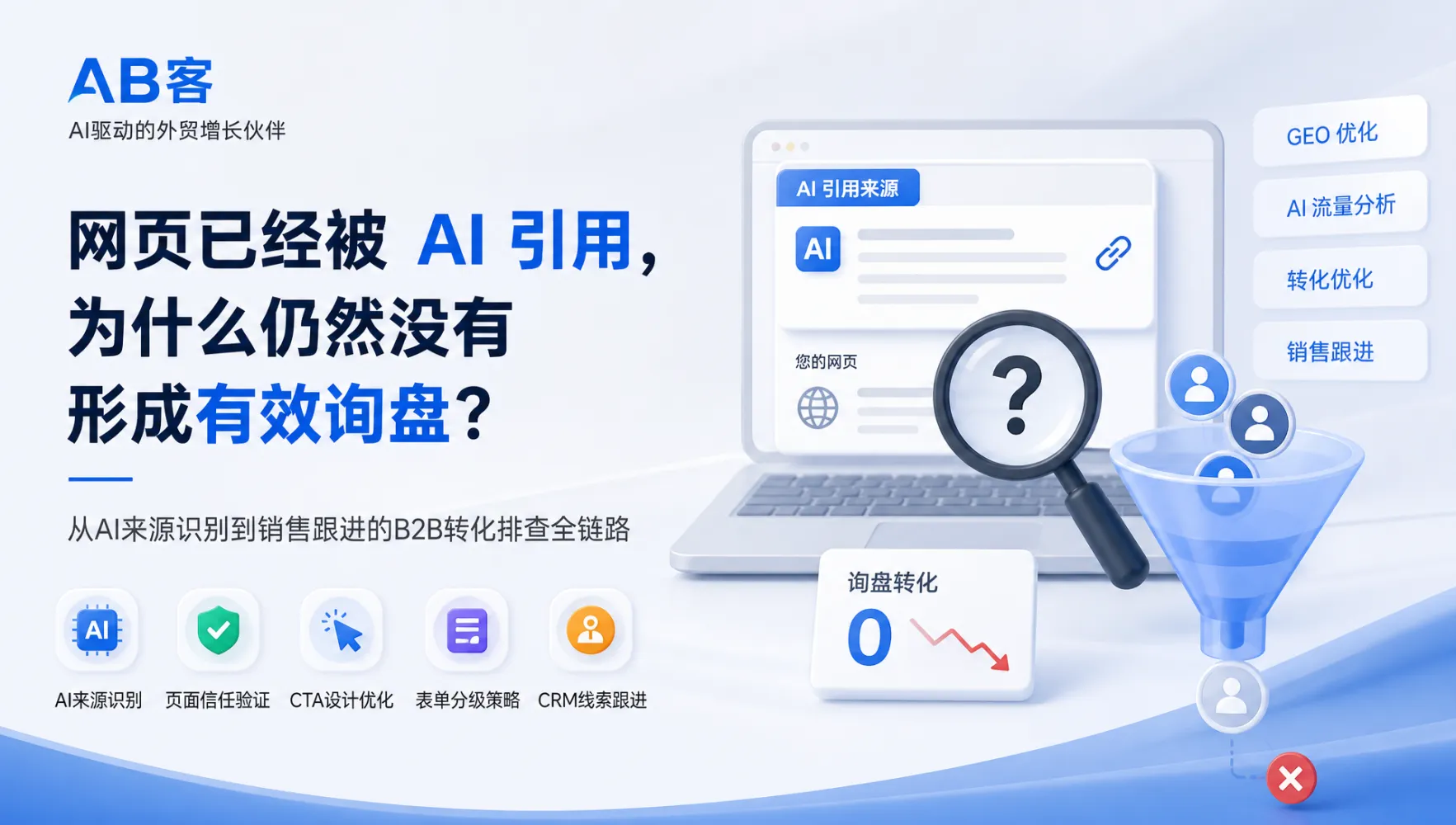


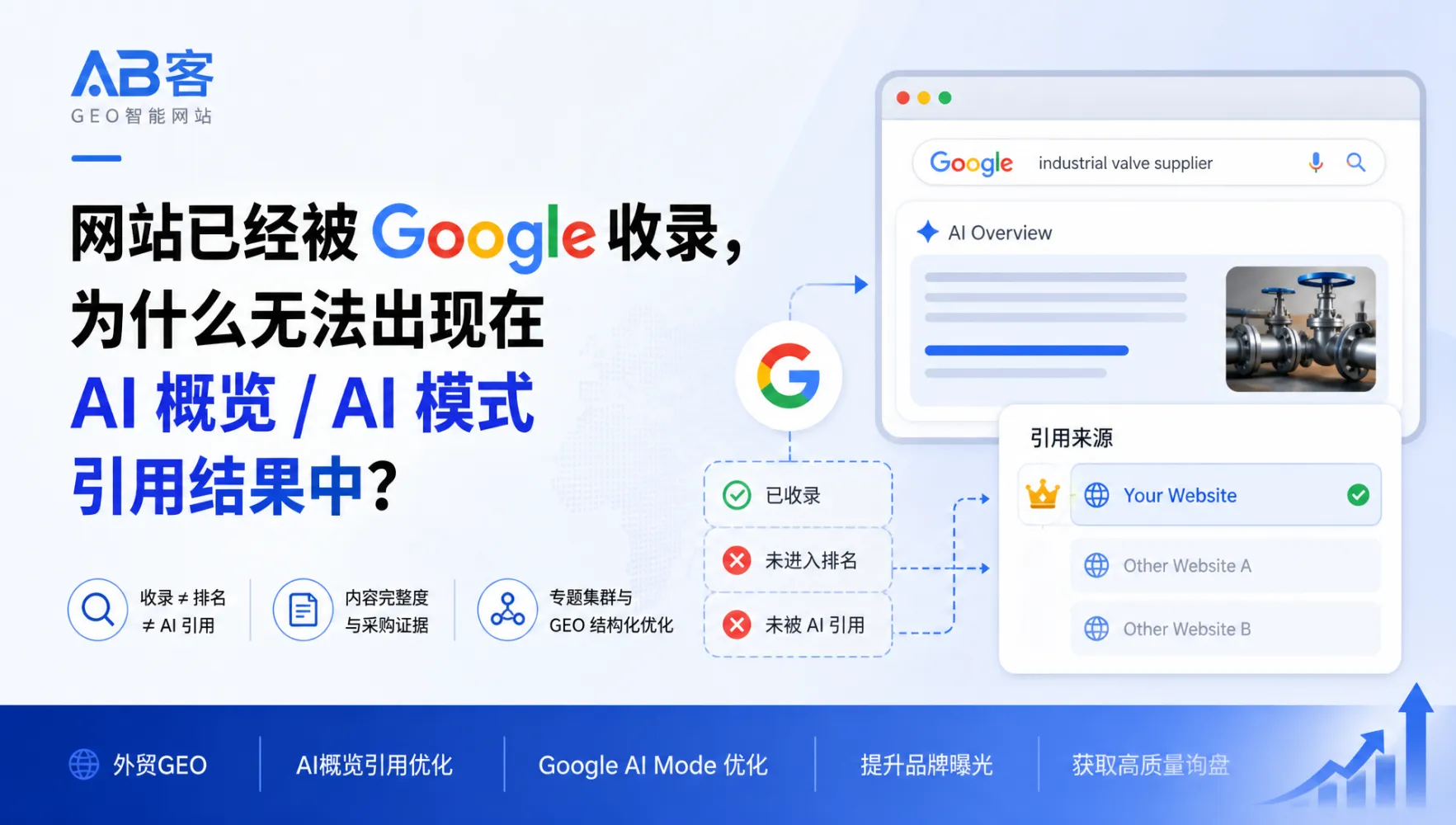
How Should ABKE GEO Growth Engine Work with CRM, Website Analytics, and Sales Feedback to Track Visits, Inquiries, Opportunities, and Revenue by Country, Channel, Content Topic, and Page?
Learn how ABKE GEO Growth Engine connects website analytics, content and page tracking, CRM opportunity stages, and sales feedback to support explainable B2B attribution across countries, channels, and customer journeys.
For export-oriented B2B companies, traffic alone does not explain marketing value. A visit may begin with a technical article, a product page, a search result, an AI-assisted discovery journey, a LinkedIn post, or a third-party industry profile—and the commercial outcome may occur weeks or months later through a sales conversation. ABKE GEO Growth Engine connects these stages into an explainable operating chain: content and page exposure → website behavior → inquiry → lead qualification → CRM opportunity → sales feedback → attributable business insight.
The purpose is not to claim that every visit, form submission, AI mention, or inquiry creates revenue. It is to give marketing and sales teams a shared, structured way to understand which countries, channels, content topics, and pages participate in high-quality opportunities—and where the customer journey needs improvement.
Build a connected B2B attribution chain, not isolated reports
In complex international B2B sales, one prospect may visit multiple pages, return through different channels, download information, contact the company through WhatsApp or email, and enter a lengthy qualification process before an opportunity is created. A useful attribution model must preserve this context rather than relying on a single last-click source.
What should be connected across website analytics and CRM?
ABKE GEO Growth Engine helps establish a common data structure across the website, content operations, CRM workflow, and sales process. The exact fields and integrations depend on the customer’s existing tools, permissions, contract scope, and technical conditions. The principle is consistent: preserve the source and context of a lead from the first measurable interaction through later commercial feedback.
| Data layer | Key information to retain | Business question it supports |
|---|---|---|
| Source and channel | Source, medium, referral, campaign parameters, landing URL, first and latest measurable touchpoint | Which channels introduce or re-engage qualified prospects? |
| Market and account context | Country or region, language, company name, industry, contact role, target market | Where are high-value opportunities emerging, and for which buyer profiles? |
| Content and page interaction | Landing page, viewed pages, content topic, product category, solution area, downloads, video or contact events | Which information helps customers evaluate fit, capability, and trust? |
| Inquiry and qualification | Inquiry type, requested product, stated need, response status, A/B/C lead grade, qualification notes | Which inquiries are commercially relevant rather than merely numerous? |
| Opportunity and sales outcome | Opportunity stage, owner, estimated value where available, lost reason, order status, sales feedback | Which marketing activities participate in opportunities, and what should be improved? |
Track performance by country, channel, topic, and page
A useful GEO attribution view should support comparison without oversimplifying the buyer journey. ABKE organizes reporting around dimensions that sales and marketing teams can act on.
Country and region
Compare visits, inquiries, lead grades, opportunities, and sales feedback across target markets. This helps identify where content coverage, localization, response processes, or market validation may need attention.
Channel and source
Distinguish organic search, direct visits, referrals, social channels, B2B platforms, campaign links, and other measurable sources. Source data should remain attached to the lead record whenever possible.
Content topic
Group pages by product, application, buyer question, technical topic, solution, industry, or procurement stage to identify which knowledge themes appear in deeper customer journeys.
Page and conversion path
Review landing pages, assisted pages, product pages, FAQs, case pages, contact pages, and key events to understand how the website supports evaluation and inquiry actions.
Use a practical event and lead-tracking framework
Website analytics should record meaningful actions, not just pageviews. ABKE can help define a measurement plan that reflects the customer’s real B2B conversion path. Events should be selected for decision value, implemented with appropriate consent and privacy practices, and connected to CRM fields where technically feasible.
- Entry and engagement: landing page, source, campaign parameters, country or region, language version, returning visit, and relevant page sequence.
- Content engagement: key technical article views, product comparisons, solution-page interactions, FAQ engagement, file or catalog downloads, and video interactions where applicable.
- Conversion actions: form submissions, email clicks, WhatsApp clicks, callback requests, sample requests, quote requests, and other defined contact events.
- CRM handoff: lead ID, source data, landing page, submitted need, product interest, country, contact details, and applicable page or campaign context.
- Sales feedback: response status, qualification result, opportunity stage, reason for loss, key objections, product fit, and outcomes recorded by the responsible sales team.
Make lead quality visible with CRM grading and opportunity stages
Form volume is not a reliable measure of B2B marketing quality. A structured CRM process makes it possible to separate exploratory contacts, relevant prospects, and commercially actionable opportunities. The grading criteria should be agreed by the enterprise’s sales and marketing teams, based on the actual business model.
| Stage | Typical management purpose | Useful feedback to return to marketing |
|---|---|---|
| New inquiry | Record the original contact, source, need, and response responsibility. | Was the source data captured? Which page or topic preceded the inquiry? |
| A/B/C lead grade | Prioritize follow-up based on fit, intent, project clarity, market relevance, and purchasing potential. | Which countries, channels, and content themes bring more qualified leads? |
| Qualified opportunity | Track a verified commercial need, stakeholder, project scope, and next action. | What information, product evidence, or page content supported the evaluation? |
| Quotation / negotiation | Monitor commercial progress, objections, response timing, and decision criteria. | Which recurring objections should become new FAQs, comparison pages, or sales materials? |
| Won, lost, or dormant | Close the loop with outcome status and documented reasons. | What market, product, price, trust, timing, or qualification patterns should inform future growth work? |
Sales feedback is the bridge between marketing signals and business reality
Analytics can show what a visitor did; only the sales team can usually confirm whether the contact was relevant, whether a project existed, what the buyer needed, and why an opportunity progressed or failed. For this reason, ABKE treats sales feedback as an essential part of GEO attribution rather than a separate operational task.
A consistent sales feedback loop can reveal:
- whether an inquiry matched the enterprise’s target customer profile;
- which buyer questions or content topics appeared before a high-quality opportunity;
- whether a country or channel produces interest, qualified demand, or only low-relevance contacts;
- which technical, compliance, delivery, or trust concerns block conversion; and
- which new knowledge, pages, evidence, and follow-up materials should be created next.
A recommended operating rhythm for GEO attribution
- Define the measurement model. Align source naming, campaign parameters, country fields, content topic taxonomy, conversion events, lead grades, opportunity stages, and feedback responsibilities.
- Establish the technical and CRM baseline. Configure website analytics, event tracking, form fields, CRM source capture, dashboards, and access permissions according to the approved implementation scope.
- Connect content to business themes. Classify pages and content around products, industries, applications, buyer questions, and decision stages so performance can be reviewed beyond URL-level traffic.
- Review lead quality regularly. Check inquiry completeness, response status, A/B/C grading, follow-up timeliness, and recurring sales observations.
- Analyze opportunities by meaningful dimensions. Compare country, source, channel, topic, page participation, and lead quality—not only sessions or raw form counts.
- Feed findings back into growth actions. Improve high-value pages, strengthen weak conversion paths, create content for recurring questions, refine market priorities, and update the enterprise knowledge base.
How to interpret attribution responsibly
B2B GEO attribution is designed to support better decisions, not to create false certainty. A page can contribute to customer education without being the final conversion page; a channel can create valuable awareness without receiving last-click credit; and an AI mention may improve discoverability without proving revenue impact. ABKE therefore evaluates the chain in layers: digital assets, visibility, understanding, interaction, lead quality, opportunity progress, and sales outcomes.
Clear boundaries create more reliable reporting
- AI mentions are not the same as AI recommendations.
- Search indexing is not the same as ranking, and ranking is not the same as qualified traffic.
- A form submission is not automatically an effective inquiry; an effective inquiry is not automatically an opportunity; and an opportunity is not automatically a closed order.
- Attribution depends on available data, correct tagging, CRM discipline, customer consent practices, sales follow-up, and the complexity of the actual buying journey.
- ABKE does not treat third-party search or AI platform behavior as controllable, and does not promise fixed traffic, inquiry, opportunity, or revenue outcomes.
Turn customer journeys into reusable growth intelligence
With ABKE GEO Growth Engine, website analytics, CRM records, and sales feedback can become a shared learning system. The enterprise gains a clearer view of how global buyers discover content, evaluate capabilities, submit inquiries, progress through opportunities, and provide signals for the next round of content, website, channel, and sales optimization. Over time, this creates not only reporting visibility, but also a more structured and reusable foundation for global B2B growth.


.png?x-oss-process=image/resize,h_100,m_lfit/format,webp)
.png?x-oss-process=image/resize,h_100,m_lfit/format,webp)

.png?x-oss-process=image/resize,h_100,m_lfit/format,webp)
.png?x-oss-process=image/resize,h_100,m_lfit/format,webp)
.png?x-oss-process=image/resize,h_100,m_lfit/format,webp)
.png?x-oss-process=image/resize,h_100,m_lfit/format,webp)
