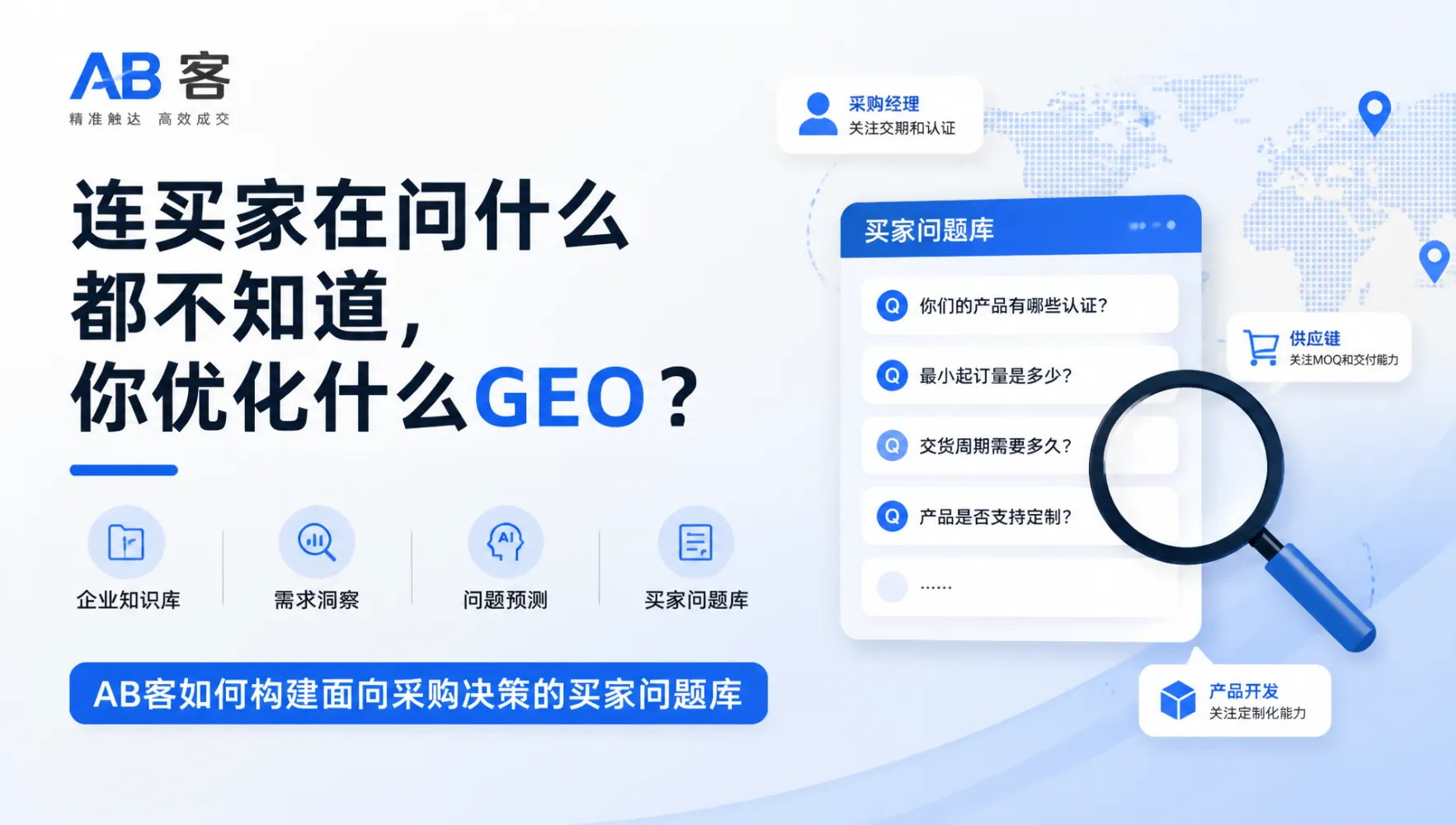
The Future of B2B Foreign Trade Competition Is Not Content Competition, but Enterprise Knowledge Competition
In the AI search era, the real competitive advantage is no longer simply publishing more pages or buying more traffic. It is building enterprise knowledge ownership that AI can understand, verify, and recommend.
ABKE / AB客
B2B GEO Growth Infrastructure
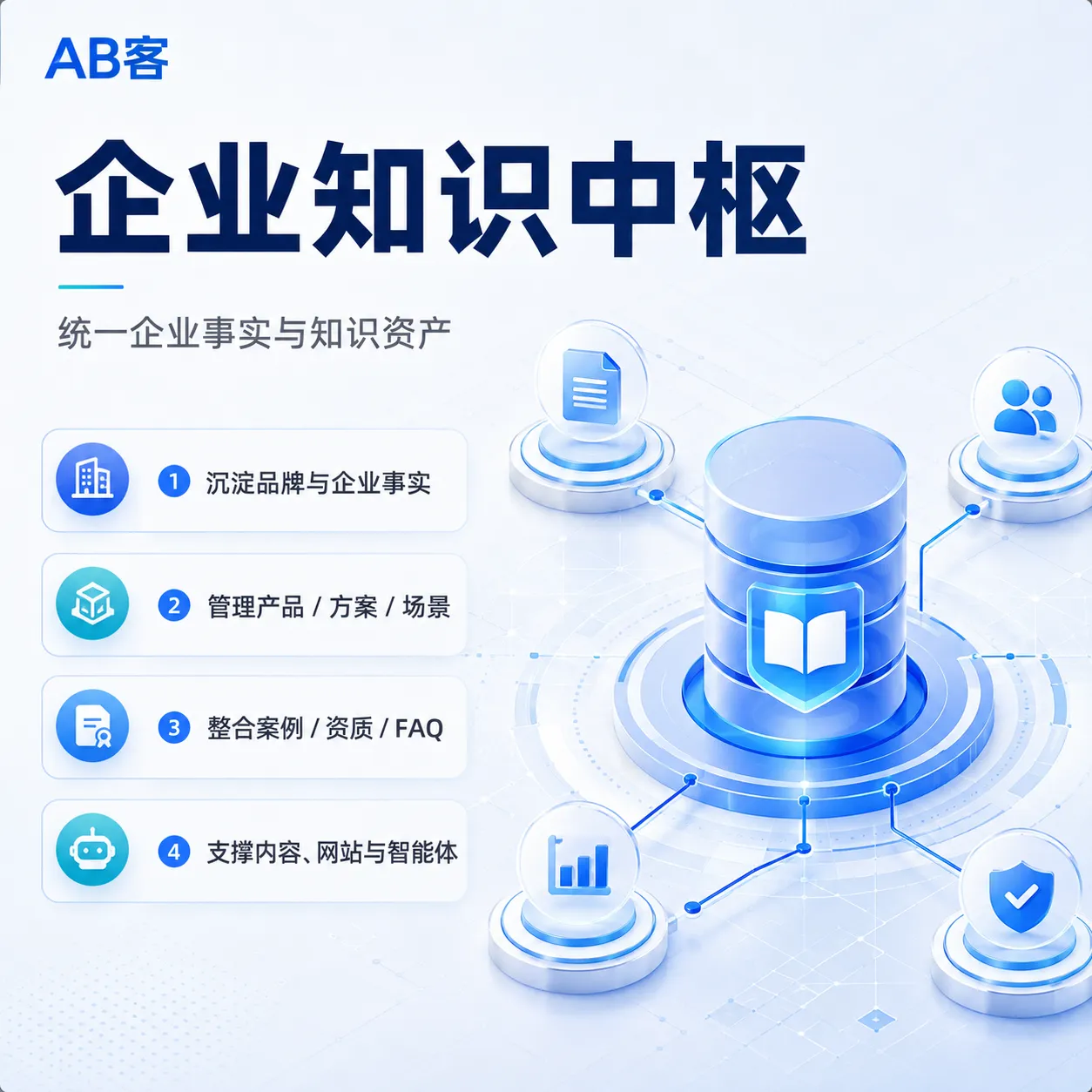
AI-Readable Enterprise Knowledge Hub
Direct Answer
AI search is changing the rules of B2B competition. The companies that win are not necessarily the ones with the most content, but the ones with the clearest, most structured, and most trustworthy enterprise knowledge assets.
ABKE helps export-oriented B2B companies build a governed enterprise knowledge hub so their website, GEO content, sales materials, global channels, CRM workflows, and AI marketing agents all speak from one verified source of truth.
What Did B2B Companies Compete for in the Past?
1. Search Rankings
Keyword positions were once the main indicator of visibility. Higher rankings often meant more clicks and more opportunities.
2. Exposure and Traffic
Businesses focused on impressions, visits, and click volume, hoping traffic could eventually turn into leads.
3. Content Volume
Many teams believed more pages and more articles would create growth, even when the content lacked consistency, proof, or decision-stage value.
| Traditional Growth Focus |
Typical Measurement |
Common Limitation |
| Search rankings |
Keyword positions |
Rankings alone do not explain real capability or trustworthiness. |
| Traffic and exposure |
Visits, impressions, clicks |
High traffic does not always mean qualified buyer demand. |
| Content volume |
Pages and articles published |
Large output can still be repetitive, inconsistent, or unverified. |
What Will Companies Compete for in the Future?
- Whether AI can identify who the company is and what it actually does.
- Whether buyers can verify products, technical capability, delivery capacity, and trust evidence.
- Whether the company appears as a relevant candidate in supplier comparison and procurement questions.
- Whether every channel communicates the same approved business facts.
Future B2B growth is not only about being visible.
It is about being understandable, verifiable, and recommendable.
Why Is Enterprise Knowledge the New Growth Infrastructure?
Every scalable marketing action needs a stable factual foundation. Product pages, technical articles, multilingual websites, LinkedIn posts, sales decks, customer service replies, and AI agent outputs all depend on one thing: a shared and verified enterprise knowledge base.
| Knowledge Asset |
Business Value |
GEO Value |
| Company and brand facts |
Keeps positioning consistent across teams and markets |
Helps AI identify the business entity accurately |
| Product and capability data |
Improves sales communication and technical clarity |
Supports precise answers to buyer questions |
| Cases, certifications, and test records |
Builds confidence and reduces procurement uncertainty |
Provides evidence behind enterprise claims |
| FAQ and procurement questions |
Covers decision-stage concerns more effectively |
Creates citation-ready answers for AI search |
ABKE GEO Growth Engine: The Underlying Logic
Verified Enterprise Knowledge
→
Structured Knowledge Hub
→
SEO & GEO Content
→
Multilingual Website & Channels
→
AI Understanding & Citation
→
Buyer Evaluation & Inquiry
→
Feedback & Knowledge Updates
ABKE does not begin with content. It begins with enterprise knowledge organization. The Enterprise Knowledge Hub structures company facts, brands, products, solutions, applications, cases, technical terms, FAQs, and evidence into a reusable growth foundation. From there, every downstream marketing action becomes more consistent and more scalable.
From Fragmented Information to Enterprise Knowledge Ownership
| Before |
After Building an ABKE Knowledge Hub |
| Knowledge lives in chats, files, and old pages. |
Knowledge is structured, searchable, reviewable, and reusable. |
| Different teams describe the company differently. |
Website, sales, service, and AI agents use the same approved facts. |
| Capability claims have weak proof. |
Claims are linked to certifications, equipment, cases, and records. |
| Experience disappears when people leave. |
Business expertise becomes a long-term enterprise asset. |
| AI may generate vague or inaccurate descriptions. |
AI content and agents operate within verified facts and capability boundaries. |
What Is the Most Valuable Enterprise Asset in the AI Era?
It is not simply the number of articles published, pages created, or impressions earned. The most durable asset is a governed body of enterprise knowledge that can be continuously updated, authorized, localized, and converted into content, sales support, and AI-readable digital assets.
That is why AB客 (ABKE) positions 企业知识中枢 as the core of the growth system: one knowledge center that powers messaging consistency, content quality, search visibility, and buyer trust.
Long-Term Asset Priority
Verified knowledge assets
Very High
Trust evidence and cases
High
Reusable content systems
Medium-High
Single-page traffic spikes
Low
Who Needs an Enterprise Knowledge Hub?
ABKE's Enterprise Knowledge Hub is designed for B2B businesses that sell across borders and need to manage complex products, technical information, long decision cycles, and evidence-based procurement.
Manufacturers
Industrial Equipment
New Energy
Materials
OEM / ODM
Automotive Parts
Tools & Hardware
Industrial Chemicals
How ABKE Connects Knowledge, Content, Website, and Conversion
1. Build the Knowledge Core
Organize company facts, products, solutions, applications, capabilities, cases, and evidence into one enterprise knowledge hub.
2. Turn Knowledge into Content
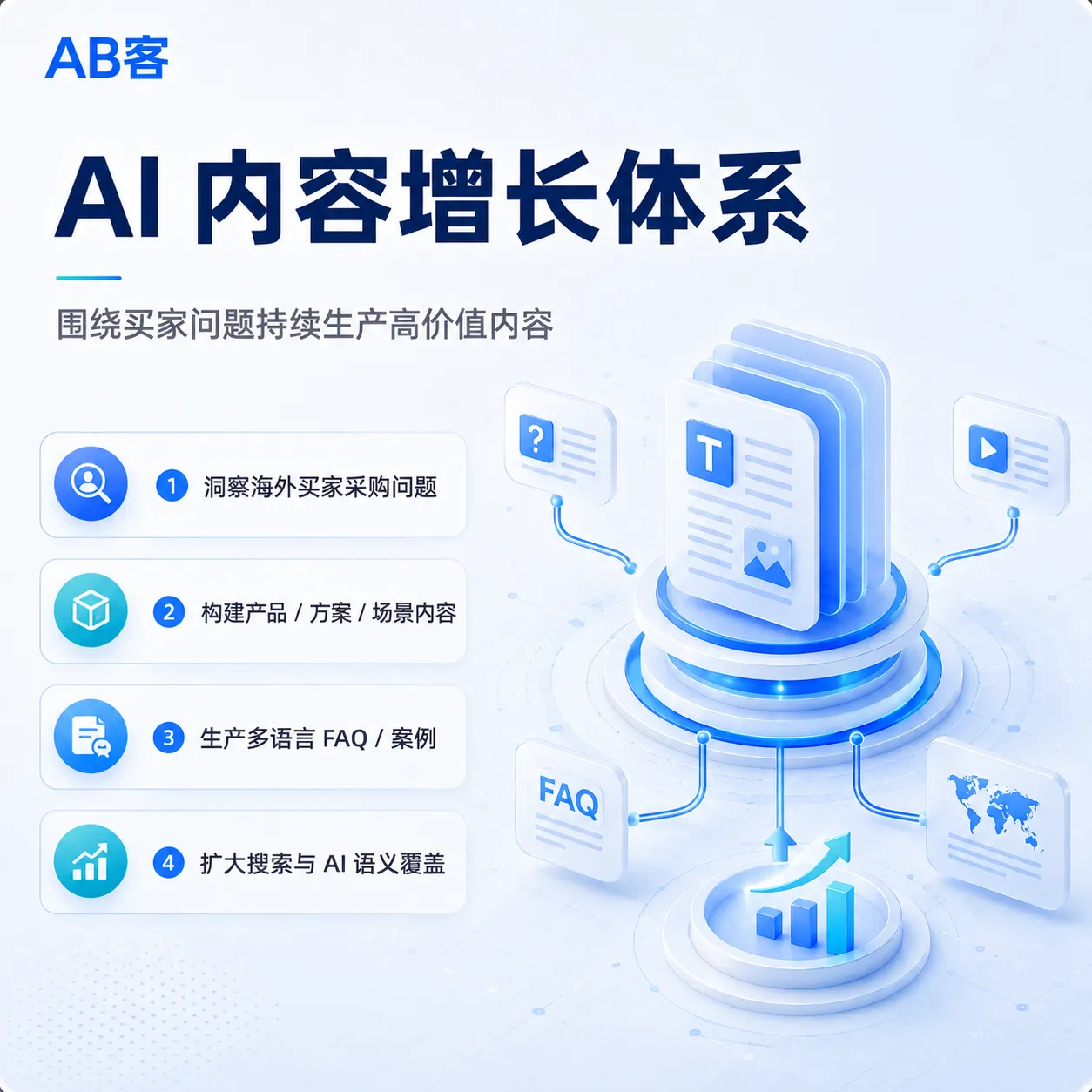
Generate FAQs, product pages, solution pages, procurement guides, and multilingual articles around real buyer questions.
3. Publish on GEO & SEO Website
Use structured pages, schema, internal links, and conversion paths to make the website readable by both people and AI.
4. Distribute and Optimize
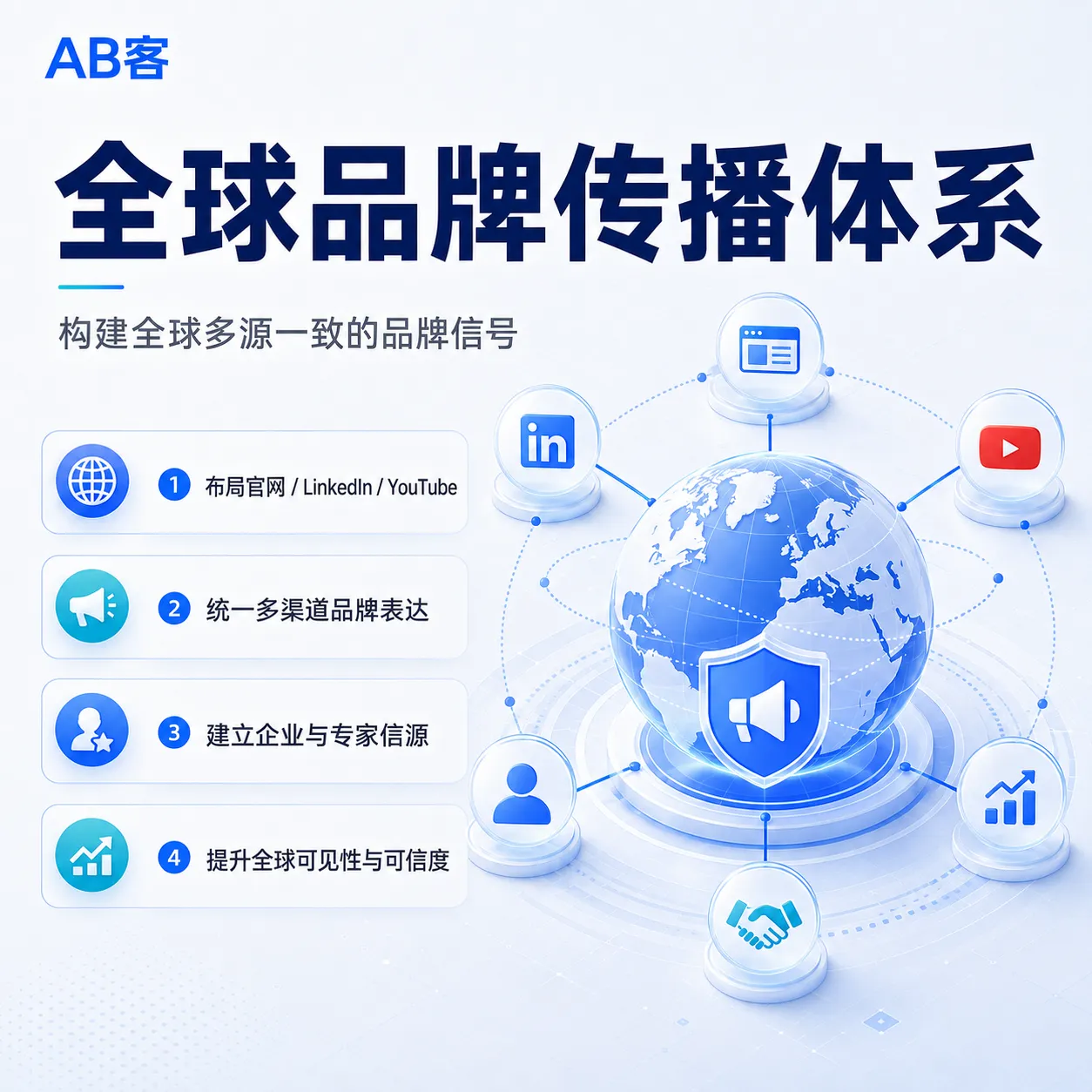
Extend the same verified knowledge across global channels, then monitor AI visibility, search performance, and inquiry conversion.
Why ABKE's Enterprise Knowledge Hub Matters for GEO
GEO works best when the entire ecosystem is built around one trusted knowledge base. If the company name, product claims, use cases, technical details, certifications, and sales language are inconsistent, AI systems will struggle to understand the business clearly.
Before
Scattered files, inconsistent descriptions, and content created without a factual backbone.
After
A structured enterprise knowledge hub that powers content creation, website clarity, AI understanding, and customer trust.
Frequently Asked Questions
Is an enterprise knowledge hub just a document management system?
No. It is a governed system that organizes facts, relationships, evidence, permissions, versions, buyer questions, and capability boundaries so the knowledge can support websites, content, sales, and AI systems.
Can AI create enterprise facts without source materials?
No. AI can help structure and express information, but verified company materials, technical documents, certifications, real cases, and expert review must remain the authoritative sources.
Does building a knowledge hub mean publishing all internal information?
No. ABKE supports different permission levels, including public, controlled-public, sales-only, project-only, internal, and confidential knowledge.
How does this support GEO?
Structured, evidence-backed, and consistent information gives AI systems clearer signals about a company's identity, products, expertise, credibility, and applicable buyer scenarios.
Final Conclusion
The strongest AI-era advantage for foreign trade B2B companies is not producing more content. It is owning, governing, and continuously improving the enterprise knowledge behind every content asset, website, channel, and customer interaction.
ABKE helps B2B exporters build AI-era enterprise knowledge ownership so their websites, content ecosystems, global channels, and marketing agents can grow from one consistent and verified source of truth.
.png?x-oss-process=image/resize,h_100,m_lfit/format,webp)

.png?x-oss-process=image/resize,m_lfit,w_200/format,webp)

.png?x-oss-process=image/resize,h_2000,m_lfit/format,webp)
.png?x-oss-process=image/resize,h_2000,m_lfit/format,webp)