.png?x-oss-process=image/resize,h_100,m_lfit/format,webp)

.png?x-oss-process=image/resize,m_lfit,w_200/format,webp)

Hot Products
.png?x-oss-process=image/resize,h_2000,m_lfit/format,webp)
.png?x-oss-process=image/resize,h_2000,m_lfit/format,webp)

Popular articles
When Is a GEO Website Truly Complete?
AI Doesn’t Know Who You Are—Is It Too Early to Talk About AI Recommendations?
What Should You Do First When Building a New Export Website for GEO?
Your Website Is Only the First Step: Build a Multi-Source GEO Trust Matrix for AI Recommendation
How Can You Optimize GEO If You Don’t Know What Buyers Are Asking?
Recommended Reading


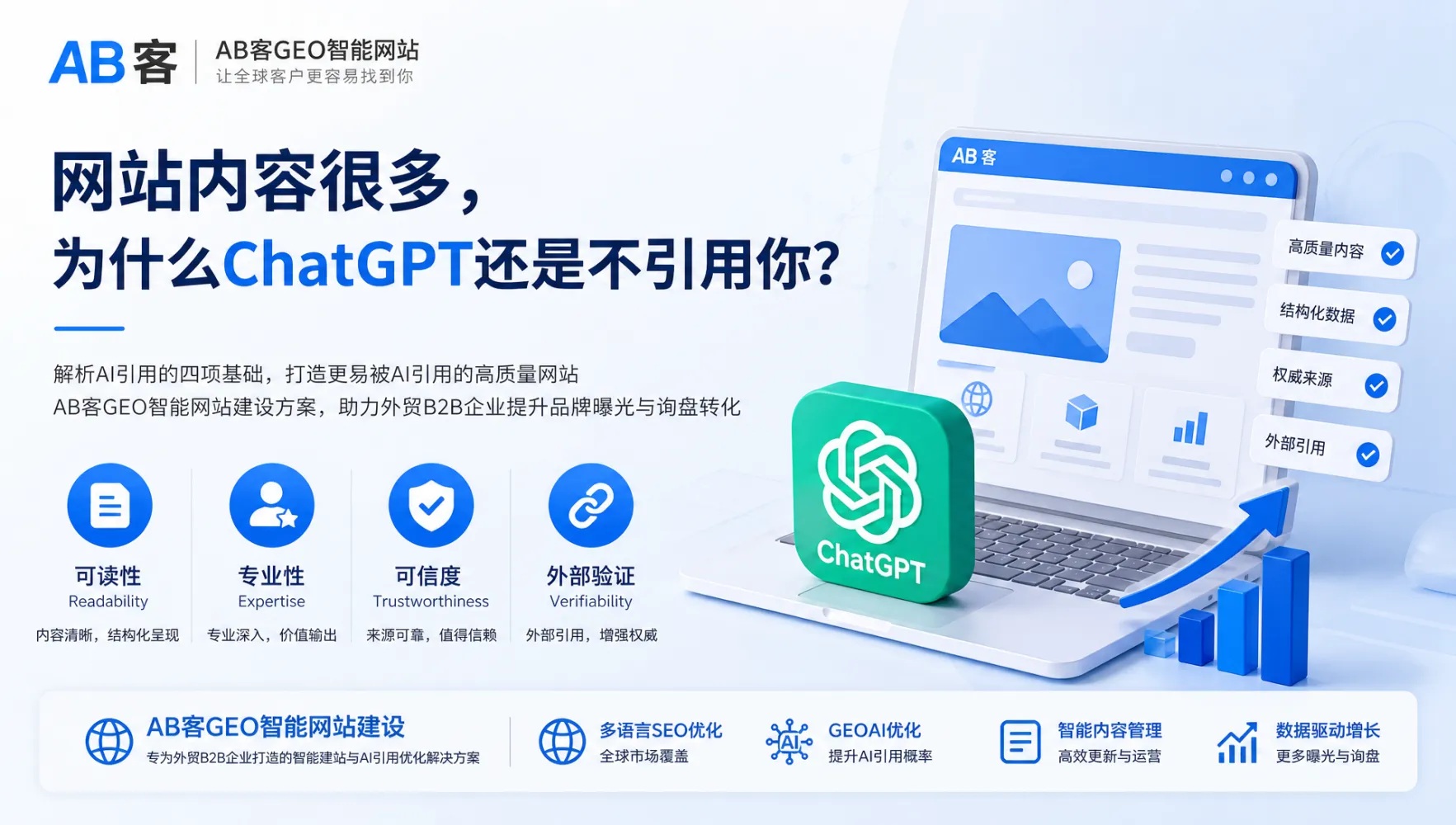
Why Does Foreign Trade Growth Become More Expensive Without Enterprise Knowledge Sovereignty?
Discover how ABKE Enterprise Knowledge Hub helps B2B exporters reduce repeated information costs by turning verified company knowledge into reusable, AI-ready growth assets.
Why Does Foreign Trade Growth Become More Expensive Without Enterprise Knowledge Sovereignty?
When a B2B exporter does not have a unified knowledge source, every website update, product launch, multilingual expansion, sales training, and AI workflow has to start from scratch. The result is not just slower execution, but repeated information costs, inconsistent messaging, and higher long-term growth expenses.
Direct Answer
Without enterprise knowledge sovereignty, companies keep paying to collect, verify, rewrite, and redistribute the same facts. The more markets, languages, channels, and stakeholders involved, the more expensive growth becomes.
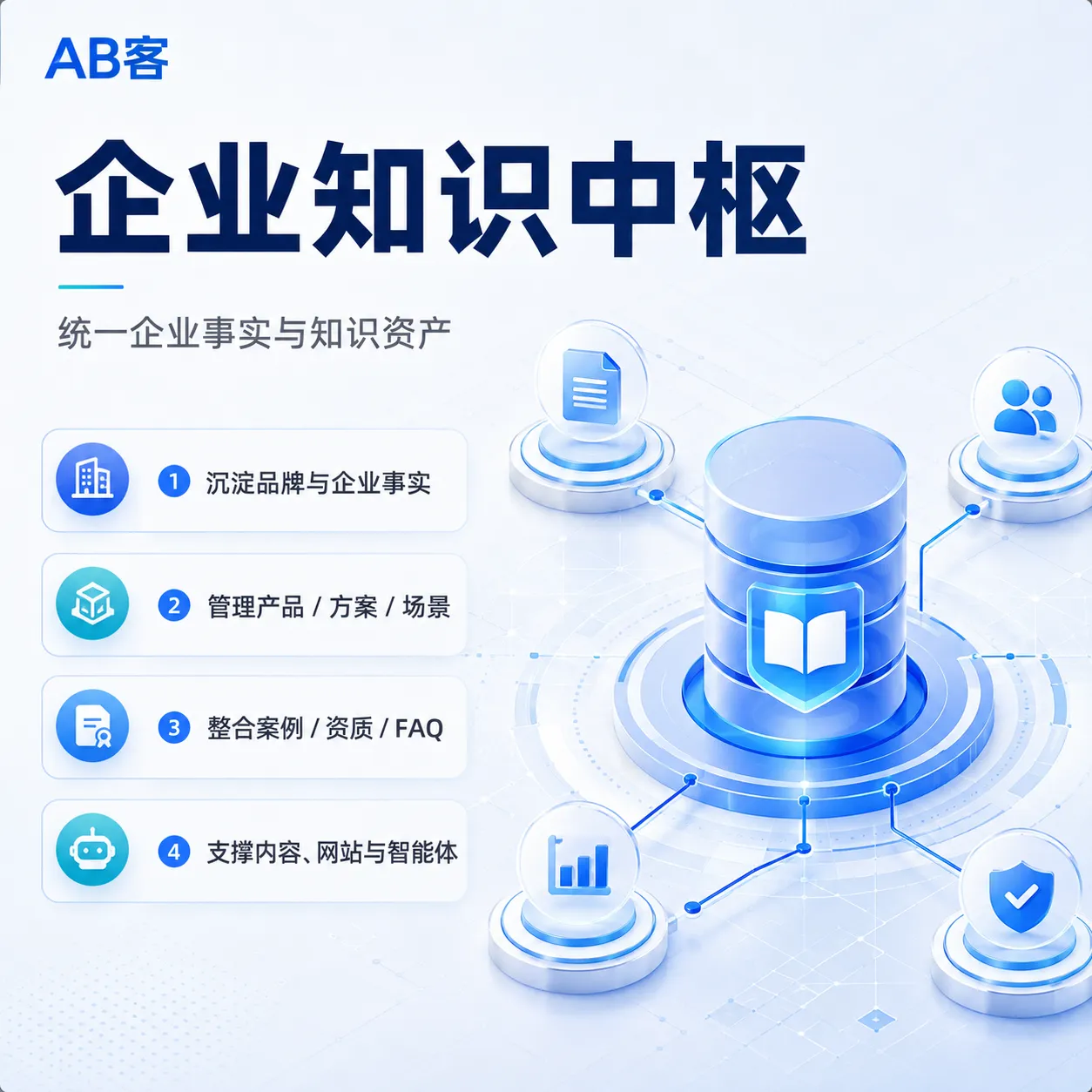
ABKE Enterprise Knowledge Hub
ABKE helps manufacturers and export B2B companies turn fragmented company facts, product data, capabilities, cases, certifications, and buyer questions into reusable, governed, AI-ready knowledge assets.
Many Exporters Repeatedly Pay for the Same Information
A product specification changes. A new market opens. A buyer asks a technical question. In many companies, each event triggers the same manual workflow: people search old files, confirm details, rewrite materials, and update channels separately.
| Business Event | Without a Unified Knowledge Source | With an Enterprise Knowledge Hub |
|---|---|---|
| Product upgrade | Update the website, catalog, sales deck, and platform listings one by one. | Update verified product knowledge once and reuse it across channels. |
| New market launch | Recollect facts and recreate multilingual materials from scratch. | Reuse approved facts with localized language and market-specific rules. |
| Sales onboarding | Knowledge depends on experienced employees and scattered files. | Sales teams access current, approved product and solution knowledge. |
| AI content production | AI may generate vague or inaccurate claims without fact constraints. | AI works from governed facts, evidence, and capability boundaries. |
| Website expansion | Pages are created independently and often conflict in messaging. | Product, solution, FAQ, and proof pages draw from the same source of truth. |
Why Does This Happen?
The real problem is not simply a lack of content. It is the absence of a single source of truth for the enterprise.
In many organizations, critical knowledge is scattered across founders, sales representatives, engineers, manuals, chat records, folders, legacy websites, and third-party platforms. When facts are not structured, approved, and connected to evidence, every new growth action starts from fragmented information.
Information Flow Comparison
Fragmented flow
People + scattered files → repeated collection and verification → inconsistent website, sales, and channel content → higher operating cost and slower response
ABKE knowledge-driven flow
Verified enterprise knowledge → governed knowledge hub → website, GEO content, sales tools, CRM, and AI agents → consistent global growth execution
How Knowledge Assets Reduce Long-Term Growth Costs
Enterprise knowledge becomes a compounding asset when it is structured around entities, products, solutions, scenarios, buyer questions, evidence, permissions, and update responsibilities.
Build once, reuse across many scenarios: Use approved knowledge for websites, product pages, FAQs, technical articles, LinkedIn posts, sales presentations, and AI assistants.
Reduce repeated verification: Link claims about quality, production, delivery, and customization to certifications, test reports, equipment, cases, and responsible owners.
Protect brand consistency: Ensure official websites, sales teams, and global channels use aligned enterprise facts and capability boundaries.
Improve AI accuracy: Give AI systems structured, evidence-backed information instead of asking them to infer company facts from incomplete inputs.
Preserve organizational expertise: Retain product, engineering, and customer knowledge when employees or external providers change.
| Knowledge Asset | Reusable Outputs | Growth Value |
|---|---|---|
| Enterprise and brand facts | Company profiles, website pages, third-party listings | Clear and consistent entity recognition |
| Product and capability data | Product pages, catalogs, technical answers, sales tools | Faster response and fewer factual errors |
| Cases, certifications, and evidence | Trust pages, proposals, solution content, AI citations | Stronger buyer confidence and verifiable claims |
| Buyer questions and FAQs | SEO articles, GEO pages, chatbot responses, sales scripts | Better coverage of real procurement intent |
| Permissions and versions | Public, controlled, sales-only, and internal materials | Safer information governance across markets |
ABKE Does Not Simply Produce More Content
ABKE focuses first on making existing enterprise knowledge usable, governed, and valuable at scale. The Enterprise Knowledge Hub is the factual and cognitive foundation of ABKE’s foreign trade B2B GEO growth infrastructure.
It helps an enterprise establish knowledge sovereignty: the ability to define, review, authorize, update, export, and reuse its own identity, products, solutions, expertise, evidence, and communication boundaries.
From Content Production to Knowledge-Driven Growth
Traditional approach: write a page → publish it → repeat when information changes.
ABKE approach: confirm enterprise facts → structure and govern knowledge → generate reusable content and channel assets → measure accuracy, visibility, and conversion → continuously update the knowledge base.
Better for SEO
Clear entities, structured topics, and reusable answers improve indexing and long-tail visibility.
Better for GEO
AI systems can understand, cite, and recommend companies with governed knowledge.
Better for Sales
Sales teams reuse approved knowledge instead of rebuilding explanations for every conversation.
Where an Enterprise Knowledge Hub Creates Value
1. Website and SEO&GEO pages
Product pages, solution pages, FAQ pages, and knowledge articles all use the same verified company facts, improving consistency and reducing rewrite work.
2. AI content and AI agents
AI tools generate more reliable outputs when they are grounded in governed knowledge rather than loose prompts and scattered materials.
3. Sales enablement
Sales teams can answer buyer questions faster, standardize product explanations, and reduce the cost of training new team members.
4. Global market expansion
Multilingual content can be built from a centralized knowledge base, making localization faster, more accurate, and easier to govern.
5. Brand trust and AI recognition
When facts, capabilities, and evidence are consistent across channels, AI and buyers are more likely to recognize and trust the company.
A Simple View of the Knowledge Sovereignty Stack
Who Should Build an Enterprise Knowledge Hub?
This solution is especially relevant for manufacturers, industrial suppliers, equipment companies, material providers, OEM/ODM businesses, and technical B2B service companies that operate across products, markets, languages, and long procurement cycles.
It is most valuable for companies upgrading an export website, building multilingual content, adopting AI marketing agents, standardizing brand communication, improving sales-material reuse, or reducing knowledge loss caused by personnel changes.
Typical pain point
The website exists, but the company still cannot explain itself consistently across teams and channels.
Typical risk
Important facts live in people’s heads or scattered files, so growth slows when staff changes or markets expand.
Typical opportunity
Once knowledge is structured, it can support content, SEO, GEO, sales, AI workflows, and market localization at the same time.
Core Conclusion
Without knowledge assets, every growth initiative starts over. With governed enterprise knowledge assets, every website update, content effort, AI interaction, and sales activity can build on what the business has already confirmed and accumulated.
ABKE helps foreign trade B2B enterprises become more understandable to AI, more credible to buyers, and more efficient in long-term global growth.
Frequently Asked Questions
Is an Enterprise Knowledge Hub just a document management system?
No. Document storage organizes files, while an Enterprise Knowledge Hub structures verified facts, relationships, evidence, permissions, versions, and reuse scenarios so people, websites, and AI systems can use the information accurately.
Can AI create enterprise facts when information is missing?
No. AI can help organize and express confirmed information, but it should not invent capabilities, certifications, customer cases, or performance claims. ABKE relies on enterprise-confirmed materials and expert review.
Will all company information become public?
No. A knowledge hub supports permission levels such as public, controlled public, sales-only, project-only, internal, and highly confidential. Enterprises keep control over what can be used in each scenario.
How does this support GEO and AI recommendation?
Structured, consistent, and evidence-backed enterprise knowledge gives AI systems clearer signals about who the company is, what it offers, where it fits, and why it can be trusted. That improves AI understanding, citation readiness, and recommendation potential.
ABKE Enterprise Knowledge Hub is built for exporters that want to reduce repeated information costs, improve AI visibility, and turn company knowledge into reusable growth infrastructure.


