Hot Products





Popular articles
How can export-oriented manufacturing companies publish original industry data that is worth citing? From test logs to technical white papers.
How Multilingual Content Enters the Global Sources Network: From Procurement Issues to Channel Version Adaptation Process
How Can Foreign Trade B2B Companies Test a New Market Without Overinvesting in a Localized Website?
Recommended Reading





Battery Passport Implementation in 2027: What Data Needs to be Prepared for Energy Storage and Power Battery Exports?
AB Customer has compiled key points for data preparation for the EU Battery Passport, analyzing the classification, supply chain division of labor, data permissions, and buyer verification of batteries for power, energy storage, and light transportation vehicles, helping export companies plan their document delivery.
Battery companies exporting to the EU should understand battery passport preparation as a data engineering process that spans product classification, supply chain handover, and ongoing maintenance, rather than a one-time collection of parameters. Power batteries need to emphasize vehicle platform and whole-vehicle verification, while energy storage batteries need to consider actual operating conditions, system configuration, and lifespan requirements. Publicly available information for both types of batteries can be managed uniformly, but cannot replace the battery passport managed by those with legal authority.
This article is based onEU Battery and Waste Battery Regulation (EU) 2023/1542This serves as the primary basis. Article 77 and Annex XIII of this regulation are important starting points for verifying the scope of application and information requirements of the battery passport; specific items should also be verified in conjunction with subsequent implementing regulations, revisions, and official EU guidelines to confirm the effective date and division of responsibilities.Related Cases:How can industrial lithium battery companies achieve GEO growth? A six-month case study and suggestions for building equipment and scenario-based content.
What are the different market logics for batteries used in power vehicles, energy storage, and light transportation?
Power battery:
The demand for power batteries is typically closely linked to vehicle platforms, vehicle production plans, and vehicle validation schedules. Purchasers not only compare cell energy density and cost, but also need to evaluate battery pack size, electrical interfaces, safety strategies, and the collaborative capabilities between different suppliers. Good performance parameters for a single cell do not necessarily mean that it has passed vehicle validation for a specific model.
Export documentation should specify whether the product is at the cell, module, or battery pack level, and differentiate between general specifications and verification results specific to a particular vehicle platform. Test reports should retain the sample model, test conditions, and version; results from other configurations should not be directly applied to the current product.
Energy storage batteries:
Energy storage procurement focuses more on application conditions: frequency regulation, industrial and commercial peak shaving, backup power, or renewable energy projects may have different requirements for charge/discharge duration, cycle frequency, and operating environment. Even with the same cell combination, different battery management systems (BMS), thermal management systems, and system configurations can result in different deliverable performance.
Batteries for light vehicles are often used in applications such as electric bicycles. Procurement decisions need to consider the vehicle's intended use, charging method, and maintenance conditions. Their regulatory category cannot be determined solely by the sales name; it should be verified based on regulatory definitions and actual intended use.
Indicator Scope:
When comparing market changes, the statistical objects and units should be identified first: cell shipments reflect supply chain delivery, while terminal deployments reflect actual installations; power is usually measured in MW, and energy capacity is usually measured in MWh. The ratio of the two can be used to understand the rated duration of a specific system, but the rated conditions and system boundaries must be identified.
Verify the product level, statistical period, and delivery region. Terminal deployment
Verify whether the project is in operation and the system's statistical boundaries. Power and capacity
Distinguish between MW and MWh; they cannot be directly substituted for each other.
International Energy AgencyGlobal Electric Vehicle OutlookandBatteries and Safe Energy TransitionIt can serve as background information for understanding the vehicle battery and energy storage market; when citing data from it, the year, region, and statistical scope should be verified.
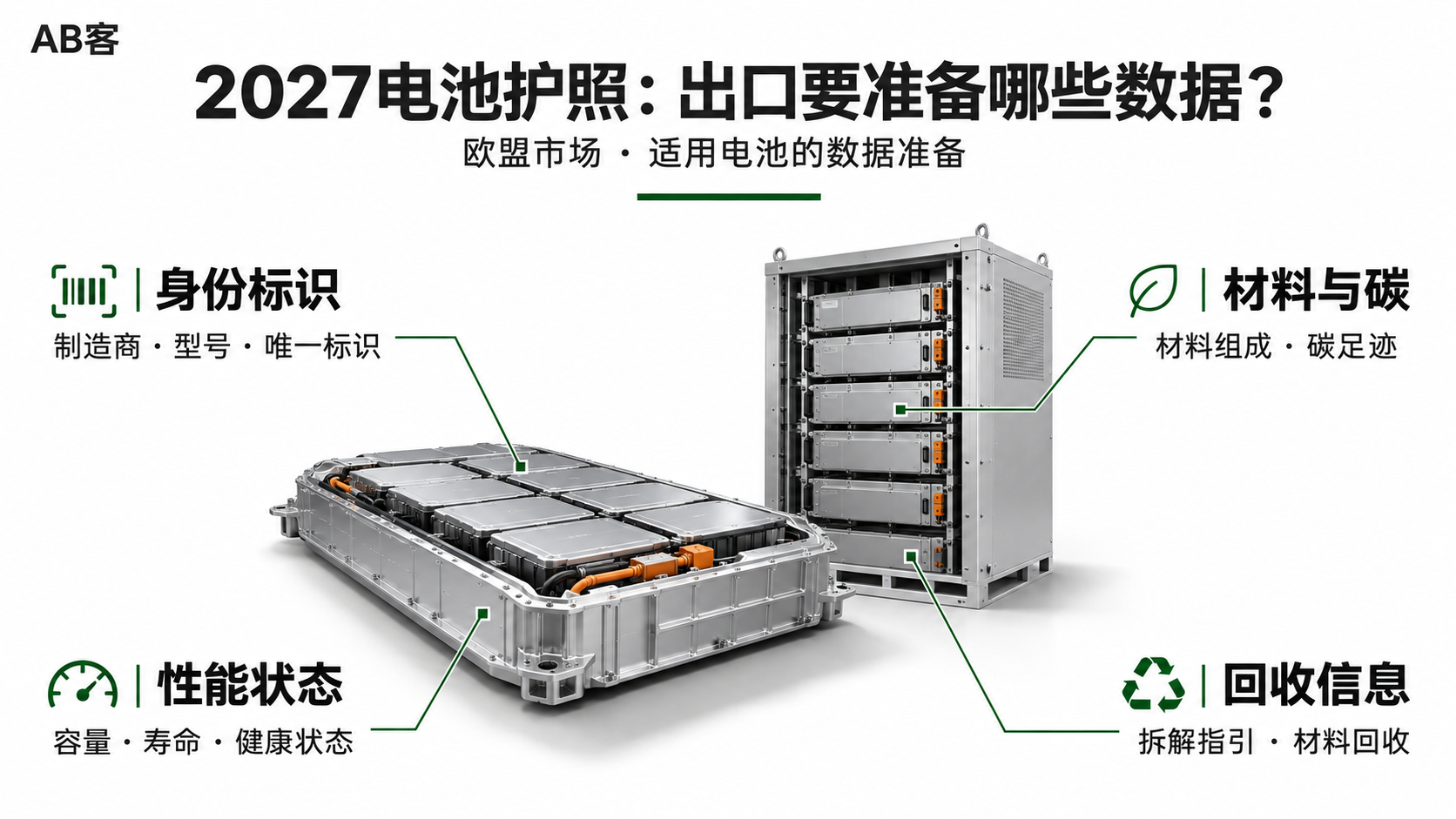
Which products, operators, and timeframes need to be verified?
Product Categories:
The classification of regulations should be based on the product's actual use, design, and capacity, rather than solely on commercial names such as "power" or "energy storage." According to Article 77 of the regulations,Starting from February 18, 2027, batteries for light vehicles, industrial batteries with a capacity of more than 2 kWh, and electric vehicle batteries that are put into the market or put into use should have an electronic battery passport.The capacity threshold for industrial batteries should not be mistakenly applied to the other two types of batteries.
Energy storage products may fall under the category of industrial batteries, but the specific classification must be determined based on regulatory definitions and the actual product. For combined products, the batteries and their liability boundaries in the legal sense should be identified first, and then the relationships between the cell, module, and system information should be verified.
Business Role:
Cell manufacturers, module or system integrators, brand owners, importers, and other operators may be in different contractual and supply chain positions. Article 77 places the responsibility for ensuring the accuracy, completeness, and timely updating of battery passport information on the operator who places the relevant batteries on the market or puts them into use; companies should identify the specific entities in conjunction with the transaction structure and cannot assume that a single supplier at any level bears all the obligations.
The procurement contract should clearly specify: who provides the original data, who verifies its applicability, who is responsible for submitting it to the passport system, and who is responsible for notifying and updating the information after any changes occur. Even if some information is provided by the upstream entity, the responsible party still needs to establish the necessary verification and traceability mechanisms.
Distinction of obligations:
Battery passports, labels and QR codes, carbon footprint declarations, and other compliance requirements each have their own scope of application, implementation time, and supporting rules. The passport will be applicable from 2027 onwards, but this does not mean that all related obligations will take effect on the same day, nor does it mean that a particular product will automatically be subject to all carbon footprint requirements.
What kind of battery data structure should be established?
Model data:
The model number layer records information that can be reused across products of the same design, such as product category, model number, rated capacity, material information, applicable performance parameters, and corresponding verification data. Fields should not contain only a single number: they should also record the unit of measurement, test conditions, data source, applicable model number, and version, enabling the purchaser to determine data comparability.
Annex XIII of the regulations specifies the scope of passport information and differentiates access permissions based on different users. Companies should map statutory fields to internal data item by item; not all internal R&D data or procurement data necessarily falls under public fields.
Individual data:
Each battery needs to be associated with a unique identifier. Here, "individual battery" refers to a single battery object at the data management level and should not be equated to every individual cell without proper assessment. The specific identifier should be determined according to the applicable battery category and product boundaries.
Companies can link individual battery identifiers with model numbers, production batches, critical component batches, and delivery records. During product recalls, quality investigations, or information updates, the affected products can be located first, and then the associated document versions can be traced, avoiding inferences about the status of all products based solely on the model number.
Lifecycle data:
Information regarding use, maintenance, reuse, and recycling should be organized according to product category, actual events, and applicable regulations, rather than assuming that all fields are present at the time of manufacture. For data that needs to change over time, the event date, source, responsible party, and basis for updating should be recorded, and it should be clearly stated which content is allowed to be accessed.
Design, Performance and Validation Battery label
Related batches and deliveries Lifecycle events
Record changes as required. Version and Permissions
Provided to the relevant parties after review
For batteries that are reused, repurposed, or remanufactured, the regulations regarding the new passport and its association with the original passport should also be reviewed. Data models need to allow for correlations to changes in product status, rather than simply covering historical records.
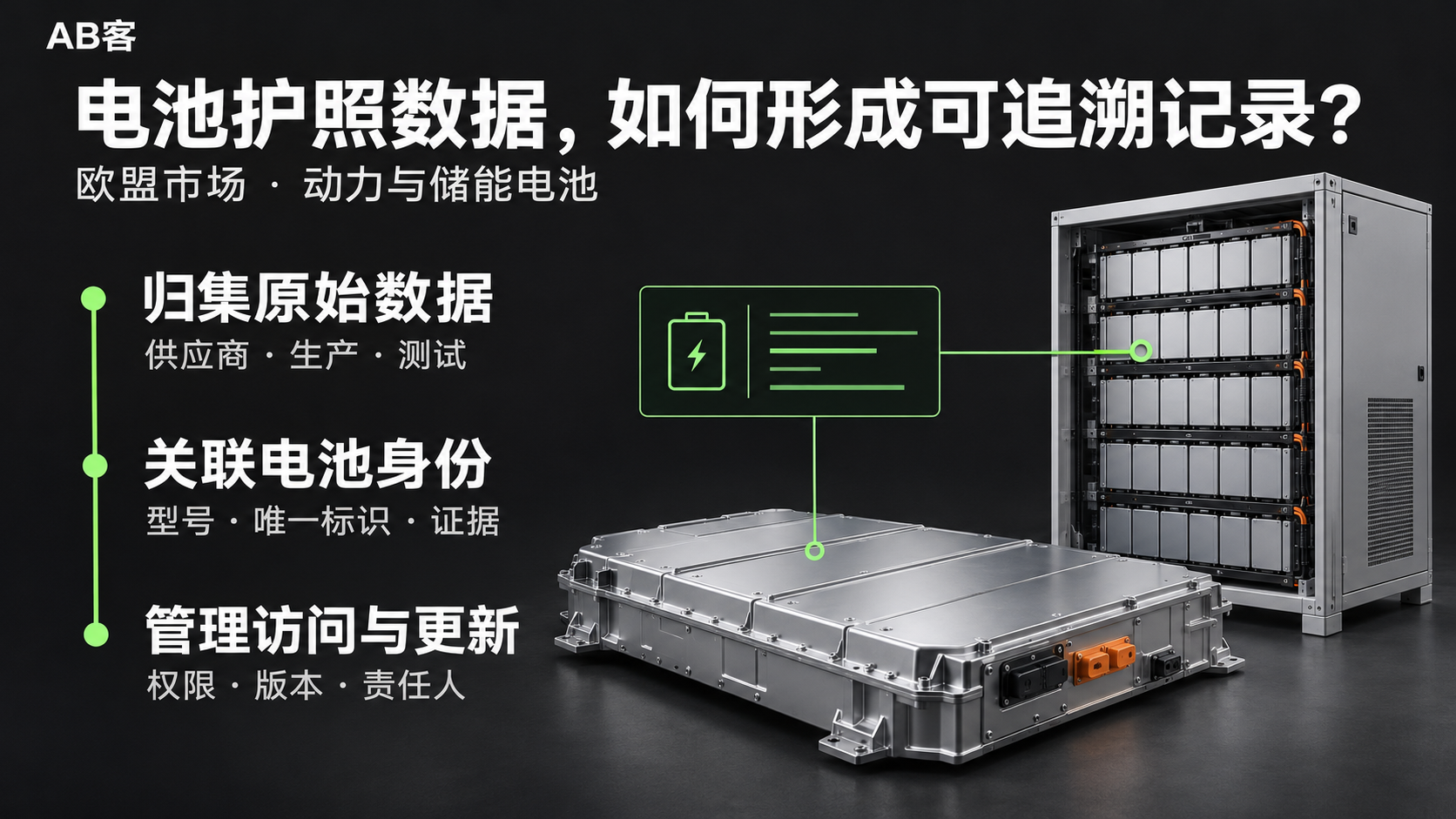
Who provides, reviews, and continuously updates the data?
Supply chain handover:
The difficulty in data handover often lies not in the lack of documentation, but in the existence of multiple definitions for the same field. For example, the cycle test results provided by the cell supplier may use different temperatures, rates, or lifespan endpoints than those provided by the system purchaser. Delivery should include field definitions, units, test conditions, scope of application, and sources of evidence.
It is recommended that the procurement technology agreement include a data list, delivery format, responsible contact person, review method, and change notification mechanism. For commercially sensitive information, legal disclosure requirements and access targets should be confirmed first, and then handled through appropriate permissions or contractual arrangements. Applicable obligations should not be ignored under the pretext of confidentiality.
Version control:
Model upgrades, material changes, testing method adjustments, or supplier replacements may all affect the applicability of existing data. Each change should retain the reason for the modification, the source document, the reviewer, the effective date, and the scope of affected products; old versions should be marked as invalid and retained as required to avoid long-term inconsistencies between sales data and passport information.
Public websites, technical data sheets, and passport systems may reference the same controlled knowledge source, but their publication and approval processes need not be identical. When errors are discovered, the scope of impact should be verified first, then the responsible party should correct the error, and relevant parties relying on the old data should be notified.
Access permissions:
Battery Passport does not place all data on a public webpage. Annex XIII distinguishes between information provided to the public and information provided to stakeholders with legitimate interests, competent authorities, etc.; specific accessible content should be determined on an item-by-item basis according to regulations. Access control design should also consider authentication, access logs, and information security.
For data relating to battery status and expected lifespan, the provision and access requirements should be verified in accordance with Article 14, Annex VII, and applicable categories. Information required by the purchaser may not all be publicly available; both parties should confirm the legal access path in advance.
How can buyers verify the technical and business suitability of batteries?
Performance evidence:
When comparing capacity, rate capability, or cycle life, the purchaser should require the supplier to specify the test temperature, charge/discharge rate, state of charge range, end of life, and whether the test object is a cell or a system. Lifetime figures lacking these details cannot support reliable cross-sectional comparisons and should not be directly considered as a commitment to actual project operation.
| Validate Project | Conditions to be verified | Procurement Judgment |
|---|---|---|
| Capacity and power | Temperature, magnification, measurement level | Does it meet the target operating conditions? |
| Cycle life | Charge/discharge range, lifespan end point, test methods | Can it be compared with the project's operating conditions? |
| Safety and environmental performance | Sample preparation, applicable standards and reporting scope | Does the evidence cover the proposed procurement configuration? |
System compatibility:
For powertrain projects, the interface, control strategy, and verification scope of the battery pack and vehicle platform should be verified; for energy storage projects, the configuration of the battery cells, BMS, thermal management, and system integration should be verified. Procurement documents should specify the level from which the parameters originate, which components participate in the testing, and whether re-verification is required after configuration changes.
For energy storage systems, the measurement boundaries for power, available energy, and operating duration should be clearly defined. System auxiliary equipment, operating limitations, and environmental conditions can all affect the project's availability; therefore, the nominal capacity of the cells cannot be directly used to replace the system's delivery capacity.
After-sales responsibility:
Procurement assessments should extend to warranty coverage, fault diagnosis, traceability paths, and service division of labor. Contracts should clearly define the investigation process, data provision methods, and liability boundaries in case of disputes arising from battery cells, BMS, integrated systems, or usage conditions; specific warranty terms should be based on the agreement between the parties and applicable laws.
The table below is for the handover of planning documents and is not a substitute for determining the legally mandated scope of disclosure or the responsible party. Actual fields and permissions should be confirmed item by item according to regulations, product categories, and contracts.
| Battery Category | Data field examples | Provider Example | Example of an auditing party | Access control | Update responsibility |
|---|---|---|---|---|---|
| Electric vehicle batteries | Model, capacity, markings, verification documents | Battery cell suppliers and system integrators | Responsible operators and related technical teams | Classified by field and regulation | The source party reports changes, and the responsible operator ensures updates. |
| Industrial batteries, such as suitable energy storage batteries | Capacity, configuration, applicable performance and lifecycle information | Cell suppliers, system integrators and related data holders | Responsible operators and related technical teams | Check by field and access object | Handover and updates shall be carried out in accordance with applicable requirements and agreements. |
| Light vehicle batteries | Category, model, markings and applicable performance information | Manufacturers, suppliers | Responsible operators and related technical teams | Judge item by item according to Appendix XIII | Responsible operators coordinate with suppliers to maintain |
FAQ
- Does a battery passport mean that all data must be made public?
No. Regulations differentiate between different access groups, such as the general public, stakeholders with legitimate interests, and competent authorities; access permissions should be verified by field, and not all internal information should be directly disclosed. - How do cell or module suppliers and finished battery retailers divide their responsibilities?
Upstream suppliers typically provide the product and verification information they possess; responsible operators who place products on the market or put them into use should ensure that passport information is accurate, complete, and updated in a timely manner. Specific handover, verification, and change notification procedures should be implemented through agreements. - What is the relationship between product web pages, technical documentation, and the legal passport system?
All three can share verified basic facts, but their target audience, fields, and permissions differ. Public web pages and technical materials help buyers understand the product, but they cannot replace legal passports and their access control. - Can the growth in energy storage capacity replace the growth in battery shipments?
No. Power, energy capacity, cell shipments, and terminal deployment measure different things; the region, time, unit, and statistical boundaries should be unified before comparing trends.
For power and energy storage companies that need to continuously provide information to overseas buyers, the key is to ensure that publicly available information is complete and consistent in version. ABKE's corporate knowledge base and GEO intelligent website can be used to organize publicly available product parameters, application conditions, testing criteria, and technical FAQs, and to present them uniformly according to different application scenarios. Companies can further consult on knowledge organization and website construction solutions based on existing data and target markets. The creation, maintenance, and access management of legally mandated battery passports remain the responsibility of the relevant responsible entities and professional systems.
Related reading:
Authoritative Outlook: Which Industries Will Drive Global Trade Growth in 2027?


