Hot Products





Popular articles
How can export-oriented manufacturing companies publish original industry data that is worth citing? From test logs to technical white papers.
拿到几家外贸GEO公司的报价,如何按相同服务范围逐项比较?
How to choose markets for photovoltaic exports in 2027? Installation prospects, grid connection constraints, and profit risks.
Recommended Reading


Exporting Connected Devices to the EU in 2027: How Does the CRA Change Software Maintenance and Security Responsibilities?
Explore the scope and key dates of the EU Cyber Resilience Act (CRA), as well as responsibilities for software version management and vulnerability handling. Learn how ODMs and brand owners can prepare security evidence and maintenance arrangements.
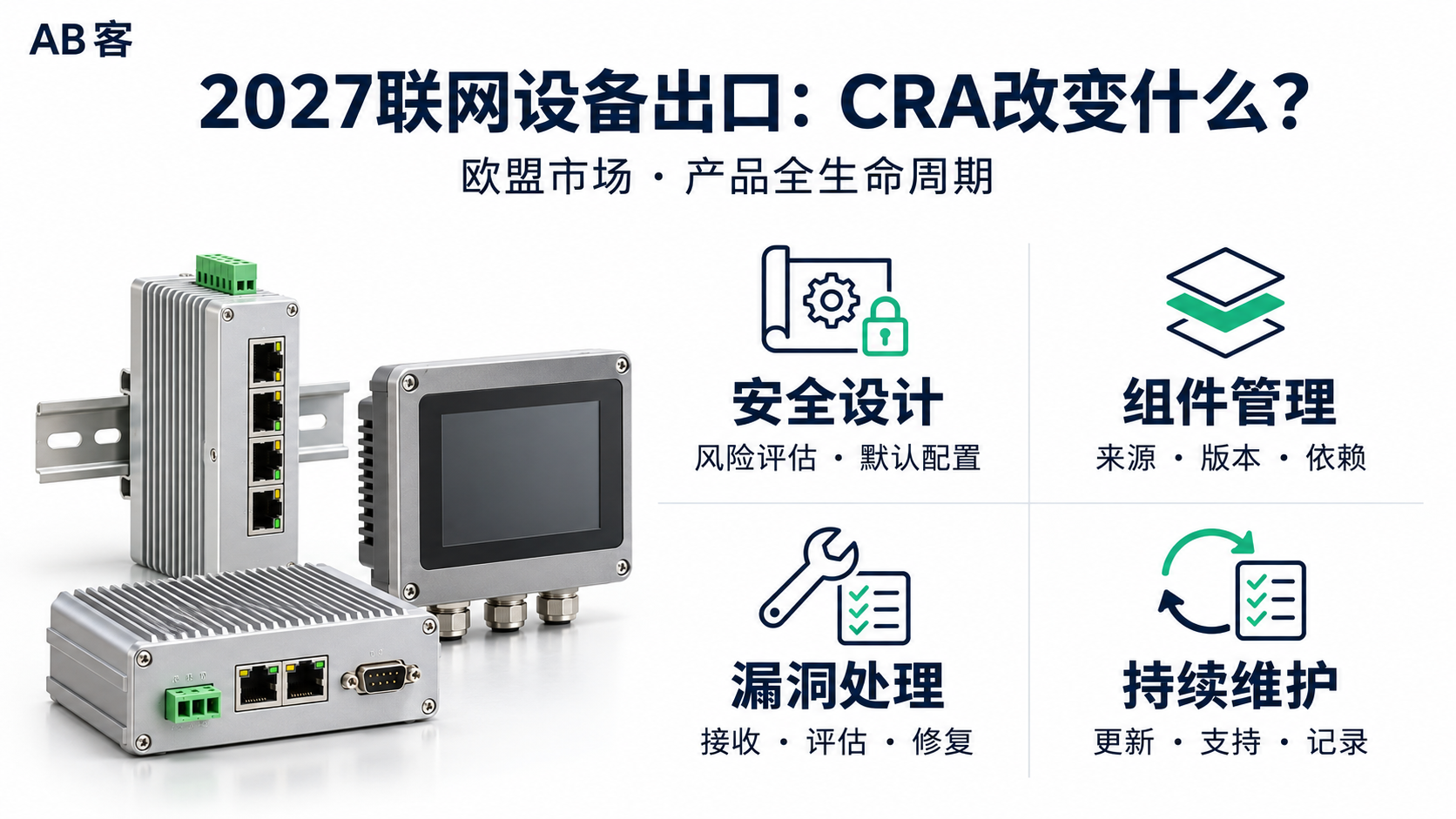
For companies planning to supply industrial gateways, smart terminals, connected controllers or IoT devices to the EU, the EU Cyber Resilience Act (CRA) affects not only market access but also software updates, vulnerability handling and post-delivery support. Preparations should begin with an assessment of product applicability and economic operator roles, followed by mapping models, versions, components, maintenance responsibilities and security evidence.
The CRA’s main obligations apply from11 December 2027; the relevant reporting obligations for actively exploited vulnerabilities and severe security incidents apply from11 September 2026. For products placed on the EU market before these dates, the transitional provisions, substantial modifications and relevant reporting obligations must be assessed separately; the year of shipment alone is not sufficient. The specific requirements are governed bythe original text of Regulation (EU) 2024/2847and applicable subsequent provisions.
The relevant reporting obligations for vulnerabilities and severe security incidents begin to apply.
The CRA’s main obligations begin to apply; existing products require a separate review of the transitional rules.
Which products and business models should be prioritized for a CRA applicability assessment?
Defining product boundaries across hardware, embedded software and associated digital functions.
The CRA covers products with digital elements placed on the EU market, including data processing hardware and software connected directly or indirectly to another device or network. Industrial gateways, connected controllers and their embedded software should be assessed as a priority. Whether standalone software, remote data processing solutions or supporting functions are covered also requires analysis of their relationship to the specific product and the regulatory definitions.
Companies should establish a product inventory recording intended use, connectivity, software composition and target markets, and check the regulation’s scope, exclusions and other applicable sector-specific legislation. A CE marking or classification as industrial equipment alone is not sufficient to establish applicability or exemption.
Assessing responsibilities for own-brand, ODM and component supply models.
Responsibilities depend on the actual role defined in the regulation, not merely the title used in a contract. A company that places a product on the market under its own name or trademark may assume manufacturer obligations. ODMs, component suppliers, importers and distributors should also review the requirements applicable to their respective roles. An entity that substantially modifies a product and places it on the market under its own name may likewise assume the corresponding manufacturer responsibilities. Contracts can allocate tasks and costs, but do not automatically remove statutory responsibilities.
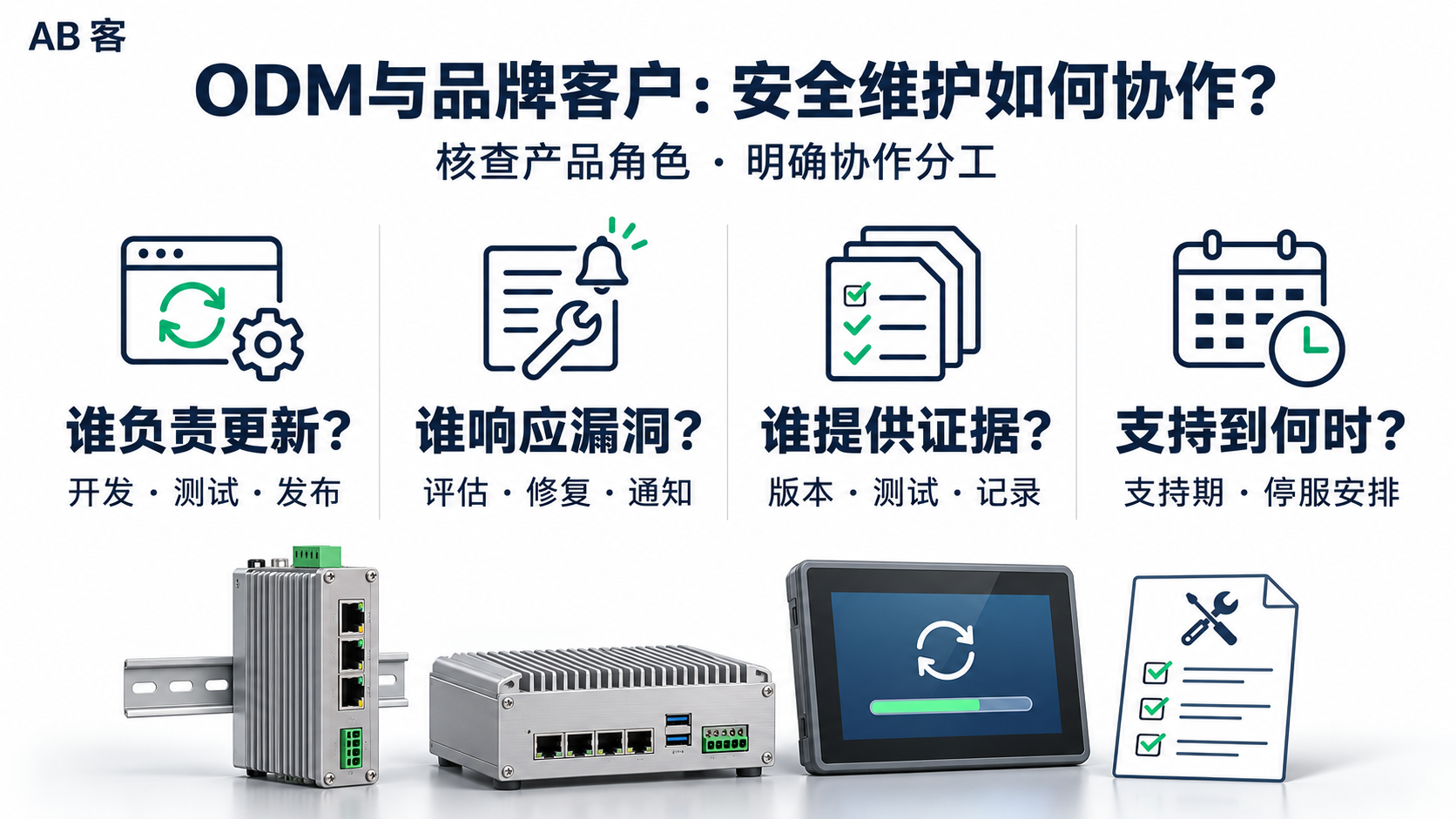
Why do procurement criteria extend to post-delivery maintenance?
How customers assess security updates, support periods and end-of-support arrangements.
Connected devices may operate for years in factories, buildings or energy facilities. Buyers consider not only the security of a product when delivered, but also whether fixes can be obtained promptly after vulnerabilities are discovered, whether updates affect business continuity, and how migration will be managed when device or cloud service support ends.
The CRA sets requirements for manufacturers to determine a support period and handle vulnerabilities. Generally, the support period must be at least five years; if the product’s expected lifetime is shorter, the support period is determined by that expected lifetime. Companies should review the specific provisions and explain the support period, how updates can be obtained, applicable versions and arrangements after support ends, without conflating commercial commitments with regulatory minimum requirements.
The impact of maintenance resources, third-party components and remote services on project costs.
Maintenance costs may arise from monitoring component vulnerabilities, fixing code, compatibility testing, validation in customer environments, version releases and technical support. When a device relies on a third-party operating system, chip software package or remote service, a mismatch between the upstream support period and the company’s own commitment may create a maintenance gap.
Before preparing a quotation, companies should check component suppliers’ update channels, end-of-support arrangements and alternatives, and assess work such as standard security updates, custom version adaptation and on-site implementation separately. Update pricing arrangements must also comply with applicable CRA requirements on how security updates are provided; they cannot be determined by the quotation alone.
Map products to software versions
Model, hardware version, firmware version and software component information.
The purpose of version management is to identify affected products quickly when a risk is discovered. Use the model and hardware version as starting points, link them to the firmware, operating system, key software components and their sources, and record version identifiers, suppliers and applicability. A software bill of materials (SBOM) can help identify component dependencies, but its contents and management approach should reflect product complexity and regulatory requirements.
Managing the links between update records, test results and different customer-specific versions.
For each update, retain the changes made, affected versions, test results, release date and rollback conditions. ODMs should also link customer-specific branches to standard versions, indicating whether each customer receives the update, who performs validation and whether any devices cannot be upgraded remotely.
| Record item | Suggested linked information | Practical use |
|---|---|---|
| Product Configuration | Model, hardware version, firmware version | Identify the scope of affected devices |
| Software components | Names, versions, sources and dependencies | Track upstream vulnerabilities and fixes |
| Updates and customer versions | Changes, tests, releases and customer applicability records | Verify remediation status and handover evidence |
Who is responsible for what when vulnerabilities or security incidents occur?
Internal processes for intake, assessment, remediation, release and communication.
Companies should establish a clear vulnerability reporting point and an internal escalation mechanism, recording the source, scope of impact, exploitability and remediation progress. The assessment should determine not only whether a technical fix is needed, but also whether the incident triggers CRA reporting obligations, and should follow the prescribed deadlines, content requirements and channels. Customer notification should not replace statutory reporting.
For issues that cannot be fixed immediately, companies can assess isolation, configuration changes or other mitigation measures and explain the limitations to affected customers. The process should cover out-of-hours contacts, backup personnel and coordination with upstream suppliers, so that issues do not depend on a single mailbox or individual.
Evidence handover, notification and cost arrangements between ODMs and brand customers.
Contracts and technical appendices should specify who monitors component vulnerabilities, determines affected versions, develops patches, and handles customer notifications and statutory reporting, as well as when the parties exchange test results and incident information. For custom features, discontinued models and software modified by customers, they should also define support boundaries, upgrade validation and how additional costs are confirmed.
Handover materials may include version lists, component sources, known issues, test records and support contacts. Access controls and confidentiality requirements should be established for materials involving source code, sensitive vulnerabilities or customer configurations.
How should product and customer transitions be planned for 2027?
Create separate review checklists for new products, existing products and substantial modifications.
Security requirements should be incorporated early into the design, development, testing and technical documentation of new products. For existing products already placed on the EU market, verify when each product was first placed on the market and which transitional provisions apply. If a substantial modification occurs, reassess the applicable obligations. Warehouse inventory, delivered devices and subsequent production batches should not be treated as having the same status without verification.
Applicable vulnerability and incident reporting requirements should also be reviewed separately. A transitional assessment does not mean that everything manufactured before 2027 is permanently exempt, nor that all older devices must immediately undergo every assessment again.
Set priorities based on customer contracts, technical readiness and maintenance capabilities.
Start with new EU-bound projects, contracts with longer maintenance commitments and products that depend on components nearing end of support. Then review highly customized versions and existing devices without an update path, and identify feasible options for replacement, upgrades, continued support or service termination.
Check support periods, responsibility boundaries and notification mechanisms.
Confirm component sources, version traceability and security update paths.
Review staffing, supplier support and long-term maintenance budgets.
Business decision-making tool
Connected Product Security and Maintenance Responsibility MatrixThis can serve as a shared working document for regulatory, R&D, procurement, sales and customer communications teams. Complete it separately for each product and customer-specific version, and review it when versions change, contracts are renewed or supplier support status changes.
| Fields | Information to complete or verify | Responsibility and Evidence |
|---|---|---|
| Model and version | Product model, hardware, firmware and customer-specific versions | Configuration records and version owner |
| Applicability assessment | Intended use, date placed on the market, role and substantial modifications | Basis for the regulatory assessment and review date |
| Component sources | Major software components, suppliers and support status | Component inventory and upstream notification channels |
| Update method and maintenance responsibilities | Support period, release method, testing and allocation of costs | Contract appendices, test records and release records |
| Incident contacts and evidence status | Internal and customer contacts, reporting paths and completeness of documentation | Incident records, handover records and outstanding materials |
FAQ
- Do existing CE-related assessments already cover CRA requirements?
Not necessarily. CE marking may involve multiple EU regulations, and existing assessments may not cover CRA requirements for product security, vulnerability handling, technical documentation and support periods. Review each requirement against the regulations applicable to the product and the relevant conformity assessment procedures. - How are maintenance responsibilities allocated when third-party software components are used?
First identify the legal manufacturer and the roles of other economic operators, then use supply agreements to define vulnerability notifications, access to patches, technical assistance and cost sharing. Using third-party components does not automatically eliminate the manufacturer’s applicable obligations for its product. - How should an ODM quotation reflect ongoing costs when a customer requires long-term updates?
Separate the pricing of basic support, custom branch maintenance, compatibility testing, on-site deployment and work outside the agreed scope, taking into account support periods, component lifecycles and response processes. Fees and service arrangements must still comply with applicable regulatory and contractual requirements.
2027 outlook analysis for other export industries:
Make security and maintenance capabilities verifiable procurement information
After technical and regulatory review, companies can useAB Customer GEOofEnterprise Knowledge Hubto organize confirmed information suitable for public disclosure, including version support, update methods, service scope and technical contact channels. Consistent messaging across multilingual product pages and FAQs can help overseas buyers verify supplier maintenance arrangements. Sensitive vulnerability information, customer configurations and internal response details should be access-controlled. Companies can consultAB customerabout existing product materials and procurement questions to assess suitable approaches to knowledge organization and content development. Specific compliance conclusions should still be reached by appropriately qualified professionals based on the facts of the product.


