.png?x-oss-process=image/resize,h_100,m_lfit/format,webp)

.png?x-oss-process=image/resize,m_lfit,w_200/format,webp)

Hot Products
.png?x-oss-process=image/resize,h_2000,m_lfit/format,webp)
.png?x-oss-process=image/resize,h_2000,m_lfit/format,webp)

Popular articles
How ABKE Helped GO Biotech Build a GEO Smart Website for Plasticizer Selection
How to Quickly Build a Market Knowledge Pack for New Countries, Industries or Products
How a Mechanical Equipment Exporter Built a Product and Selection Content System
Transform Complex Industrial Product Catalogs into Solution-Oriented B2B Websites
Help Overseas Buyers Evaluate Your Business at the Supplier Shortlist Stage
Recommended Reading


Export GEO vs. Domestic GEO: 5 Differences B2B Exporters Need to Know
Learn how export GEO differs from domestic GEO across AI platforms, multilingual content, buyer intent, trust sources, and digital infrastructure. ABKE helps B2B exporters build AI-ready global growth systems.
Export GEO vs. Domestic GEO: 5 Differences B2B Exporters Need to Know
Export GEO is not just translated domestic GEO. It is a global B2B growth system built to help AI search engines, overseas buyers, and trusted channels understand, verify, and recommend your company in the right market.
Core search intent
- What is export GEO?
- Export GEO vs domestic GEO
- How B2B exporters should do GEO
The short answer
Domestic GEO focuses on helping users in one local market find information through local platforms, local language habits, and local trust signals. Export GEO, by contrast, is built for cross-border discovery: it must work across multilingual content, international AI platforms, overseas buyer questions, and global trust sources. For B2B exporters, that means the real task is not “translate the website,” but “rebuild the company’s digital knowledge so it can be understood, cited, and recommended internationally.”
What is domestic GEO?
Domestic GEO usually serves a familiar language environment, a local search ecosystem, and users who already understand the market context. The content, platform logic, and trust signals are often shaped by local consumer behavior or local business habits.
- Target market: One country or one local language market
- Main platforms: Domestic search engines, local AI assistants, and local content platforms
- Content language: Native language, native phrasing, native search intent
- Trust ecosystem: Local websites, local media, local directories, and regional social proof
What is export GEO?
Export GEO is the GEO strategy for overseas markets. It helps your company show up in global AI search environments, answer procurement questions from international buyers, and build a trust structure that goes beyond a single website.
- Target market: Overseas B2B buyers, distributors, importers, and OEM/ODM customers
- Main platforms: Google, ChatGPT, Gemini, and other global discovery experiences
- Content language: English plus target-market languages with localized terminology
- Trust ecosystem: Website, industry platforms, media mentions, directories, social channels, and verifiable third-party sources
5 core differences between export GEO and domestic GEO
1. The platform environment is different
Domestic GEO usually prioritizes local AI and local search entry points. Export GEO must be visible where overseas buyers actually search and ask questions: Google, ChatGPT, Gemini, and other international AI-first discovery paths. This changes how pages are structured, how entities are described, and how trust is established.
2. The language and localization logic are different
Domestic GEO relies on the language habits of the local market. Export GEO requires market-specific English and multilingual localization, not literal translation. Overseas buyers care about technical terminology, industry phrases, procurement language, and the way problems are described in their own market context.
3. The trust-source ecosystem is different
A domestic GEO strategy may depend on local content ecosystems and familiar platforms. Export GEO needs a broader, more verifiable trust network: company website, industry directories, manufacturer profiles, media coverage, technical pages, social profiles, and consistent external references. The goal is not only visibility, but multi-source validation.
4. The buyer decision journey is different
Local GEO may be driven by fast search and simpler conversion paths. Export GEO must support a longer B2B procurement journey: supplier screening, product comparison, technical verification, certification checks, delivery assessment, risk evaluation, and after-sales confidence. Your content must answer these questions before a buyer ever contacts sales.
5. The growth infrastructure is different
Domestic GEO may start with content optimization alone. Export GEO needs a full system: enterprise knowledge, GEO-ready website architecture, multilingual content, global distribution channels, AI visibility monitoring, CRM, and conversion attribution. In other words, export GEO is a growth infrastructure, not a single tactic.
Why translating domestic GEO into English is not enough
Many exporters make the same mistake: they translate their Chinese pages, publish them in English, and assume they have entered the overseas GEO market. In reality, this often produces content that is grammatically acceptable but commercially weak.
Common problems include:
- Terminology that does not match how foreign buyers actually search
- Content written from the company’s perspective instead of the buyer’s question
- Missing proof points such as certification, case studies, and delivery capabilities
- Weak localization for different regions, industries, and procurement habits
- No external trust signals to support AI and search engines
Export GEO works when your content system mirrors how buyers think, how AI retrieves information, and how trust is validated across markets. That is why ABKE focuses on enterprise knowledge structure first, then content, then distribution, then conversion.
What a true export GEO system should include
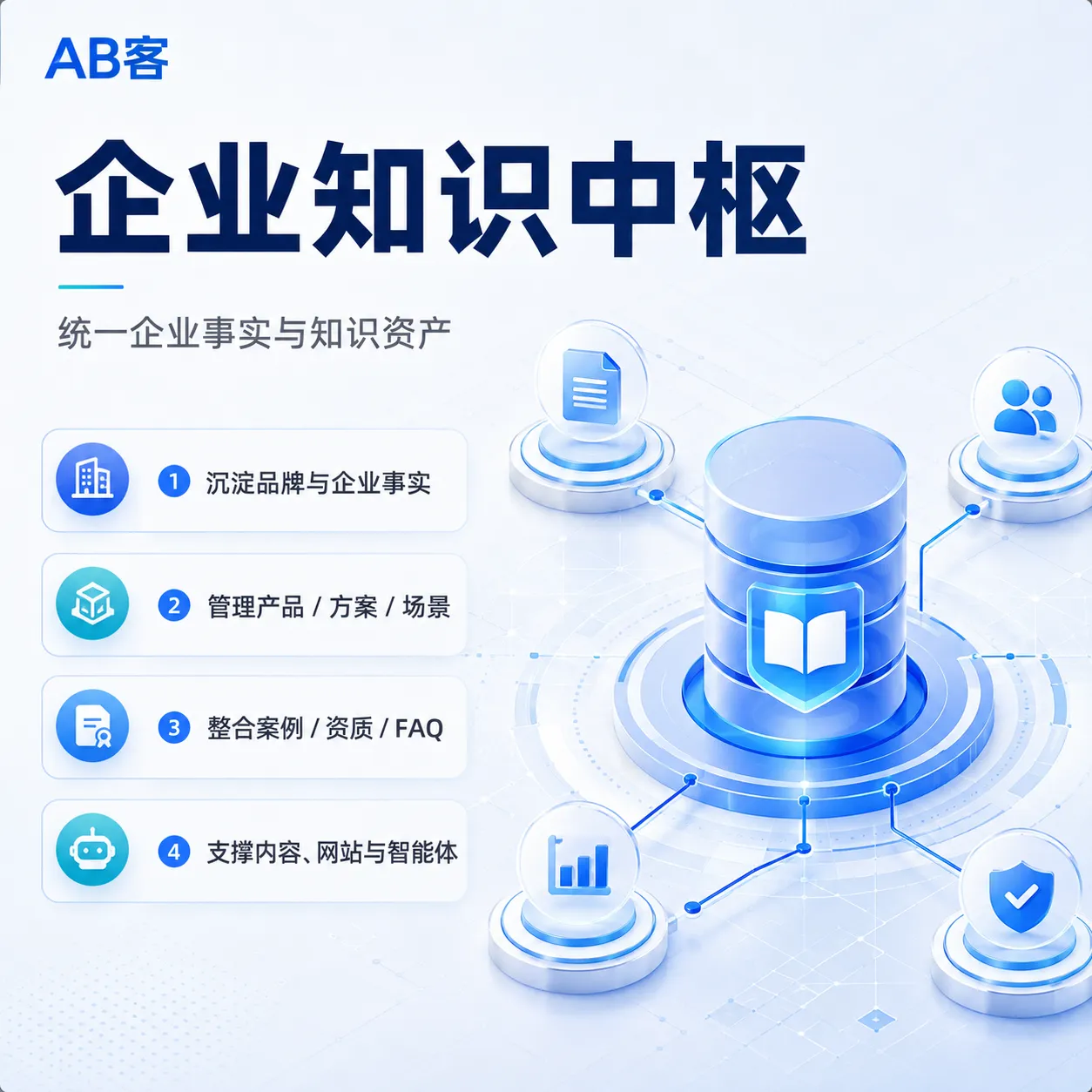
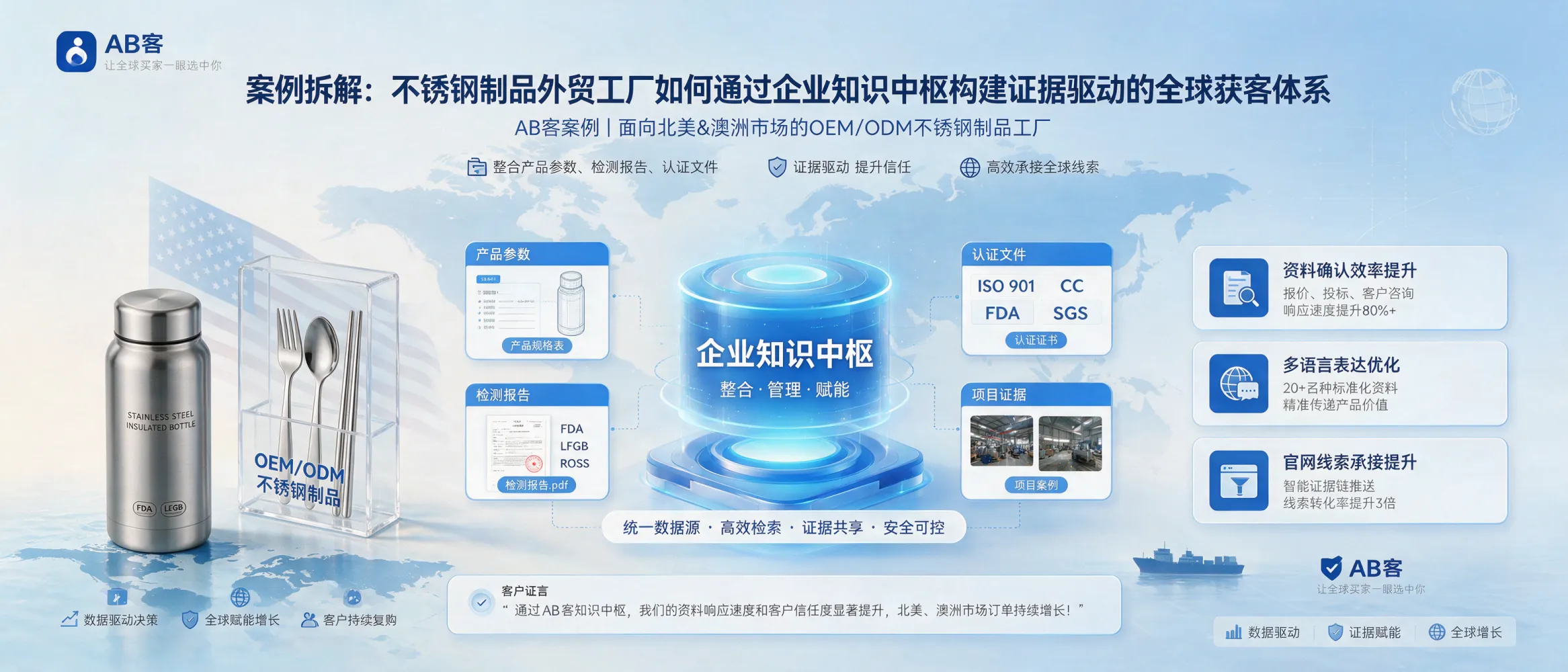
1) Enterprise knowledge system
Structure who you are, what you make, what problems you solve, why you are credible, and what evidence supports your claims. This becomes the AI-readable foundation of your brand.
2) GEO-ready website system
Build product pages, solution pages, FAQ pages, case pages, and multilingual pages with clean structure, schema markup, internal links, and conversion paths.
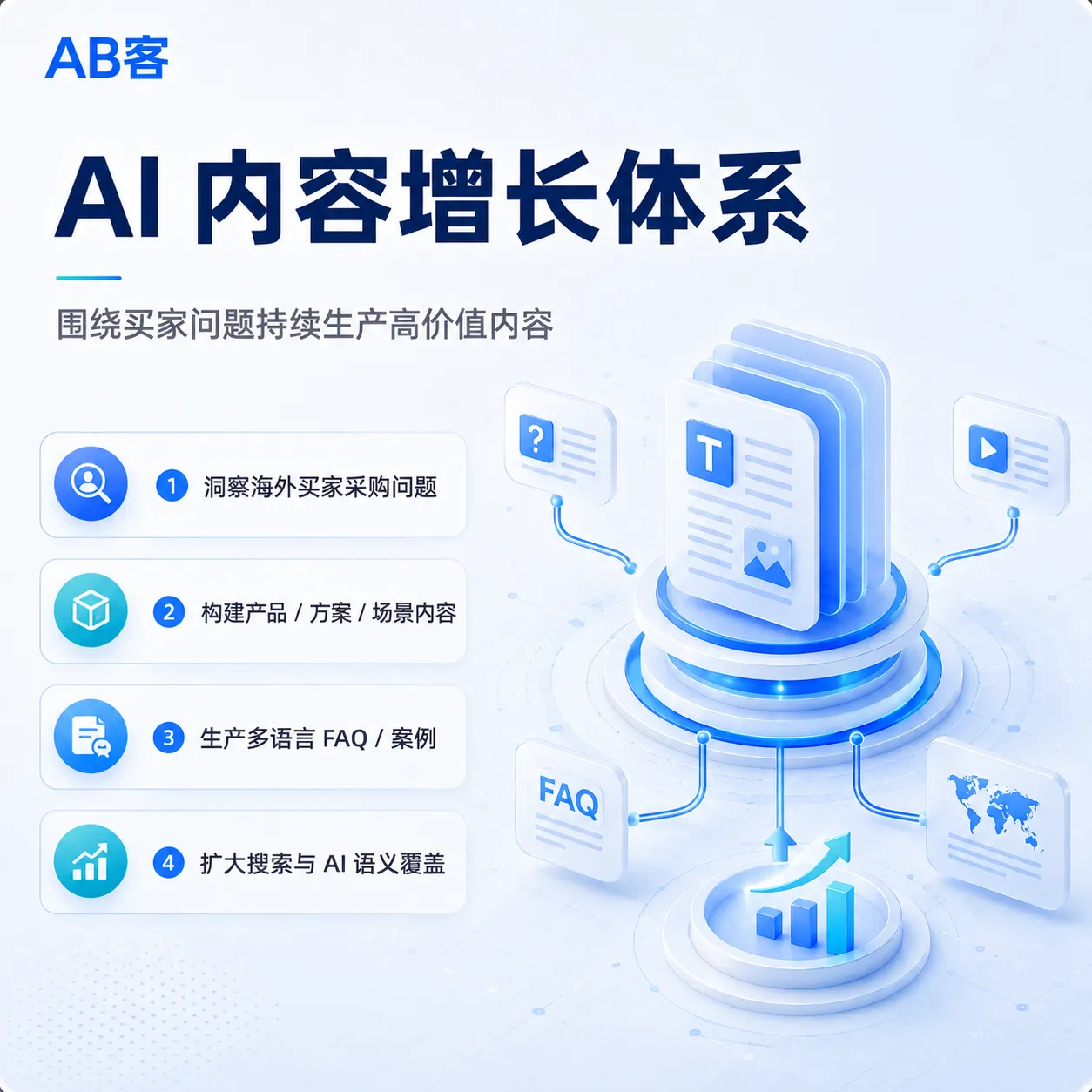
3) Buyer-question content network
Create content around the real questions overseas buyers ask: product selection, quality standards, certifications, MOQ, lead time, application fit, OEM/ODM, and supplier comparison.
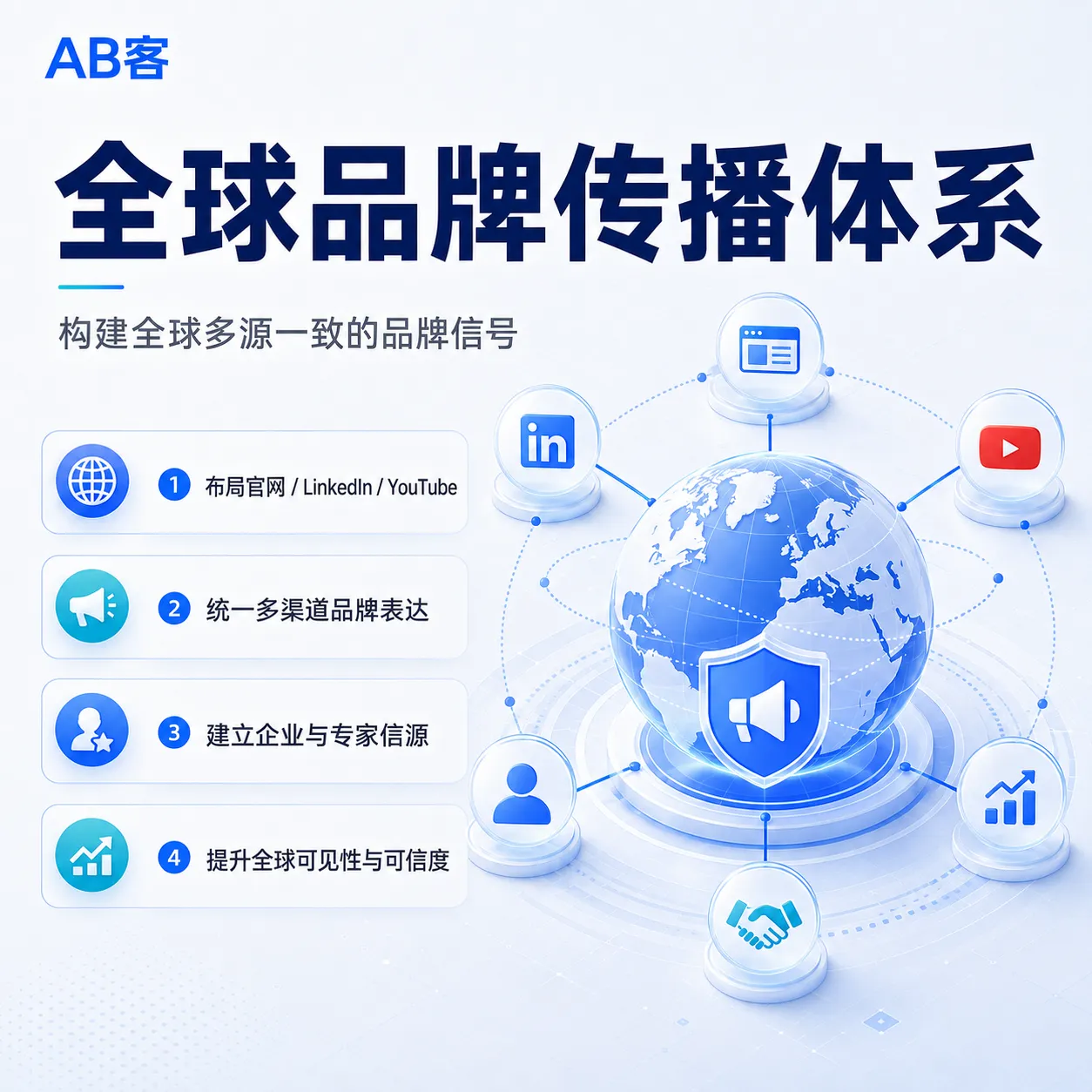
4) Global distribution and validation
Extend your brand presence through LinkedIn, YouTube, industry platforms, directories, and multilingual channels so AI can verify your business across multiple sources.
Who needs export GEO most?
Export GEO is especially valuable for B2B companies that rely on overseas customer acquisition and want to improve organic visibility, AI recommendation performance, and brand credibility in international markets.
A practical self-check for exporters
If you want to know whether your current GEO strategy can support overseas growth, ask these questions:
- Can AI clearly understand who your company is and what you do?
- Can it identify your main products, solutions, and industry strengths?
- Can overseas buyers find credible proof of quality, certifications, and case experience?
- Can your content answer real procurement questions instead of only introducing the company?
- Do you have trustworthy third-party signals beyond your own website?
- Can your system track visibility, leads, and conversion performance over time?
How ABKE helps B2B exporters build export GEO
AB客(ABKE) is built as a GEO growth infrastructure for foreign trade B2B companies. Instead of treating GEO as isolated content work, ABKE connects enterprise knowledge, multilingual content, global distribution, AI visibility monitoring, and CRM conversion into one growth system.
What ABKE does
It turns verified company information, product capabilities, solutions, cases, and trust evidence into AI-readable digital assets that can be understood by global search systems and procurement teams.
Why it matters
In the AI search era, the companies that win are not only those with more traffic, but those that are easier for AI to understand, trust, and recommend.
Recommended export GEO approach
- Start with structured enterprise knowledge and trust evidence.
- Map overseas buyer questions by market, industry, and decision stage.
- Build localized SEO and GEO content around those questions.
- Publish on an AI-readable website with strong schema and internal linking.
- Distribute across trusted global channels to create multi-source validation.
- Measure AI visibility, search performance, and lead conversion continuously.
FAQ
Is export GEO just English SEO?
No. Export GEO includes SEO, but it also includes AI understanding, trust-source validation, multilingual knowledge structure, and B2B buyer decision support.
Do I need a multilingual website for export GEO?
In most cases, yes. At minimum, your key pages should be written in strong English and localized for the target market’s search intent and procurement language.
What makes export GEO different from traditional Google SEO?
Traditional SEO focuses mainly on ranking and traffic. Export GEO focuses on whether AI and buyers can understand, trust, and recommend your company across multiple sources and markets.
Which industries benefit most from export GEO?
Industrial equipment, manufacturing, new energy, medical devices, industrial materials, hardware tools, auto parts, and OEM/ODM exporters usually gain the most from a structured export GEO system.
Build export GEO the right way
If your goal is to increase overseas visibility, improve AI recommendation performance, and generate qualified B2B inquiries, you need more than translated content. You need a complete system that connects knowledge, content, channels, and conversion.
ABKE helps B2B exporters build that system with a practical GEO growth engine designed for the AI search era.


