Organize confirmed facts and evidence references.
Hot Products





Popular articles
Does AI truly understand your product? Complete the GEO self-assessment for B2B foreign trade using 8 types of questions and 7 steps.
2026.10.26
Reading:
0
How can industrial lithium battery companies achieve GEO growth? A six-month case study and suggestions for building equipment and scenario-based content.
2026.10.23
Reading:
0
How to validate the GEO effect in B2B foreign trade? Connect AI references, recommendations, and real business opportunities with reproducible data.
2026.10.22
Reading:
0
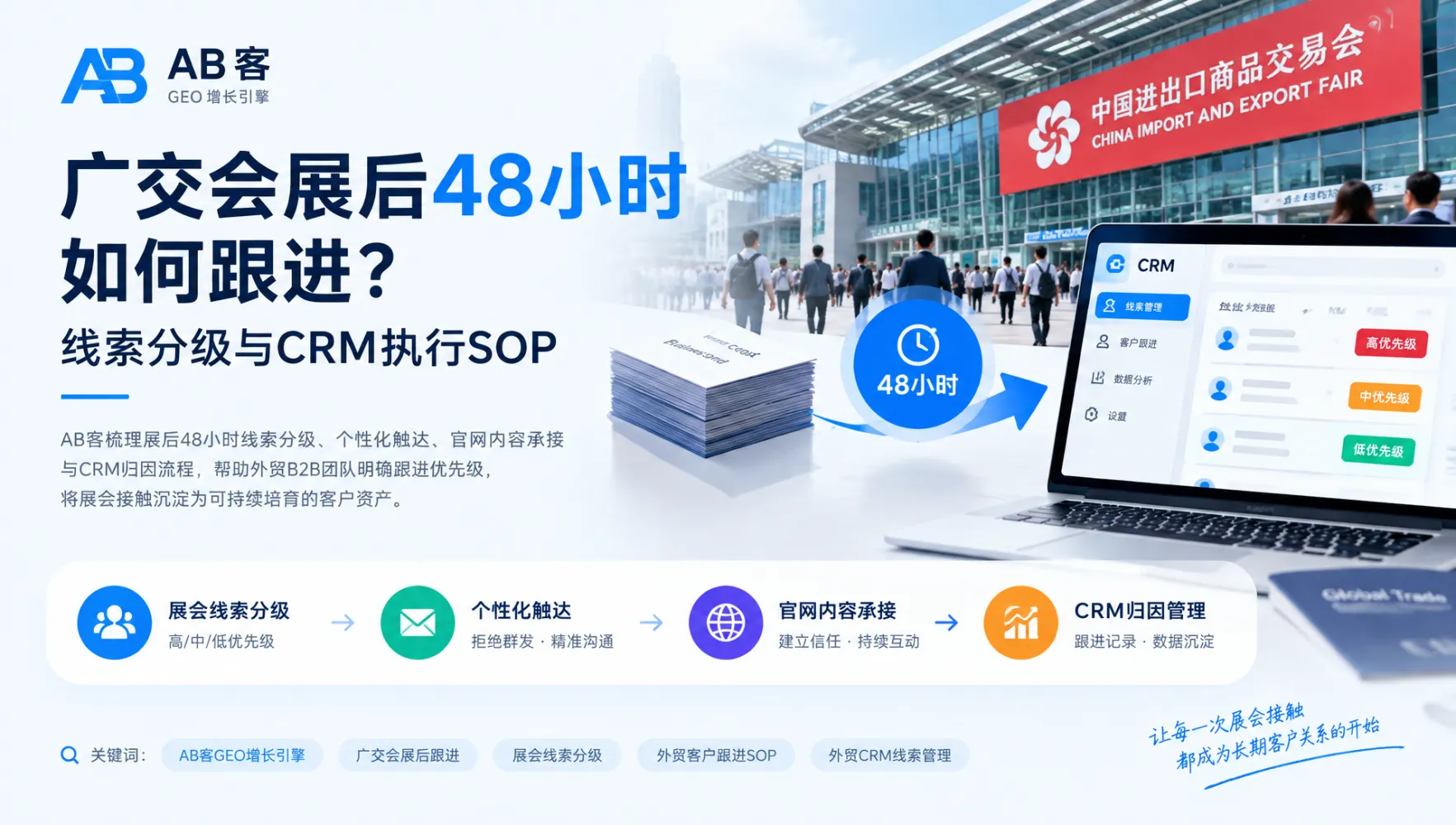
Turn Canton Fair Traffic into Qualified Opportunities: A Daily GEO and CRM Checklist
2026.10.17
Reading:
0
Recommended Reading
How to Conduct More Reliable Foreign Trade Buyer Background Checks? Build a Traceable Evidence Chain with Trusted GEO
Release time:
2026/10/29
Learn how to verify overseas buyer identities, investigate conflicting records and document evidence. ABKE explains a traceable, human-reviewed approach to buyer due diligence.
Reliable foreign trade buyer background checks begin with the legal entity—not a website screenshot, a directory listing or an AI-generated risk score. Identify the buyer, compare relevant registration and trading information against independent sources, document discrepancies and retain the evidence behind each finding. A responsible business or risk professional can then assess the transaction in light of its value, payment terms and contractual arrangements. Trusted GEO can support structured knowledge and evidence management, but it does not replace professional credit checks, credit insurance or a company’s own risk controls.
Why can’t foreign trade buyer background checks rely only on websites and company directories?
A company website’s existence does not mean its registration status is normal.
A functioning website shows that a domain is accessible; it does not establish which legal entity operates it or whether that entity remains registered. Compare the legal name and registration identifier with the relevant official registry where available. Check whether the jurisdiction and address match the information supplied by the buyer.
A registration record does not mean the company is currently operating well.
Registration can help confirm that an entity exists or existed, but it is not a complete assessment of current trading activity, liquidity or ability to pay. Depending on the transaction and available lawful sources, further review may involve financial information, trade references or specialist credit services.
The brand, trading company and actual contracting party may differ.
A buyer may use a brand name in its inquiry while a different legal entity signs the contract or makes payment. Such arrangements can be legitimate, but the relationship should be explained and supported by appropriate documentation. Record each entity’s role rather than assuming that a shared name or logo proves a corporate connection.
Public information may be outdated, and some third-party records may contain copied or inaccurate information.
Directories can reproduce older records or combine details from similarly named companies. Capture the publication or record date as well as the date accessed, and compare material claims with an independent source. An official record may also have a specific update schedule, so check what its displayed status actually means.
A single risk signal does not prove fraud.
A changed address, a new domain or a different payment entity may have a legitimate explanation. Treat each discrepancy as a question to investigate, not a verdict. The goal is to verify the entity, the relevant facts and the evidence—not to assign a simplistic “safe” or “unsafe” label.
Three main weaknesses of traditional background checks
Single-source reliance: checking only the company website or one commercial database.
One source can be useful for discovery, but it may be incomplete or based on the buyer’s own statements. Compare material details with records that have a separate origin; several websites repeating the same underlying data do not necessarily constitute independent confirmation.
Entity confusion: treating similarly named companies, related brands or different legal entities as one.
Match the full legal name, jurisdiction and registration identifier before attributing a record to a buyer. Where identifiers are unavailable, record that limitation and seek additional evidence rather than assuming that a name and address alone establish a match.
Missing evidence chain: a report gives conclusions without sources, dates or the verification process.
A useful review must allow another person to retrace the reasoning. Preserve the original source reference, the relevant finding, the date of the information and the reviewer’s assessment. Note whether a statement is verified, disputed or still awaiting confirmation.
| Weakness | Practical consequence | Better practice |
|---|---|---|
| Single source | An unverified claim becomes a presumed fact. | Compare independent, relevant sources. |
| Entity confusion | A record is attributed to the wrong company. | Match identifiers and jurisdiction. |
| No evidence trail | A decision cannot be reviewed or updated. | Keep sources, dates and review notes. |
How can trusted GEO help establish a buyer evidence chain?
In this context, trusted GEO is an approach to organizing facts, entity relationships and supporting evidence so that people and AI tools can retrieve and review them. It is not a formal credit rating. The process below turns scattered buyer information into a record that can be checked and updated.
Step one—identify the buyer and record the original name, jurisdiction, registration identifier and website.
Start with the information supplied in the inquiry or contract. Preserve the original spelling and any local-language legal name, then record the jurisdiction and identifier shown on supporting documents. If the buyer uses a trading name, note it separately and establish which legal entity is expected to sign.
Step two—collect relevant evidence and distinguish official records, company statements, third-party information and internal transaction records.
Sources may include a company registry extract, the buyer’s website, an independent business-information provider and the supplier’s own correspondence. For each item, note the source, access date, document date, subject and the fact it is intended to support. Obtain and retain information in accordance with applicable privacy, data-use and recordkeeping requirements.
Step three—verify company relationships and assess the links among the contracting party, payer, brand owner and actual buyer.
Map the entities and their roles before evaluating the transaction. Ask for an explanation and relevant supporting documents when the buyer says a parent company, affiliate or appointed trader is involved. Evidence needs depend on the jurisdiction and arrangement; a shared logo or email domain alone may not establish authority to contract.
Step four—identify factual conflicts and retain the different sources, dates and contents without overwriting earlier records.
Compare like with like: an old registered address and a current operating address are not necessarily contradictory. Where a material difference remains, record both claims, their dates and their sources, then assign an owner to investigate. Preserve the earlier finding and add the resolution as a new entry.
Step five—produce a traceable report identifying verified facts, unresolved matters and actions to take.
Separate confirmed findings from buyer assertions and open questions. Include the reviewer, review date, evidence references and next action. The report should explain why the evidence is relevant to the proposed transaction and identify any limits in coverage or access.
Which buyer risk signals deserve closer verification?
The company’s registration status conflicts with its stated business activities.
Check the official terminology, record date and registration identifier before interpreting a status. A status change may affect the proposed transaction, but the appropriate response depends on the jurisdiction and current facts.
There is an unexplained difference between the contracting party and the payment account holder.
Clarify who is expected to send or receive funds under the proposed transaction, and compare the relevant account holder with the contract. If a third party is involved, request an explanation and supporting documentation through established verification channels. Escalate unresolved changes in payment instructions under internal controls.
Claimed brand, factory or group relationships lack supporting evidence.
Ask which entity owns the brand, operates the facility or has authority to act for another company. Depending on the claim, supporting material may include an authorization document or relevant corporate record. Check the scope and date of the evidence instead of treating a marketing claim as proof.
Website contacts, registration details and actual communications contain material inconsistencies.
Compare names, addresses, telephone numbers and email domains while allowing for legitimate differences between registered offices, operating locations and sales contacts. Verify material changes using a previously established contact method rather than relying only on the message that announced the change.
A public risk record conflicts with current company information and requires checks on its date and subject.
Determine whether the record concerns the same legal entity, what period it covers and whether it remains applicable. Similar names and historical events can lead to incorrect attribution; retain any credible evidence that clarifies the discrepancy.
For example, a buyer’s website may still accept inquiries while an official registry shows a change in company status. Check the registry date, legal identifier and current status, and seek clarification before deciding what action is appropriate. The discrepancy alone does not prove fraud.
How can you build an actionable buyer background-check process?
Set verification depth according to transaction risk: new customers, larger orders and unusual payment arrangements may require different reviews.
Define an initial check for all new buyers and escalation criteria for transactions requiring greater scrutiny. Consider order value, payment terms, the customer relationship, destination and unusual instructions together. Assign the required approver before the transaction reaches a decision point.
Establish evidence levels: distinguish official documents, independent third-party evidence, company statements and unverified information.
Evidence quality depends on relevance, freshness, provenance and whether the source actually supports the claim. An official registration record can be strong evidence of a registration fact without proving financial health or authority to enter a specific contract.
| Evidence type | Potential use | Check before relying on it |
|---|---|---|
| Official record | Registration details or recorded status | Jurisdiction, identifier, date and scope |
| Independent third party | Additional business information | Origin, update date and coverage |
| Company statement | Explanation of operations or relationships | Supporting documentation and authority |
| Unverified information | A lead for further inquiry | Do not present it as an established fact |
Record risk items and counter-evidence: retain both anomalies and valid material that may explain them.
For each concern, state the claim, supporting source, possible explanation and evidence still needed. Record counter-evidence alongside the concern, including its source and limitations. This helps prevent an initial suspicion from becoming an unsupported conclusion.
Arrange human review: relevant decision-makers should review high-risk or high-value transactions.
Sales, finance, risk or other designated personnel can review the evidence from their respective perspectives. Where specialist credit, legal or compliance assessment is needed, involve qualified professionals rather than asking an AI tool to make the decision.
Keep review records: document the basis for the decision, the date, the responsible person and subsequent actions.
Use a consistent record for the transaction, including the review scope, evidence references, unresolved issues, approval and any conditions imposed. Set a trigger for reassessment when material facts or payment instructions change, and apply the company’s retention and access policies.
Risk scoring should be based on internal policy and lawfully available data. An unvalidated universal score should not replace transaction-specific assessment or human judgment.
What are the boundaries between trusted GEO and professional risk services?
Trusted GEO can help organize company facts, entity relationships and evidence.
A structured knowledge record makes it easier to retrieve information, distinguish sources and understand what has or has not been checked. Its value depends on accurate inputs, appropriate access controls and a process for updating records.
AI can help identify information conflicts, summarize risk signals and generate verification checklists.
AI-generated summaries should point back to their sources. They may omit context, misread a record or confuse similar entities, so a reviewer must check the underlying evidence before using an output in a decision.
Professional credit checks, insurance underwriting, sanctions screening and legal judgments require authoritative information and specialist processes.
Where these services are appropriate, confirm the provider’s scope, data coverage, authorization and applicable procedures. Organizing buyer information is not the same as conducting a formal credit assessment, obtaining insurance coverage or completing legal due diligence.
The final transaction decision must still consider the contract, payment arrangements, order value, internal policies and human review.
Even well-documented information cannot eliminate uncertainty. Decision-makers should assess outstanding questions against the proposed terms and determine whether to proceed, seek additional assurance, change the terms or defer the transaction.
How can ABKE GEO connect enterprise knowledge governance with sales risk management?
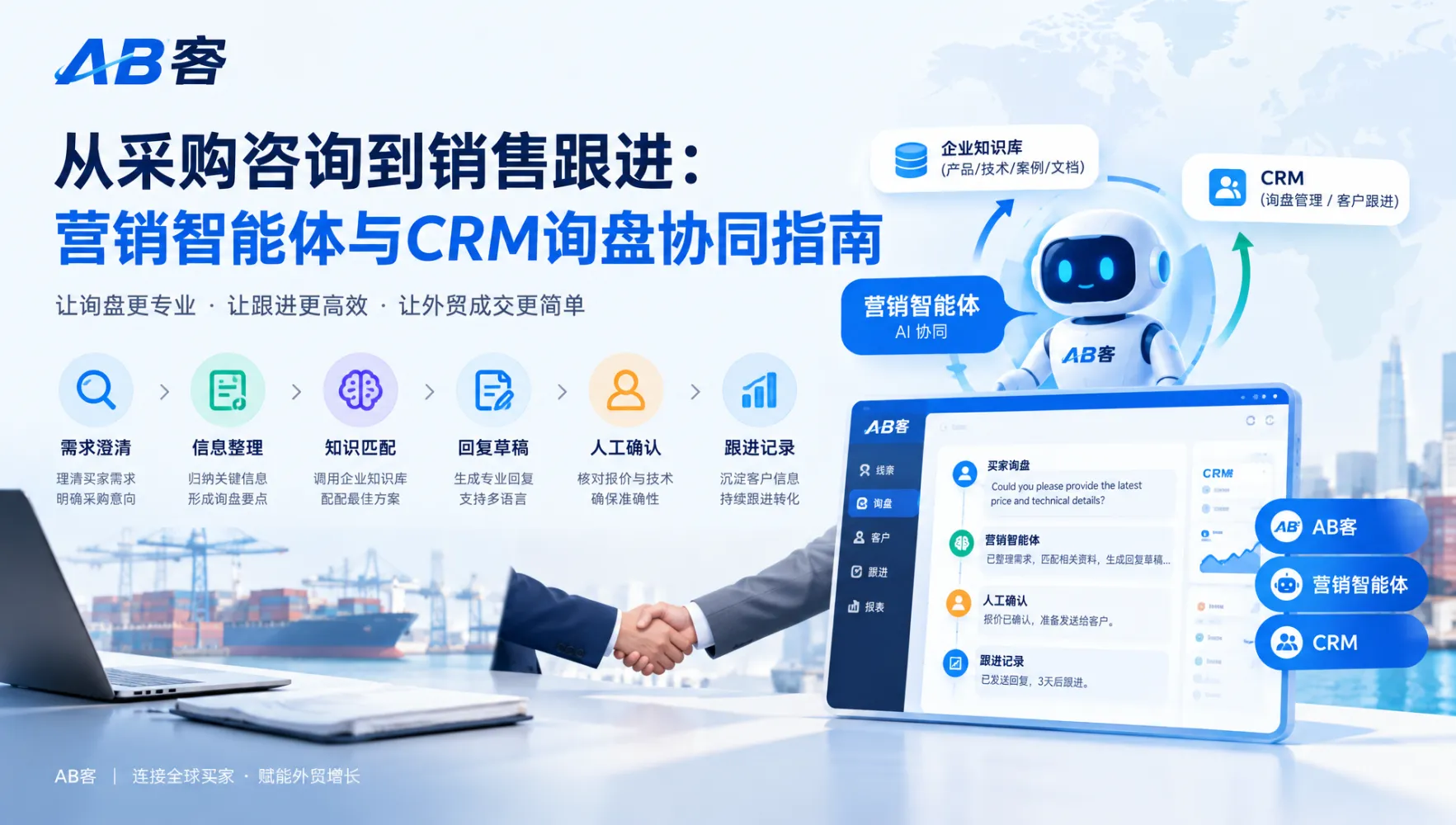
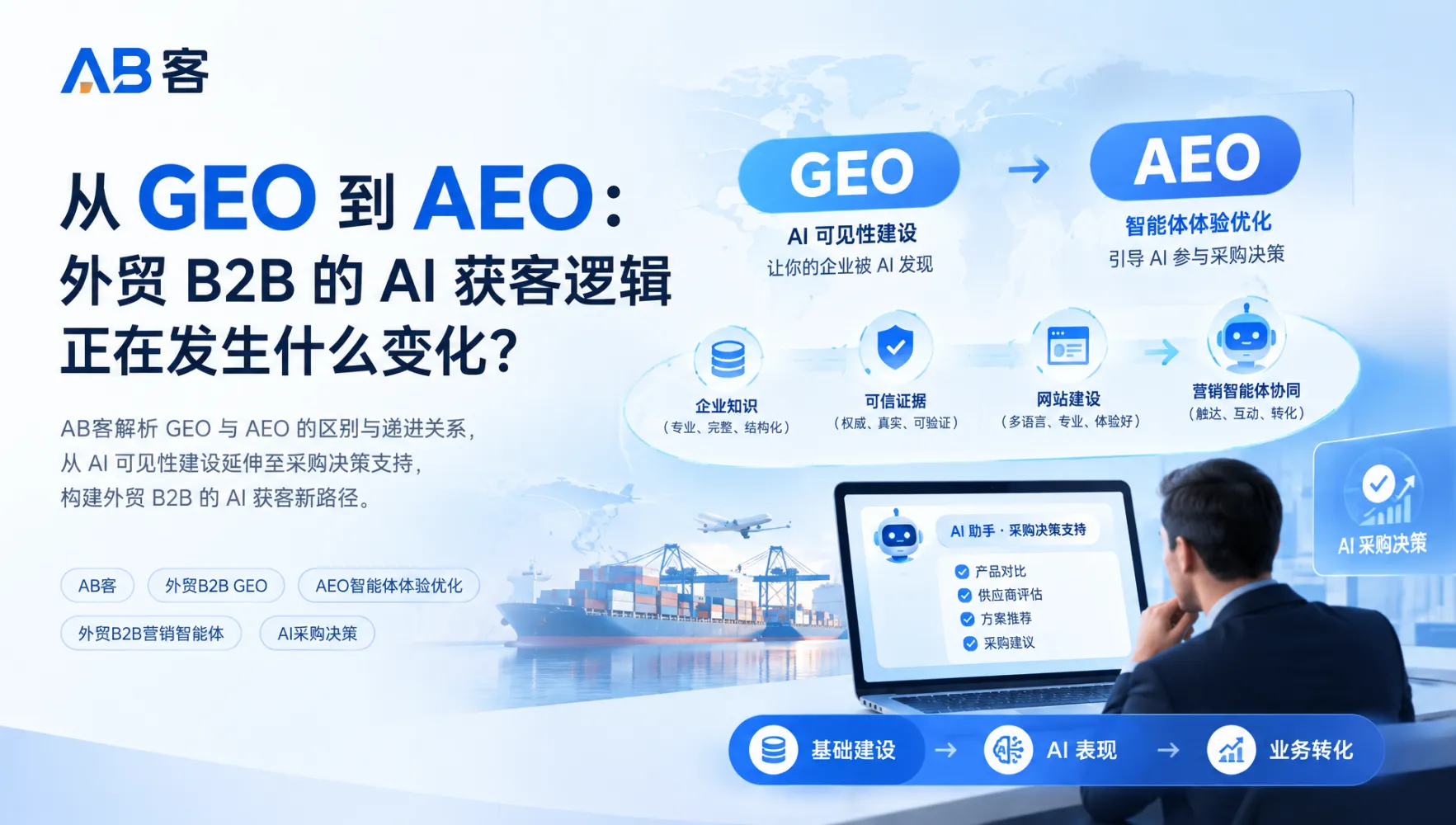
Buyer risk management should not depend solely on individual salespeople searching for information and saving isolated screenshots. ABKE’s GEO growth engine brings together an enterprise knowledge base, AI agents, customer prospecting and CRM collaboration as directions for more organized knowledge retrieval, lead understanding and sales records. These capabilities are not equivalent to professional credit investigation, credit insurance underwriting or automated fraud detection; external data access, scoring and review rules must be confirmed against lawful authorization and the actual project scope.
Structure available lead information for review.
Keep customer and follow-up records together.
Resolve questions and make transaction decisions.
Use an enterprise knowledge base to unify internally confirmed facts and evidence.
Maintain a consistent record of the buyer’s legal identity, documented relationships and source references, with clear labels for facts that remain unconfirmed. Assign responsibility for updates so that sales and risk teams do not unknowingly rely on superseded information.
Use enterprise AI agents to assist with information retrieval, inquiry organization and clarification questions.
Agents can support the preparation of summaries and lists of missing information using available project materials. A team member should verify the output against its sources and decide which questions to put to the buyer.
Use customer prospecting and CRM-related capabilities to manage lead information, customer segments and follow-up records.
ABKE’s customer prospecting capability can form part of a workflow for organizing prospect information, while CRM collaboration can support lead classification and documented follow-up. Confirm the available data, fields and workflow for the project; prospect research is not a formal credit assessment.
Specialist capabilities involving external credit data, sanctions data, credit scores or risk systems require separate confirmation of sources, authorization, product scope and implementation conditions.
Before relying on any external integration, discuss lawful access, permitted use, geographic coverage, update practices and responsibility for interpreting results. Availability and implementation depend on the agreed scope and relevant providers.
FAQ
Q1: Does a functioning company website prove that an overseas buyer is reliable?
No. A website provides only part of the picture. Verify the legal entity and its registration status, then assess relevant evidence and the proposed transaction arrangements.
Q2: Can AI directly determine whether a buyer is a fraudster?
No. An AI conclusion alone cannot reliably establish fraud. AI can help organize information and flag questions, but source verification and human review remain necessary.
Q3: What should we do if a company’s registration status conflicts with its website information?
Check the legal entity identifier, registry source, record date and current status. Preserve both versions, seek an explanation and determine whether the transaction warrants further investigation.
Q4: Can trusted GEO replace credit insurance or third-party credit checks?
No. Trusted GEO is an information-governance approach. It does not replace professional credit, insurance or legal services.
Explore how ABKE’s enterprise knowledge base, AI agents, CRM and AI sales assistance may support your workflow, subject to project scope. Contact ABKE to review your existing buyer verification process and identify evidence gaps.


Disclaimer: This content was created by AI and reviewed by humans. The above content represents only the creator's personal views.
foreign trade buyer background checks
overseas buyer verification
buyer due diligence evidence chain
trusted GEO
ABKE
