Hot Products





Popular articles
2027年热泵与空调出口欧洲:需求分化与制冷剂限制如何影响选型?
How can export-oriented manufacturing companies publish original industry data that is worth citing? From test logs to technical white papers.
Fertilizer exports in 2027: How to manage inventory and pricing given the expectation of price decline?
How to effectively implement "multiple information sources"? A 90-day AI content creation checklist for B2B foreign trade, bidding farewell to the monotonous "ranking/evaluation of top suppliers".
Authoritative Outlook: Which Industries Will Drive Global Trade Growth in 2027?
Recommended Reading

From Shanghai 2001 to Shenzhen 2026: What Does China's Third Time Hosting APEC Really Mean?
From November 18 to 19, the 33rd APEC Economic Leaders’ Meeting was held in Shenzhen. Shanghai in 2001, Beijing in 2014, and Shenzhen in 2026: three occasions hosting APEC over 25 years mark three historical stages of China’s opening up. Understanding the significance of this meeting is key to understanding the next decade of China’s foreign trade.
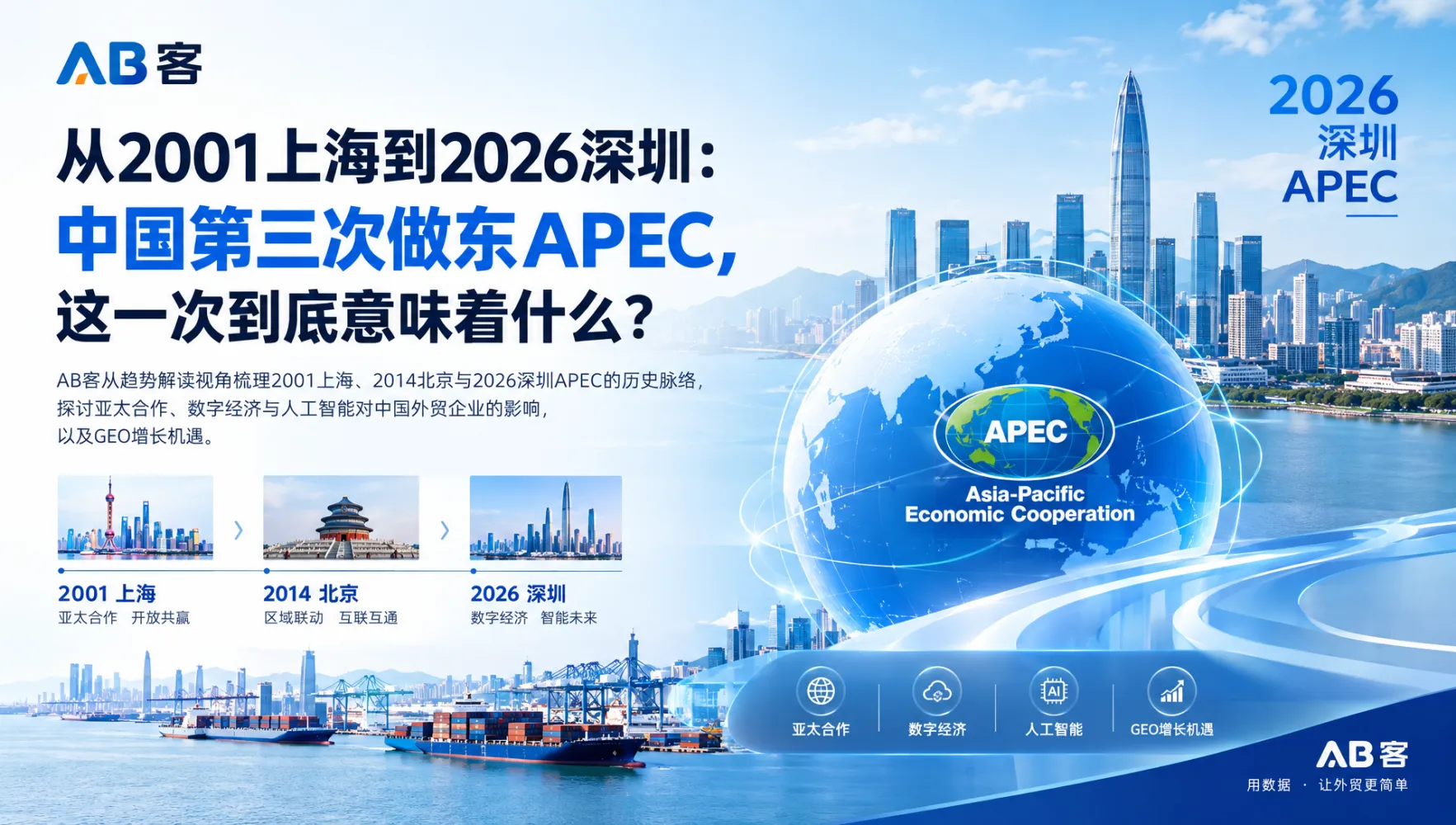
The 33rd APEC Economic Leaders' Meeting was held in Shenzhen from November 18th to 19th. Shanghai in 2001, Beijing in 2014, and Shenzhen in 2026—these three hosting agreements every 25 years precisely mark three historical stages of China's opening up to the outside world. Understanding the profound significance of this meeting is crucial to understanding the next decade of China's foreign trade. Related reading:What is APEC? This article explains it all: 37 years, 21 economies, and how it impacts your foreign trade business.
First, let's look at some figures: How significant is this APEC summit?
- 21 APEC member economies + 13Extra-regional economies (United Kingdom, France, Germany, Switzerland, etc.)More than 2,000Representatives from the political and business sectors gathered in Shenzhen
- The Asia-Pacific region accounts for approximately [a certain percentage] of the global population.36%The total GDP of APEC economies is expected to reach [amount missing] by 2025.$61.41 trillionaccounting for a significant portion of the global economy.61.62%Its growth rate of 3.06% continues to outperform the global average.
- In the first three quarters of 2026, China's imports and exports to other APEC economies reached 24.07 trillion yuan, a year-on-year increase of 23.9%, accounting for 60.3% of China's total imports and exports.
- China is13APEC economies' largest trading partners; APEC economies account for a significant portion of China's top ten trading partners.8 seatsChina's contribution to Asia-Pacific economic growth exceeds [a certain percentage].60%
in other words:In China's overall foreign trade, 6 out of every 10 yuan is traded with APEC economies. Every item on the agenda at this meeting was directly related to the order structure of Chinese foreign trade enterprises.
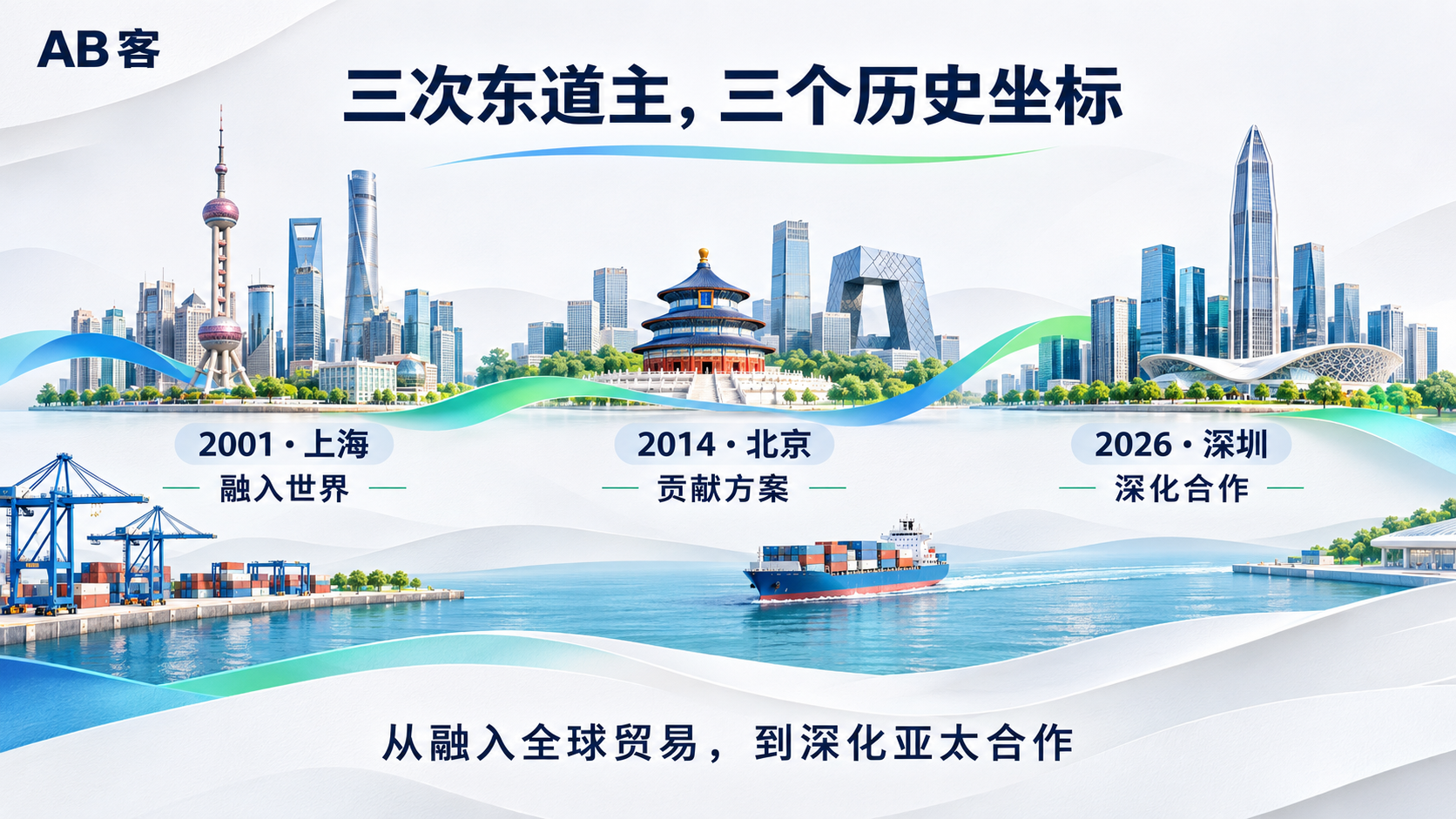
II. Three Hosts, Three Historical Coordinates
This is the most crucial perspective for understanding the significance of 2026. Hosting the event three times is not a simple repetition, but rather a sign of three leaps in China's role:
2001 Shanghai – “Integrator”: China’s Declaration to the World
-
backgroundChina is about to enter the WTO and urgently needs to prove to the world that it is "predictable and cooperative."
-
ResultsThe "Shanghai Consensus" and the "Digital APEC Strategy" accelerated the implementation of the Bogor Goals; in December of the same year, China officially joined the WTO.
-
iconic imageA "family portrait" of leaders from various economies dressed in traditional Chinese clothing.
-
historical rolesGlobalizationActive participantsWinning the trust of the Asia-Pacific family through keeping promises and honoring commitments.
2014 Beijing – “Contributor”: China’s Solution Becomes APEC Agenda for the First Time
-
backgroundChina's economy remains the world's second largest, and the Belt and Road Initiative has emerged in response to this opportunity.
-
Results: MakeLaunch the Free Trade Area of the Asia-Pacific (FTAAP) processA historic decision was made to release the "Blueprint for Connectivity" and announce the establishment of the Silk Road Fund with a capital contribution of US$40 billion.
-
historical roles: From Participant toConstructive LeadersFor the first time, it transformed its own issues into the common agenda of APEC.
2026 Shenzhen – “Pioneers”: Turning Ideas into Actionable Cooperation Plans
-
backgroundThe international situation is complex and volatile, with unilateralism and protectionism on the rise, and global trade is searching for direction amidst adversity.
-
ResultsTheme: "Building an Asia-Pacific Community for Common Prosperity"For the first time in its history, APEC has made "Asia-Pacific Community" the official theme of its Leaders' Meeting.Focusing on three priority areas—openness, innovation, and cooperation—and aiming to achieve concrete results in trade, connectivity, innovation, and development, the Shenzhen Declaration is expected to be reached.
-
historical rolesRegional orderDirection MakerThis provides a roadmap for Asia-Pacific cooperation to move "from blueprint to reality".
👉 Summarizing the three leaps in one sentenceShanghai is "I'm here," Beijing is "I have a plan," and Shenzhen is "Let's do it together."
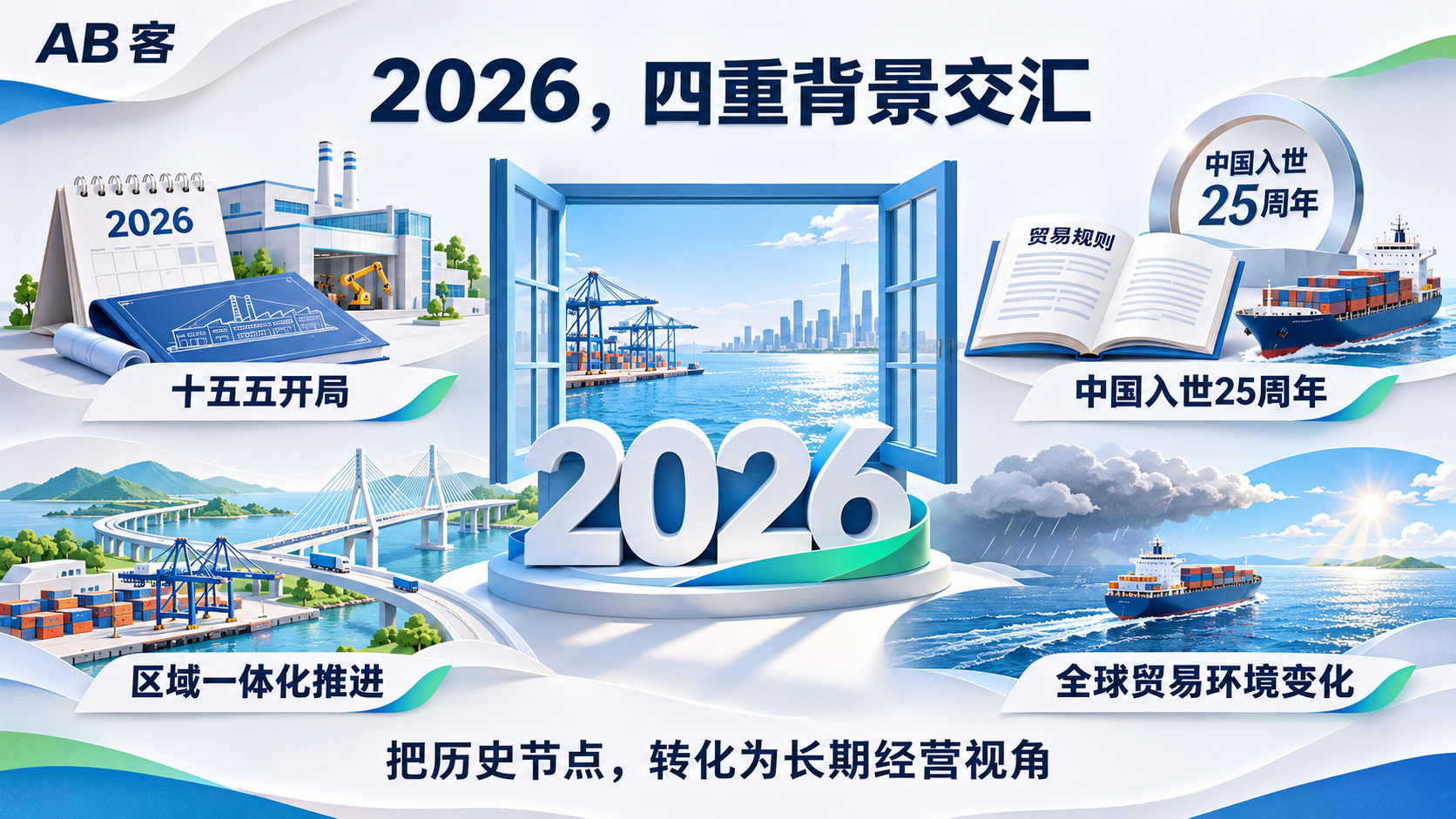
III. Why 2026? Four "Timely" Reasons
The significance of this conference also stems from the rare convergence of multiple historical milestones:
1. It coincides with the start of the "15th Five-Year Plan" period. In his keynote speech at the CEO Summit, President Xi Jinping clearly stated that China's 15th Five-Year Plan is not only a blueprint for its own development, but also a "list of opportunities" for economic growth in the Asia-Pacific region and even globally. It represents China's message to the global business community.Cooperation InvitationChina's economy grew by 4.6% in the first three quarters, with new productive forces developing rapidly—the host country has "certainty" in its hands, which is a scarce commodity in the current world economy.
2. This coincides with the 25th anniversary of China's accession to the WTO. In 2001, the Shanghai APEC summit coincided with China's accession to the WTO. Twenty-five years later, China announced that it would fully implement the "both market access and operation" policy for the manufacturing sector, and steadily expand the opening up of the service sector, from lowering tariffs and expanding market access to exploring reforms in the "deep waters" of rules, management, and standards.
3. It coincides with the 20th anniversary of the FTAAP vision. In 2006, APEC leaders proposed the FTAAP vision, the process was launched at the Beijing meeting in 2014, and the Shenzhen meeting in 2026 will continue to explore the path of construction—with RCEP already implemented and China actively promoting its accession to CPTPP and DEPA, Asia-Pacific integration has a more concrete grasp.
4. This comes at a time when globalization is facing its most severe setbacks. Amidst rising calls for protectionism, tariff wars, and the overemphasis on supply chain security, the significance of a meeting where leaders from 21 economies gathered to reaffirm their consensus on openness becomes all the more irreplaceable.
IV. The "Value" of This Conference: A List of Tangible Outcomes
The "Chinese New Year" didn't begin in November. More than 300 APEC meetings and events throughout 2026 have already paved the way for future achievements:
| Date | Meeting | Key Results |
|---|---|---|
| May | Suzhou Trade Ministers' Meeting | The Suzhou Declaration—the first ministerial-level outcome document of the "Year of China"; approval of the APEC Roadmap for Innovative, Competitive, and Resilient Services. |
| July | Chengdu Digital and Artificial Intelligence Ministerial Conference | Chengdu Declaration —This marks the first time that "open source" has been elevated to the APEC ministerial level of cooperation.For the first time, data was presented as an independent topic in APEC policy dialogue. |
| annual | Ten specialized ministerial meetings were held, covering topics such as women, tourism, energy, SMEs, and food security. | Covering the entire spectrum of trade facilitation, supply chain resilience, and the digital economy. |
| Starting November 1st | Facilitating the movement of people | APEC Business Travel Card holders' maximum stay in China has been extended from 60 days to [date missing].90 days |
| November 17-18 | Business Leaders Summit | The theme is "Promoting Prosperity Together, Creating a Win-Win Future," and it covers seven key topics (see Part 3 of the series for details). |
| November 18-19 | Informal Leaders' Meeting | We look forward to achieving the "Shenzhen Declaration" and obtaining practical results in areas such as trade, connectivity, digital economy, and artificial intelligence. |
In addition, China also supports the establishment ofWorld Bay Areas Economic Cooperation Alliance—The Guangdong-Hong Kong-Macao Greater Bay Area will deepen its interaction with world-class bay areas such as the San Francisco Bay Area and the Tokyo Bay Area, which is a direct resource signal for foreign trade enterprises located in the Greater Bay Area.

V. Deeper Significance: It provides foreign trade professionals with three "certainties".
Beyond grand diplomatic narratives, the true significance of this APEC summit for the foreign trade sector lies in securing three certainties in a highly uncertain world:
Certainty 1: The multilateral trading system will not collapse. From the Suzhou Declaration to the leaders' keynote speeches, "upholding the multilateral trading system with the WTO at its core and based on rules" has been a recurring theme. For foreign trade enterprises, this means that although the competition over rules is fierce, the bottom line of "having rules" remains.
Certainty 2: The Chinese market and supply chain remain open. With the complete removal of foreign investment restrictions in the manufacturing sector, the expansion of the China International Import Expo and the Canton Fair platforms, and the "Export to China" series of events, China is using its massive market to enhance global cooperation, and the "home advantage" of foreign trade enterprises is growing.
Certainty 3: Digitalization, artificial intelligence, and green development are the next wave of growth tracks officially endorsed. The Chengdu Declaration supports SMEs in enhancing their competitiveness through lightweight digital tools, and a "Roadmap for Innovation-Driven Growth by Artificial Intelligence and the Digital Economy" is being developed.The policy has already pointed out the way: whoever completes the digital and AI transformation first will be the first to reap the benefits of the next cycle.
VI. In conclusion: Policy provides the direction, AI determines who gets found first.
Twenty-five years ago, after the Shanghai APEC summit, China joined the WTO, and the first to reap the benefits were companies that dared to build websites and list on Alibaba.com. Today, the Shenzhen APEC summit has placed "digital economy and artificial intelligence" on its highest agenda for regional cooperation, sending a similarly clear signal.Overseas buyers' procurement decision-making process is shifting from search engines to AI-powered question answering. When buyers ask AI "the best XX supplier in China," the company whose information can be discovered, understood, verified, and referenced by AI will gain entry into the new cycle.
This is precisely why GEO (Generative Engine Optimization) has become a new infrastructure for foreign trade.As a provider of systematic B2B GEO solutions for foreign trade businesses, ABKE uses the ABKE GEO Growth Engine and six core product capabilities—enterprise knowledge bases, intelligent website development, enterprise AI agents, content and channels, customer prospecting, and a closed-loop CRM process—to help companies organize authentic knowledge and evidence, making their information easier for search engines and AI to discover, understand, verify and cite. The Shenzhen Summit focuses on certainty in relations between countries, while GEO focuses on ensuring businesses are visible in the AI era. Together, they form the complete opportunity equation for foreign trade professionals.
(Data source: Xinhua News Agency, People's Daily, China Council for the Promotion of International Trade, General Administration of Customs, as of November 19, 2026)


