Hot Products





Popular articles
Turn Canton Fair Buyer Interest into Website Inquiries: A Two-Entry GEO Guide
How to respond to buyer verification at the Canton Fair? Build trust with a checklist of 6 types of evidence.
Should I prioritize ChatGPT advertising or GEO? Prioritize B2B foreign trade budgets based on company maturity.
Recommended Reading

From AI Mentions to Qualified Inquiries: An Agent-Assisted GEO and AEO Monitoring Workflow
ABKE explains how marketing agents support GEO and AEO reviews using buyer-question tests, citation evidence and CRM feedback—without confusing correlation with causation.
MARKETING AGENT · MONITORING & REVIEW
An AI mention is a visibility signal—not proof of a qualified inquiry.
For B2B exporters, a useful review connects buyer questions, AI answer evidence, website inquiry paths and sales feedback without treating them as interchangeable results. ABKE’s Marketing Agent supports this process by organizing evidence and preparing follow-up tasks, with people responsible for factual verification, professional judgment and key approvals.
What GEO and AEO monitoring should establish
GEO monitoring examines how a company appears in generative AI answers: whether it is mentioned, how its capabilities are described, which sources are cited and whether it appears in a supplier-selection context.
AEO validation, as used in this workflow, checks whether answers to defined buyer questions are accurate, relevant and supported by accessible evidence. It is not a certification or a guarantee of placement in an answer engine.
These reviews should distinguish the following observations:
- Brand mention: the company appears in an answer, whether or not it is recommended.
- Source citation: an answer references a source; check whether that source actually supports the claim.
- Supplier consideration: the company is presented as a possible fit for a stated procurement need.
- Website visit: a recorded visit, with source information assessed where available.
- Qualified inquiry: an inquiry reviewed against the business’s agreed qualification criteria—not simply a mention, click or form submission.
Assess visibility, evidence, engagement and inquiry quality separately before connecting them.
A repeatable, agent-assisted monitoring workflow
1. Define procurement questions and a comparison baseline
Start with questions buyers ask about product selection, manufacturing capabilities, quality evidence, customization and delivery. Maintain a fixed core question set so reviews remain comparable. Keep exploratory questions separate from the baseline.
For example, a buyer might ask which supplier capabilities matter for an OEM project or what evidence to request before shortlisting a manufacturer. Questions should reflect the company’s actual products and target markets.
2. Preserve the answer and its testing context
Record the platform, exact question, date, region and relevant language context. Preserve the answer, cited sources and observed mentions or recommendations. Where available, note the model or mode and follow-up prompts. The Marketing Agent can help organize these records; reviewers should not treat one answer as a stable description of platform behavior.
3. Verify company facts and citation support
Compare the answer with approved enterprise knowledge. Check product specifications, service scope, certifications, delivery statements and company identity. Review whether cited pages support the statements attributed to them. An incorrect capability claim requires correction work even when it makes the company appear favorable.
4. Check the website inquiry path
Inspect the relevant landing page, supporting product or solution content and contact options. Confirm that forms work, mobile users can reach contact details and sales teams receive the information needed to respond. This checks conversion readiness; it does not prove that an AI answer caused a visit.
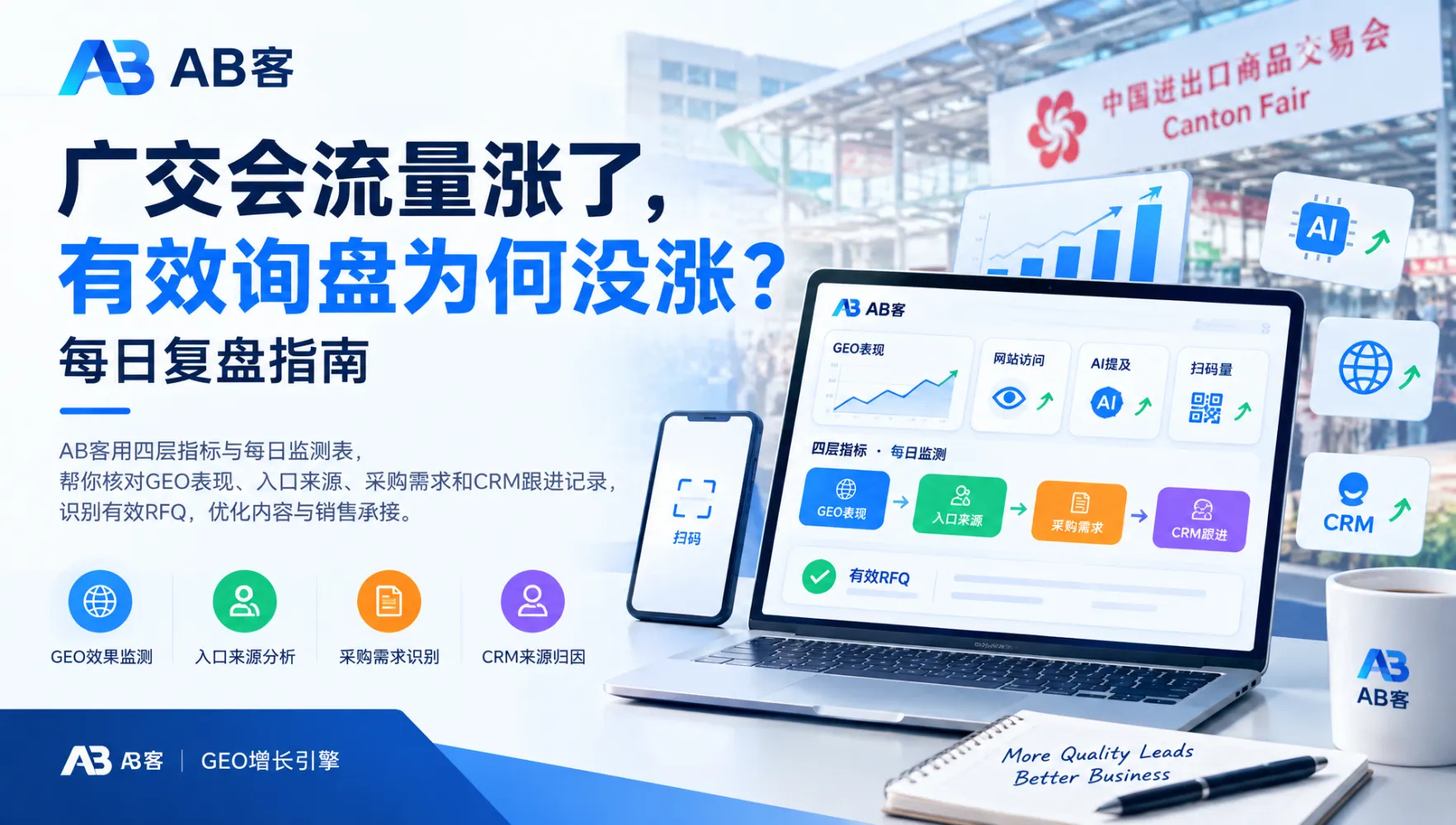
5. Review CRM feedback and assign the next action
Review recorded sources, buyer needs, qualification decisions and sales follow-up. Use the findings to prepare knowledge updates, content revisions, page improvements or inquiry-handling tasks. Assign an owner and an approval checkpoint, then record completion for the next review.
The agent assists with evidence organization and task preparation; people validate facts and approve consequential actions.
Keep attribution separate from simultaneous improvement
AI mentions, website traffic and inquiries may increase during the same period. That pattern alone does not establish that the Marketing Agent—or a particular content update—caused the commercial result. Advertising, seasonality, existing customer relationships and sales activity may also contribute.
- Retain available source and referral records, but acknowledge missing or ambiguous attribution.
- Record buyer-reported discovery sources as buyer statements, not independently verified tracking.
- Separate total inquiries from sales-reviewed qualified inquiries and subsequent opportunities.
- Document what changed, when it changed and what remains uncertain before drawing conclusions.
A defensible review states what was observed, what evidence supports it and what cannot yet be attributed. It does not convert concurrent metric changes into an agent-driven growth claim.
Where the Marketing Agent helps—and where people remain accountable
ABKE’s Marketing Agent is an execution and coordination assistant across enterprise knowledge, content, websites, global distribution, GEO testing, CRM and sales support. It uses authorized knowledge, business rules, data and tools to support tasks rather than relying on isolated chat responses.
Agent-assisted work
Organize test records, compare answers with approved knowledge, flag gaps, prepare content drafts, summarize sales feedback and propose follow-up tasks. Maintain task status, versions and review records within the agreed scope.
Human-owned decisions
Confirm facts, evaluate technical claims, approve qualification criteria, review compliance risks and authorize external publication. Pricing, contracts, technical commitments and customer relationships still require responsible company personnel.
Available functions, integrations, permissions and release status must be confirmed for the agreed implementation. This workflow does not imply that every action is available as an autonomous, production-ready integration.
Turn review findings into specific improvement tasks
A monitoring record becomes operationally useful when it leads to an evidence-backed action. Depending on the finding, the next task may be:
- Incorrect company description: verify the underlying fact and update approved knowledge and relevant public pages.
- Missing procurement evidence: prepare a supported FAQ, technical explanation or solution page for review.
- Visibility without inquiries: inspect page relevance and contact paths before assuming the problem is insufficient exposure.
- Poor-fit inquiries: review targeting language, capability boundaries and sales qualification feedback.
Each finding should lead to a defined task, a responsible owner and a subsequent evidence check.
Start with a review scope your team can maintain
Prepare approved company knowledge, a focused buyer-question set, relevant website pages and authorized CRM feedback. Name the people responsible for factual review, content approval and sales qualification. Agree which tasks the agent may assist with and which require explicit authorization.
Assess whether agreed tasks were completed, drafts passed review, approved changes were published and findings became follow-up actions. Review downstream visibility and inquiry data separately, without inventing a universal automation rate, labor-saving figure or inquiry-uplift target.
Discuss an evidence-led monitoring scope with ABKE. The objective is a repeatable review process—not a promise of fixed AI rankings, citations, recommendations, inquiries or sales.


