Hot Products



Popular articles
How to Use GEO to Capture Q4 2026 US & European Procurement Demand: 5 Priorities for B2B Exporters
How Can GEO Help Overseas Buyers Find You Before the 2026 Autumn Canton Fair?
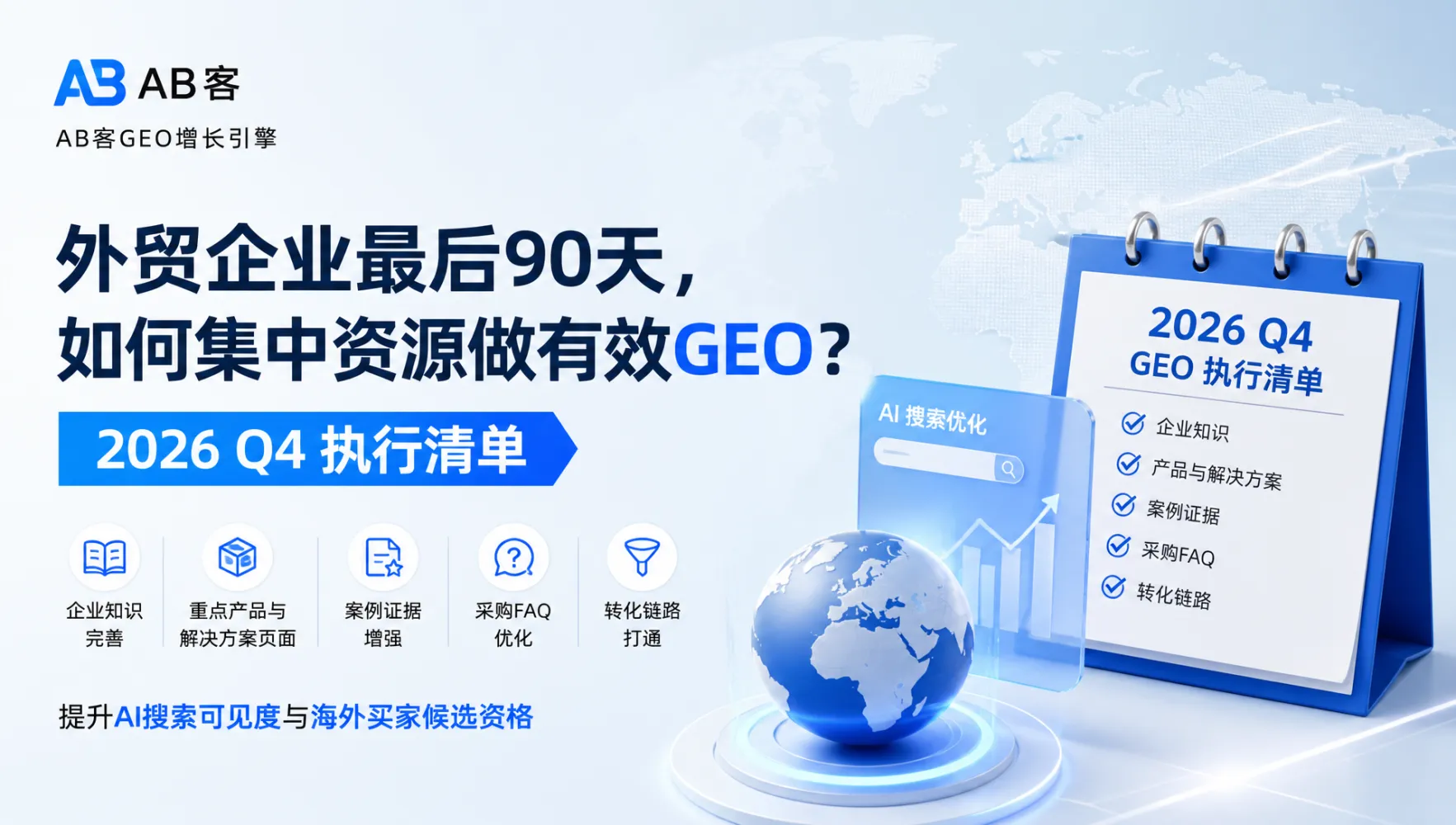
Only 90 Days Left in Q4 2026: What Should Export Businesses Cut From GEO—and What Should They Focus On?
Recommended Reading

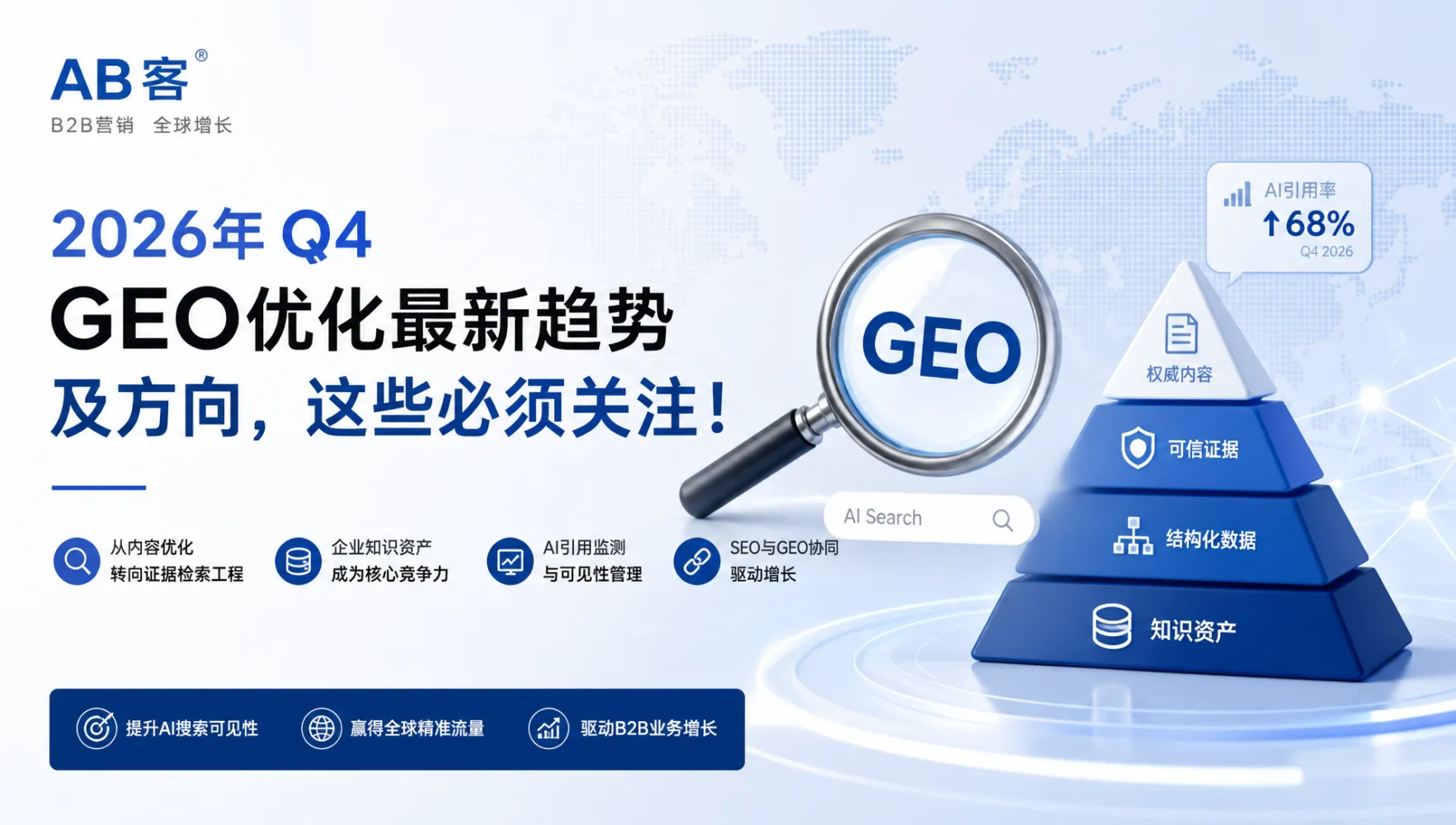
Planning Q4 2026 GEO Investment: Improve Content, Build Evidence or Fix Retrieval?
Plan Q4 2026 GEO investment with ABKE: distinguish unclear content, missing evidence and retrieval barriers, then prioritize asset reuse and targeted improvements.
Before allocating your Q4 2026 GEO budget, identify what is preventing overseas buyers and AI systems from understanding your business. The problem may be unclear content, missing procurement evidence, or difficulty retrieving information that already exists. Each requires a different intervention.
For export-oriented B2B teams, GEO—Generative Engine Optimization—should connect accurate business knowledge, useful content and accessible website assets. Publishing more pages is not automatically the right next step. Existing technical documents, product information and verified customer experience may offer a better starting point.
A practical investment rule: improve expression when facts are unclear; build evidence when claims lack support; investigate retrieval when useful, verified information is difficult to access. Reuse suitable assets before commissioning new ones.
Diagnose three gaps before choosing the work
Content clarity, evidence quality and retrieval are connected, but they are not interchangeable. A well-written page can still lack proof. A verified document can still be difficult to find. A retrievable page can still fail to answer a buyer’s question.
| Gap | Diagnostic question | Priority action |
|---|---|---|
| Unclear content | Can a buyer understand the product, its application and its limitations from the page? | Restructure verified information around specific procurement questions. |
| Missing evidence | What supports the stated capability, specification or experience? | Collect, verify and approve relevant business evidence before expanding claims. |
| Retrieval barriers | Can search systems and relevant AI retrieval tools access and locate the supporting information? | Review page access, website structure, internal links and technical configuration. |
More than one gap may affect the same page. Diagnose them separately rather than treating every weak result as a writing problem.
When content optimization is the right investment
Prioritize GEO content optimization when the underlying facts are available, but the page does not explain them clearly. Common issues include broad capability statements, disconnected specifications, vague application descriptions and answers buried in long paragraphs.
- Answer a defined buyer question: explain product suitability, selection criteria, customization boundaries or the cooperation process.
- Connect facts to decisions: show how documented specifications relate to a stated application, without extending beyond verified limits.
- Use consistent terminology: align product names, technical terms and brand information across pages and languages.
- Make support visible: place relevant evidence near the claim it supports, or link to an accessible supporting page.
For example, if a product’s operating limits are already documented, an application page can explain those limits in the context of a buyer’s selection question. That is a content improvement—not a reason to invent additional performance claims.
When evidence building should come first
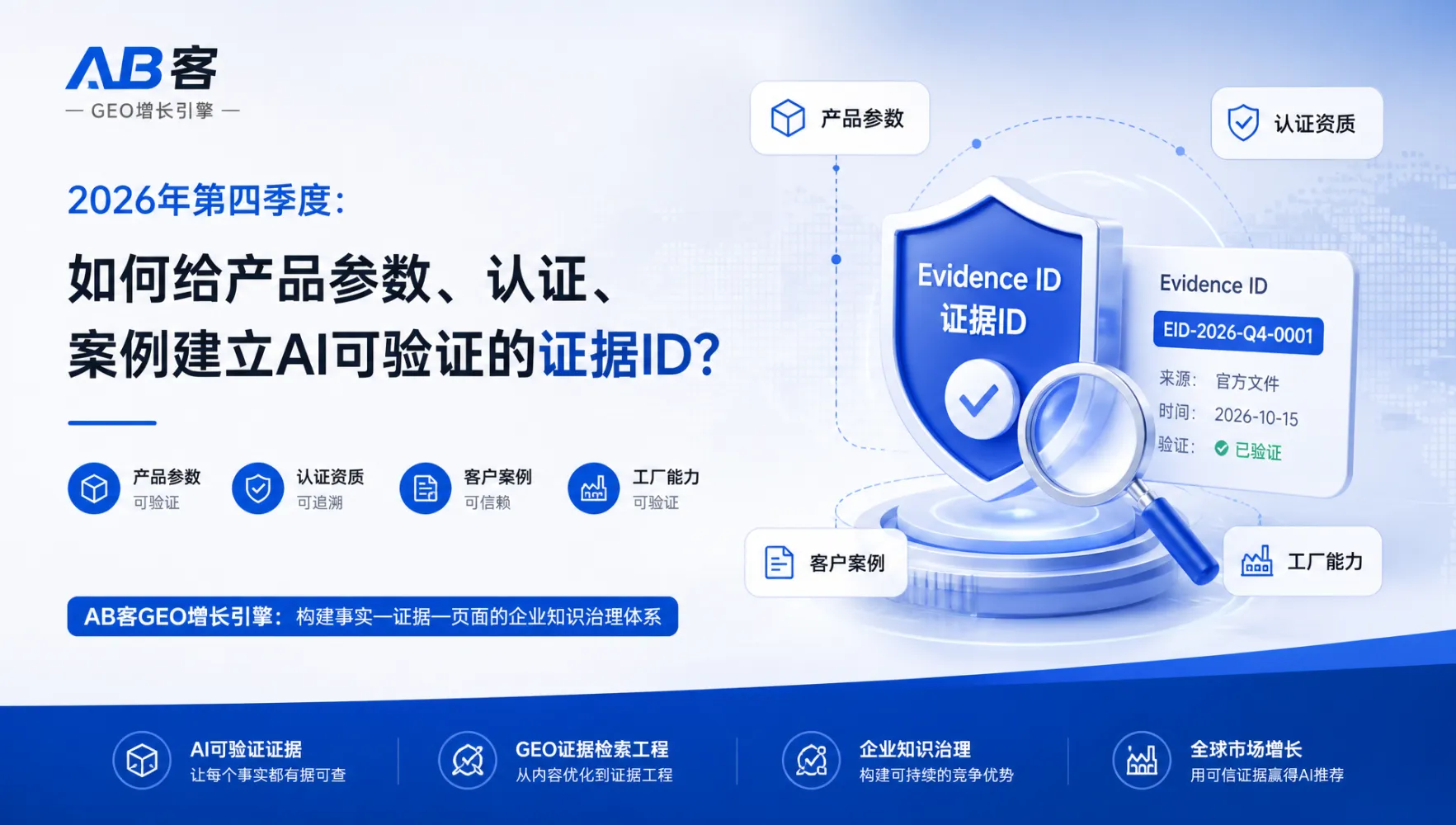
Retrievable business evidence is factual material that supports a business claim and can be located in an approved, accessible form. For B2B procurement, it should help buyers evaluate capability, suitability, quality controls or delivery processes—not simply repeat promotional language.
Where available and authorized for publication, useful evidence may include:
- Product specifications and technical documents with clear scope.
- Valid certifications identifying the covered entity, product or process.
- Documented manufacturing, inspection and quality-control procedures.
- Approved application or project records explaining requirements and delivered work.
- Verified customization, cooperation and after-sales service information.
Verify before publication
Check the source, relevance, validity and publication permission of each item. Remove confidential customer information and unsupported conclusions. If evidence is unavailable, narrow the claim or leave it unpublished; AI-generated wording cannot substitute for missing proof.
When retrieval needs attention instead of more writing
If useful evidence already exists, investigate whether it is accessible and connected to the relevant product or solution. Important information may be isolated in documents, disconnected from navigation, or unavailable to the retrieval systems you want to reach.
- Confirm that intended public pages load correctly and review applicable crawling or indexing restrictions.
- Present essential facts in readable page content rather than relying only on images or isolated downloads.
- Connect product, application, FAQ and evidence pages through relevant internal links.
- Review multilingual page structure and ensure structured data matches visible, verified information.
- Monitor search indexing and available AI visibility signals separately.
Access, indexing, AI citation and recommendation are different outcomes. Making a page retrievable does not establish that an AI platform will cite it. Likewise, an absent citation does not by itself prove a retrieval failure.
Turn the diagnosis into a Q4 work plan
Use the quarter to address defined business questions and asset gaps, rather than setting publication volume as the sole target.
- Select priority products and markets. Identify the buyer questions that matter to current sales activity and the pages intended to answer them.
- Inventory reusable assets. Review existing product documents, approved cases, FAQs, website content and sales materials for accuracy, relevance and permissions.
- Classify the gaps. Record whether each question needs clearer expression, additional evidence, retrieval work or a combination.
- Assign accountable tasks. Define the source material, responsible expert, reviewer, output and completion criteria for each improvement.
- Review results and adjust. Compare completed work with indexing, AI visibility and inquiry-quality observations. Feed buyer questions and sales feedback into the next task cycle.
How the ABKE GEO Growth Engine supports this workflow
The ABKE GEO Growth Engine is an enterprise-grade GEO platform for export-oriented B2B businesses. It connects enterprise knowledge, customer-demand analysis, SEO/GEO planning, content production, multilingual localization, websites, channels and growth data.
Its architecture helps organize targeted improvements:
- Brand workspace: manages shared business facts, brand standards, trust assets and review boundaries.
- Product agents: organize product knowledge, buyer questions, content assets and market-specific tasks.
- Task sessions: connect objectives, source context, execution steps, human review, publishing results and follow-up analysis.
- Data feedback: brings search performance, AI visibility, inquiries and CRM feedback into subsequent optimization.
The platform supports knowledge management and execution; it does not create factual proof of capabilities a business has not established. Company experts remain responsible for professional judgment, content approval and sales decisions.
Evaluate delivery, visibility and business response separately
Track completed assets and tasks separately from external outcomes. Approved evidence, improved pages and resolved technical issues are delivery measures. Search indexing, AI mentions, citations and answer accuracy are visibility measures. Qualified inquiries and sales opportunities are business-response measures.
AI recommendations, rankings, inquiries and sales depend on platform behavior, market demand, competition, business capability and sales execution. Neither evidence building nor content optimization guarantees a fixed outcome.
Start with a focused asset review. Bring your priority product information, target markets, existing website pages, approved evidence and available inquiry data to an ABKE planning discussion. Use that review to decide what to reuse, what to verify and which content or retrieval gaps deserve investment first.


