Hot Products





Popular articles
Thanksgiving B2B Inquiry Surge: GEO Keyword Layering to Capture North American Buyer Searches
From GEO to AEO: How B2B Marketing Agents Can Support Procurement Decisions
Before AEO: Seven Categories of Business Facts Your Marketing Agent Needs
可信 GEO 为什么不只是客户名单?外贸 B2B 如何把企业数据变成知识资产
How to Build Trusted GEO for B2B Trade: Four Steps to Reliable Enterprise Knowledge
Recommended Reading


How Can CRM Connect the Same Inquiry from Source to Sale, and What Needs Manual Updating?
Explore ABKE’s CRM and AI Sales Assistant approach to linking inquiry sources, quality, follow-ups, opportunities and sales, including manual updates and implementation checks.
Connect inquiry records—not just visibility reports
CRM can connect an inquiry’s source, quality assessment, follow-ups, opportunity progress and sales outcome when those records remain linked and are kept current. Source information alone cannot explain whether an inquiry became a qualified opportunity or a customer.
ABKE’s CRM and AI Sales Assistant supports this inquiry lifecycle for B2B exporters. It brings lead management and sales collaboration together, while sales teams remain responsible for maintaining business assessments and outcomes. Automatic capture coverage and record-linking mechanisms must be confirmed against your channels, CRM configuration and sales workflow.
What needs to stay connected from source to sale?
An inquiry, a contact, a customer company and an opportunity describe different parts of the sales process. Keeping their relationships clear allows a team to review the original request alongside later conversations, quotations and outcomes.
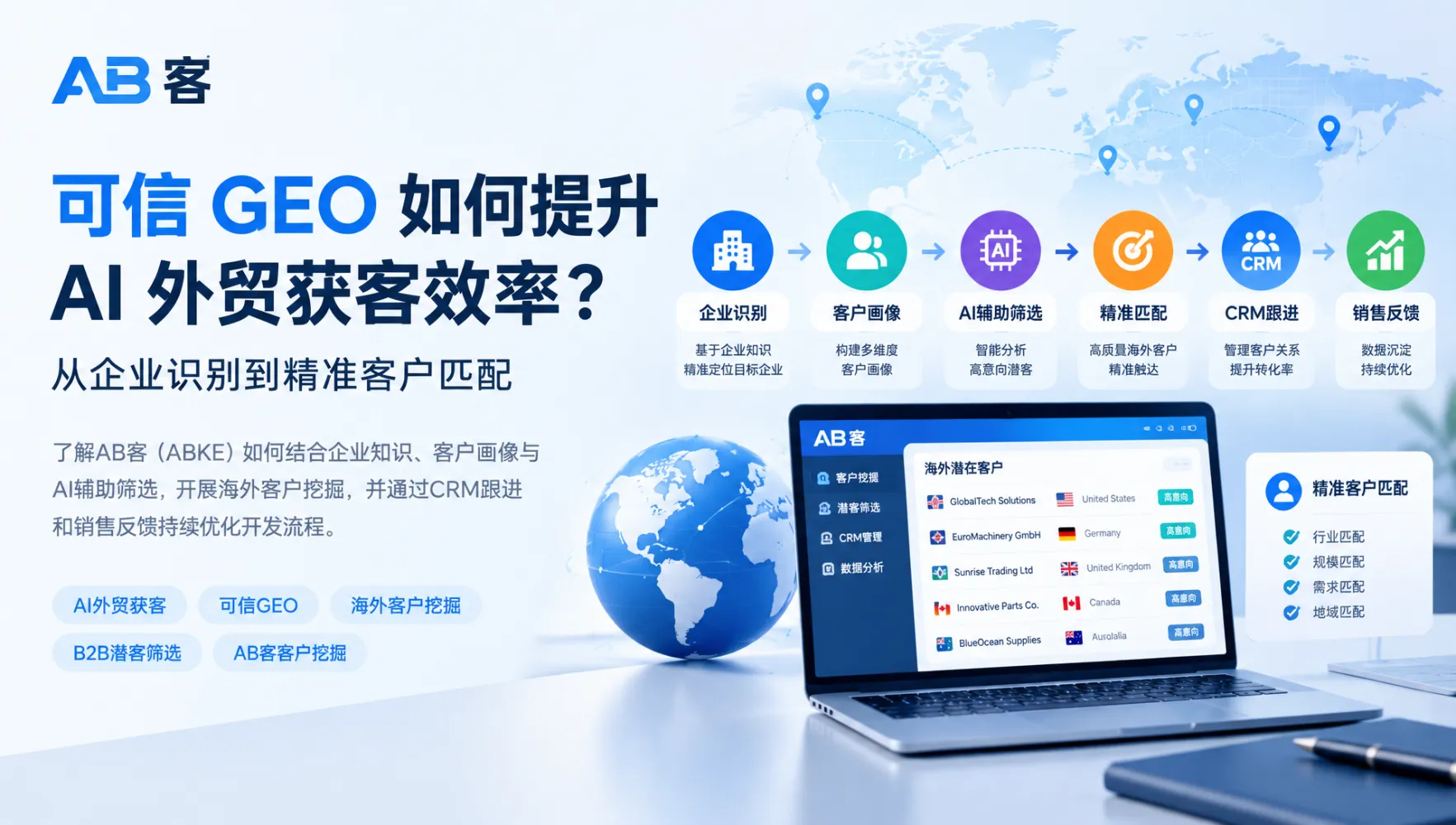
Source and content touchpoints → Inquiry and customer records → Quality classification → Follow-ups and tasks → Opportunity stages → Sales outcome and customer lifecycle
A conceptual tracking workflow, not a claim that every touchpoint is captured or linked automatically.
- Source and touchpoints: record the channel, page, content or interaction associated with the inquiry where that information is available.
- Customer context: maintain the company, contacts, inquiry details and relevant requirements.
- Qualification: record inquiry quality and the evidence behind the assessment.
- Sales activity: retain follow-up notes, tasks, quotations and opportunity progress.
- Outcome: record won, postponed or lost opportunities, including loss reasons and later customer-success or repeat-purchase activity where relevant.
Which information requires manual updating?
Customers need to maintain inquiry quality assessments, follow-up details, opportunity progress and sales outcomes. AI can assist with preparation and analysis, but it does not remove the need to confirm what actually happened in a sales conversation.
| Record area | Sales-team responsibility | What to verify |
|---|---|---|
| Source and customer information | Complete missing details and confirm the relevant company and contact. | Which channels and fields are captured, imported or entered manually? |
| Inquiry quality | Confirm the classification and revise it as requirements become clearer. | Are qualification criteria and ownership agreed? |
| Follow-ups and tasks | Record conversations, commitments, next steps and task completion. | Which activities are captured, and which need manual notes? |
| Opportunity progress | Update requirements, quotation status and the current sales stage. | What evidence is required to move an opportunity forward? |
| Sales outcomes | Maintain won, postponed and lost status, loss reasons and relevant customer follow-up. | Who confirms outcomes and keeps reporting current? |
Use inquiry quality to guide follow-up priorities
Inquiry quality classification separates the number of inquiries from their business relevance. ABKE’s approach considers target-market fit, industry fit, requirement clarity, purchasing stage, budget and timing.
A-class: prioritize
A matching market or industry, clear requirements, and project context, budget or a timeline. Prioritize a response and arrange technical or solution discussions.
B-class: qualify further
A broadly suitable customer with genuine interest, but incomplete requirements, budget, purchasing-stage or decision-chain information.
C-class: nurture selectively
Incomplete information, lower fit or weaker demand. Use lower-priority follow-up or an appropriate nurturing process.
Invalid inquiries include spam, recruitment messages, supplier pitches, unreachable contacts and clearly unrelated requests. Mark these separately rather than combining them with genuine sales opportunities.
Where the AI Sales Assistant helps—and where people decide
Using enterprise knowledge and customer information, the AI Sales Assistant supports inquiry summaries, customer research, intent assessment and qualification. It can also help prepare reply drafts, assist multilingual communication, recommend relevant products and materials, suggest next steps, flag risks and summarize opportunities.
For example, a salesperson can use an inquiry summary and relevant product information to prepare a response, then record the customer’s confirmed requirements after the conversation. The confirmed information—not the initial AI assessment—should guide subsequent sales decisions.
AI assistance is not autonomous selling. Salespeople remain responsible for commercial judgment, negotiation, quotations, relationship management and moving opportunities forward. Suggested replies, classifications and risk assessments require review.
What connected CRM records can tell you about GEO contribution
Generative Engine Optimization (GEO) aims to make enterprise information easier for AI systems to discover, understand and reference. CRM inquiry lifecycle tracking addresses a different question: what happened to the customer opportunity after the inquiry arrived?
When source information and sales records are sufficiently complete, teams can examine inquiry quality, opportunity creation and sales outcomes by available country, language, page, content and channel data. Sales feedback can then help marketing teams identify relevant topics and improve weaker acquisition paths.
- Quality: valid inquiries and the share classified as A or B.
- Execution: first-response and follow-up timeliness.
- Progression: lead-to-opportunity conversion, opportunity win rate and sales cycle.
- Contribution: content-associated opportunities and outcomes across recorded sources and touchpoints.
Record linkage is not verified attribution. Linking a source to an inquiry and a later sale does not, by itself, prove that GEO caused the sale. Missing source information, multiple touchpoints and incomplete sales updates limit the conclusions a report can support. Unknown sources should remain explicitly identified as unknown rather than assigned to GEO without evidence.
Confirm the workflow before implementation
A practical implementation review should test both the record connections and the team’s ability to maintain them.
- Map entry points. List website forms, online conversations, enterprise agents, downloads, appointments, social channels and B2B platforms. Confirm supported capture or import methods individually.
- Check record relationships. Verify how inquiries connect to companies, contacts and opportunities, including how repeat inquiries and duplicate records will be handled.
- Define update ownership. Assign responsibility for qualification, follow-up notes, stage changes, outcomes and loss reasons.
- Prepare sales knowledge. Provide current product, solution, FAQ, case and sales materials for AI-assisted responses and recommendations.
- Walk through a sample inquiry. Check what is captured, what requires manual input and whether the final report reflects the recorded sales history.
Build a sales feedback loop your team can maintain
ABKE’s CRM and AI Sales Assistant is suited to exporters already receiving inquiries, especially where sales cycles are long, several salespeople share customer responsibilities, or marketing needs clearer feedback on lead quality. It works best with a defined sales process, an accountable owner and consistent record updates.
Scope matters: customer prospecting through customs data, global company databases or target-account discovery is a separate solution area. Do not assume those capabilities are included in CRM and AI Sales Assistant scope without product or contractual confirmation.
For an implementation discussion, prepare your lead-source list, sales stages, qualification rules and reporting needs. ABKE can use these inputs to review the intended workflow and clarify configuration and responsibilities. CRM use does not guarantee a fixed number of inquiries or sales; meaningful reporting depends on complete records and active sales follow-through.


