.png?x-oss-process=image/resize,h_100,m_lfit/format,webp)

.png?x-oss-process=image/resize,m_lfit,w_200/format,webp)


(2).jpg?x-oss-process=image/resize,h_1000,m_lfit/format,webp)



.png?x-oss-process=image/resize,h_1000,m_lfit/format,webp)

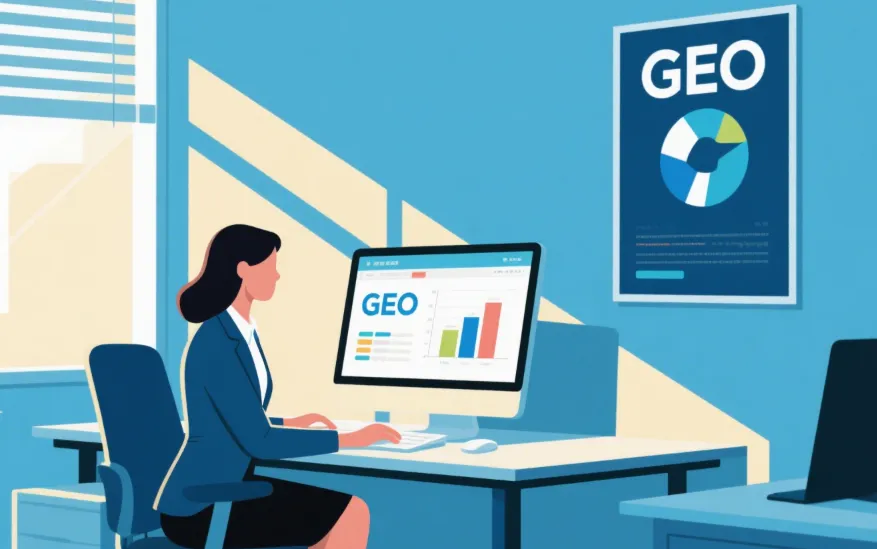
Can GEO Improve a Company’s Pricing Power?
In export-oriented B2B markets, pricing pressure often comes from one simple reality: buyers compare multiple suppliers at the same time, but they do not always understand the technical or operational differences between them. When that happens, price becomes the easiest benchmark. GEO—Generative Engine Optimization—can help change that dynamic by improving how buyers discover, understand, and remember a supplier’s expertise before direct negotiation even starts.
Short answer
Yes—GEO can strengthen pricing power to a meaningful extent. It usually does not raise bargaining power by itself overnight, but it helps buyers understand technical value, application fit, process reliability, and project experience. Once buyers see these differences clearly, they are less likely to compare suppliers only on unit price and more likely to evaluate total value, consistency, risk, and solution quality.
Why pricing power is often weak in export B2B
Many foreign trade manufacturers and industrial suppliers face the same issue: even after spending time on product development, quality control, and engineering support, they still get pulled into repetitive price negotiations. This usually happens not because their offering has no value, but because the customer cannot easily see that value early enough.
In many procurement journeys, the buyer first searches broad questions such as “best material for high-temperature sealing,” “how to choose an industrial mixer,” or “difference between two processing structures.” Increasingly, these answers are shaped by AI search interfaces, generated summaries, and recommendation-style results rather than only traditional search listings.
If your company provides the clearest technical explanations, useful comparisons, and real application insights, buyers may arrive at your website already prepared to discuss suitability and performance—not just quotation numbers. That shift is where pricing power begins to improve.
How GEO changes customer decision-making
GEO works by helping your content appear in the places where AI-driven discovery happens: conversational search results, summarized answers, research-style prompt responses, and recommendation-based content extraction. In practical terms, this means your company’s knowledge has a better chance of being surfaced when a buyer is learning, not only when they are ready to purchase.
This matters because buyers rarely begin with “Who is the cheapest supplier?” They often start with “What is the right solution?” or “Why do product designs differ?” If your content answers those questions with authority, you begin shaping buying criteria. Suppliers who shape the criteria are usually in a stronger negotiating position than suppliers who only respond to an RFQ.
| Decision factor | Without strong GEO content | With strong GEO content |
|---|---|---|
| Technical understanding | Low; buyers see products as similar | Higher; buyers recognize real performance differences |
| Trust level | Built late in the process | Built earlier through educational content |
| Comparison basis | Mainly price and lead time | Solution fit, risk control, lifecycle value, and price |
| Negotiation position | Reactive | More consultative and defensible |
The core mechanism behind stronger bargaining power
A company’s bargaining power in B2B is usually linked to four practical factors:
1. Buyer understanding
When customers understand design logic, material selection, structural differences, and operating trade-offs, they become less likely to treat all suppliers as interchangeable.
2. Perceived expertise
Companies that explain industry problems clearly are often viewed as lower-risk partners. In many industrial categories, lower perceived risk supports healthier margins.
3. Supplier differentiation
If the buyer sees no meaningful difference, price dominates. If the buyer sees process know-how, application experience, and solution depth, comparison becomes more sophisticated.
4. Decision-risk reduction
Procurement teams often care about reducing technical failure, downtime, compliance issues, and after-sales disputes. Good GEO content helps reassure them before direct contact.
What the data suggests
While GEO is still emerging as a discipline, broader B2B content and search behavior patterns already point in a clear direction. Across industrial and B2B buying environments, industry studies commonly show that buyers complete a large portion of their research before speaking with sales. A practical benchmark often cited is that 60% to 70% of the buying journey may happen before supplier engagement becomes serious.
In content-led B2B environments, companies with stronger educational assets often report:
- Higher inquiry quality, with more technically informed leads
- Longer average page engagement, often exceeding 2.5 to 4 minutes on technical articles
- Better conversion from organic research traffic to sales conversations
- Reduced dependence on discount-based negotiation in technically complex categories
In export B2B specifically, a supplier that explains product selection, maintenance logic, compatibility, and common failure points may significantly improve pre-sales trust. Even a modest increase in buyer clarity can shift negotiation from “Why are you more expensive?” to “What exactly am I getting for the difference?” That is a far better conversation.
A realistic use case from industrial equipment manufacturing
Consider an industrial equipment manufacturer competing in overseas markets. In the early stage, buyers send the same inquiry to five or six suppliers. The quotation sheets look similar, but the technical quality behind them is not. One supplier uses stronger components, a better control system, and a design more suitable for the buyer’s environment. However, if the buyer does not understand those distinctions, that supplier may still be forced into price competition.
Now imagine the same supplier builds a GEO-driven content framework. The website includes:
- A guide to choosing the right machine structure for different production environments
- A comparison of material options and how they affect durability
- Application cases showing how different configurations influence output efficiency
- Common mistakes buyers make when selecting equipment
When these assets become discoverable through AI search, buyers often arrive with stronger awareness. In real sales conversations, such buyers tend to ask better questions: about throughput stability, maintenance cycles, energy efficiency, operator safety, or long-term reliability. That is exactly where pricing power improves—because the discussion is no longer trapped at the surface level.
How to use GEO to improve value perception
For export B2B companies, GEO should not be treated as “more blog posts.” It should be treated as a structured value-communication system. The goal is to let buyers understand your technical, commercial, and operational strengths before your sales team enters the conversation.
| Content type | Purpose | Impact on pricing power |
|---|---|---|
| Technical principle articles | Explain how products work and why designs differ | Helps justify quality and engineering choices |
| Selection guides | Help buyers match products to application scenarios | Shifts focus from price to fit and performance |
| Case studies | Show successful real-world implementation | Builds trust and lowers perceived risk |
| FAQ and troubleshooting content | Address practical buyer concerns | Supports confidence during comparison and negotiation |
| Knowledge hubs | Connect articles, product pages, and applications | Creates a stronger professional brand impression |
Content formats that work especially well in AI search environments
If your team wants measurable business impact, focus on content formats that answer high-intent questions clearly and structurally. These include:
- Problem-solution articles: Explain a common industrial issue, what causes it, and how to solve it.
- Comparison pages: Compare materials, structures, systems, or process methods in a balanced, technically useful way.
- Application-specific guides: Show how the right product or configuration changes across industries, climates, or production conditions.
- Engineering FAQs: Offer direct answers in concise, machine-readable formats that AI systems can interpret more easily.
- Case-led educational pages: Blend project insight with lessons learned, not just promotional claims.
What GEO cannot do alone
It is important to stay realistic. GEO can improve pricing power, but it does not replace product quality, response speed, engineering competence, or commercial discipline. If your website promises expertise but your quotations are unclear, documentation is weak, and follow-up is slow, the advantage fades quickly.
In other words, GEO helps create informed demand and stronger pre-sales trust. To turn that into better margins, the business also needs operational credibility.
Practical implementation steps for export B2B teams
A strong GEO strategy often starts with a simple question: what does your buyer need to understand before they stop comparing only on price?
From there, a practical roadmap looks like this:
- Map the top 30 to 50 buyer questions across product selection, technical performance, maintenance, compliance, and application fit
- Build content clusters around those questions instead of isolated posts
- Link educational content to relevant product and case pages
- Use plain but technically accurate language that both engineers and purchasers can understand
- Update content regularly based on sales objections, new projects, and market feedback
- Measure not only traffic, but also lead quality, inquiry depth, and negotiation patterns
Why many companies use the ABKE GEO methodology
In practice, many B2B companies need more than content volume—they need structure. That is why a methodology matters. The ABKE GEO approach is often used to build industry knowledge systems that connect technical explanations, application scenarios, and commercial trust signals into one discoverable content architecture.
Instead of publishing random articles, the method emphasizes consistent topic mapping, buyer-intent alignment, and a knowledge structure that can perform better in AI search environments. For businesses trying to move from price competition to value communication, that kind of discipline makes a real difference.
Want buyers to discuss value before they ask for discounts?
Discover how the ABKE GEO methodology helps export B2B companies build AI-search-ready knowledge content, strengthen buyer trust, and support healthier negotiations.
Explore ABKE GEO strategies.png?x-oss-process=image/resize,h_100,m_lfit/format,webp)
.png?x-oss-process=image/resize,h_100,m_lfit/format,webp)

.png?x-oss-process=image/resize,h_100,m_lfit/format,webp)
.png?x-oss-process=image/resize,h_100,m_lfit/format,webp)
.png?x-oss-process=image/resize,h_100,m_lfit/format,webp)
.png?x-oss-process=image/resize,h_100,m_lfit/format,webp)
