.png?x-oss-process=image/resize,h_100,m_lfit/format,webp)

.png?x-oss-process=image/resize,m_lfit,w_200/format,webp)

Hot Products
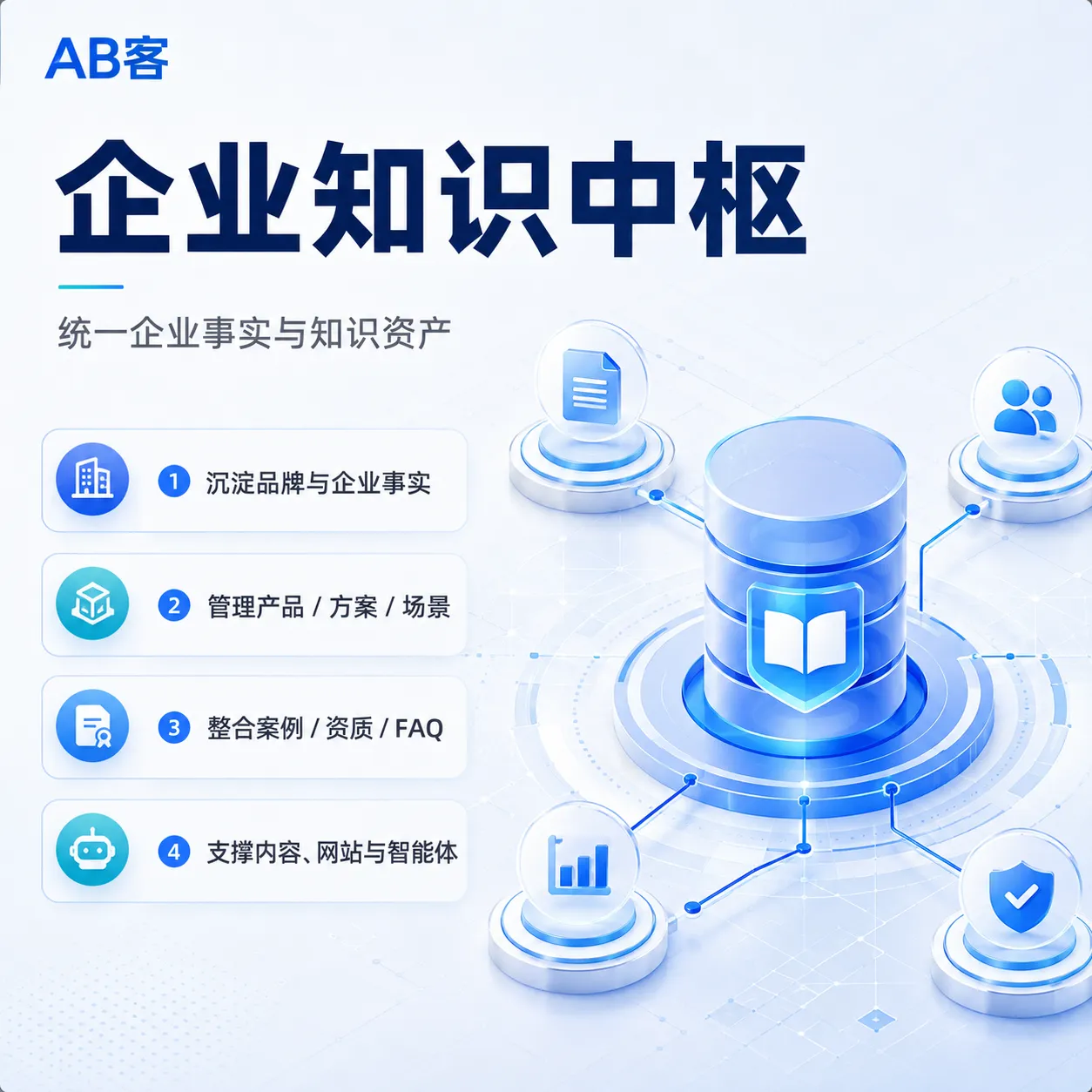
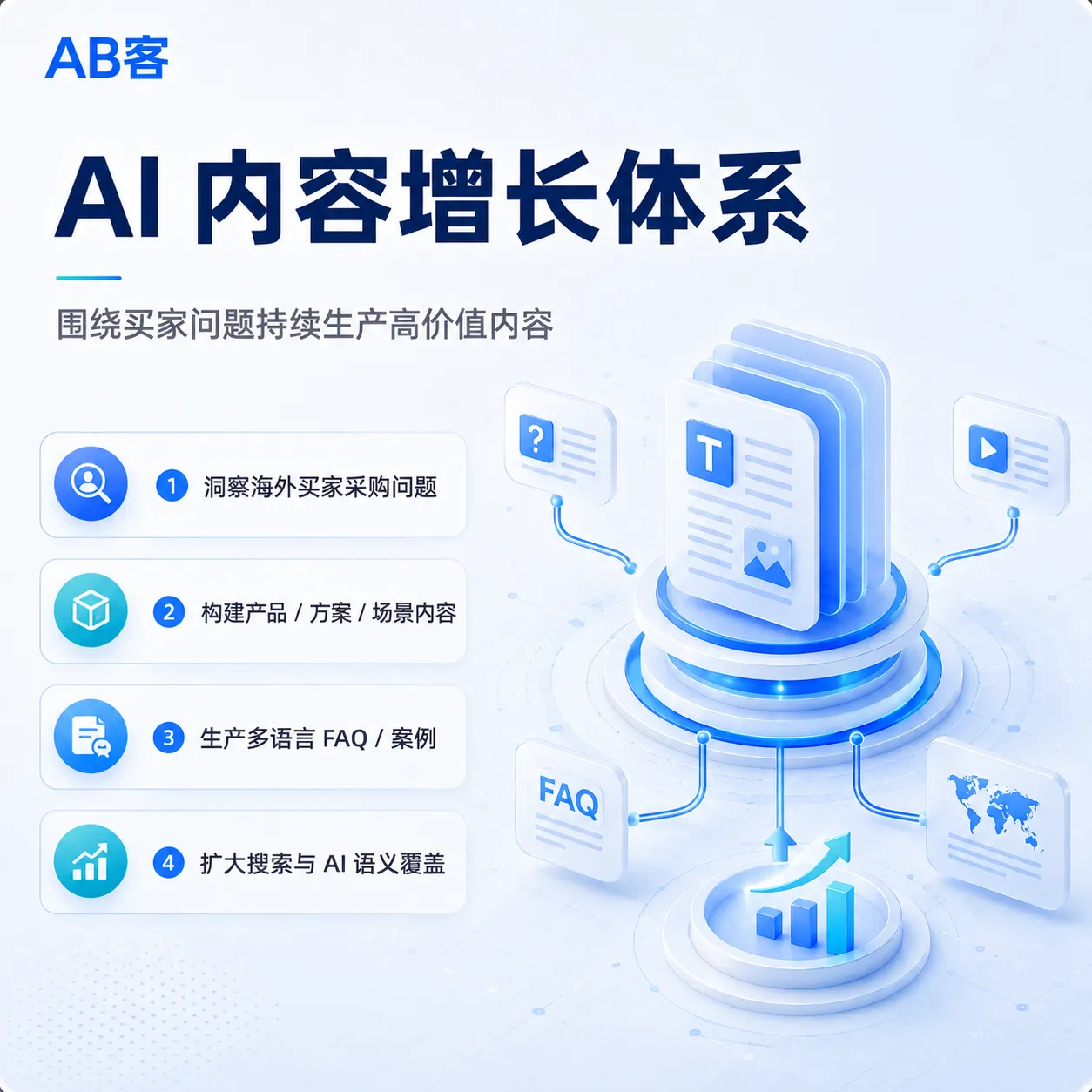
.png?x-oss-process=image/resize,h_2000,m_lfit/format,webp)
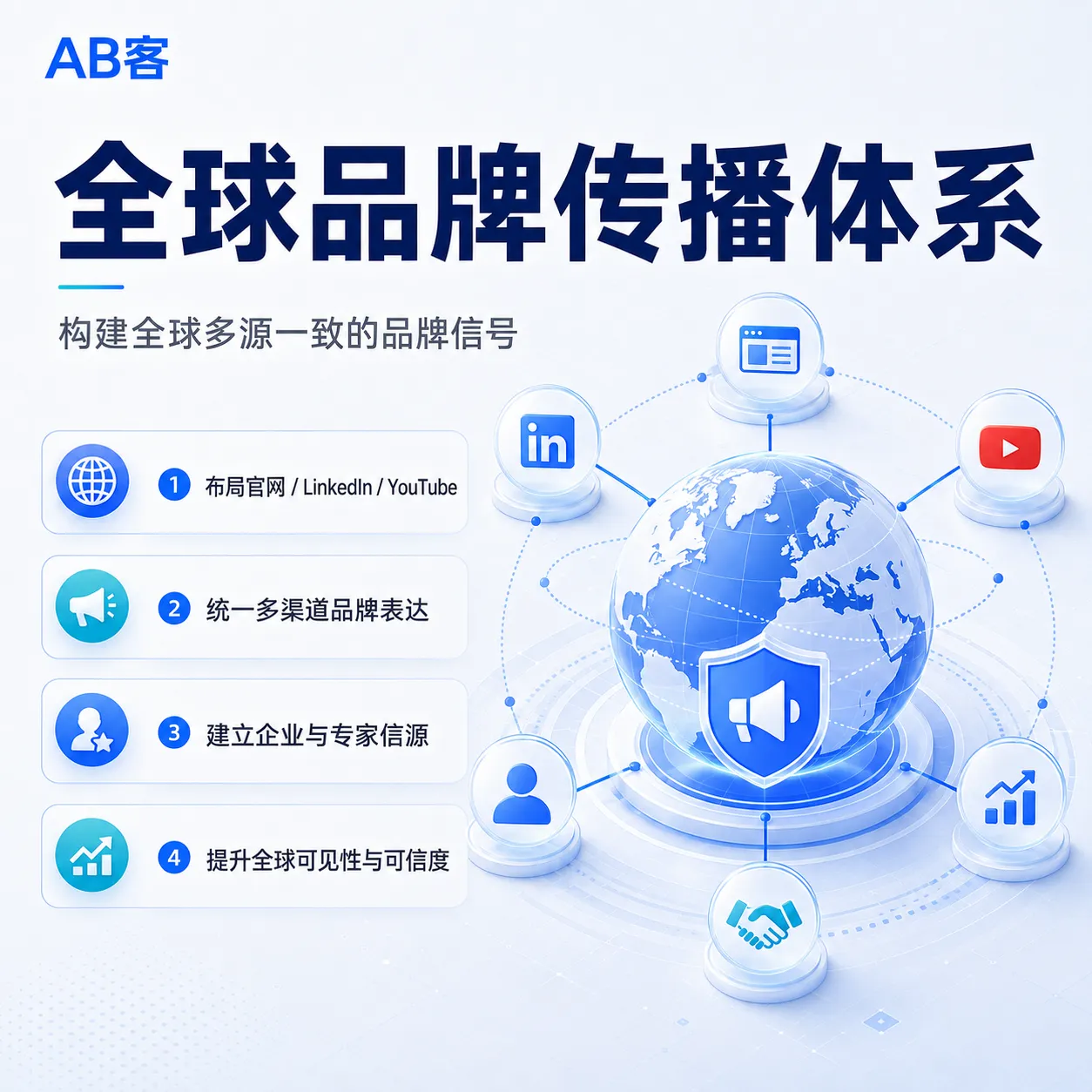
.png?x-oss-process=image/resize,h_2000,m_lfit/format,webp)

Popular articles
Why Does Overseas GEO Cost More? A Practical B2B Pricing Guide for Export Manufacturers
独立站都没有!你做的哪门子GEO?
Built Websites for 20 Languages but Still No Inquiries?
Your Website Has Only Product Specifications—Why Would AI Recommend You?
Help Overseas Buyers Evaluate Your Business at the Supplier Shortlist Stage
Recommended Reading

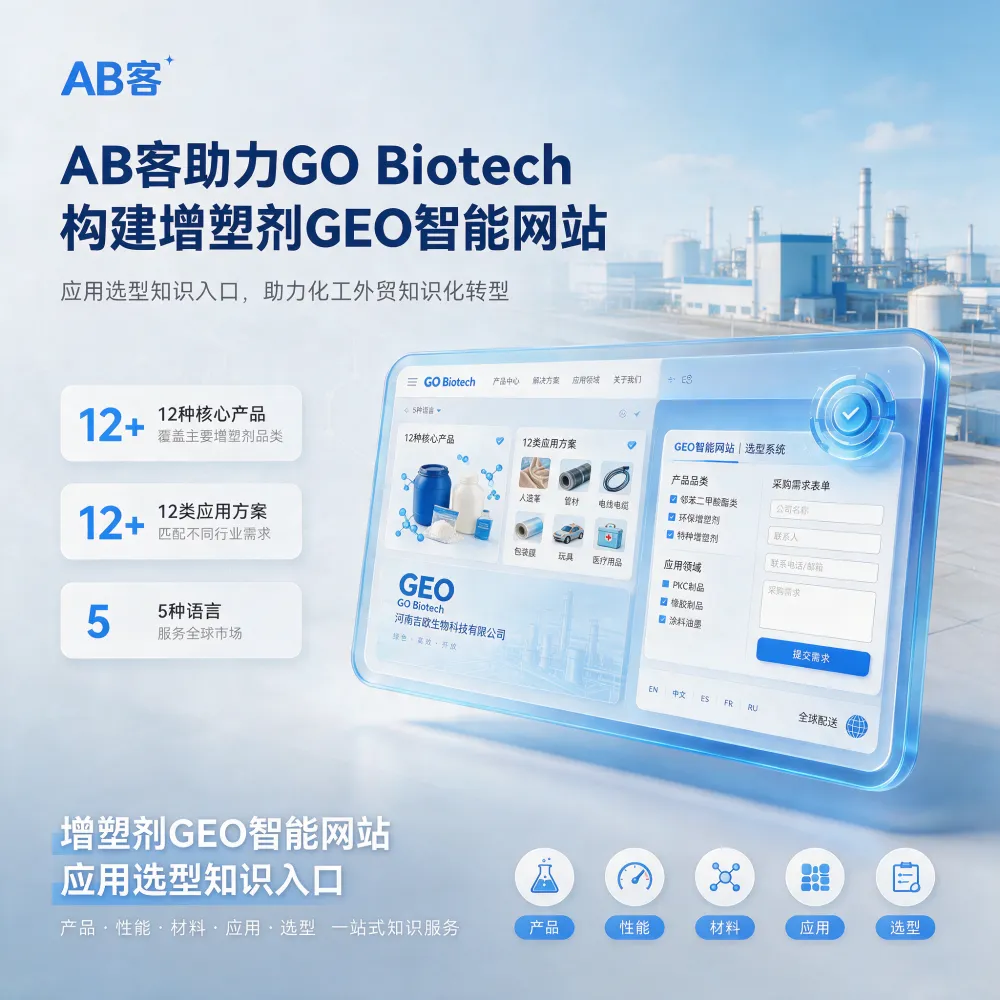


Your Website Is Only the First Step: Build a Multi-Source GEO Trust Matrix for AI Recommendation
Learn why AI search engines require multi-source verification beyond your website. ABKE explains how B2B exporters can build a GEO trust-source matrix for stronger AI visibility and recommendation readiness.
Your Website Is Only the First Step: Why AI Needs Multi-Source Cross-Validation
In AI search, a company is not judged by what it says about itself alone. It is judged by whether its core facts can be supported across multiple relevant, consistent, and publicly accessible sources. For B2B exporters, this is the shift from simple website optimization to GEO trust-source construction.
Core principle
Entity + Fact + Evidence + Source
This is the trust logic AI systems use to understand, verify, and recommend a B2B supplier.
01 | A common GEO problem
Many export companies already have a website, product pages, FAQs, technical articles, and even Schema markup. Yet AI still rarely cites or recommends them. The reason is not always content quantity. More often, it is a trust-structure issue.
“A company saying it is good” and “multiple independent sources proving what the company is” are two completely different credibility systems.
02 | What is GEO multi-source cross-validation?
GEO cross-validation means the same important enterprise fact can be confirmed by multiple independent, relevant, and consistent public sources. These sources do not need to repeat the same promotional message. Instead, each source should validate a different part of the business reality.
| Trust structure | Information pattern | AI interpretation | GEO readiness |
|---|---|---|---|
| Self-claim | Only the company website states the capability | Useful, but limited independent confirmation | Basic |
| Supported claim | Website plus technical documents, cases, and product evidence | More structured and evidence-led | Developing |
| Verified entity | Website, proof assets, platforms, partners, and independent sources align | Stronger entity confidence and relationship clarity | Advanced |
The goal is not to publish the same article on five different websites. The goal is to let different source types verify different facts, so AI can assemble a coherent and trustworthy understanding of the company.
03 | What does AI actually need to verify?
For B2B exporters, AI usually verifies five categories of entity facts. If these facts are fragmented, vague, or only self-declared, recommendation confidence drops.
Identity
Who are you? What is the company, brand, and business positioning?
Capability
What can you manufacture, deliver, or solve for buyers?
Product
What products, systems, or solutions do you provide?
Evidence
What proof shows the claim is real and reliable?
Relationship
Which industries, applications, and customer needs are you truly connected to?
This is why GEO is not just keyword optimization. It is entity optimization built on factual consistency, verifiable evidence, and source diversity.
04 | GEO trust pyramid
Foundation: a semantically clear website and accurate enterprise knowledge.
Proof layer: technical evidence, project experience, quality records, and certifications.
Validation layer: third-party platforms, partners, media, directories, and professional channels.
Outcome: stronger conditions for AI systems and buyers to identify, understand, and trust the company.
05 | How to build a GEO source matrix
A source matrix helps you identify which facts are only stated on your own website and which facts need stronger external support. This is a practical way to reduce blind spots in AI visibility.
| Core business fact | Official website | Technical assets | Case evidence | Third-party sources | Industry platforms |
|---|---|---|---|---|---|
| Company identity & positioning | Yes | Optional | Optional | Recommended | Recommended |
| Product specifications & capabilities | Yes | Yes | Recommended | Optional | Recommended |
| Technical or engineering advantages | Yes | Yes | Recommended | Recommended where relevant | Optional |
| Manufacturing and delivery experience | Yes | Optional | Yes | Recommended where verifiable | Optional |
| Industry and application expertise | Yes | Recommended | Recommended | Recommended | Recommended |
Not every fact needs to appear on every channel. Each source should serve a clear verification purpose and stay consistent with the enterprise knowledge base.
06 | Which channels should prove which facts?
| Business claim | Best source types | Recommended content format |
|---|---|---|
| Technical capability | Technical documents, specialist publications, product resources | Datasheets, technical articles, testing explanations |
| Manufacturing capability | Factory documentation, project records, audited materials | Factory profile, process overview, project case study |
| Product and application fit | Official product pages, B2B platforms, solution pages | Catalog, application guide, buyer FAQ |
| Company identity | Official website, credible business listings, industry associations | Company profile, directory listing, association profile |
| Professional expertise | LinkedIn, YouTube, trade media, professional communities | Expert commentary, educational video, industry analysis |
07 | How AB客 (ABKE) builds multi-source GEO trust
AB客GEO增长引擎 is designed for export-oriented B2B companies that want to move from single-site visibility to multi-source entity trust. It combines enterprise knowledge governance, AI content production, SEO & GEO website architecture, global content distribution, AI visibility monitoring, and CRM-driven conversion tracking.
1. Enterprise fact governance
Structure brand, product, capability, certification, case, and service information into a unified knowledge base.
2. Knowledge base construction
Create a factual foundation for content, websites, AI agents, and sales teams.
3. Official website authority
Build SEO/GEO-ready pages with clear entity relationships and structured information.
4. Buyer-question content matrix
Cover FAQ, product, solution, application, and comparison questions that buyers actually ask.
5. Multi-source distribution
Place relevant content on platforms that can validate different facts and signals.
6. Visibility monitoring
Track AI mentions, citations, recommendation presence, and information accuracy over time.
7. Source-gap optimization
Identify unsupported claims and continuously strengthen proof coverage.
8. Conversion connection
Connect inquiries, CRM, and sales follow-up so visibility turns into opportunities.
08 | What ABKE makes possible for B2B exporters
From traffic competition
to AI recommendation competition.
From isolated content
to a structured content and evidence network.
From website-only presence
to multi-source entity visibility.
From manual effort
to AI-assisted GEO execution.
09 | Executive checklist: are you ready for AI cross-validation?
- Can AI identify your company, products, target industries, and differentiators accurately?
- Are your key capability claims supported by documents, case studies, or verifiable proof?
- Do your website, B2B profiles, social channels, and third-party sources express consistent facts?
- Can buyers easily find evidence of your manufacturing, technical, quality, and delivery strengths?
- Do you know which high-value buyer questions still lack authoritative content or supporting sources?
10 | Final takeaway
A GEO strategy should not optimize for content volume alone. It should build a consistent, evidence-backed, multi-source trust network that helps AI systems and global buyers discover, understand, verify, and evaluate your B2B business.
AB客GEO增长引擎 helps enterprises organize knowledge, build AI-readable identity, deploy GEO content, manage multi-language websites, distribute trustworthy signals, monitor visibility, and connect all of it to real inquiry conversion.


