.png?x-oss-process=image/resize,h_100,m_lfit/format,webp)

.png?x-oss-process=image/resize,m_lfit,w_200/format,webp)

Popular articles
Turn AI Visibility into Qualified B2B Opportunities with GEO, Sales and CRM
How Can Confidential B2B Projects Build a Citable Case-Evidence Chain Without Naming the Customer?
Which Content Blocks Can AI Extract More Easily from Articles?
How Can We Verify That GEO Builds Traceable Growth Assets, Not Just More Content and Website Pages?
What Can We Verify from ABKE GEO Growth Engine at 3, 12, and 24 Months?
Recommended Reading
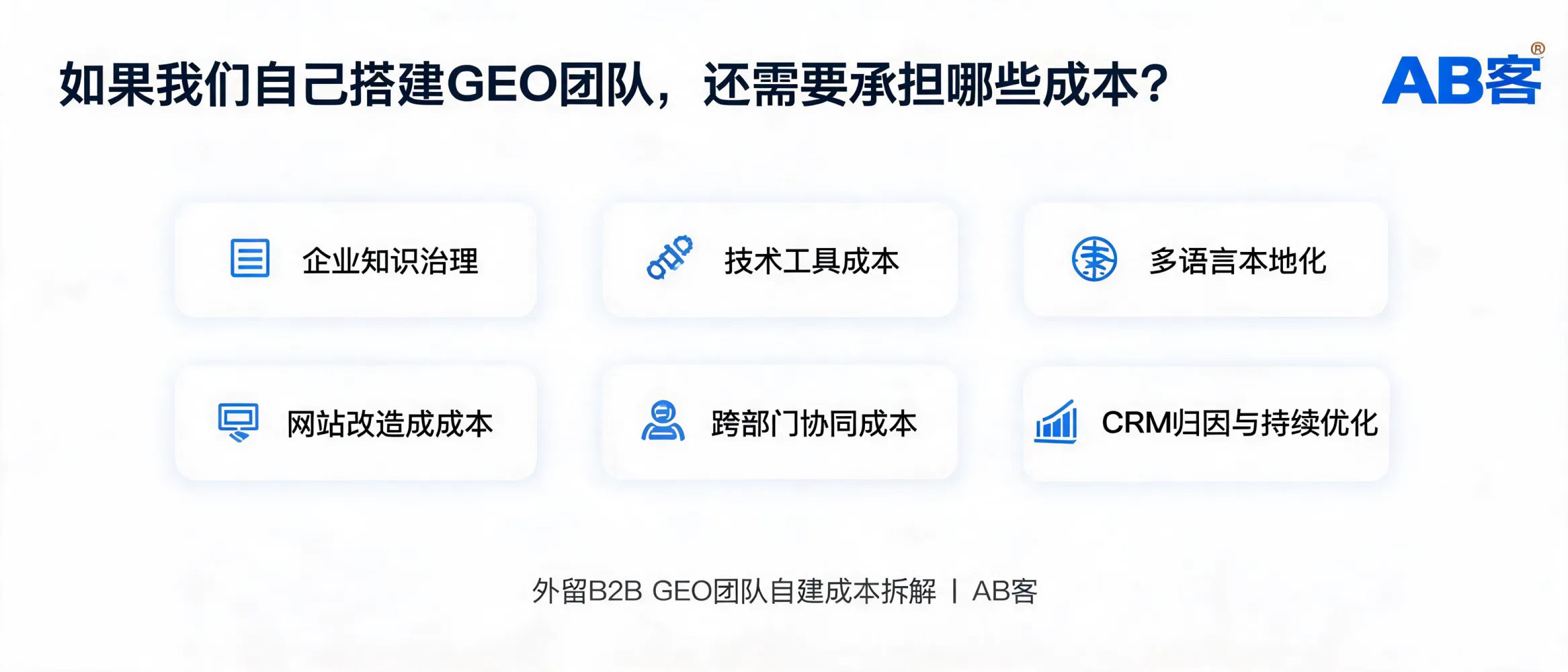
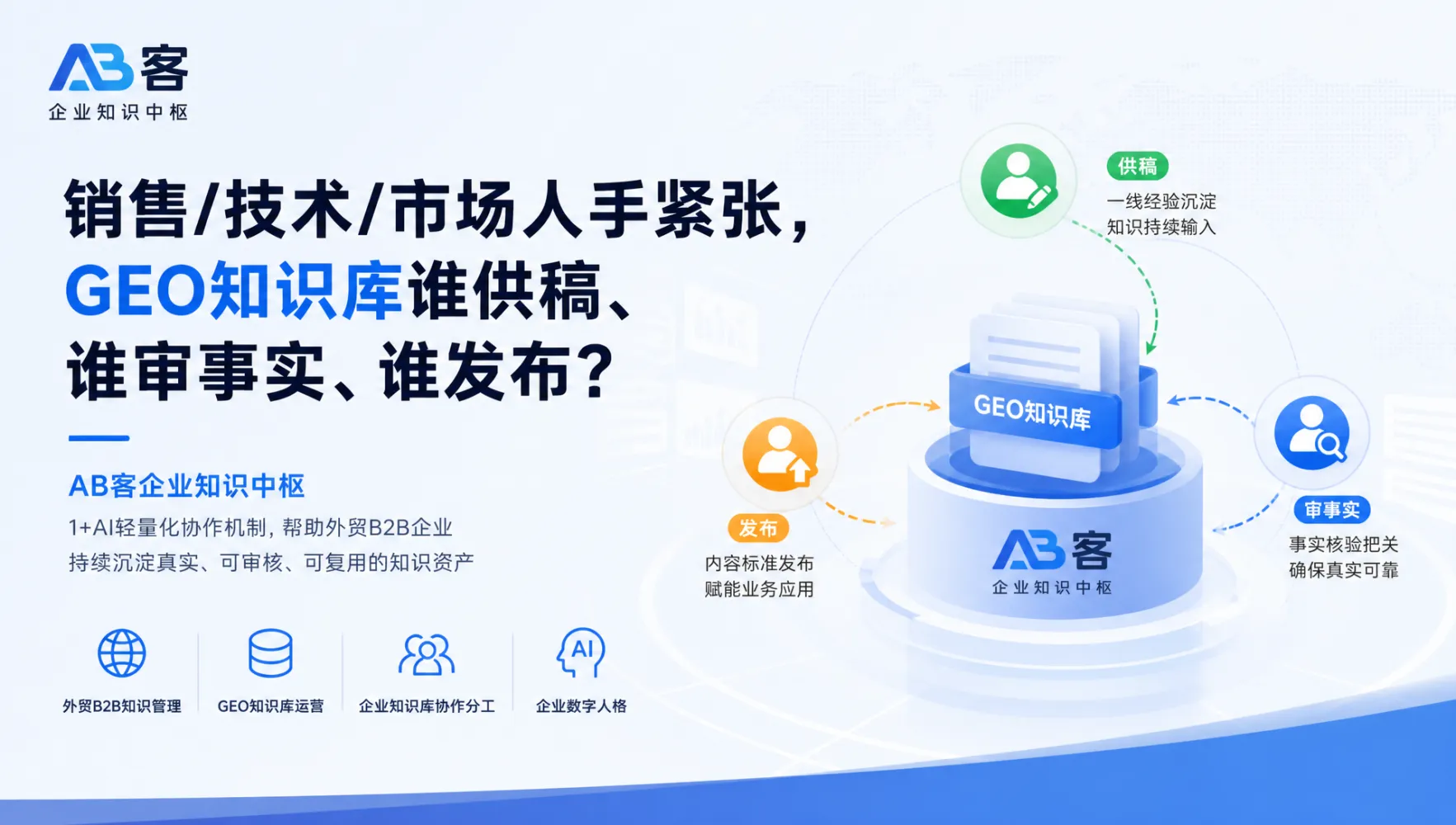


No GEO Inquiries Yet? Measure B2B Growth Beyond Immediate Leads
No inquiries after starting GEO? ABKE explains how export B2B companies should measure GEO results through digital assets, AI visibility, customer engagement, and long-term pipeline growth.
No GEO Inquiries Yet? You May Be Judging the Wrong Metric
If your export B2B company started GEO recently and you still have no inquiries, that does not automatically mean the project is failing. In most cases, the issue is not the lack of value — it is the wrong expectation. GEO is not a quick traffic purchase. It is a long-term growth infrastructure that builds enterprise knowledge, AI visibility, trust signals, and conversion assets over time.
1. Why “no inquiries in one month” is not a fair GEO benchmark
Many exporters ask the same question: “We’ve been doing GEO for almost a month. Why are inquiries not showing up yet?” This is a very common concern, but it often reveals a misunderstanding of what GEO is designed to do.
When you run Google Ads, you pay for clicks and can see fast feedback. When you attend an exhibition, you buy short-term exposure. When you build GEO, however, you are building a repeatable digital growth system that can continue to work after the initial setup.
In other words, GEO is closer to building a factory, a brand, or a knowledge system than buying immediate clicks. The first month should be used to lay the foundation, not to demand final commercial results.
2. GEO is not traffic buying — it is asset building
To evaluate GEO correctly, you need to understand what you are actually investing in. With ABKE, GEO is positioned as an export B2B growth infrastructure that combines enterprise knowledge, AI-readable positioning, multilingual content, SEO/GEO websites, distribution channels, CRM, and attribution.
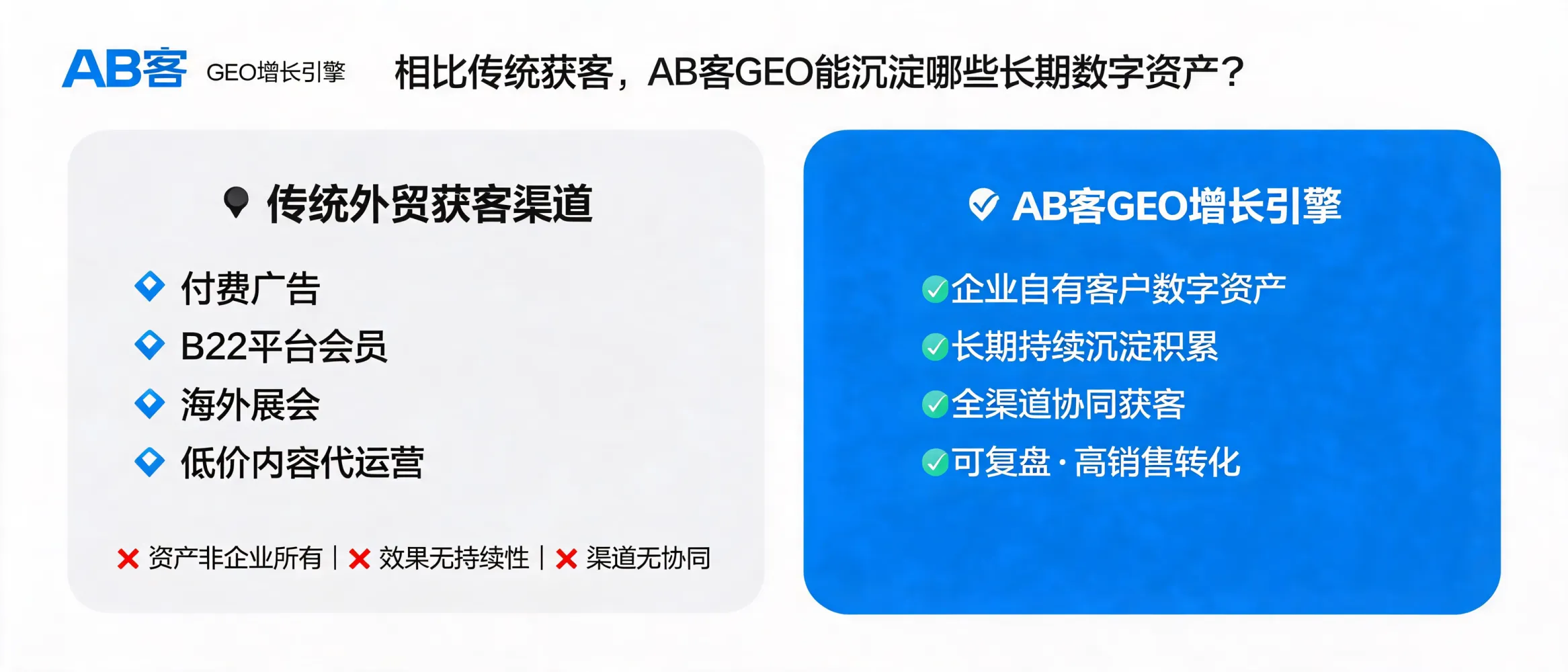
| What you buy | What you really get | Main characteristic |
|---|---|---|
| Ads | Clicks and short-term traffic | Pay-to-play, stop-and-go |
| Exhibitions | Temporary exposure and face-to-face access | Time-limited reach |
| Platforms | Marketplace access under platform rules | Dependent on external algorithms |
| GEO | A compounding growth asset system | Accumulating value, reusable content, long-term visibility |
A well-built GEO system creates enterprise knowledge assets, a machine-readable digital identity, searchable and AI-citable content, and a measurable path from attention to inquiry. That is why judging it only by immediate leads is too narrow.
3. Five layers of GEO measurement: you may only be looking at the last one
Most companies measure GEO by one thing only: “How many inquiries came in?” But inquiries are the final output of a layered system. If the earlier layers are weak, the last layer cannot perform well.
| Measurement Layer | What to evaluate | Typical signals |
|---|---|---|
| 1. Digital Assets | Whether a durable enterprise knowledge base is being built | Knowledge entries, product pages, evidence assets, content updates |
| 2. Visibility | Whether search engines and AI systems can discover the business | Indexation, impressions, crawling, AI mentions, AI citations |
| 3. Understanding | Whether AI and buyers can accurately understand the company | Entity consistency, FAQ coverage, page completeness, answer accuracy |
| 4. Engagement | Whether qualified visitors take meaningful actions | Visits, time on page, content depth, form and contact interactions |
| 5. Business Results | Whether GEO contributes to pipeline and revenue opportunities | Qualified inquiries, sales opportunities, conversion contribution |
Key principle: If your enterprise knowledge is incomplete, your visibility will be weak. If visibility is weak, understanding will be poor. If understanding is poor, engagement will be limited. If engagement is limited, inquiries will not scale.
4. A practical GEO timeline: results are released in stages
ABKE recommends viewing GEO as a phased growth process. The timeline below is a more realistic way to judge progress for export B2B companies.
Clarify the starting point, define business goals, review the current website and content foundation, and identify opportunities in SEO and GEO.
Build the company knowledge model, core pages, and brand positioning so that AI and buyers can understand who you are, what you do, and why you are credible.
Expand multilingual content, broaden searchable themes, and strengthen visibility across Google and AI-powered answer environments.
Improve decision-stage content, evidence systems, and comparison pages so buyers are more likely to select you after evaluation.
Refine SOPs, strengthen attribution, and create a repeatable growth loop that supports ongoing inquiries and business development.
5. Why some GEO projects fail to show results
When GEO does not produce visible results, the cause is often not the method itself, but the execution conditions around it.
GEO needs accurate company facts, product parameters, case studies, process details, and approval feedback. If the enterprise does not provide enough real information, the system cannot build a credible knowledge base.
A large number of low-quality pages may look active, but they rarely rank well, get cited by AI, or convert buyers. GEO works best when every piece of content is based on fact, intent, and trust.
If you only track the last step, you miss the progress happening in assets, visibility, understanding, and engagement. That makes optimization almost impossible.
6. How ABKE measures GEO in a real project
ABKE does not promise “instant inquiry miracles.” Instead, the ABKE GEO Growth Engine focuses on transparent delivery, measurable stages, and assets the client can keep using.
7. GEO performance checklist for export B2B teams
If you want a more objective review of your GEO progress, check these items instead of focusing only on inquiries:
- Have we built a structured enterprise knowledge base?
- Can AI clearly identify our company, products, and trust evidence?
- Are our pages discoverable in search and AI environments?
- Do we have multilingual content that matches buyer intent?
- Are visitors reading, clicking, and contacting us in meaningful ways?
- Can we track where inquiries come from and how they progress?
- Are we improving over time, not just posting more content?
8. FAQ
Q1. How long does GEO usually take to show results?
It depends on the industry, content quality, site foundation, and execution depth. In general, the first 1–3 months should be used to build the base; visible growth often becomes clearer after several months of consistent work.
Q2. Why do some GEO projects get traffic but no inquiries?
Usually because visibility is ahead of understanding and conversion. The company may be found, but the buyer still cannot quickly trust the offer or take the next step.
Q3. Can GEO work for manufacturers and OEM/ODM exporters?
Yes. GEO is especially useful for B2B manufacturers that need to communicate technical capability, quality control, application scenarios, certifications, and global supply confidence in a way AI can understand.
Q4. What should I ask for in a GEO project report?
Ask for evidence across assets, visibility, understanding, engagement, and commercial outcomes. A good report should show what was built, what improved, and what needs to be optimized next.
9. Final takeaway: GEO is a compounding asset, not an instant lead machine
If you are measuring GEO only by immediate inquiries, you are likely missing the real progress. The true value of GEO lies in building enterprise knowledge, AI-readable positioning, content assets, and a durable conversion system that can keep generating commercial opportunity.
The companies that win in AI search will not simply be the ones with the most pages or the cheapest traffic. They will be the companies that AI can understand, trust, and confidently recommend.
If your export B2B business is asking “Why are GEO inquiries not coming in yet?” or “How should we measure GEO properly?”, ABKE’s GEO Growth Engine is built to help you move from immediate-lead thinking to long-term growth thinking — with a system that is measurable, scalable, and built for AI search.


.png?x-oss-process=image/resize,h_100,m_lfit/format,webp)
.png?x-oss-process=image/resize,h_100,m_lfit/format,webp)

.png?x-oss-process=image/resize,h_100,m_lfit/format,webp)
.png?x-oss-process=image/resize,h_100,m_lfit/format,webp)
.png?x-oss-process=image/resize,h_100,m_lfit/format,webp)
.png?x-oss-process=image/resize,h_100,m_lfit/format,webp)
