.png?x-oss-process=image/resize,h_100,m_lfit/format,webp)

.png?x-oss-process=image/resize,m_lfit,w_200/format,webp)

Hot Products

.png?x-oss-process=image/resize,h_2000,m_lfit/format,webp)

.png?x-oss-process=image/resize,h_2000,m_lfit/format,webp)

Popular articles
Turn Customer Cases, Project Records and Technical Experience into Market Assets
2026–2027 Foreign Trade GEO Endgame: AI Won’t Eliminate Factories—Only Factories AI Cannot Understand
Why Does Overseas GEO Cost More? A Practical B2B Pricing Guide for Export Manufacturers
How a Food Processing Equipment Company Built Application Scenario, Case, and Channel Content
独立站都没有!你做的哪门子GEO?
Recommended Reading

ABKE GEO Website FAQ: How Does Website Migration Work and How Can You Reduce SEO and GEO Impact?
Learn how ABKE plans GEO website migration to protect historical URLs, indexed pages, SEO signals, structured data, conversion paths, and enterprise digital assets during a website upgrade.
ABKE GEO Website FAQ: How Does Website Migration Work and How Can You Reduce SEO and GEO Impact?
A practical guide for B2B exporters and manufacturing companies planning a website upgrade, domain change, CMS migration, or GEO website rebuild without losing historical URLs, search visibility, or conversion assets.
Direct Answer: Website Migration Is More Than Moving Files
For an established B2B website, migration is not just copying files from one server to another. It is a controlled transfer of digital assets that already carry search value, brand signals, and conversion potential.
If the site already has indexed pages, inbound links, historical URLs, product pages, or FAQ content, migration must also protect URL structure, redirects, canonical tags, hreflang, Schema markup, sitemap files, analytics, forms, and CRM tracking. That is why ABKE treats website migration as part of a broader GEO website upgrade process: preserve what already works, then improve the site so it becomes easier for search engines and AI systems to understand, cite, and recommend.
What you need to protect
- Historical URLs and indexed pages
- Internal links and external backlinks
- Structured data and semantic page relationships
- Lead forms, downloads, chat, and email paths
- Analytics, events, and attribution logic
What ABKE focuses on
- Enterprise knowledge preservation
- SEO and GEO configuration continuity
- AI-readable content structure
- Conversion path stability
- Post-launch verification and monitoring
What Needs to Be Migrated?
A website migration touches multiple layers of the site stack. The table below summarizes the main asset categories and why each one matters.
ABKE Website Migration Workflow
ABKE handles migration as a step-by-step process so the new site can go live with controlled risk and clear verification points.
Step 1: Build an asset inventory
Before changing anything, identify every page, file, form, tracking code, and third-party service that supports the current website. This helps prevent accidental losses during migration.
Step 2: Crawl all URLs and check indexing
A complete URL crawl shows which pages exist, which pages are indexed, and which pages still receive traffic or backlinks. This is essential for URL mapping and redirect planning.
Step 3: Back up all critical data
Backup should cover content, images, database records, technical settings, forms, analytics tags, and any API-connected systems before the new site is deployed.
Three Website Migration and Upgrade Paths
Not every site should be migrated in the same way. ABKE uses the website condition, technical environment, and business goals to decide the most suitable path.
When Is a 301 Redirect Needed?
A 301 redirect is used when an old URL must permanently point to a new URL. The purpose is to guide users, search engines, and link equity from the old address to the new one.
If a high-value URL can stay unchanged, there is no need to change it just for the sake of migration. The best practice is to keep important URLs stable whenever possible, and use one-to-one redirects only where the page address must change.
Migration Verification Checklist
After the new site is built, verification should cover both technical SEO and GEO-related visibility signals. The checklist below is the minimum practical review set.
- Validate priority URLs and page status codes
- Check 404 pages and broken links
- Verify 301 redirect paths and redirect chains
- Confirm canonical tags and hreflang annotations
- Review sitemap and robots directives
- Validate Schema markup such as Organization, Product, and FAQ
- Test crawlable body content and internal linking
- Reconnect Search Console, GA4, and event tracking
- Test forms, consultation buttons, chat, and CRM flows
- Monitor indexing, organic traffic, and conversions after launch
Common Questions Buyers Ask
Will migration affect rankings?
It can affect crawling, indexing, traffic, and rankings if URLs, content, technical settings, or tracking are changed incorrectly. The risk is not migration itself, but poor migration planning. ABKE reduces avoidable risk through inventory, URL mapping, validation, and post-launch monitoring. At the same time, search engines and AI platforms make their own crawling, indexing, citation, and recommendation decisions.
Can WordPress be migrated?
Yes. ABKE can support WordPress deployment, migration, or content injection based on the agreed technical environment and access conditions.
Does GEO need to be rebuilt after migration?
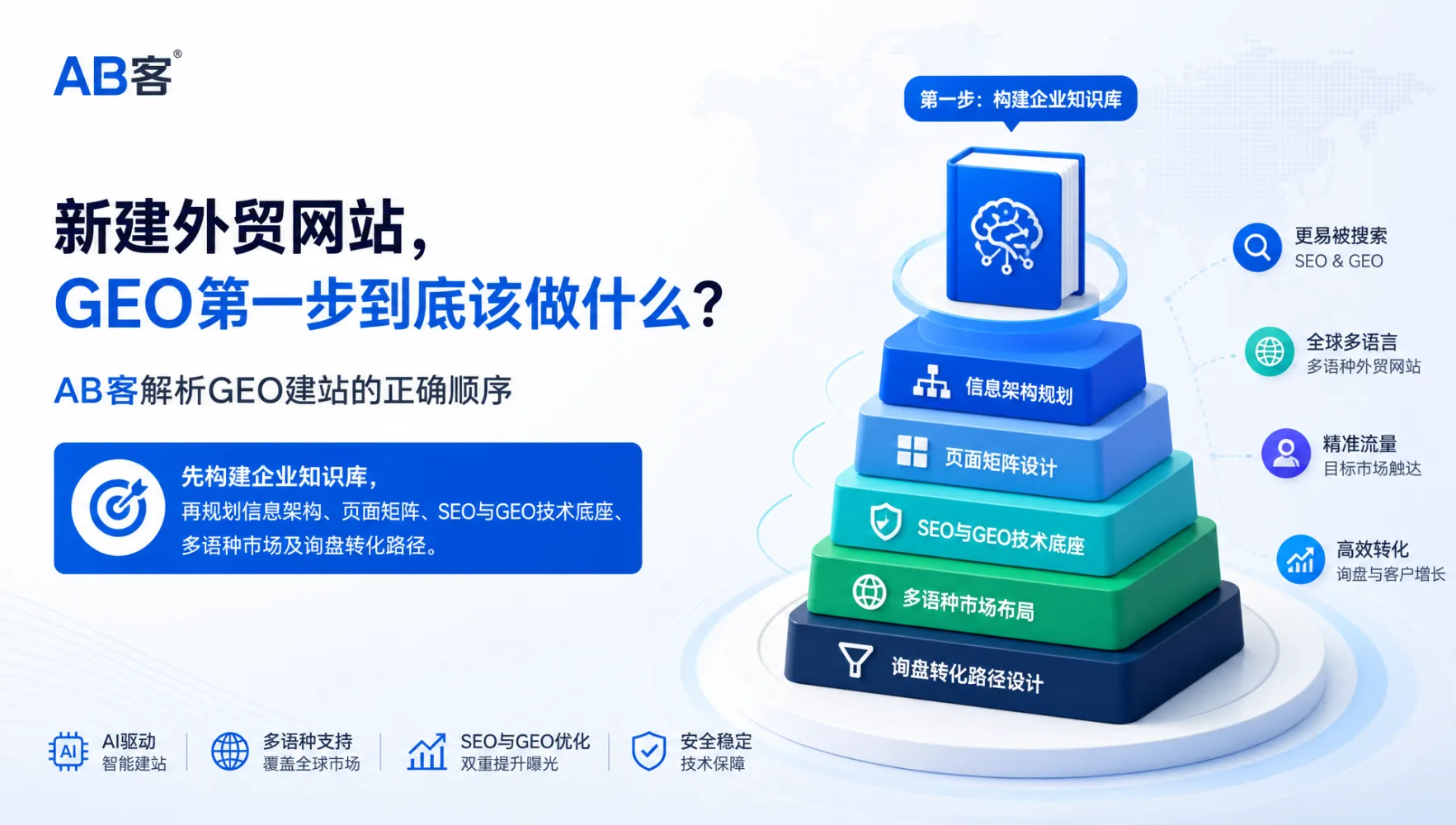
GEO should not be treated as a separate afterthought. It should be preserved and strengthened through clear entity information, structured enterprise knowledge, Schema markup, semantic page relationships, crawlable content, FAQs, evidence, and conversion paths in the new site architecture.
How ABKE Approaches GEO Website Migration
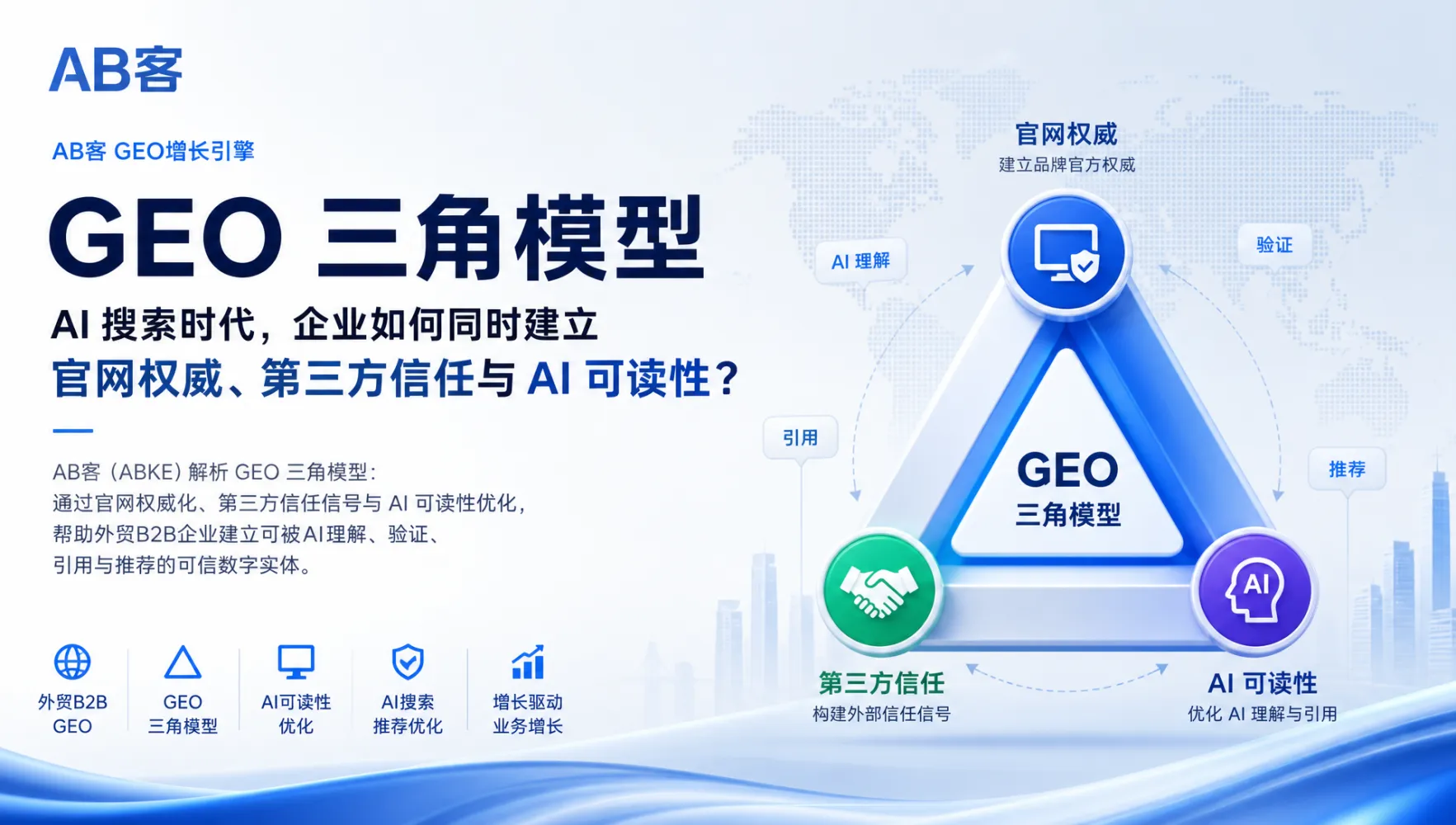
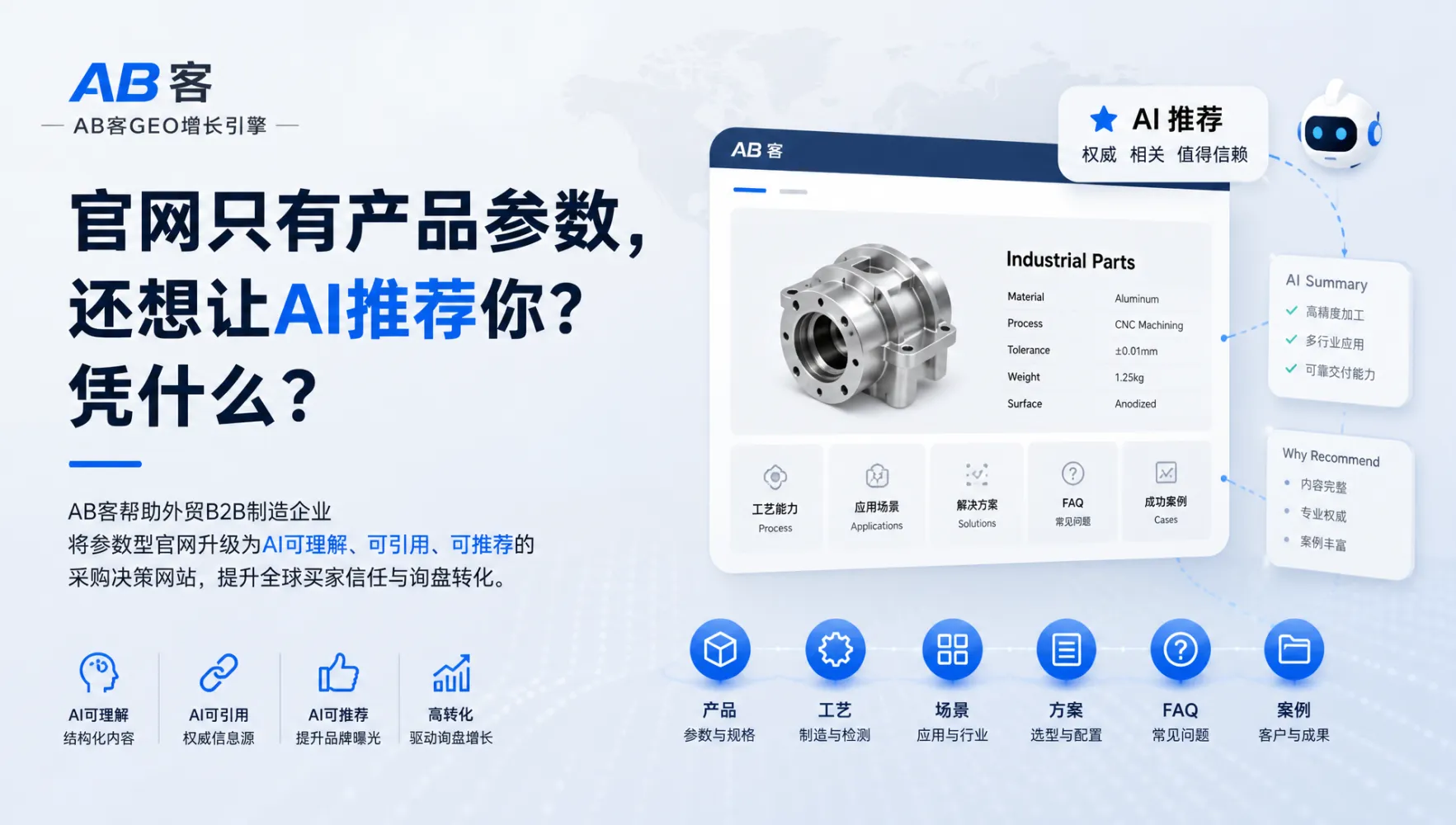
ABKE is the GEO growth infrastructure brand of Shanghai Muke Network Technology Co., Ltd., focused on helping B2B exporters build websites that AI can understand, search engines can index, and buyers can trust.
In a migration project, the goal is not only to redesign the site. The goal is to preserve enterprise knowledge, maintain search equity, and keep the website usable as a long-term growth asset.
ABKE Recommendation
Before upgrading an export B2B website, first identify which URLs, pages, content assets, tracking configurations, and lead paths are business-critical. Then choose the migration approach based on the current site condition, traffic value, technology environment, and target-market needs.
A GEO intelligent website should become a controllable enterprise digital asset center—not just a redesigned product catalog. If you are planning a website migration, domain change, or GEO website rebuild, ABKE can help you structure the transition in a way that protects search equity and supports long-term growth.


