.png?x-oss-process=image/resize,h_100,m_lfit/format,webp)

.png?x-oss-process=image/resize,m_lfit,w_200/format,webp)

Hot Products
.png?x-oss-process=image/resize,h_2000,m_lfit/format,webp)
.png?x-oss-process=image/resize,h_2000,m_lfit/format,webp)

Popular articles
How AI Sees Your Factory: Build AI-Readable Digital Assets for Global B2B Growth
How to Turn Google Ads Traffic into More Qualified B2B RFQ Opportunities
Three Months of GEO Without a Sales Surge? You May Be Measuring the Wrong Metrics
Google Has Rankings—Why Doesn’t ChatGPT Recommend You?
How Can You Optimize GEO If You Don’t Know What Buyers Are Asking?
Recommended Reading
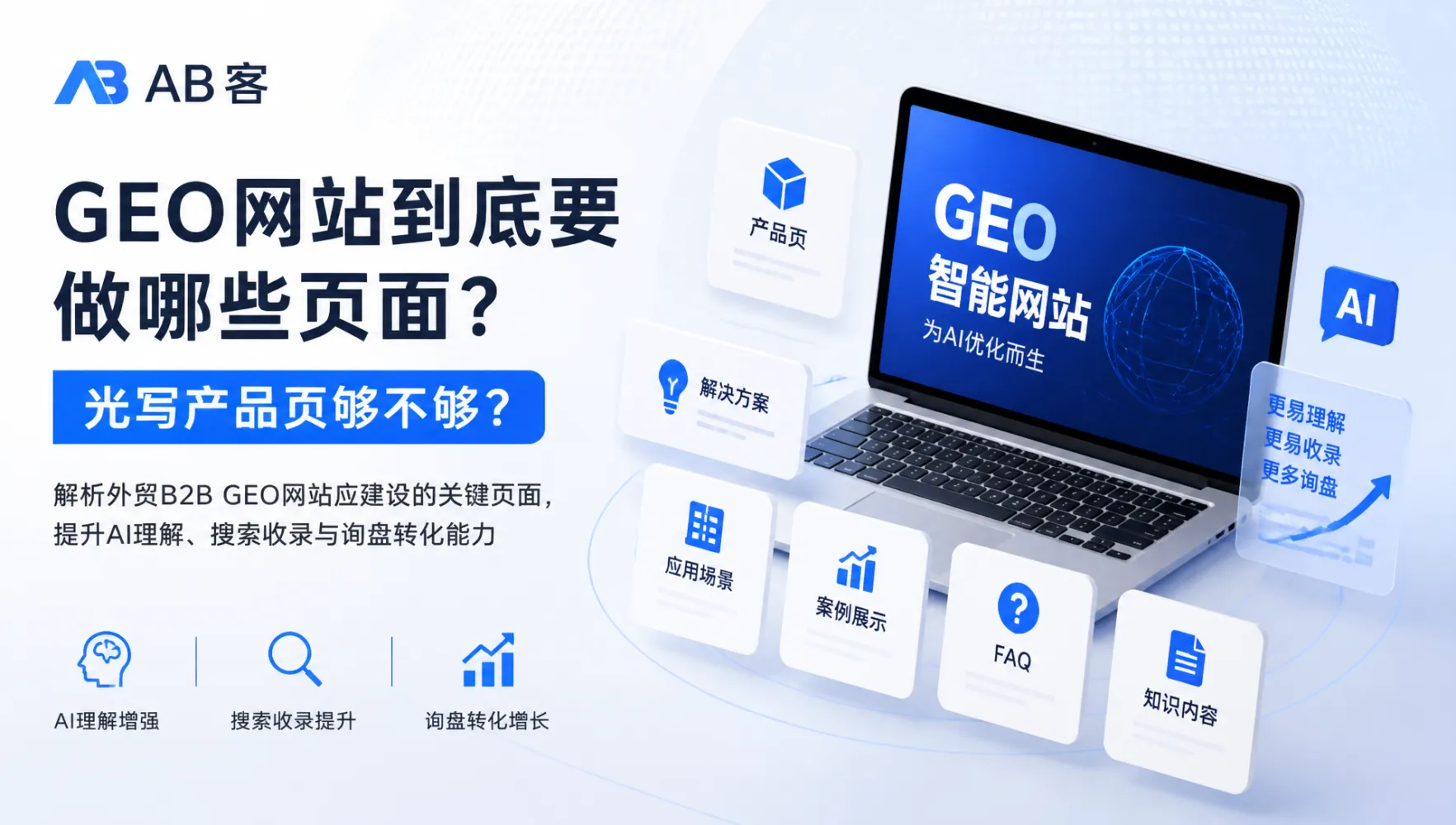


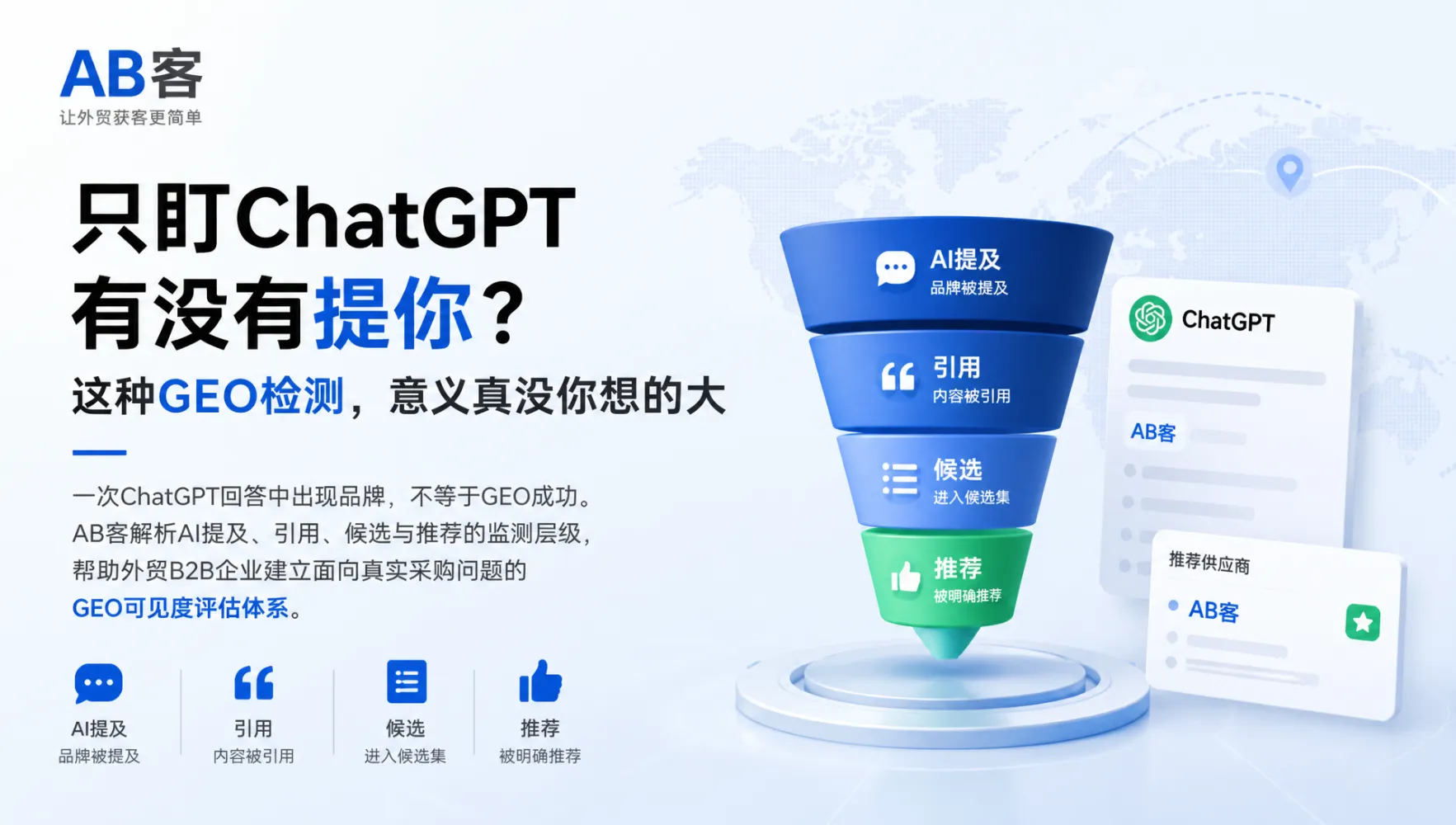
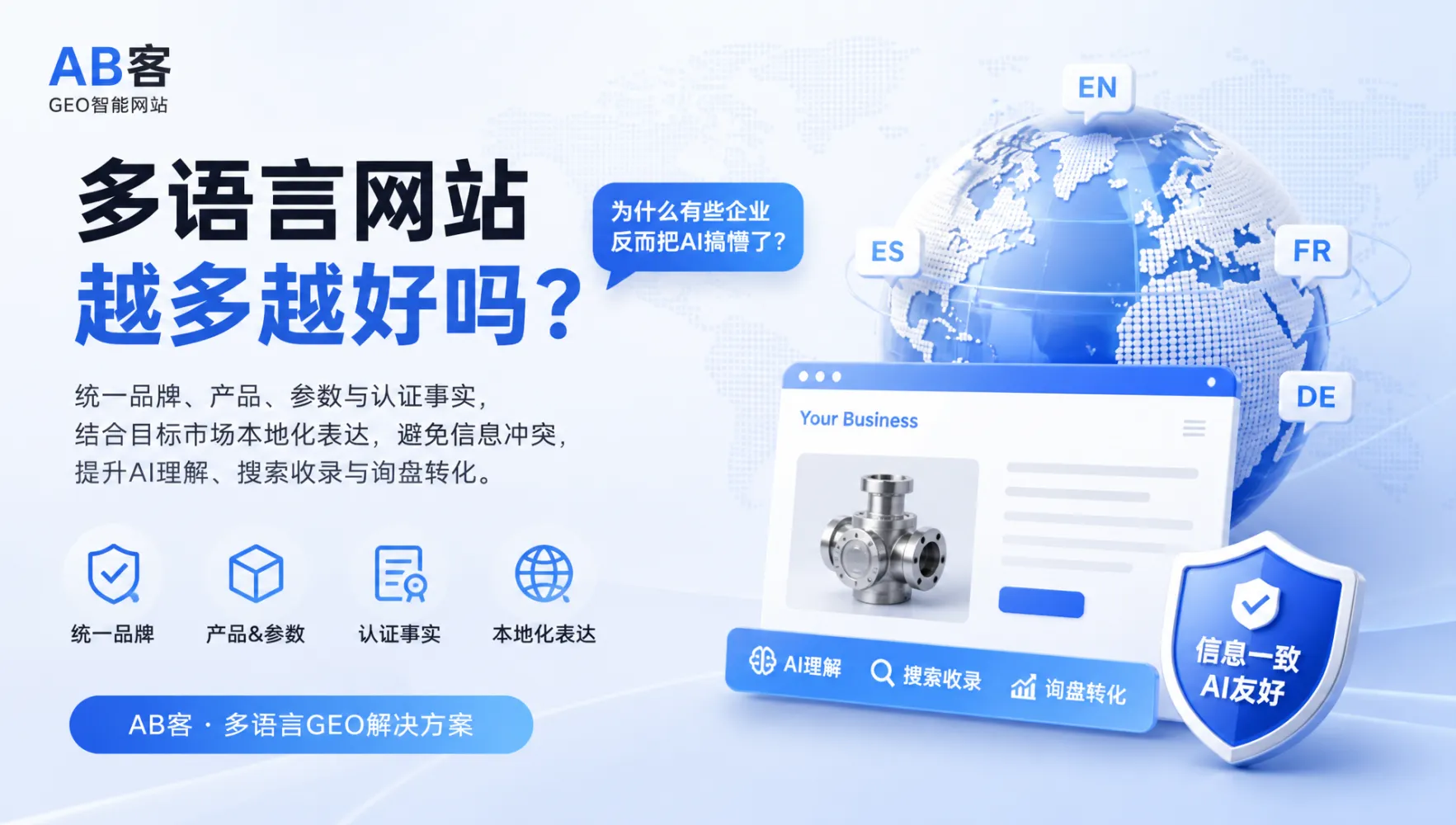
ABKE GEO Website FAQ: Who Owns Your Website, Content and Data After Service Ends?
Learn how ABKE distinguishes enterprise digital assets, website files, business data, platform capabilities and third-party services—so your B2B website ownership, export and migration terms are clear before signing.
ABKE GEO Website FAQ | Who Owns Your Website After the Contract Ends?
A practical guide for B2B exporters to clarify website ownership, content export, data handover, platform boundaries, and third-party service responsibilities before signing.
Direct Answer
After a service contract ends, website ownership should be evaluated by asset category, not by the generic phrase “the website.” In general, enterprise knowledge, approved content, published pages, and business data that have been created and paid for by the customer should be handled according to the signed contract for continued use, export, or handover. By contrast, ABKE’s software platform, underlying system architecture, proprietary capabilities, and licensed third-party components are not automatically transferred to the customer.
Why B2B Companies Must Clarify Ownership Before Signing
A website is not a single file. It is a combination of assets, permissions, content, data, platform functions, and third-party dependencies. If these are not defined in advance, later discussions about “source code,” “page export,” or “data transfer” can easily become unclear.
Website ownership is actually multiple ownership questions:
- Who owns the domain and login access?
- Who owns the written content and published pages?
- Who owns the customer leads and CRM data?
- Who owns the CMS, GEO engine, and automation tools?
- Who owns the third-party services used to run the site?
Why “Do you give the source code?” is not enough:
For a GEO intelligent website, the practical value is not only code. It also includes content architecture, knowledge structure, internal linking, conversion paths, multilingual pages, and measurable data. These items need separate confirmation.
What Assets Are Typically Inside a B2B GEO Website?
1) Enterprise Digital Assets
These are business-facing assets that express your company’s value and credibility.
- Product information
- Solution descriptions
- Case studies
- FAQ content
- Approved website copy
- Business data and leads
2) Website Assets
These are the technical and visual assets that make the website accessible online.
- HTML pages
- Images and static files
- Page layout and structure
- Published articles and landing pages
- Public-facing materials
3) Platform Capabilities
These are the operating functions behind the website experience.
- CMS backend
- GEO monitoring
- CRM workflows
- AI agents and automation
- Content operations tools
4) Third-Party Assets
These are services or accounts owned or governed by third parties.
- Domain registration
- Cloud hosting
- CDN services
- Plugins and APIs
- SaaS subscriptions
Ownership Framework at a Glance
Simple Asset Relationship Map
What Should Be Confirmed Before Signing?
For B2B exporters, these questions are usually more important than a single “source code included or not” statement.
- Who is the registered owner of the domain?
- How can website files and content be exported?
- Can images, media, and public materials be transferred?
- Can CRM leads and analytics data be exported, and in what format?
- What happens when the service is not renewed?
- What are the limits of third-party components and licenses?
- What migration support, redirects, and technical assistance are included?
ABKE’s Principle for GEO Intelligent Websites
ABKE treats enterprise knowledge, official websites, content, and business data as long-term digital assets, not as temporary deliverables from a one-time project. At the same time, specific export, handover, deployment, and migration arrangements should always be governed by the signed contract and the actual technical setup.
This is especially important for foreign trade B2B companies that rely on SEO and GEO. A website is not just a display page—it is part of your growth infrastructure. When ownership is clear, content can accumulate, data can be reused, and the business can keep building recognition in AI search environments.
How ABKE Helps Reduce Ownership Risk
1) Clear digital asset structure
ABKE organizes enterprise knowledge, content, and data into a structured asset framework so the website is easier to understand, manage, and hand over.
2) SEO + GEO website architecture
The website is designed to be readable by both search engines and AI systems, while supporting scalable content expansion and conversion paths.
3) Data-driven growth operations
ABKE’s GEO framework combines content, website, CRM, and monitoring so companies can see what is working instead of relying on guesswork.
FAQ
Q1: Will the website be shut down immediately after the contract ends?
That depends on the contract, hosting arrangement, and service scope. The key point is to define renewal, handover, and migration terms before signing.
Q2: Can published articles be taken away with the website?
Published content should be checked against ownership, licensing, and contract terms. In practice, the export or continued use of content must be clearly agreed in advance.
Q3: Can images and public materials be migrated?
Usually this depends on whether the materials were created for the customer, who owns the rights, and what the contract allows.
Q4: Can customer leads and CRM data be exported?
Lead and CRM export should be defined by the service agreement, data handling rules, and the technical structure of the system.
Q5: Does ABKE’s backend source code automatically belong to the customer?
No. ABKE’s platform, system layer, and proprietary capabilities are not automatically customer-owned. Asset scope should be confirmed by contract and technical conditions.
Need a Clear GEO Website Ownership Structure?
If your B2B company is planning a GEO intelligent website, ABKE can help structure your enterprise knowledge, content assets, and growth system so ownership boundaries and operational logic are easier to manage from the start.


