.png?x-oss-process=image/resize,h_100,m_lfit/format,webp)

.png?x-oss-process=image/resize,m_lfit,w_200/format,webp)

Hot Products
.png?x-oss-process=image/resize,h_2000,m_lfit/format,webp)
.png?x-oss-process=image/resize,h_2000,m_lfit/format,webp)

Popular articles
Sales Teams Cannot Find Information Fast Enough? Build a Knowledge Base for Consistent Pre-Sales and Follow-Up
Building a Tiered Trust Evidence Repository for a Chemical Materials Exporter
How Can B2B Manufacturers Make Complex Product Models and Parameters Easy for Customers and AI to Understand?
How can foreign trade companies solve the problems of competing for traffic and brand fragmentation when operating multiple SEO sites, product sites, and country sites simultaneously?
新产品上市:怎么用内容体系解决海外买家的选型认知问题?
Recommended Reading
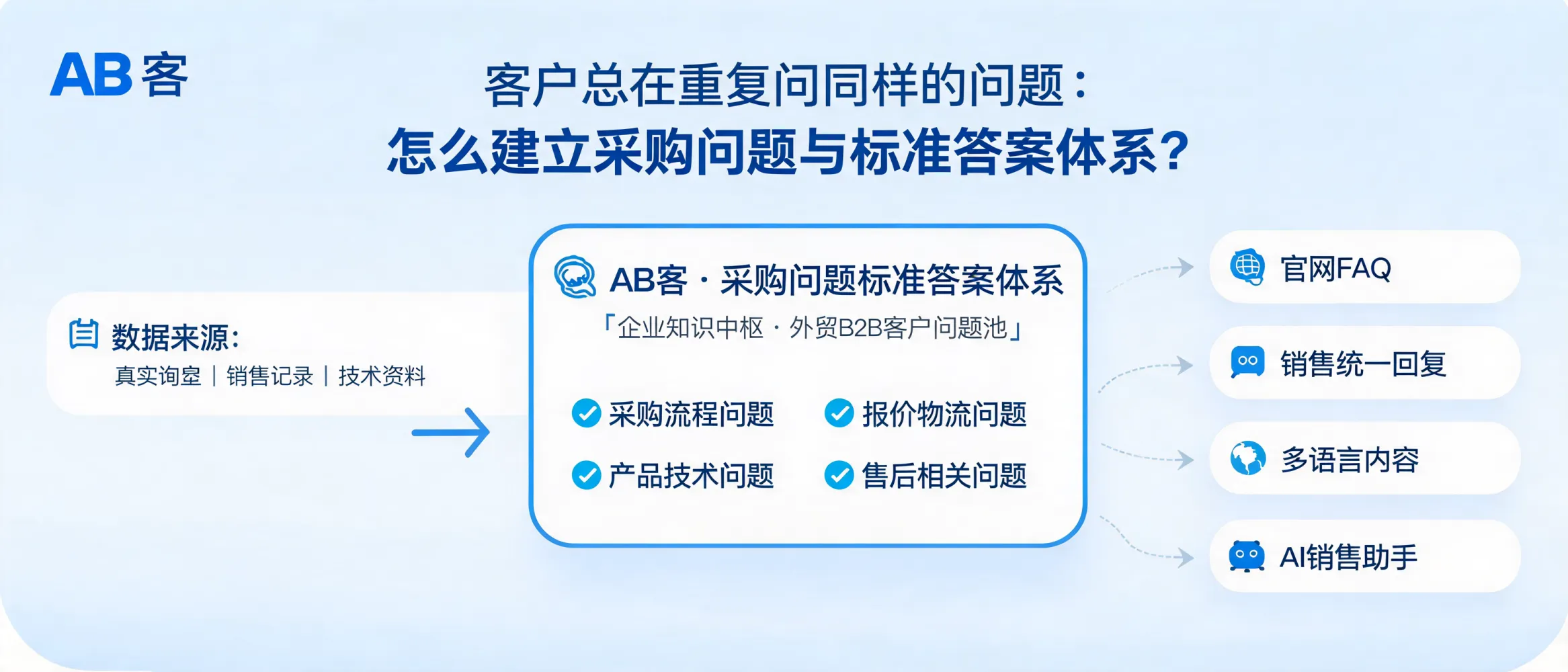


How to Turn Google Ads Traffic into More Qualified B2B RFQ Opportunities
ABKE explains how export manufacturers can use an AI content growth system to support Google Ads landing-page traffic with selection guides, application content, FAQs, technical evidence, and clearer RFQ paths.
Google Ads can bring relevant overseas visitors to an export manufacturer’s website, but a click alone does not mean a buyer is ready to submit an RFQ. In technical B2B purchasing, buyers often need to verify product fit, compare options, understand specifications, assess supplier capability, and clarify next-step requirements before they make contact.
For businesses receiving traffic but seeing inconsistent inquiry quality or limited RFQ conversion, the issue may be less about advertising volume and more about whether the landing-page experience supports the buyer’s research process. ABKE helps export-oriented B2B manufacturers connect paid keywords with structured, evidence-based content that gives buyers a clearer path from initial search to a qualified inquiry.
Why Google Ads Traffic Does Not Automatically Become an RFQ
A high-intent product keyword can represent many different procurement tasks. One visitor may be looking for a price indication, while another is checking technical compatibility, comparing configurations, validating a supplier, or researching maintenance and delivery considerations. Sending all of these visitors to one brief product page creates an information gap.
When a landing page contains only general product claims, images, a basic specification list, and a contact button, buyers may not have enough information to continue. They often return to search results to compare suppliers instead. Effective Google Ads traffic conversion therefore requires more than form design or call-to-action placement: it requires content that answers the questions buyers need to resolve before they can submit a meaningful RFQ.
Build a Procurement-Focused Content Path Around Paid Keywords
An AI content growth system organizes verified enterprise knowledge around buyer intent. Rather than treating the advertising landing page as an isolated page, it creates a connected research path: from the keyword and core landing page to selection guidance, application information, technical explanations, supplier evidence, and an appropriate RFQ route.
1. Match the Core Landing Page to Search Intent
Clarify what the product or solution addresses, where it may fit, which conditions matter, and what information buyers can review or submit next. Complex offerings can link to product families, configuration options, key parameters, and application pages.
2. Help Buyers Select and Compare
Selection guides, comparison pages, and requirement checklists help buyers understand differences between models, materials, processes, or technical approaches before requesting a quotation.
3. Support Technical and Supplier Verification
Application scenarios, technical content, quality-control information, FAQs, and verified capability materials provide context that a short product page often cannot contain.
4. Create a Clear RFQ Path
Forms and contact prompts can request relevant details such as application, model, technical requirements, quantity, or target market, helping sales teams understand the inquiry context.
Content Types That Support B2B Buyer Decisions
The right content mix depends on the product, market, and actual questions received by the business. For industrial equipment, components, materials, electronics, and other technical products, the following content types can work together as a procurement landing-page content framework.
| Content Module | Buyer Question It Can Address |
|---|---|
| Core product or solution page | What is this product, what need does it address, and what are the main conditions for use? |
| Selection guide | Which model, material, configuration, or specification may be relevant to my requirement? |
| Application scenario page | Is the product suitable for my industry, process, operating condition, or material? |
| Technical explanation and FAQ | What parameters, limitations, maintenance needs, certification issues, or delivery factors should I consider? |
| Comparison and verification content | How do options differ, and what evidence supports the supplier’s stated capabilities? |
Content Must Be Grounded in Business Facts
Procurement-oriented content should not replace technical review with generic AI writing. Product parameters, applicable conditions, process descriptions, quality information, service boundaries, project materials, and capability claims need to come from verified enterprise sources. Where performance or suitability cannot be confirmed, the content should state the conditions or limitations clearly rather than imply an unsupported outcome.
How ABKE Supports the Content Conversion Process
ABKE’s AI content growth system acts as a content-production and semantic-coverage layer between a manufacturer’s internal knowledge and its overseas market communications. It combines confirmed company information, paid keyword themes, buyer questions, and sales feedback to build content that can be used across websites, advertising landing pages, sales materials, and multilingual market pages.
- Identify priority traffic opportunities: review high-investment or high-visit keyword groups and distinguish product search, application confirmation, comparison, supplier evaluation, and other intent types.
- Structure buyer questions and enterprise knowledge: collect recurring sales questions, product information, technical documents, process details, verified cases, and requirement-confirmation items.
- Plan connected page roles: define how landing pages, selection guides, application pages, FAQs, technical materials, and contact routes should support one another.
- Produce and review content: create content from factual sources, with business, product, or technical review before publication where needed.
- Refine through feedback: use page behavior, conversion actions, lead quality, and sales feedback to identify content gaps and update priorities over time.
Who This Approach Is Designed For
This approach is relevant for export manufacturers and B2B suppliers that already invest in Google Ads or plan to develop paid search as part of a broader global marketing system. It is especially useful where products require technical evaluation, configuration choices, application confirmation, or supplier due diligence.
- Advertising generates visits, but core product pages receive limited engagement or few qualified inquiries.
- Sales teams repeatedly answer basic questions about fit, specifications, cost factors, delivery, maintenance, or certifications.
- The business has product, technical, process, or project information that has not yet become searchable and reusable content assets.
- Different target countries, industries, or buyer roles require more relevant multilingual and localized information.
- Management is willing to provide real business materials and involve qualified personnel in factual review.
Turn Paid Visits into Better-Supported Sales Conversations
A stronger RFQ path does not promise a fixed number of inquiries, rankings, or sales outcomes. Conversion is also influenced by product competitiveness, pricing, delivery terms, market conditions, advertising strategy, website performance, and sales execution. However, a structured content system can improve the information available to buyers who have already reached the website through paid search.
By connecting Google Ads traffic with product selection guidance, application content, technical evidence, FAQs, comparison materials, and relevant inquiry routes, ABKE helps B2B manufacturers build a more complete procurement research experience—one that can support both immediate advertising conversion work and the long-term accumulation of AI-readable, reusable digital knowledge assets.


