.png?x-oss-process=image/resize,h_100,m_lfit/format,webp)

.png?x-oss-process=image/resize,m_lfit,w_200/format,webp)

Hot Products


.png?x-oss-process=image/resize,h_2000,m_lfit/format,webp)
.png?x-oss-process=image/resize,h_2000,m_lfit/format,webp)

Popular articles
How Can B2B Manufacturers Build AI-Era Brand Authority?
Why Your Competitors Get AI Recommendations While Your Industrial Company Gets Ignored
Why LinkedIn Cannot Reach High-End Buyers — and How GEO Structured Assets Help You Win Overseas Decision-Makers
When Sales Reps Leave With Customer Relationships: Can GEO Build Shared Enterprise Acquisition Assets?
How to Get Overseas Buyers Consistently with a Google Independent Website?
Recommended Reading
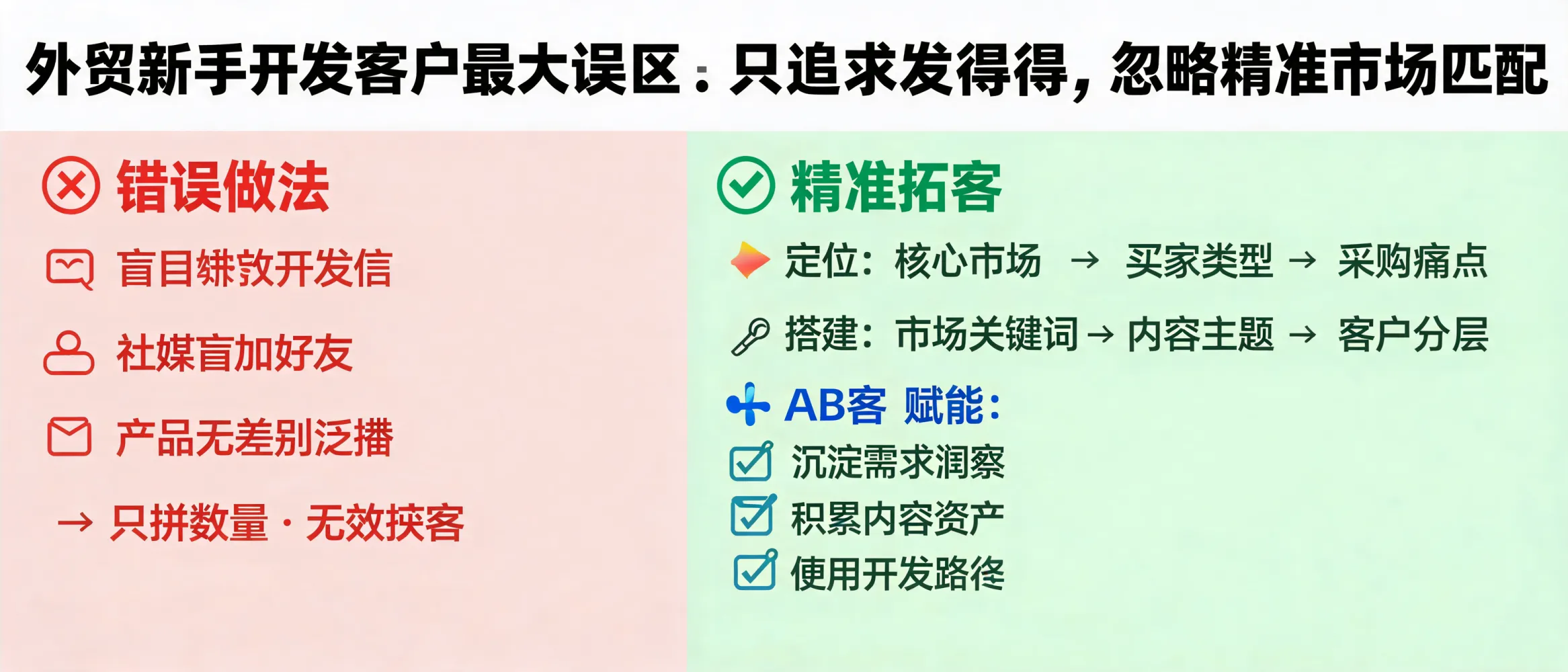


Home Goods GEO for Supermarket Chain Buyers: Build AI-Ready Retail Supply Visibility with ABKE
Learn how ABKE helps home goods factories build vertical GEO assets for supermarket chain buyers, factory audits, OEM supply, and AI-ready procurement visibility.
Home Goods GEO for Supermarket Chain Buyers: Build AI-Ready Retail Supply Visibility with ABKE
When overseas retail chains and supermarket buyers search with AI, they are not looking for a simple product catalog. They are looking for trusted suppliers, verified factory capability, bulk delivery reliability, OEM flexibility, and proof that your home goods business can support chain-store procurement at scale.
Why home goods factories struggle to reach retail chain procurement
Many home goods websites are built for general exposure, but not for procurement decisions. They attract scattered individual buyers, while supermarket chains, retail brands, and regional distributors often leave because the site does not clearly answer the questions that matter to them.
Chain buyers typically evaluate compliance, factory audit records, production capacity, packaging customization, inventory planning, and delivery structure before they ever contact a supplier. If your site only shows isolated product listings, AI systems may classify your business as a consumer retailer rather than a B2B supply partner.
The core GEO issue: AI must understand your factory as a chain-supply supplier
In the AI search era, supermarket procurement starts much earlier than before. Buyers ask generative engines questions like:
- Which home goods factories can support retail chain OEM sourcing?
- Who has factory audit records and compliance proof?
- Which suppliers can handle bulk delivery and packaging customization?
- Which manufacturer is more reliable for supermarket private label programs?
If your content does not provide structured answers, the AI will recommend competitors that do. This is why vertical home goods GEO is no longer optional for exporters that want to win retail chain buyers.
Buyer intent map: retail consumer vs. supermarket chain buyer
| Buyer Type | What They Want | What Your Site Must Show |
|---|---|---|
| Retail Consumer | Style, price, small quantity, fast purchase | Single-item catalog, retail-friendly visuals, quick order details |
| Chain Buyer | Compliance, scale, packaging, logistics, brand consistency | Audit proof, OEM workflow, bulk supply capability, delivery terms, trust evidence |
What vertical home goods GEO should include
A strong GEO structure does not rely on one page. It builds a connected content system that helps AI understand your factory, your product scope, and your procurement readiness.
- Separate retail and B2B procurement pages so AI can distinguish consumer products from chain supply capability.
- Publish factory audit, compliance, and production capacity evidence in structured formats that AI can parse.
- Build chain-specific FAQ content around OEM packaging, MOQ, delivery, private label, and warehouse coordination.
- Create solution pages for supermarket sourcing, retail chain launch support, and multi-store supply programs.
- Keep entity signals consistent across your website, directories, and distributed content to strengthen trust.
5 practical GEO steps to win supermarket chain sourcing opportunities
1. Build a chain-supply knowledge base
Collect factory audit records, certifications, production lines, quality control processes, packaging options, and bulk supply cases into a structured knowledge asset that AI can understand and reuse.
2. Create a supermarket procurement landing page
This page should focus on retail chain needs: audit evidence, OEM workflow, private label capability, bulk order handling, and delivery support, instead of only listing home goods products.
3. Rebuild keyword coverage around procurement intent
Replace consumer-only phrases with chain-relevant terms such as supermarket home supplier, retail chain OEM, factory audit visibility, bulk home goods sourcing, and private label home products.
4. Publish FAQ and expert content that answers buyer objections
Create content for high-intent questions such as minimum order quantity, packaging customization, audit requirements, sample policy, shipment coordination, and chain-store onboarding.
5. Distribute consistent supplier signals across channels
Use LinkedIn, B2B directories, industry platforms, and multilingual content to reinforce the same supplier identity. Multi-source consistency improves both search trust and AI recommendation confidence.
How ABKE helps home goods exporters build this system
ABKE, the brand of Shanghai Muke Network Technology Co., Ltd., focuses on GEO growth infrastructure for B2B exporters. For home goods factories, the goal is not simply more traffic. The goal is to make AI understand that your business is a credible retail-chain supplier.
ABKE supports this with a structured approach:
- enterprise knowledge structuring
- AI-readable supplier positioning
- GEO content system planning
- SEO and GEO-ready website architecture
- multi-channel content distribution
- visibility tracking and conversion optimization
This type of system is especially useful when your target buyers are procurement teams, retail brands, and supermarket chain decision-makers who rely on AI-assisted search before making contact.
AI-ready home goods GEO checklist
- Separate retail and B2B procurement pages
- Show factory audit, compliance, and production evidence
- Map chain buyer questions into FAQ content
- Use consistent entity signals across all channels
- Track AI visibility for supermarket sourcing queries
FAQ
Q1: Why do chain buyers ignore many home goods factory websites?
Because the sites often focus on retail-style product displays instead of procurement evidence. Chain buyers want compliance, capacity, OEM support, and delivery reliability.
Q2: What content helps AI recommend a home goods supplier to supermarket buyers?
Structured content about factory audits, certifications, bulk production, packaging customization, private label support, and chain-store case experience.
Q3: Should retail and B2B content be separated?
Yes. Separating them helps AI identify your business correctly and prevents consumer traffic from diluting chain procurement relevance.
Q4: Is GEO only about keywords?
No. GEO is about building AI-readable knowledge, consistent trust signals, and answerable content that can be cited and recommended by generative engines.
Q5: Can ABKE support multilingual expansion for chain buyers?
Yes. ABKE helps structure multilingual content systems so your supplier profile remains consistent across markets, channels, and AI retrieval layers.
Turn fragmented product pages into a retail-chain GEO system
If your home goods factory wants to be visible to supermarket chain buyers, the key is not more random traffic. The key is a structured GEO foundation that makes your factory understandable, trustworthy, and recommendable to AI. ABKE helps build that foundation with a practical, scalable growth system.


.png?x-oss-process=image/resize,h_100,m_lfit/format,webp)
.png?x-oss-process=image/resize,h_100,m_lfit/format,webp)

.png?x-oss-process=image/resize,h_100,m_lfit/format,webp)
.png?x-oss-process=image/resize,h_100,m_lfit/format,webp)
.png?x-oss-process=image/resize,h_100,m_lfit/format,webp)
.png?x-oss-process=image/resize,h_100,m_lfit/format,webp)
