.png?x-oss-process=image/resize,h_100,m_lfit/format,webp)

.png?x-oss-process=image/resize,m_lfit,w_200/format,webp)

Hot Products
Popular articles
Legacy Light Industry Factory Review: Why 3 Years of SEO Rankings Failed to Deliver OEM Growth—and How GEO Helped Rebuild Higher-Value Buyer Traffic
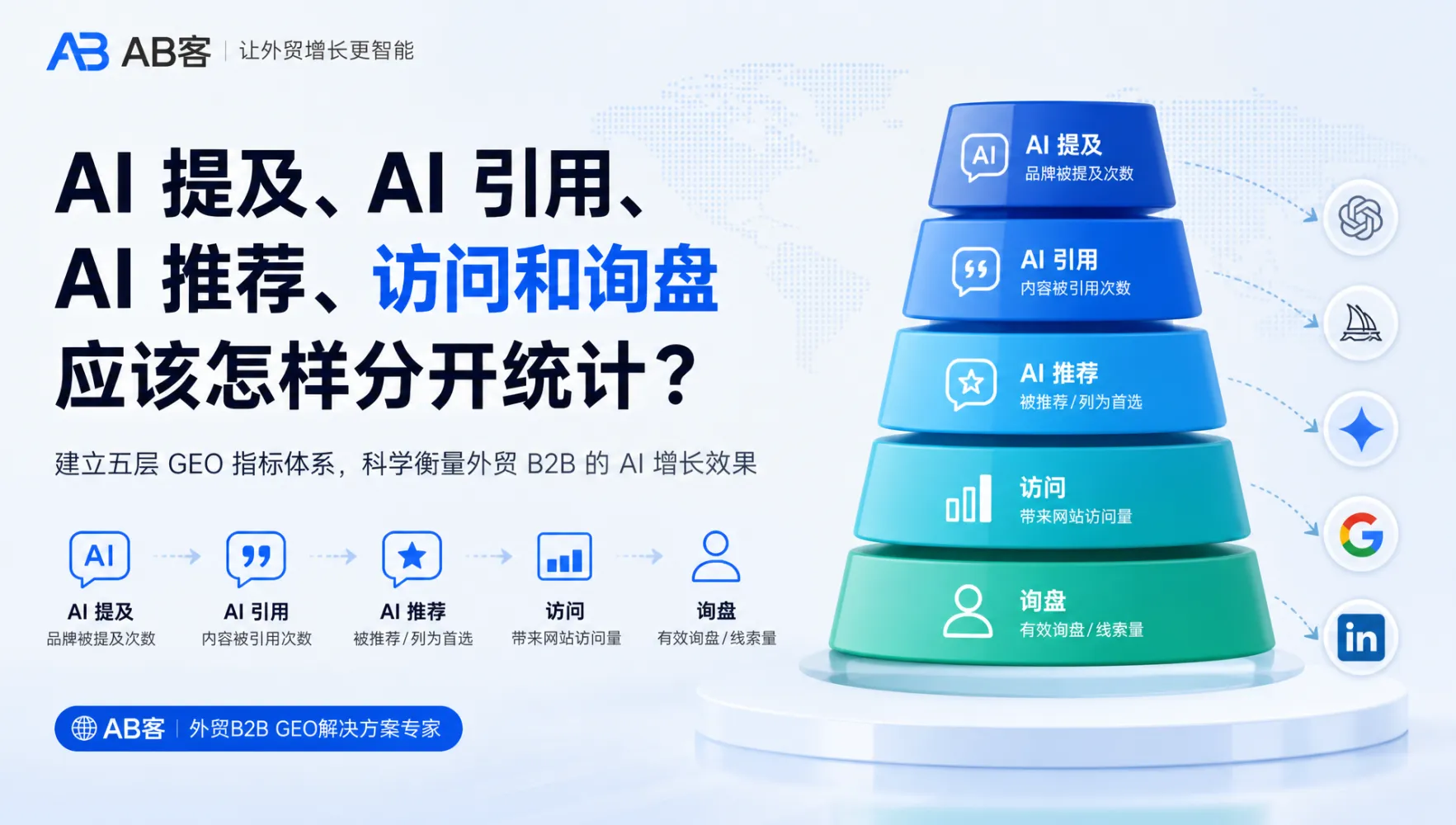
How Should AI Mentions, AI Citations, AI Recommendations, Website Visits, and Inquiries Be Measured Separately?
General Website Building vs. Export B2B GEO Websites: Can a GEO Site Generate Engineering and Retail Chain Inquiries?
Recommended Reading
For Foreign Trade B2B Companies, Is Building an In-House GEO Team Cheaper Than Choosing ABKE’s GEO Growth Engine?
Compare the 12–24 month total cost of building an in-house GEO team versus using ABKE’s GEO Growth Engine, including people, tools, website, content, coordination, ongoing operations, and reusable digital assets.
For foreign trade B2B companies, the question is not simply whether an internal GEO team or an external partner has a lower monthly price. The more useful question is: which model creates the most appropriate 12–24 month total cost of ownership for your business goals, operating capacity, and long-term digital assets?
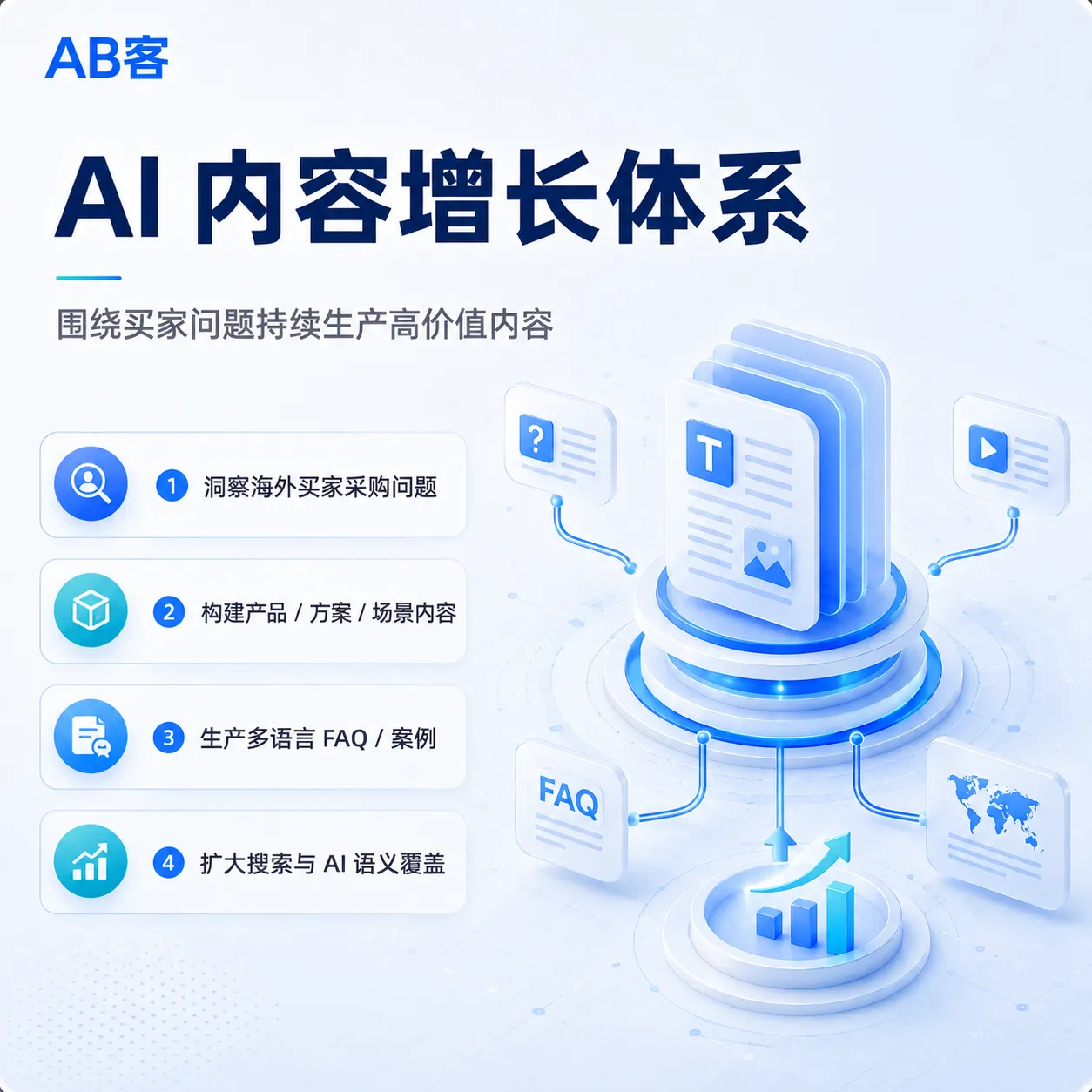
GEO involves more than content creation or AI visibility testing. A sustainable program connects enterprise knowledge, multilingual content, SEO and GEO website infrastructure, global communication, lead handling, sales coordination, measurement, and ongoing optimization. Each part requires time, expertise, tools, governance, and business participation.
Compare GEO investment as a system, not as a single line item
An in-house GEO team can be a strong option when a company already has experienced specialists, stable internal processes, sufficient content and technical resources, and the capacity to maintain cross-functional work over time. ABKE’s GEO Growth Engine can be appropriate when a company needs a structured implementation path and coordinated capabilities without building every function from the ground up.
Neither model is automatically cheaper in every situation. The right decision depends on your existing team, website foundation, target markets, product complexity, available enterprise materials, required launch speed, and ability to sustain GEO operations after the initial build.
What should be included in 12–24 month GEO total cost of ownership?
A realistic comparison should include direct expenditure as well as the time and coordination required to make the system work. Looking only at one employee’s salary, a service fee, or the cost of a website can understate the full operating scope.
People and management
Hiring, onboarding, training, specialist supervision, internal meetings, project ownership, quality review, and replacement risk.
Technology and platform setup
Website architecture, analytics, CRM coordination, content workflows, structured data, testing tools, and required integrations.
Content and knowledge operations
Enterprise fact collection, technical review, buyer-question research, multilingual production, publication, updating, and reuse.
Global reach and conversion
Channel planning, brand consistency, lead-source records, inquiry handling, sales follow-up, reporting, and optimization.
In-house GEO team vs. ABKE’s GEO Growth Engine
| Evaluation area | Building in-house | Working with ABKE |
|---|---|---|
| Initial capability build | Requires defining roles, recruiting or reallocating staff, establishing methods, and aligning marketing, technical, content, and sales teams. | Uses ABKE’s system-based implementation across enterprise knowledge, content, website, communication, CRM coordination, and marketing agents. |
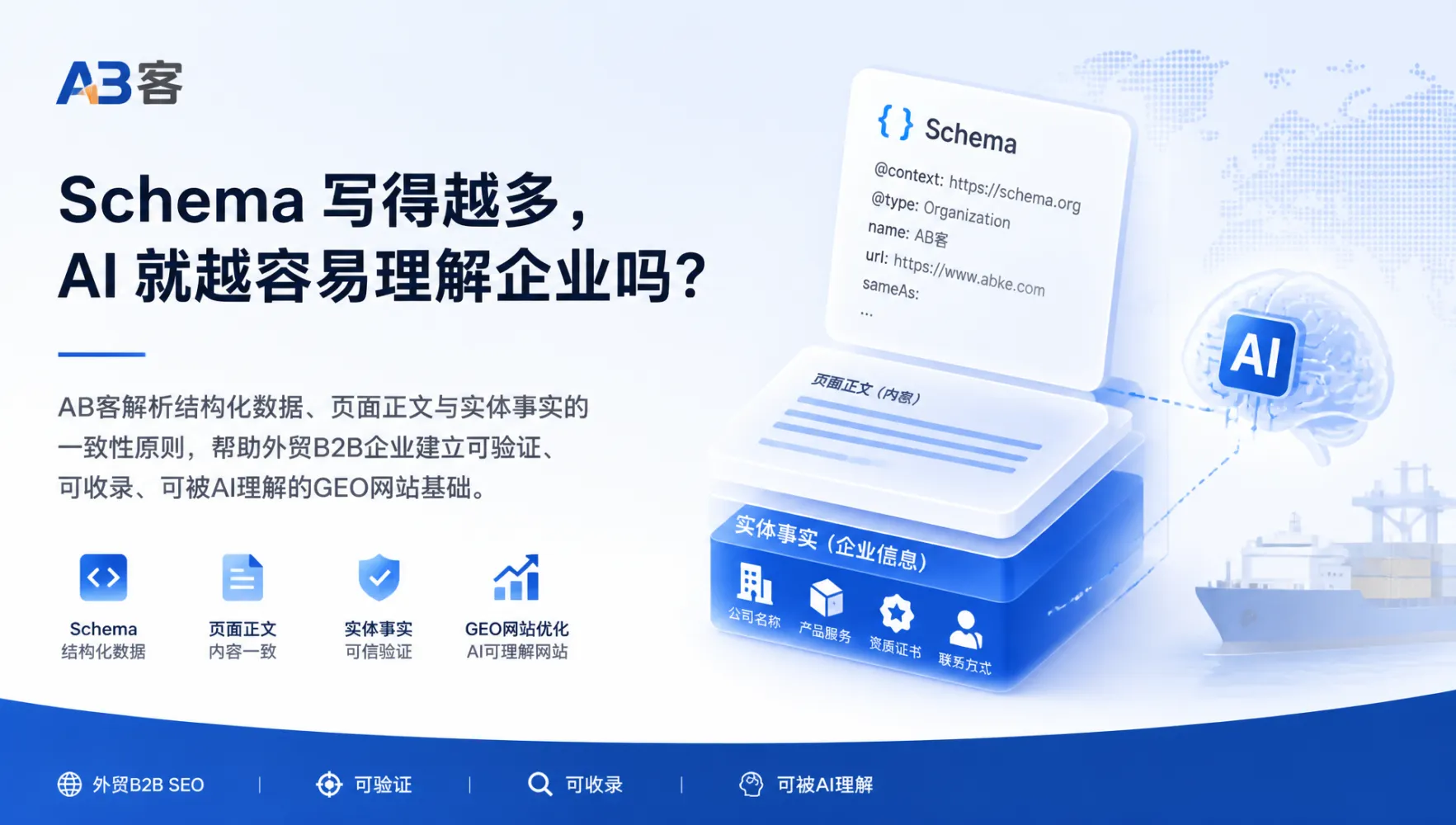
| Enterprise knowledge governance | The company must collect dispersed materials and establish standards for facts, products, evidence, versions, and approval. | ABKE helps structure real enterprise facts into a knowledge foundation and AI-readable digital expression, with client review remaining essential. |
| Content capacity | Requires internal research, writing, technical validation, localization, publishing, and refresh processes. | Provides a content framework based on buyer questions, enterprise knowledge, SEO and GEO requirements, and multilingual planning. |
| Website and technical foundation | May require internal or outsourced design, development, technical SEO, Schema, analytics, and conversion-path expertise. | Builds or improves SEO and GEO website structures that support products, solutions, FAQs, knowledge content, multilingual pages, and inquiry paths. |
| Cross-functional coordination | Internal leaders must coordinate business owners, engineers, sales teams, marketing staff, IT, and external suppliers. | ABKE provides a coordinated growth framework, while the client supplies business decisions, source materials, approvals, account participation, and sales action. |
| Ongoing measurement | The company needs a process to monitor indexing, visibility, AI mentions, content performance, inquiries, and sales outcomes. | Supports GEO visibility, SEO, content, and conversion analysis to guide iterative optimization rather than relying on isolated screenshots or rankings. |
| Long-term asset ownership | Assets can remain internal, provided the company maintains documentation, processes, and team continuity. | The project focuses on building reusable enterprise knowledge, content, pages, and operating records; export and transfer arrangements remain subject to contract and technical conditions. |
When an in-house GEO team may be the better fit
Self-building may be more suitable when your company has the resources and commitment to operate GEO as a long-term internal capability. Typical conditions include:
- A stable internal team already covers B2B strategy, technical SEO, website operations, content, data analysis, and global marketing.
- Product, engineering, certification, case, and sales materials are already well documented and easy to maintain.
- There is a clear internal owner who can coordinate business, marketing, technology, and sales decisions.
- The company can absorb the time needed to recruit, train, test, document, and optimize its operating model.
- The business plans to maintain dedicated GEO operations across markets and languages over the long term.
When ABKE’s GEO Growth Engine may be a practical choice
ABKE is designed for foreign trade B2B companies that want to build a structured GEO foundation while keeping internal teams focused on business expertise, approvals, customer relationships, and sales execution.
- You need a connected path rather than isolated services: enterprise knowledge, AI content, GEO website development, global brand communication, CRM coordination, AI sales assistance, and marketing agents.
- Your current website is primarily a brochure: it needs clearer product, solution, application, FAQ, evidence, and conversion structures.
- Your knowledge is valuable but fragmented: it exists across people, manuals, quotations, historic websites, product documents, and customer conversations.
- You need multilingual content with business context: not simply translated pages, but content grounded in real products, buyer questions, and market communication needs.
- You want transparent, staged work: measurable deliverables, data records, review mechanisms, and continuing optimization rather than a promise of fixed rankings, recommendations, inquiries, or orders.
A hybrid model is often the most effective operating model
For many manufacturing and export businesses, the choice does not need to be fully internal or fully external. A practical model combines internal business ownership with ABKE’s system-based implementation and ongoing optimization.
Your internal team contributes
- Real product, technical, manufacturing, and service facts
- Business priorities, target-market decisions, and approval
- Customer interaction, account ownership, and sales follow-up
- Feedback on inquiry quality, opportunities, and commercial outcomes
ABKE supports the operating system
- Knowledge structuring and AI-readable enterprise expression
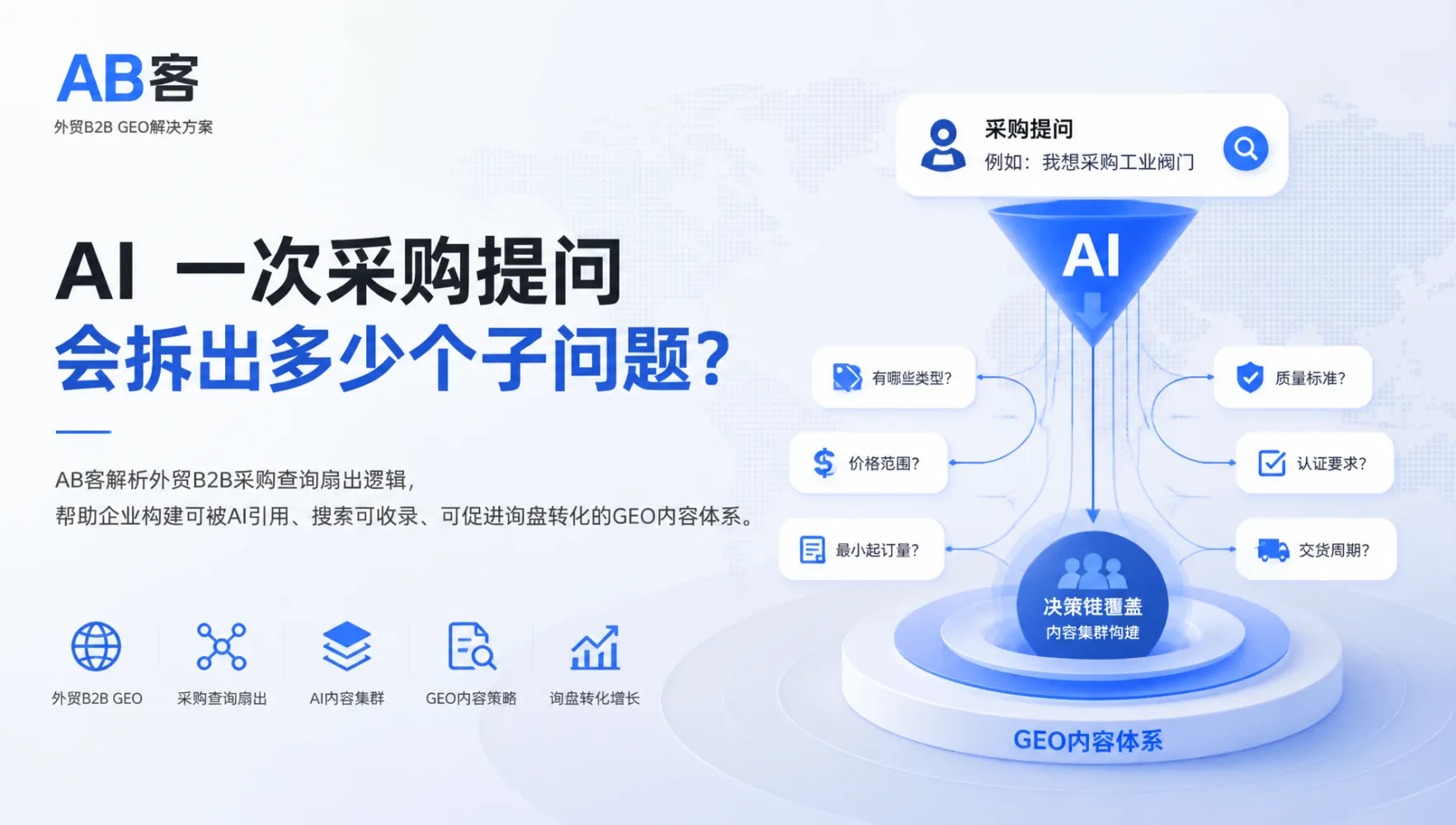
- Buyer-question mapping, content planning, and content production support
- SEO and GEO website architecture, structured data, and conversion pathways
- Visibility monitoring, content iteration, CRM coordination, and marketing-agent workflows
Questions to ask before comparing proposals or headcount
- What GEO capabilities do we already have internally, and which capabilities are missing?
- Can our team consistently collect, verify, approve, and update enterprise knowledge?
- Do we need a new GEO website structure, multilingual content system, CRM connection, or all of these?
- Who will own global channel participation, customer communication, and lead follow-up?
- Can we sustain coordinated work for 12–24 months, rather than treating GEO as a one-time publishing task?
- What assets, processes, data records, and internal capabilities should remain after the project period?
Choose the model that your company can sustain
The lowest visible cost is not always the lowest total cost, and the highest level of external support is not always necessary. The decision should reflect the company’s real operating maturity, available expertise, market ambition, and willingness to maintain a disciplined GEO process.
ABKE’s GEO Growth Engine is built to help foreign trade B2B companies turn verified enterprise capabilities into reusable knowledge, content, websites, global signals, and sales-supporting digital assets. Its purpose is not to replace the customer’s business expertise or sales team, but to provide the connected growth infrastructure needed for global customers and AI systems to discover, understand, validate, and consider the enterprise over time.


.png?x-oss-process=image/resize,h_100,m_lfit/format,webp)
.png?x-oss-process=image/resize,h_100,m_lfit/format,webp)

.png?x-oss-process=image/resize,h_100,m_lfit/format,webp)
.png?x-oss-process=image/resize,h_100,m_lfit/format,webp)
.png?x-oss-process=image/resize,h_100,m_lfit/format,webp)
.png?x-oss-process=image/resize,h_100,m_lfit/format,webp)
