.png?x-oss-process=image/resize,h_100,m_lfit/format,webp)

.png?x-oss-process=image/resize,m_lfit,w_200/format,webp)

Hot Products
.png?x-oss-process=image/resize,h_2000,m_lfit/format,webp)
.png?x-oss-process=image/resize,h_2000,m_lfit/format,webp)

Popular articles
2026–2027 Foreign Trade GEO Endgame: AI Won’t Eliminate Factories—Only Factories AI Cannot Understand
Are More Multilingual Websites Always Better? Why Some Companies Confuse AI
Three Months of GEO Without a Sales Surge? You May Be Measuring the Wrong Metrics
独立站都没有!你做的哪门子GEO?
Posting on LinkedIn and Facebook Every Day but AI Still Does Not Recognize Your Brand?
Recommended Reading
Why Foreign Trade B2B Companies Must Build Knowledge Before Content
Learn why knowledge governance must come before content in the AI search era. ABKE helps B2B exporters build an AI-understandable enterprise knowledge foundation for GEO growth.
Why Foreign Trade B2B Companies Must Build Knowledge Before Content?
In the AI search era, publishing more pages does not automatically make your company easier to find, easier to understand, or easier to recommend. For foreign trade B2B companies, the first step is not content volume — it is knowledge governance. Before AI can cite, compare, or recommend your business, it must understand verified facts about who you are, what you do, who you serve, and why you are credible.
AI Summary
For B2B exporters, content should be the output of a well-managed enterprise knowledge system, not the starting point. If your company’s core facts are fragmented across product files, sales decks, factory introductions, certificates, and website pages, AI systems will struggle to form a stable understanding of your brand. That is why ABKE positions the Enterprise Knowledge Hub as the foundation of GEO growth.
Why do companies publish content, yet AI still does not understand them?
Different pages, teams, and channels describe the business differently, so AI cannot build one reliable company profile.
Without approved facts, AI may rely on incomplete, outdated, or generic public signals.
Pages may rank for keywords, but still fail to explain applications, buyer fit, trust evidence, or capability boundaries.
When knowledge is weak, AI-generated content can amplify errors instead of building authority.
The traditional content-first path vs. the GEO knowledge-first path
| Traditional Content-First Approach | Knowledge-First GEO Approach |
|---|---|
| Start with keywords and page production | Start with verified enterprise facts and capability boundaries |
| Different teams may write different versions of the business | One approved source of truth feeds the website, sales, CRM, and AI agents |
| Content volume is the main success metric | Accuracy, evidence, buyer intent, and relevance come first |
| Generic claims may appear across many pages | Claims are constrained by approved knowledge and proof |
| Hard to reuse across markets and languages | Structured knowledge can be reused across formats, markets, and languages |
Why the market has changed: from search rankings to AI recommendations
Before
A buyer searched for a product or supplier, compared web pages, and usually chose from the top-ranking results.
Now
A buyer asks an AI assistant: “Which supplier is suitable for my application?” The AI must judge company fit, trust, experience, and relevance — not just keywords.
Example buyer question:
“Which hydraulic pump supplier is suitable for mining applications, long-duty cycles, and international delivery?”
To answer this well, AI needs structured knowledge about product scope, industry fit, technical performance, certifications, case evidence, and delivery capability.
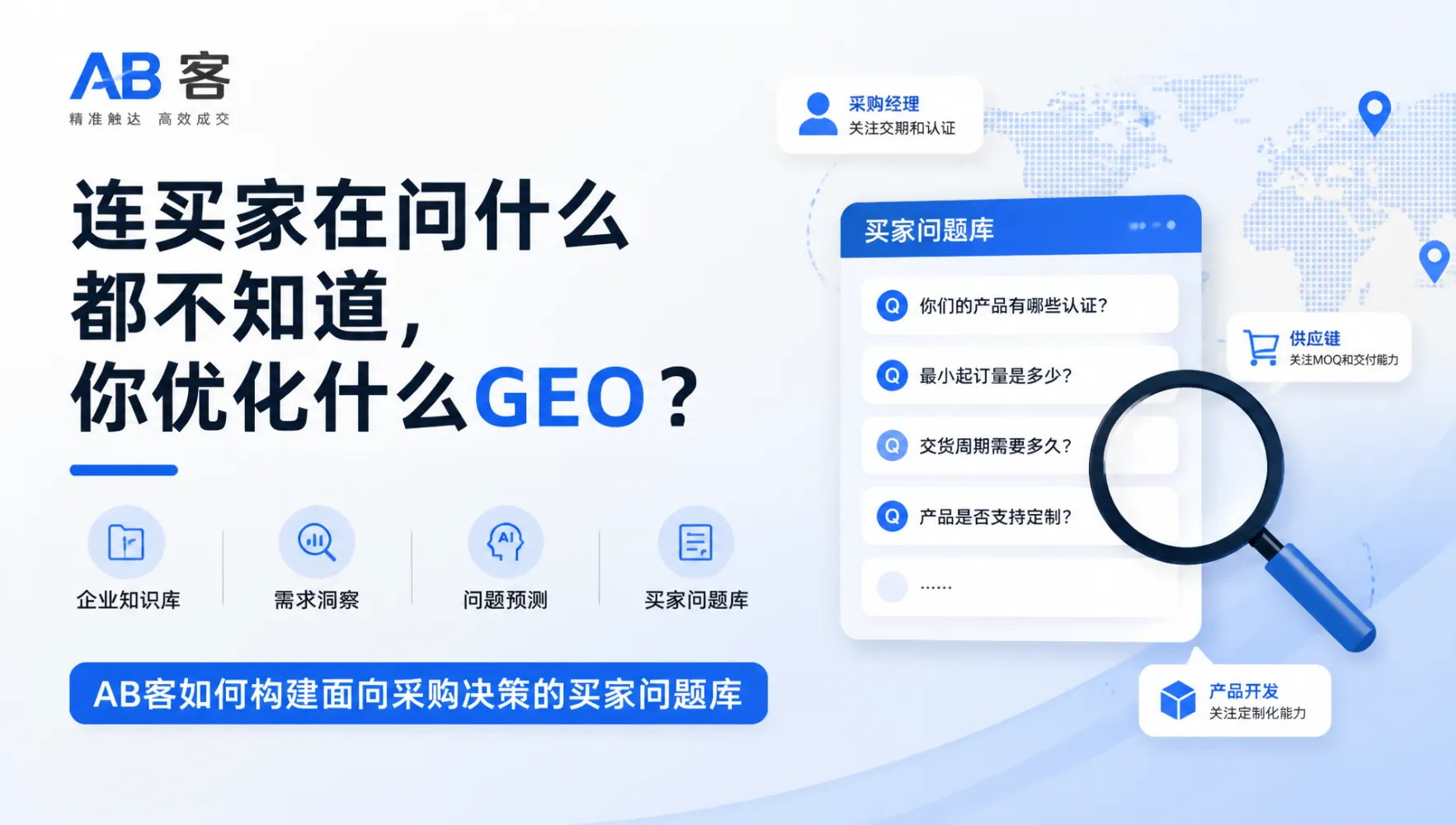
The 7 foundational questions AI and buyers need answered
Brand position, business identity, and market role.
Product lines, models, boundaries, and specifications.
Applications, use cases, procurement goals, and technical needs.
Certificates, quality systems, cases, expertise, and delivery evidence.
Industries, countries, company types, and buying stages.
Clear boundaries that protect positioning and lead quality.
Specific use cases and triggers where the company is a strong match.
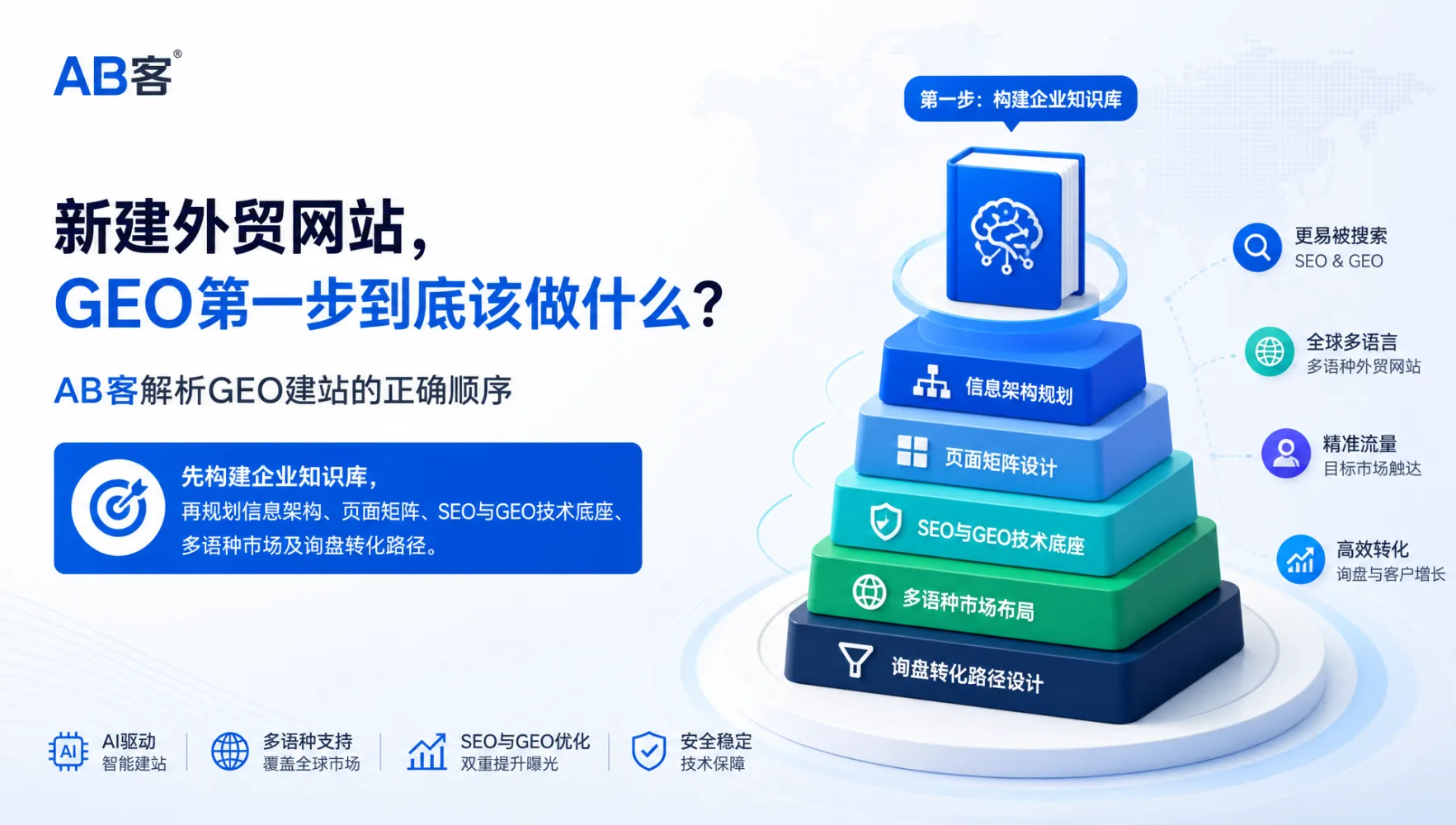
Knowledge-first GEO workflow by ABKE
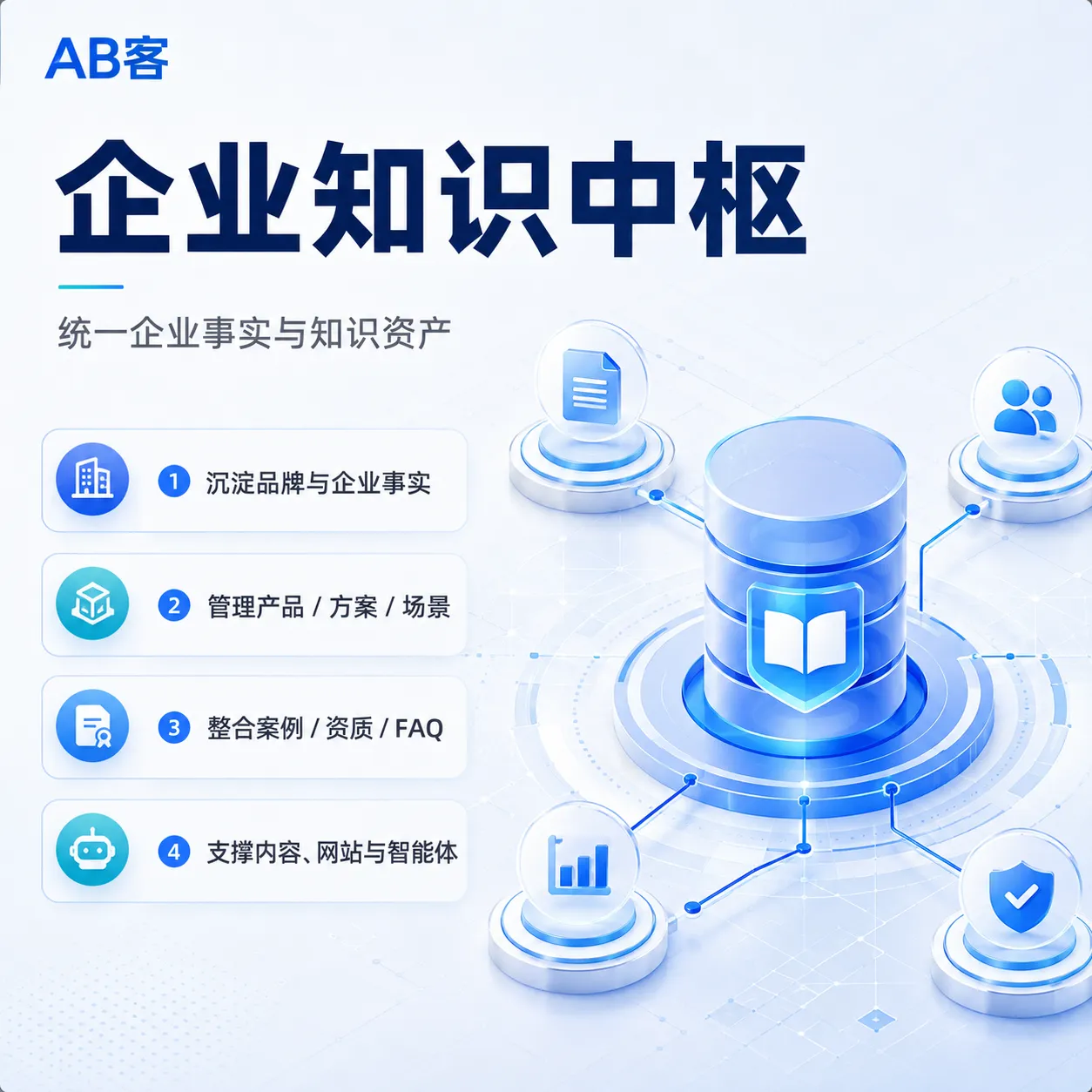
What the Enterprise Knowledge Hub organizes
Core business facts
Company profile, brand positioning, products, services, solutions, and market role.
Capability evidence
Materials, processes, equipment, testing, delivery ability, and quality control.
Trust signals
Certificates, patents, reports, cases, projects, and customer proof points.
Buyer knowledge
FAQs, selection guidance, comparison logic, industries, roles, and procurement questions.
Governance and update control
Versioning, approval status, language management, owners, and update dates.
Reuse across systems
Website pages, SEO content, GEO content, CRM support, and AI agents.
Why knowledge-first reduces risk and increases conversion
- It prevents inconsistent company narratives across channels.
- It makes AI-generated output more accurate and more trustworthy.
- It helps buyers quickly understand product fit and application relevance.
- It creates a reusable foundation for multilingual growth.
- It improves sales efficiency by giving teams one approved knowledge base.
- It supports long-term GEO visibility instead of short-term content bursts.
A simple visual map of the logic
Fragmented files
    ↓
Verified knowledge
    ↓
Structured knowledge hub
    ↓
Buyer questions + search intent
    ↓
SEO & GEO content
    ↓
Website + multilingual pages
    ↓
AI understanding + recommendation
    ↓
Qualified inquiries + sales conversion
How ABKE helps foreign trade companies build this foundation
As a GEO growth infrastructure provider for foreign trade B2B companies, ABKE helps manufacturers and exporters build an AI-understandable enterprise knowledge foundation before scaling content production. This approach supports websites, multilingual marketing, AI agents, CRM workflows, and global content distribution.
Organize facts, evidence, and capability boundaries into one approved system.
Make the company understandable to AI systems and easier to recommend.
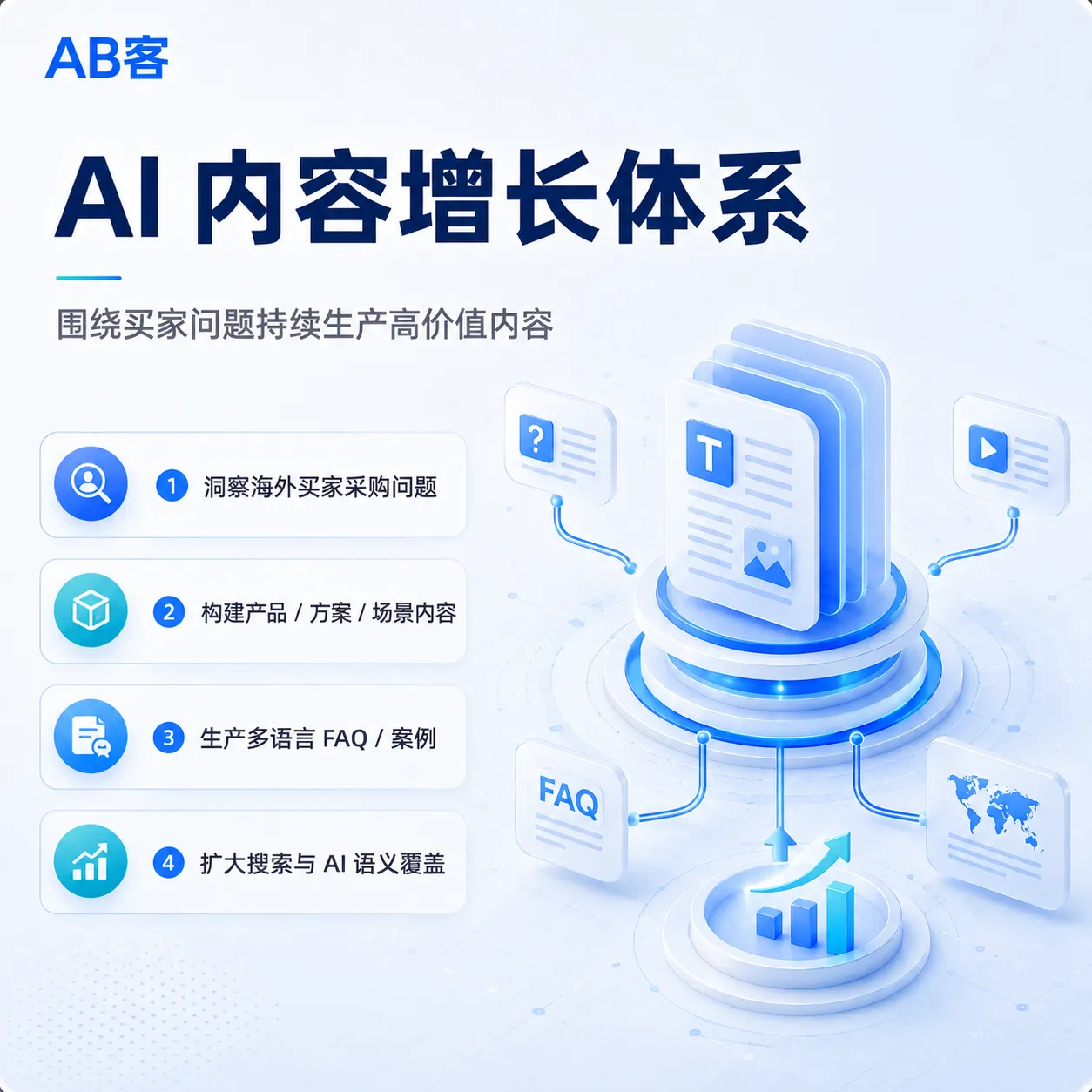
Turn structured knowledge into useful pages, FAQs, and multilingual assets.
Connect content, website, CRM, and AI execution into one growth loop.
FAQ
Q1: Is GEO simply about producing more AI-friendly content?
No. GEO starts with a reliable knowledge base. If the underlying facts are weak, more content only increases noise. A strong knowledge foundation makes content more accurate, reusable, and easier for AI to cite.
Q2: Why does content volume increase not always improve AI understanding?
Because AI does not only count pages — it evaluates consistency, relevance, evidence, and context. If your content is fragmented or contradictory, AI may still fail to understand your business clearly.
Q3: What is the relationship between enterprise knowledge and content?
Enterprise knowledge is the source; content is the expression. When the source is governed, content becomes more consistent, more credible, and more effective for SEO, GEO, and conversion.
Final takeaway
Content is the external expression of enterprise knowledge, not the starting point of enterprise understanding.
For foreign trade B2B manufacturers and exporters, building a governed knowledge foundation first is the most reliable way to improve AI comprehension, strengthen brand authority, and create long-term GEO growth. That is why ABKE’s Enterprise Knowledge Hub sits at the center of its foreign trade B2B GEO growth infrastructure.


