.png?x-oss-process=image/resize,h_100,m_lfit/format,webp)

.png?x-oss-process=image/resize,m_lfit,w_200/format,webp)

Popular articles
GEO for B2B Exporters: Win AI Discovery, Trust, and Supplier Selection
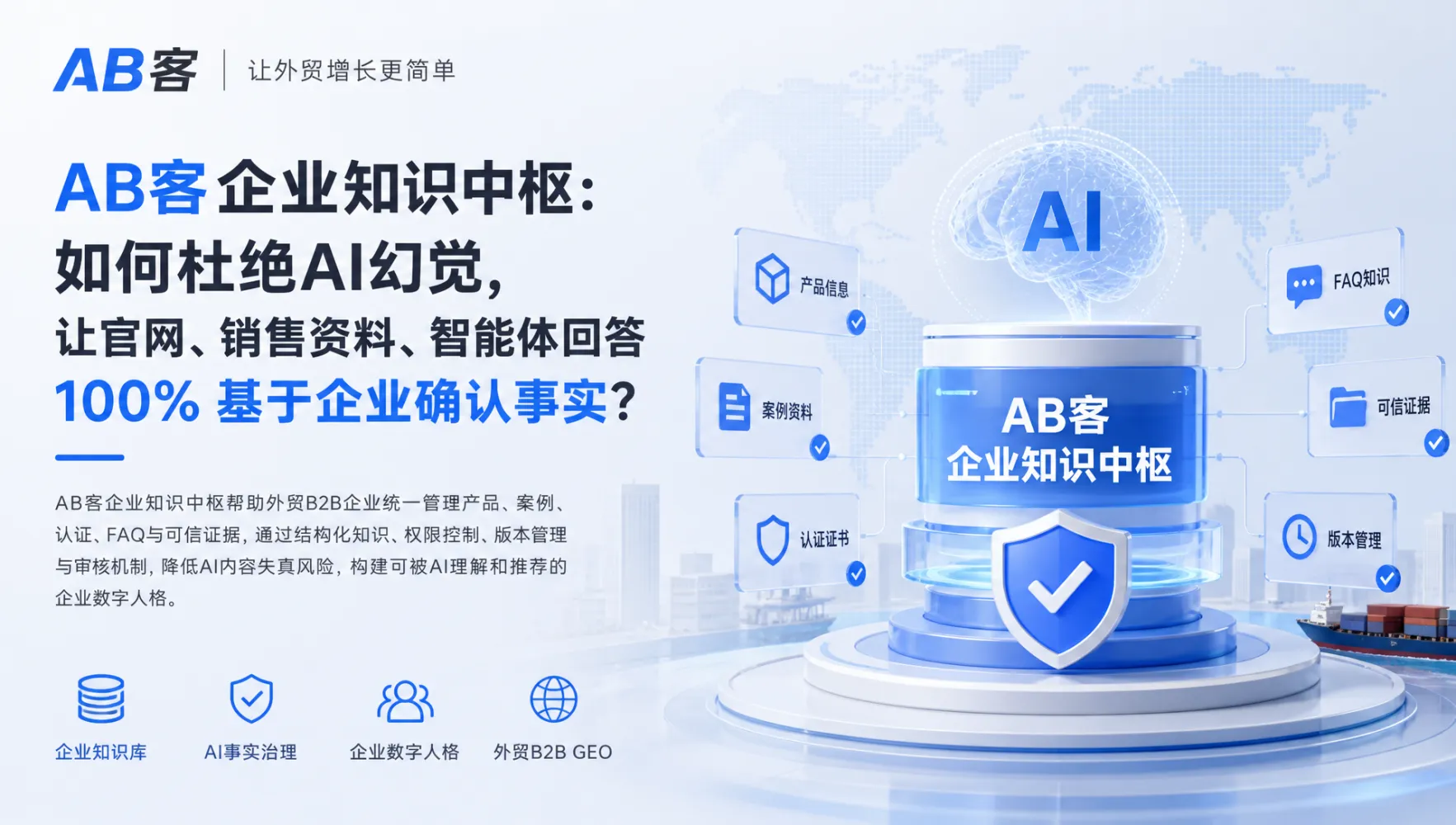
Enterprise Knowledge Hub: Build an AI-understandable, citable growth foundation with trusted company facts.
How Many Sub-Questions Can One AI Procurement Query Generate?
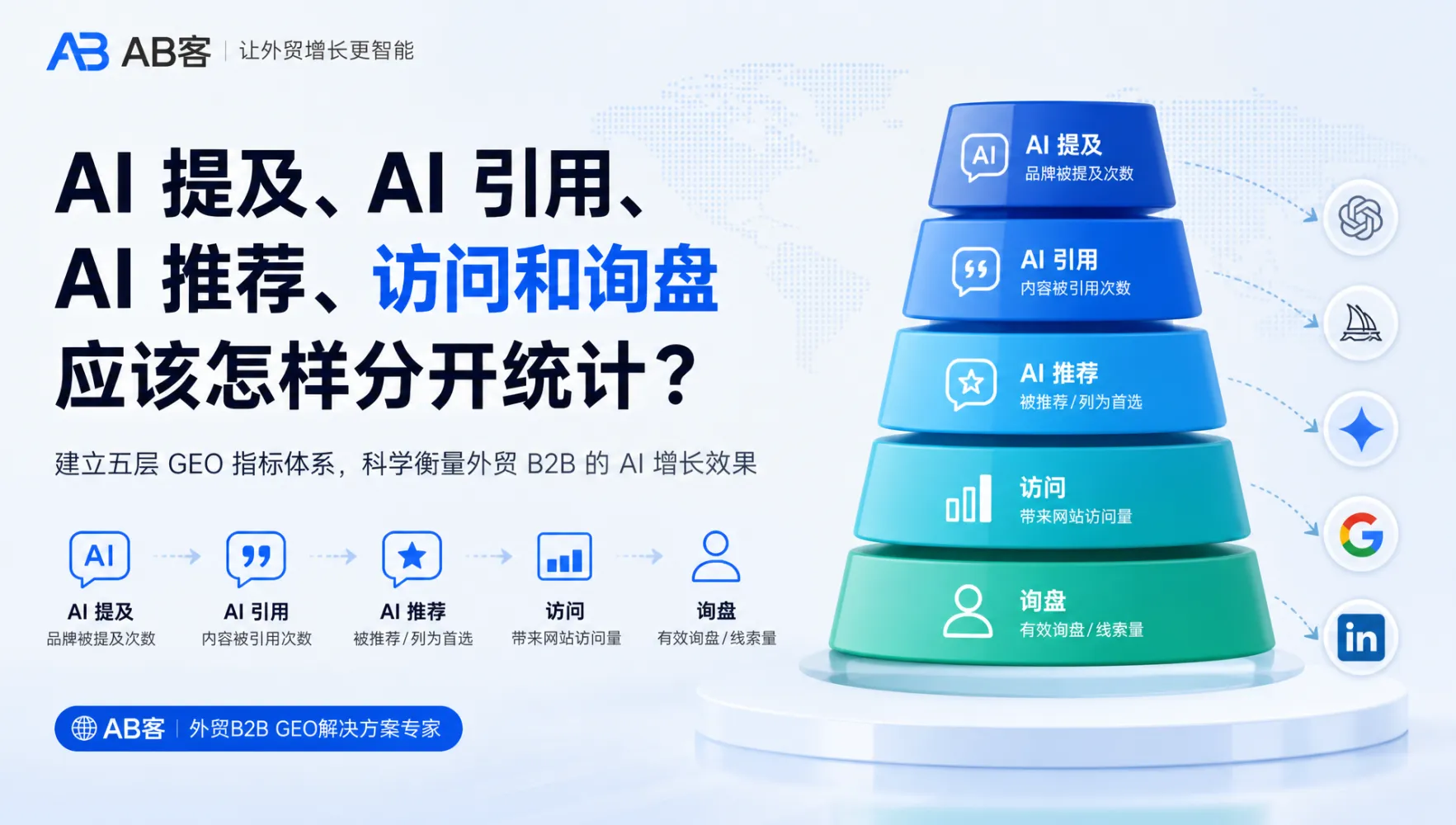
How Should AI Mentions, AI Citations, AI Recommendations, Website Visits, and Inquiries Be Measured Separately?
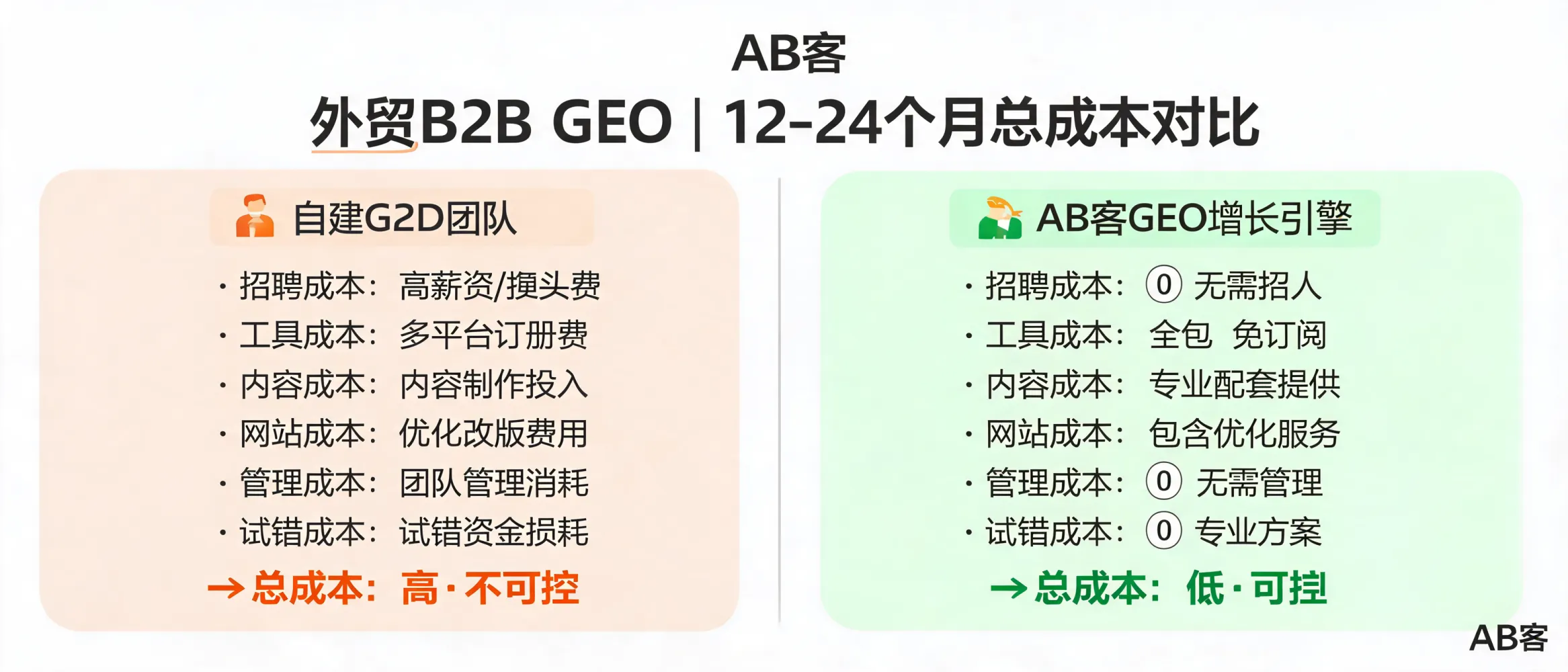
If We Build Our Own GEO Team, What Costs Beyond Content and SEO Hiring Should We Expect?
Recommended Reading

Competitors Offer GEO at Half the Price and Guarantee Inquiries? Why Low-Cost GEO Can Cost More
ABKE explains how export B2B companies can evaluate low-cost GEO offers, inquiry guarantees, AI-generated content, conversion readiness, and long-term digital growth assets.
Competitors Offer GEO at Half the Price and Guarantee Inquiries? Why Low-Cost GEO Can Cost More
In the export B2B market, “cheap GEO” often looks attractive at first glance: lower annual fees, promised AI mentions, bulk content output, and even “guaranteed inquiries.” But for manufacturers and global trade teams, the real question is not how little you pay today — it is whether the service builds a sustainable growth asset for tomorrow. ABKE helps companies evaluate GEO with a business lens, not a sales pitch.
1. The low-price GEO trap is hurting export businesses more than they realize
Many export owners hear the same claim: “Why is your GEO more expensive? Our competitor charges half the price, guarantees a certain number of articles, shows AI recommendation screenshots, and even promises inquiries.” That sounds like a bargain — until the results start to break down.
The problem is simple: many low-cost GEO offers are designed to sell activity, not capability. They deliver visible output quickly, but they do not build the underlying system that allows AI search engines and buyers to understand, trust, and recommend your company over time.
2. Trap one: “Bulk AI posting” disguised as GEO
A large share of low-cost GEO services are little more than AI-written content plus mass publishing. The process is usually straightforward: enter your product name into a model, generate dozens or hundreds of similar articles, publish them across websites or third-party platforms, then capture a few AI screenshots where your brand appears. That is marketed as GEO success.
But that is not genuine GEO. True GEO starts with enterprise knowledge architecture: who you are, what you do, where your capabilities end, and which proof points make you trustworthy. AI cannot reliably recommend what it does not clearly understand.
Low-cost content pattern
- Generic AI-generated copy
- Minimal fact checking
- No buyer-question logic
- No proof-based structure
- No differentiation
ABKE GEO growth logic
- Enterprise knowledge system
- Buyer intent and FAQ mapping
- Structured content with evidence
- SEO + GEO website support
- Continuous optimization and monitoring
Content without facts, scenarios, and evidence creates information noise. It may produce a temporary mention, but it rarely creates lasting AI recognition or buyer confidence. In the long run, low-quality content can even weaken how your brand is perceived.
3. Trap two: “Guaranteed inquiries” often means hidden water, not real leads
“100 inquiries per year” sounds convincing. But the first question should always be: what counts as an inquiry?
In many cases, low-cost providers lower the standard to make the promise work. They may count any form submission, including spam, recruitment requests, vendor promotions, or irrelevant traffic. Some even blur the line between exposure, visits, and genuine buyer inquiries.
For B2B export companies, quantity alone is meaningless without quality. One qualified RFQ from a serious buyer is often worth far more than one hundred low-intent submissions. If your sales team spends time chasing junk leads, the hidden cost can exceed the service fee very quickly.
4. Trap three: front-end exposure without back-end conversion
Another common weakness of cheap GEO is that it focuses only on publishing and visibility. The service may stop once the article is posted and the screenshot is sent. But GEO is not a one-step action — it is a complete growth chain.
If your website cannot explain your strengths, show evidence, guide the buyer, or capture the lead, the AI mention is only a vanity signal. ABKE’s approach connects the whole chain: enterprise knowledge, GEO content, SEO/GEO website structure, multilingual distribution, CRM follow-up, and data attribution.
5. Real GEO vs. fake GEO: a clear comparison
| Comparison area | Low-cost GEO service | ABKE GEO Growth Engine |
|---|---|---|
| Core focus | Article count, publishing speed, screenshot-based proof | Knowledge, buyer intent, evidence, and conversion |
| Content logic | Generic, isolated, often disconnected from the company | Built from enterprise facts, product data, and buyer questions |
| AI visibility | One-off mentions or temporary screenshots | Ongoing monitoring of mentions, citations, and answer accuracy |
| Conversion readiness | Often no clear lead path or CRM support | Structured landing paths, inquiry capture, and CRM attribution |
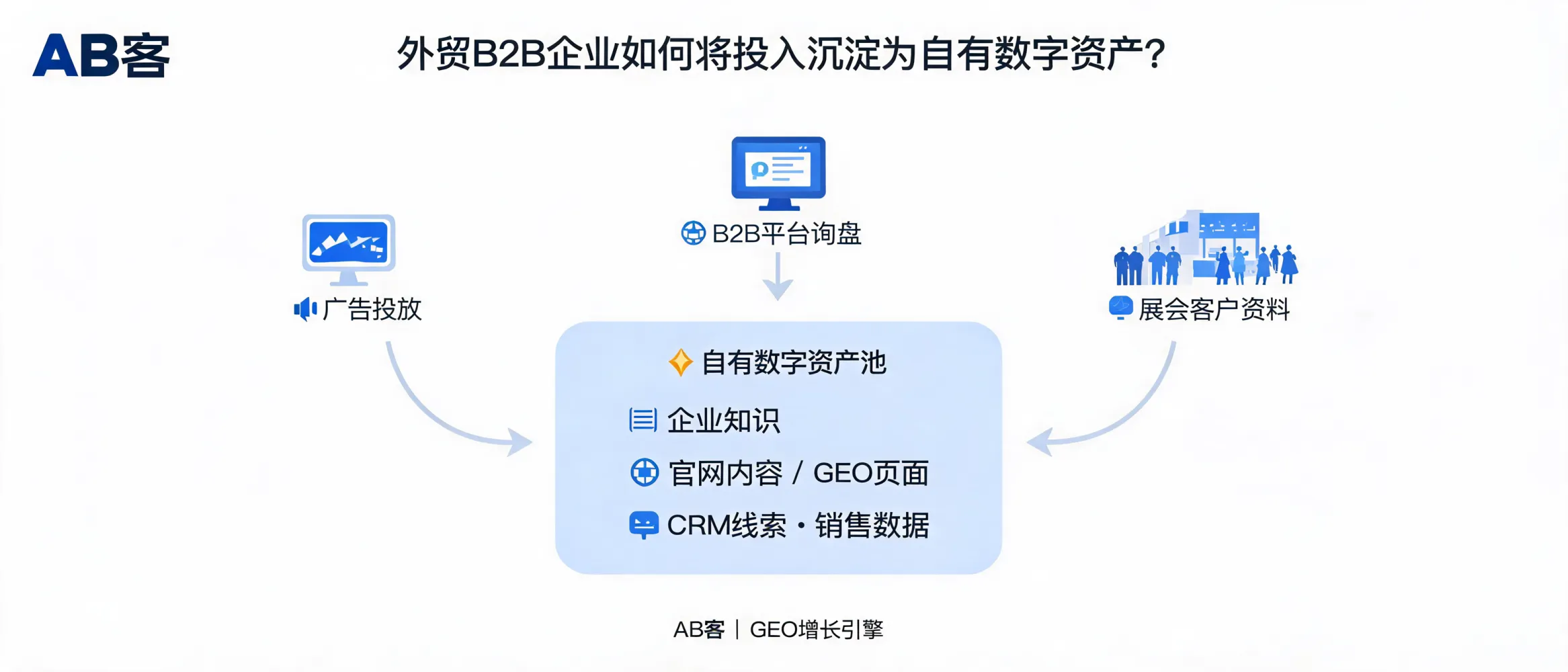
| Long-term value | Disposable content with limited reuse | Reusable digital growth assets that compound over time |
6. Why cheap GEO usually becomes expensive in the end
The hidden cost of low-cost GEO is not just the service fee. It is the time spent managing bad content, the labor spent chasing low-quality leads, and the opportunity cost of failing to build a real growth system.
Low fee, high content noise, weak leads, no durable asset.
Higher investment, but stronger visibility, better leads, reusable knowledge assets.
In export B2B growth, the “cheapest” option often becomes the most expensive once you count the full business impact. A GEO program should create value that lasts, not traffic that disappears after the campaign ends.
7. ABKE GEO Growth Engine: what a serious GEO system actually includes
ABKE, the brand of Shanghai Muke Network Technology Co., Ltd., positions GEO not as a content package, but as an export B2B growth infrastructure. The system is designed to help manufacturers and exporters become understandable to AI, credible to buyers, and visible across the global search ecosystem.
Enterprise knowledge layer
Builds a structured digital identity so AI can understand who you are, what you do, and why you are credible.
Content intelligence layer
Turns buyer questions into FAQ, product, solution, and industry content that AI can cite and customers can trust.
Growth execution layer
Connects SEO/GEO websites, multilingual pages, distribution, CRM, attribution, and optimization workflows.
The point is not to create more pages for the sake of pages. The point is to create a system that repeatedly answers buyer questions, earns AI trust, and turns attention into qualified opportunities.
8. When a GEO vendor is worth considering
For export B2B companies, a serious GEO provider should be evaluated by whether it can build verifiable enterprise knowledge, buyer-question content, SEO and GEO site infrastructure, multilingual distribution, lead conversion workflows, and ongoing visibility measurement.
- Can the provider explain how your company will be structured in AI-readable form?
- Can they map buyer questions into content topics?
- Can they support website conversion paths and inquiry capture?
- Can they measure AI mentions, citations, and answer accuracy over time?
- Can they produce reusable assets instead of disposable posts?
If the answer is mostly “no,” then you are not buying growth infrastructure — you are buying temporary output.
9. Summary: cheap GEO is only cheap when you ignore the hidden costs
GEO is not a quick-fix content service. It is a long-term capability that helps your business become discoverable, understandable, and recommendable in the AI search era.
If a service is priced far below market, ask what is missing: enterprise knowledge design, buyer intent research, conversion planning, multilingual strategy, data attribution, or continuous optimization. In most cases, the lower price means one or more of those layers are absent.
ABKE does not sell “guaranteed inquiries” as a slogan. Instead, we build a GEO growth engine that helps export B2B companies accumulate durable digital assets, improve AI visibility, and create a more reliable path from discovery to inquiry to revenue.
10. Need a GEO reality check for your export business?
If you are comparing GEO quotes, evaluating “inquiry guarantees,” or unsure whether your current content is actually helping AI understand your business, ABKE can help you assess the gap.
Start with a GEO diagnosis: review your enterprise knowledge, AI visibility, website readiness, content structure, and conversion flow before you invest in the wrong service.


.png?x-oss-process=image/resize,h_100,m_lfit/format,webp)
.png?x-oss-process=image/resize,h_100,m_lfit/format,webp)

.png?x-oss-process=image/resize,h_100,m_lfit/format,webp)
.png?x-oss-process=image/resize,h_100,m_lfit/format,webp)
.png?x-oss-process=image/resize,h_100,m_lfit/format,webp)
.png?x-oss-process=image/resize,h_100,m_lfit/format,webp)
