Hot Products





Popular articles
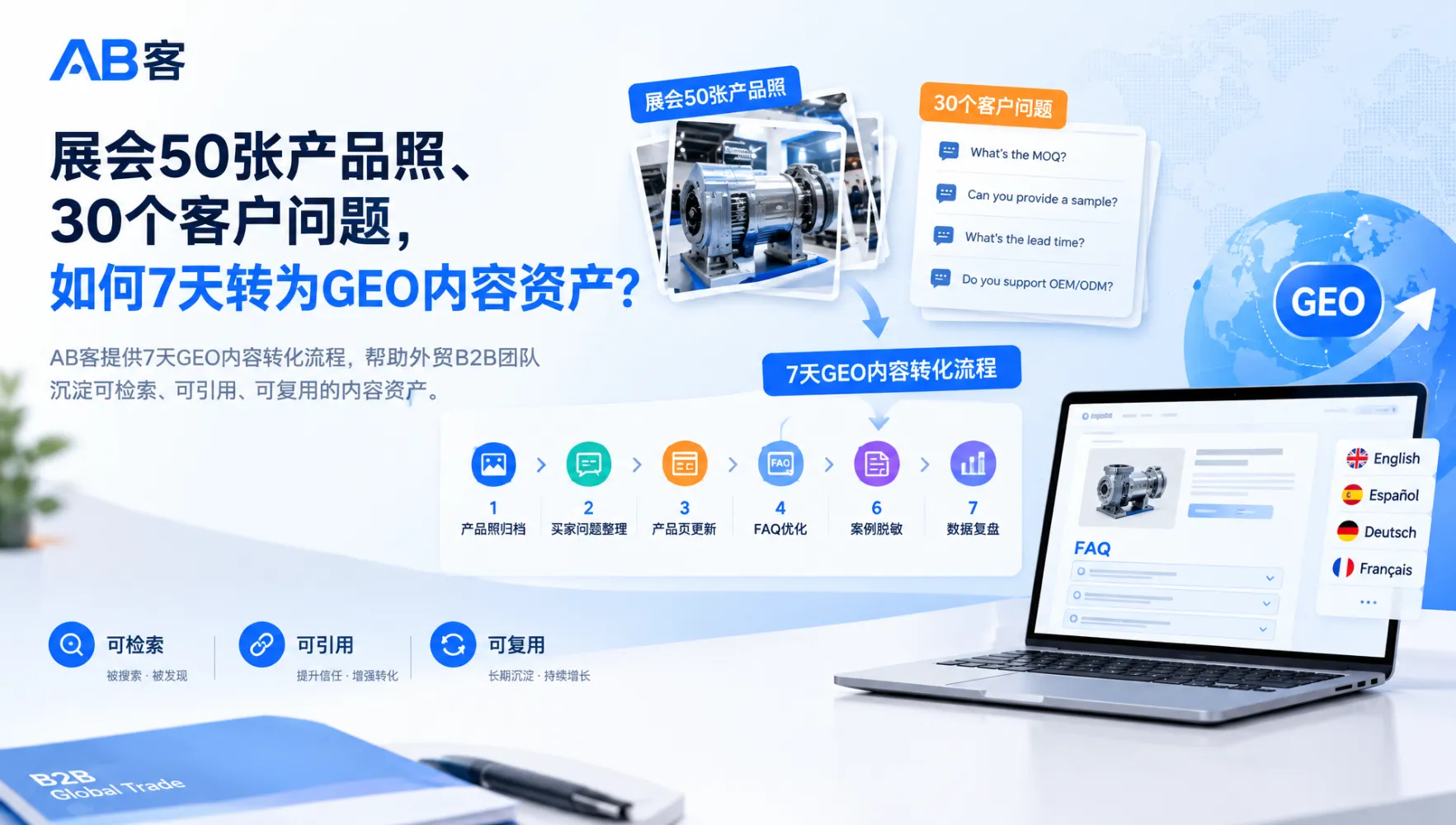
7-Day Post-Exhibition GEO Content Conversion Guide: Turn Product Photos and Customer Questions into Buyer Decision-Making Assets
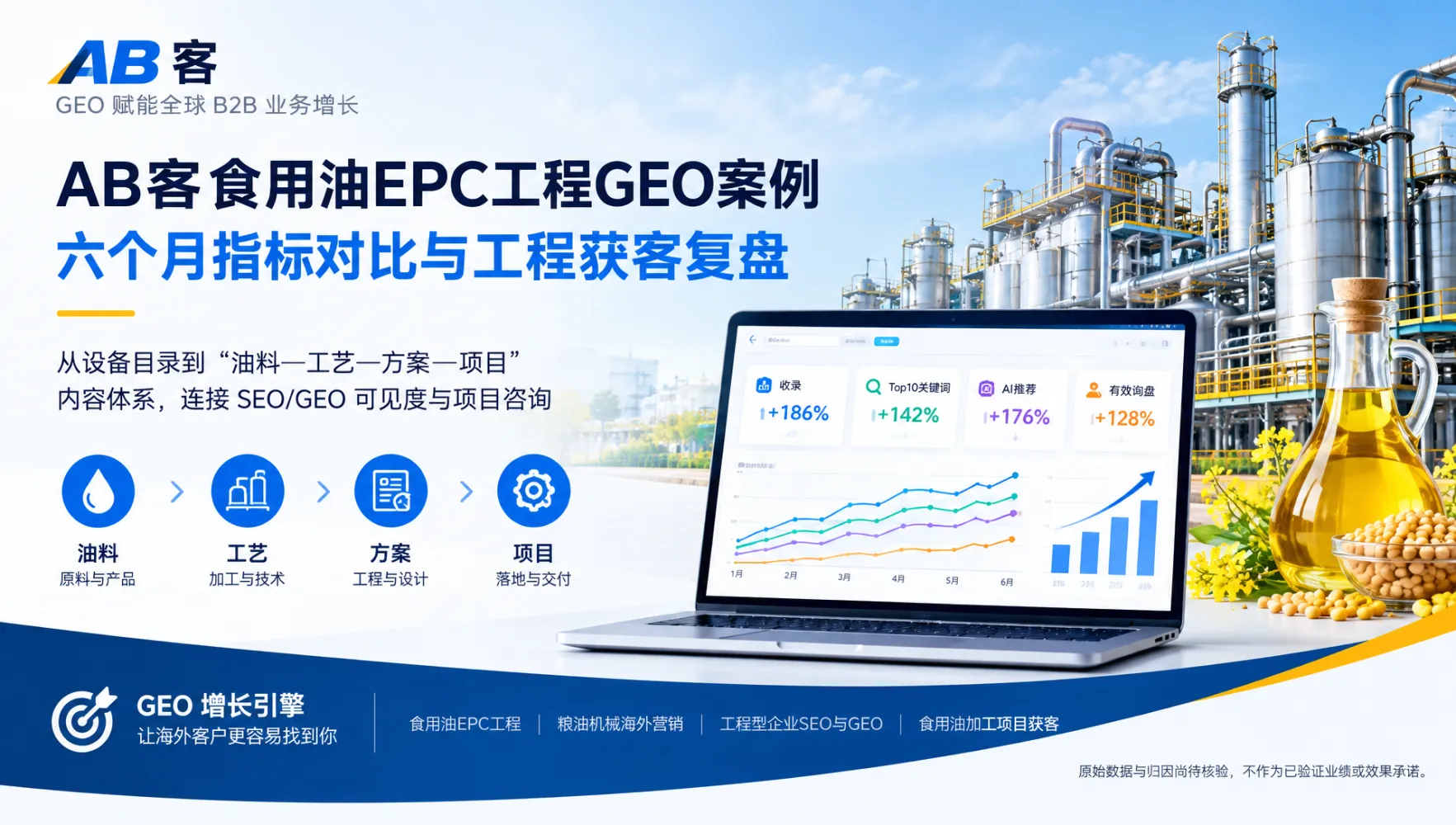
How to implement GEO (Geometric Orientation) in industrial sealing equipment? Analysis of six months of performance indicator changes and process-oriented customer acquisition paths.
During the first phase of the Canton Fair: Spend 30 minutes organizing market intelligence from competitors to identify GEO content worth prioritizing.
Should B2B foreign trade businesses advertise on ChatGPT? First, use 5 checks to determine the suitability for trial advertising.
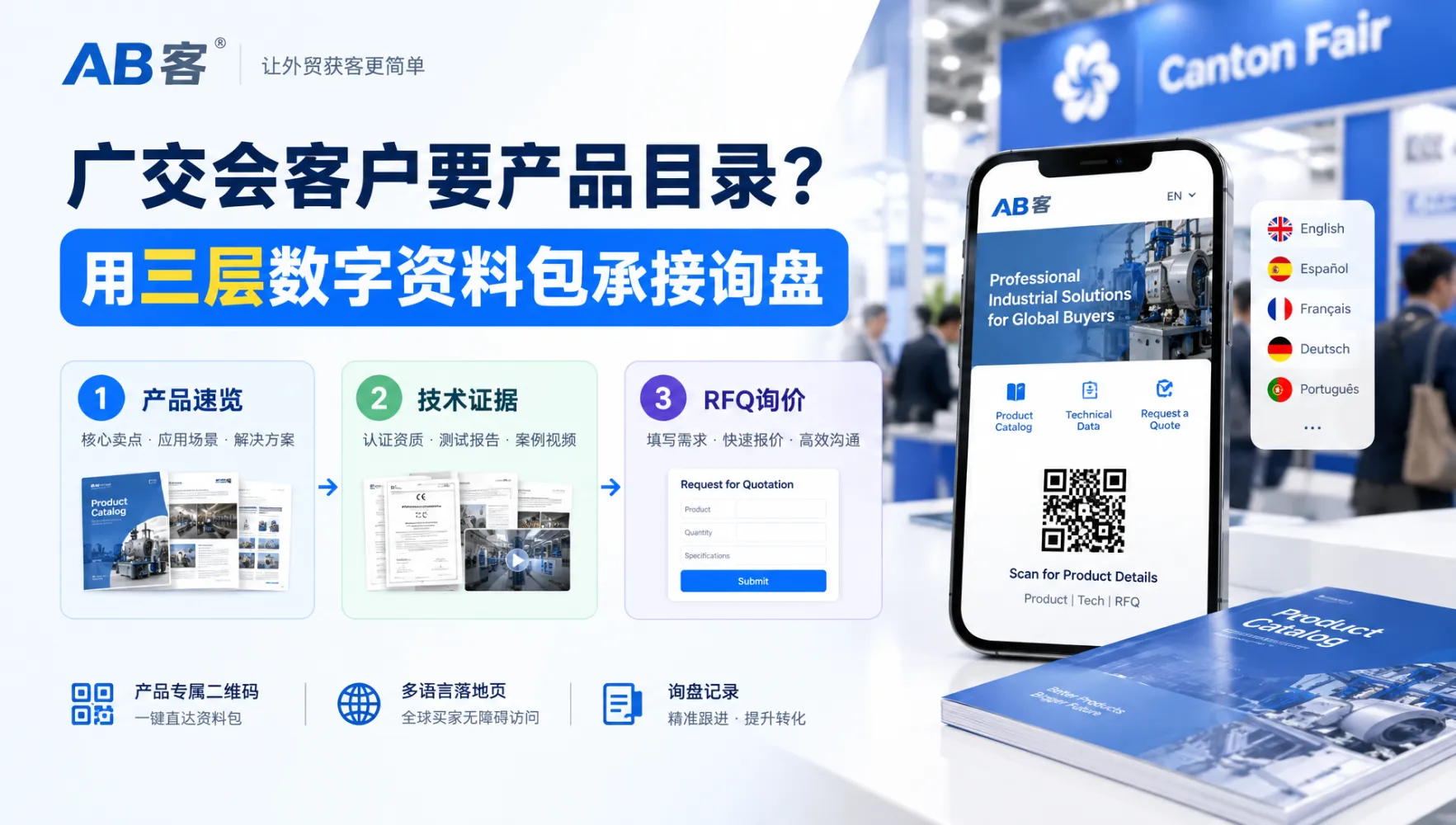
广交会买家索要产品目录时,如何用三层数字资料包推进询价?
Recommended Reading

From procurement consultation to sales follow-up: How can marketing intelligence agents collaborate with enterprise knowledge and CRM to handle inquiries?
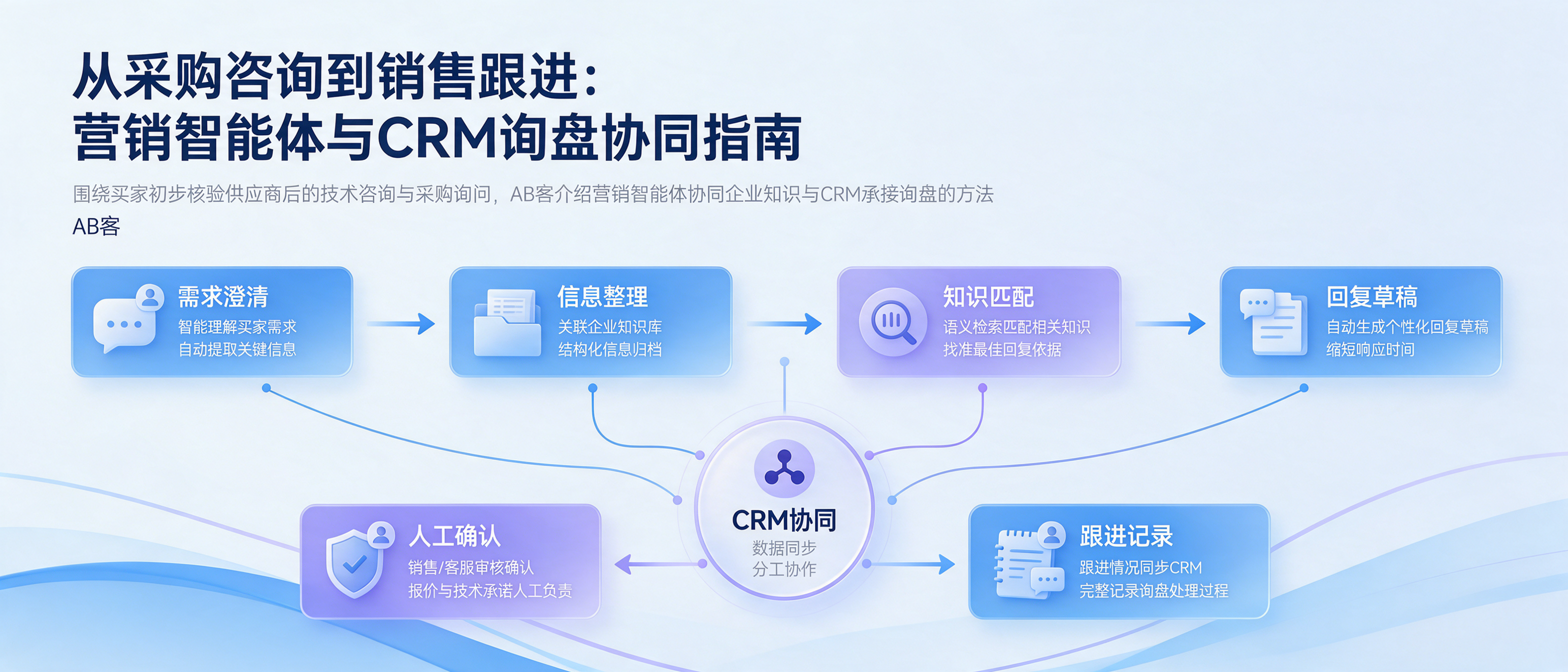
Regarding technical consultations and procurement inquiries after buyers have initially verified suppliers, AB Customer introduces a method for handling inquiries using a marketing intelligence agent that integrates enterprise knowledge and CRM: clarifying needs, organizing information, matching knowledge, drafting responses, manual confirmation and follow-up records, and clearly defining the boundaries of human responsibility for system division of labor, configuration conditions, pricing, and technical commitments.
Procurement consulting services · Enterprise knowledge collaboration · CRM inquiry management
After initial verification of suppliers, overseas buyers often continue to inquire about product compatibility, technical specifications, customization options, delivery arrangements, and procurement requirements. At this point, companies need more than just quick responses; they need to organize these scattered inquiries into a coherent narrative.Identifiable needs, verifiable data, and leads that can be followed up sustainably..
AB Customer Marketing Intelligent Agent Within authorized scopes, it can access enterprise knowledge to assist in clarifying needs, organizing information, matching knowledge, and preparing draft responses, which are then confirmed by personnel. Subsequent actions are recorded through a configured CRM or agreed-upon process. It is an AI-powered assistant for sales collaboration, not a system that replaces sales judgment or automatically commits to closing deals.
First, clarify the division of labor: What are the responsibilities of the consultation portal, the marketing intelligence agent, and the CRM?
Procurement consulting involves information exchange, knowledge processing, and sales management. These three aspects can work together, but should not be treated as a single function.
-
Enterprise intelligent interaction:This focuses on providing access to information and collecting questions and supplementary information from buyers, but does not imply completion of technical evaluation or business confirmation.
-
Enterprise Knowledge Hub:Providing confirmed product information, application conditions, service rules, and supporting evidence serves as the factual basis for the intelligent agent to prepare a response.
-
Marketing Agent:It assists in identifying needs, identifying gaps, searching for information, generating draft responses and follow-up suggestions, but does not replace professional review.
-
CRM:It contains leads, responsible persons, communication records, follow-up stages, and next tasks; the specific connection and flow method depends on the project configuration.
-
Business and professional personnel:Responsible for demand assessment, technical confirmation, quotation, important commitments, and customer relationship maintenance.
Under this division of labor, the value of marketing intelligence in sales collaboration lies in reducing the information gap between data collection and sales preparation, allowing personnel to continue communication based on the complete context.
A six-step collaborative process from procurement consultation to sales follow-up
1. Clarify requirements: First, distinguish between known conditions and matters to be confirmed.
Consultations should focus on product model, usage scenarios, technical requirements, purchase quantity, target market, and delivery expectations. Information not provided by the buyer should be marked "Pending Confirmation," and speculation should not be presented as customer requirements. When supplementary questions are needed, prioritize those that will affect product compatibility and subsequent decision-making.
2. Information organization: Preserving the original expression and business context.
Organize the original consultation document, known conditions, supporting documents, communication language, and to-do items into a sales-readable requirements summary. For multilingual consultations, retain key parameters, units, models, and the original text to avoid altering the procurement meaning during translation or summarization.
3. Knowledge Matching: Answer using confirmed information; do not fabricate new skills.
Based on the authorized knowledge, match the product description, application conditions, service scope, and related materials. If conflicts, outdated versions, or insufficient evidence are found, a list of items to be verified should be compiled and submitted to the responsible person for handling, rather than automatically generating a conclusion that "can be satisfied".
4. Draft Response: Separate the answer, follow-up questions, and suggested resources.
Marketing intelligence can assist in generating initial response drafts: first, address questions with existing evidence, then list the information that needs to be supplemented by the buyer, and prepare suitable materials for submission. Product compatibility assessments, delivery dates, prices, and service commitments in the draft should clearly indicate review requirements.
5. Manual verification: Complete the necessary review before external communication.
Sales confirm the customer background and communication strategy; technical personnel confirm parameters and selection criteria; relevant personnel confirm price, delivery, and business terms. Any unconfirmed information should not be sent as a formal commitment; important modifications should be documented with version and review records.
6. CRM Records: Let the next follow-up person know what happened.
According to the configured process, record the requirement summary, sent materials, confirmed items, unresolved issues, responsible persons, and next steps in the CRM. If the system connection is not yet configured, personnel can enter the information according to the agreed method. Manual compilation should not be described as automatic synchronization.
Different procurement issues require different handling methods.
The following is a schematic diagram of the handling method and does not represent actual customer cases or specific product commitments.
Is this product suitable for our usage environment?
The intelligent agent assists in organizing the usage environment, operating conditions, specifications, and limitations, matching existing data, and listing missing parameters.Whether it is applicable, how to select the model, and whether verification is required should be confirmed by technical or business personnel.
"Can you provide customization, quotes, and delivery times?"”
The intelligent agent assists in organizing customized requirements, quantities, destinations, and expected times, and prepares the information needed for the inquiry and draft responses.Customization feasibility, formal quotation, delivery arrangements and conditions attached shall be confirmed by authorized personnel.
"We've already communicated before, but we need further information now."
Provided that permissions and data are available, combine historical communication and CRM records to organize the context, highlight unresolved issues, and prepare relevant materials and suggestions.The sales team is responsible for confirming whether current requirements have changed and how to proceed with further communication.
Before implementation, confirm the knowledge, permissions, and connection conditions.
-
Knowledge available:Organize product information, application conditions, customization scope, and service rules; clarify document versions, applicable scope, and maintenance personnel.
-
Tasks have boundaries:The agreement defines what the intelligent agent can read, what it can generate, and which operations require human confirmation.
-
The system has verified:Confirm the CRM version, API, field mappings, and data read/write permissions, and clarify which steps are to be completed by personnel.
-
Language requirements:Identify the target language, terminology, and reviewers. Multilingual proficiency does not equate to having readily available professional terminology for all markets.
-
Accountability is traceable:Designate a lead manager, a technical reviewer, and a business confirmer, and agree on the scope of access to and processing requirements for customer data.
Configuration reminder:CRM connectivity, multilingual support, and automated workflow capabilities depend on the specific version, interface, authorization, and project configuration. Before implementation, the product or project manager should confirm the feature status, distinguishing between capabilities that are already live, in testing, for internal use, and in the planning stage. Planned features should not be treated as existing deliverables.
How can we check if collaboration has truly been implemented?
It's inappropriate to judge the effectiveness of a marketing agent solely based on response speed or the number of inquiries. First, check if the agreed-upon tasks have been completed and if the outputs have been reviewed and incorporated into the actual sales process.
-
Does the requirements summary distinguish between known facts, conditions to be confirmed, and data gaps?
-
Whether the draft response used valid data and whether manual corrections were recorded.
-
Whether formal responses and sent materials are recorded in the corresponding leads.
-
Are there any responsible parties and next steps for resolving unresolved issues?
-
Should recurring knowledge gaps be transformed into knowledge supplementation or content update tasks?
Lead stages, valid inquiries, and opportunity changes in downstream CRM can serve as joint observation information, but cannot be directly attributed to the AI agent. When AI sources are involved, only available customer testimonials or actual source information should be recorded.We do not assume access to the buyer's AI's internal decision-making records, nor do we interpret incomplete source information as complete attribution..
Common problems before implementation
Can a marketing AI agent directly respond to customers on behalf of sales?
It can assist in preparing responses within the agreed scope, but sending them externally requires necessary review and authorization. Technology selection, pricing, contracts, and important commitments remain the responsibility of designated personnel; it should not be assumed that all inquiries can be sent without review.
Can we even begin without a complete enterprise knowledge base?
First, organize frequently asked procurement questions and corresponding confirmed information to gradually establish a usable knowledge base. Issues lacking supporting documentation should be forwarded to relevant personnel for handling; do not fabricate facts about the company by generating content.
Can you guarantee an increase in inquiries or sales after the system goes live?
No. Intelligent agents assist in task execution and information collaboration. The actual results are also affected by factors such as product competitiveness, demand matching, and sales follow-up. There is no guarantee that AI will consistently cite, recommend, generate inquiries, or close deals.
Start by streamlining the collaborative process from a type of high-frequency procurement consulting.
For B2B foreign trade teams with existing corporate knowledge base, who need to continuously undertake overseas procurement consulting, and who can designate a person in charge of auditing, they can first select a type of high-frequency questions, clarify the supporting documents, response boundaries, audit personnel, and CRM record requirements, and then assess whether to expand to more products, languages, and markets.
When communicating the scope of implementation with AB customers, you can prepare product information, anonymized consultation samples, existing CRM status, and division of responsibilities for review. The positioning of AB customer's marketing intelligence agent is to connect enterprise knowledge with sales work, allowing AI to assist in execution while empowering personnel to make judgments and commitments.


