.png?x-oss-process=image/resize,h_100,m_lfit/format,webp)

.png?x-oss-process=image/resize,m_lfit,w_200/format,webp)

Hot Products

.png?x-oss-process=image/resize,h_2000,m_lfit/format,webp)
.png?x-oss-process=image/resize,h_2000,m_lfit/format,webp)

Popular articles
ABKE GEO Website FAQ | Who Should Register Your Domain, and Can You Keep It When Changing Providers?
How AI Sees Your Factory: Build AI-Readable Digital Assets for Global B2B Growth
Why Does Overseas GEO Cost More? A Practical B2B Pricing Guide for Export Manufacturers
How Do SEO and GEO Work Together? Why B2B Companies Still Need Both
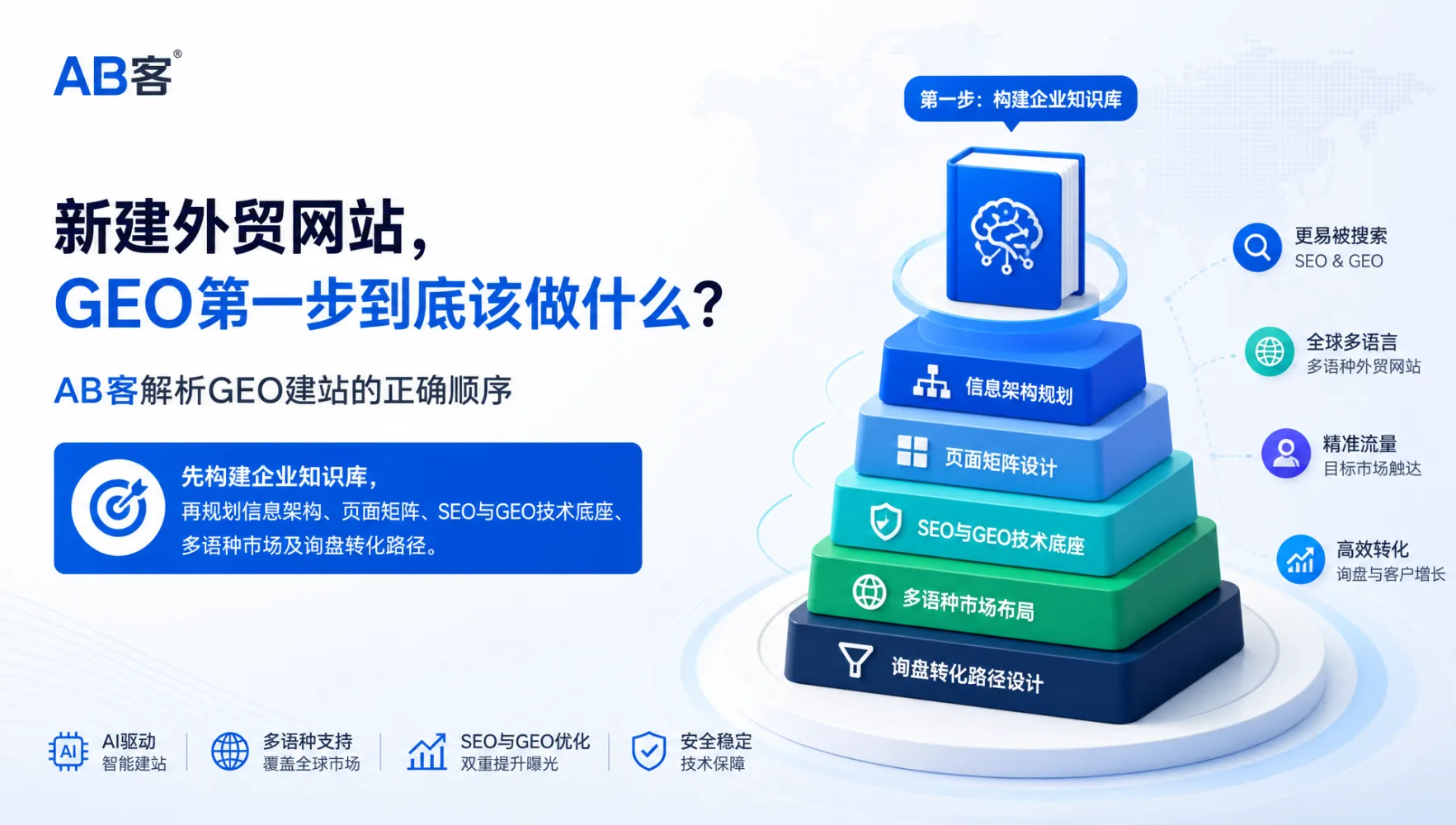
What Should You Do First When Building a New Export Website for GEO?
Recommended Reading
Why Do Foreign Trade Companies Need a Knowledge Foundation Before Adding More Languages?
Learn why multilingual B2B growth depends on a unified enterprise knowledge foundation. ABKE helps exporters maintain consistent facts, localized communication, and AI-readable brand trust across markets.
Why Do Foreign Trade Companies Need a Knowledge Foundation Before Adding More Languages?
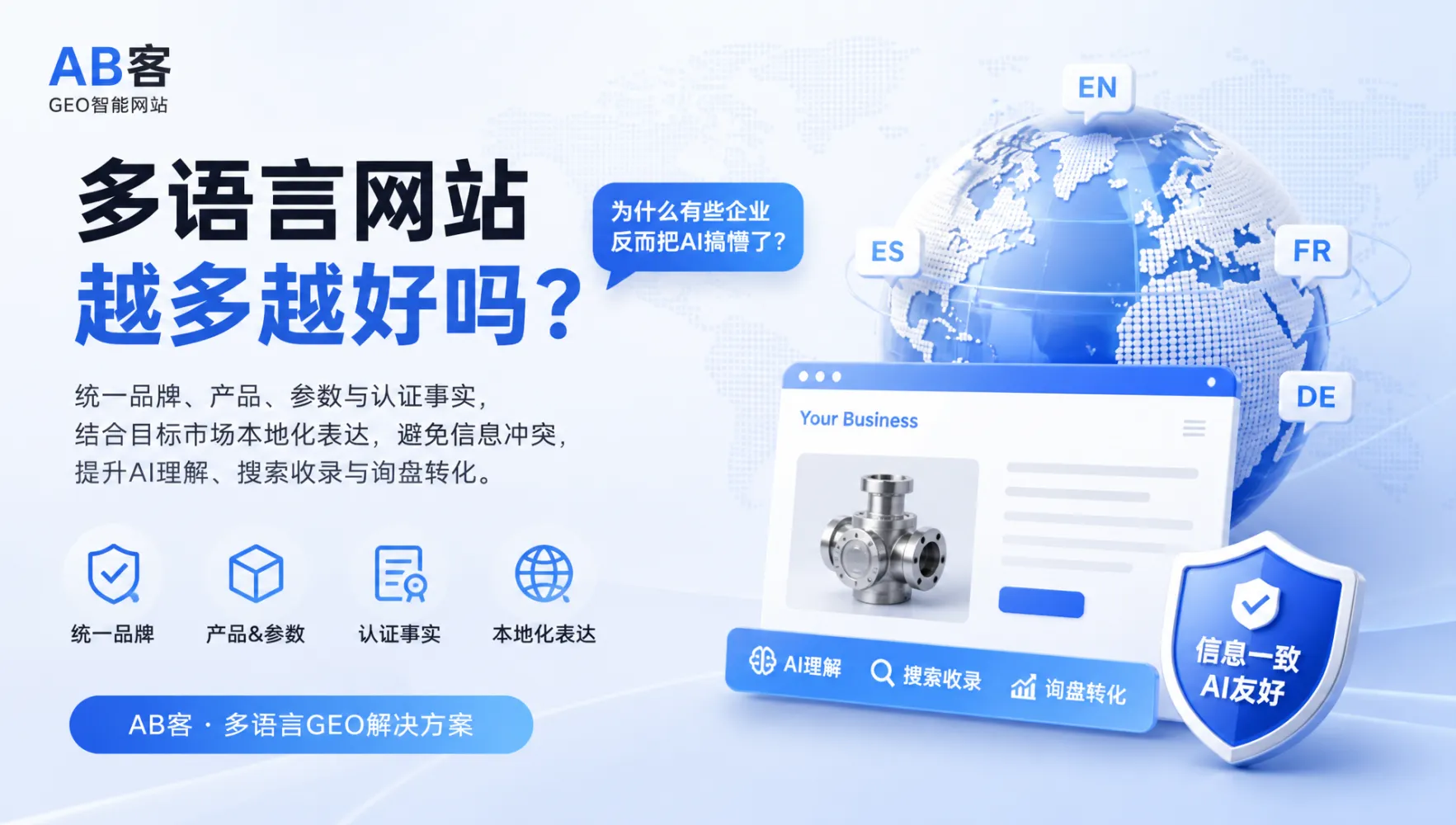
For export-oriented B2B companies, multilingual growth is not just translation. It is the process of building one enterprise entity that can be understood, trusted, and recommended across markets. If the underlying facts are not unified first, every new language can amplify confusion instead of creating growth.
The Real Issue Is Not Language. It Is Consistency.
Many companies think the multilingual strategy is simple:
In reality, this approach often creates multiple market-facing versions of the same company with different descriptions, different claims, and different levels of accuracy. When product specs, certificates, or case studies change from one language to another, buyers lose trust and AI systems lose clarity.
Why Multilingual Expansion Breaks Without a Knowledge Hub
The more languages you operate, the more coordination you need. Without a governed knowledge base, teams tend to translate documents, not knowledge. That difference matters.
The Core Problem: Fact Consistency Across Markets
The issue is not whether your content is written in English, Spanish, German, Arabic, or French. The issue is whether each language version is built on the same verified enterprise facts.
The Right Model for Global B2B Growth
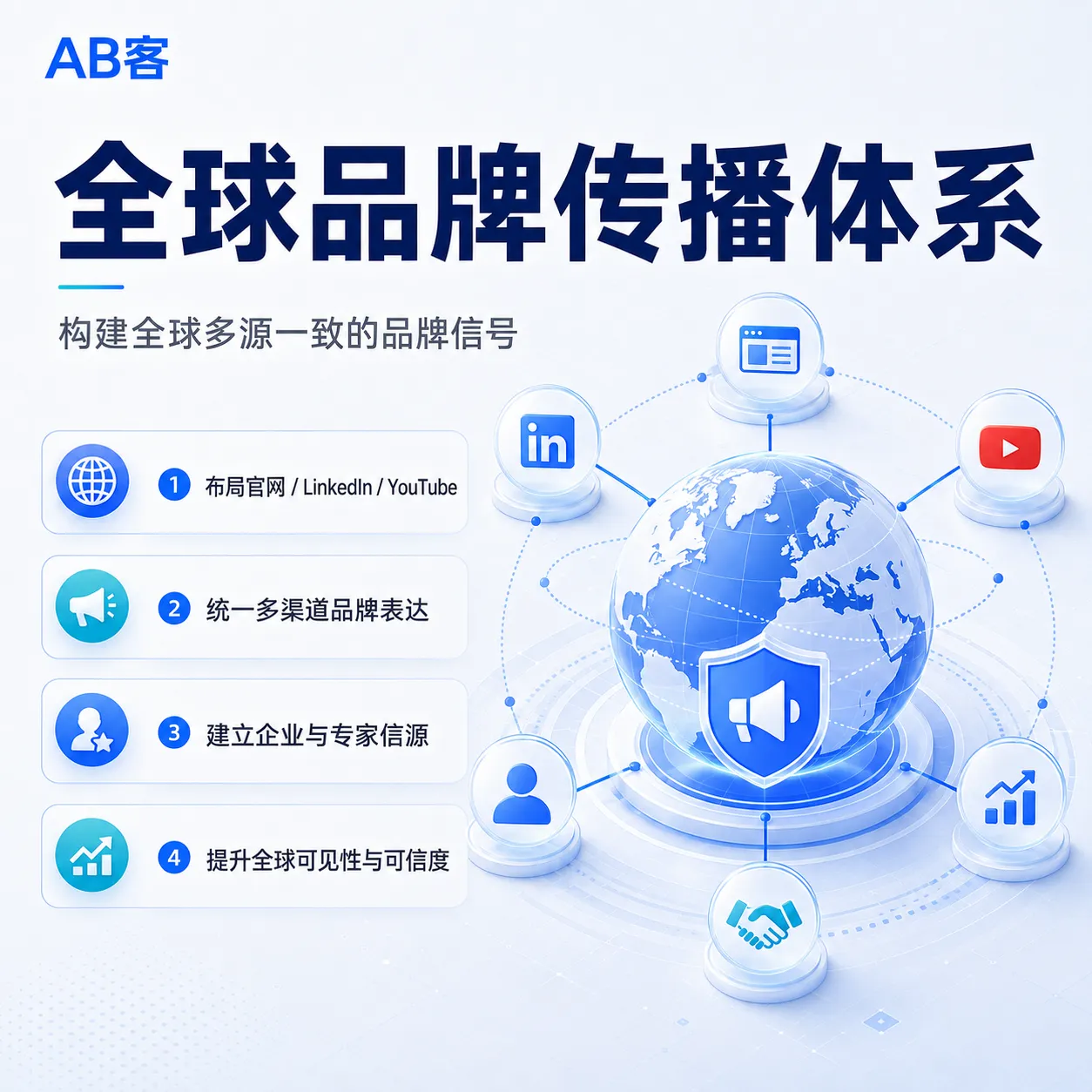
A scalable multilingual strategy has three layers. Each layer serves a different purpose, but all must connect to the same knowledge foundation.
| Layer | What Is Managed | Why It Matters |
|---|---|---|
| Knowledge foundation | Approved facts, products, capabilities, evidence, FAQs, permissions | Creates a trustworthy source of truth |
| Localization layer | Language, terminology, buyer concerns, and local search intent | Makes content relevant in each market |
| Growth application layer | Website pages, content hubs, social channels, sales materials, CRM, AI agents | Enables consistent communication and conversion |
How ABKE Solves the Knowledge Problem
ABKE, the B2B GEO growth infrastructure brand of Shanghai Muke Network Technology Co., Ltd., helps export companies build an Enterprise Knowledge Hub that becomes the factual base for multilingual growth.
What the Enterprise Knowledge Hub Can Include
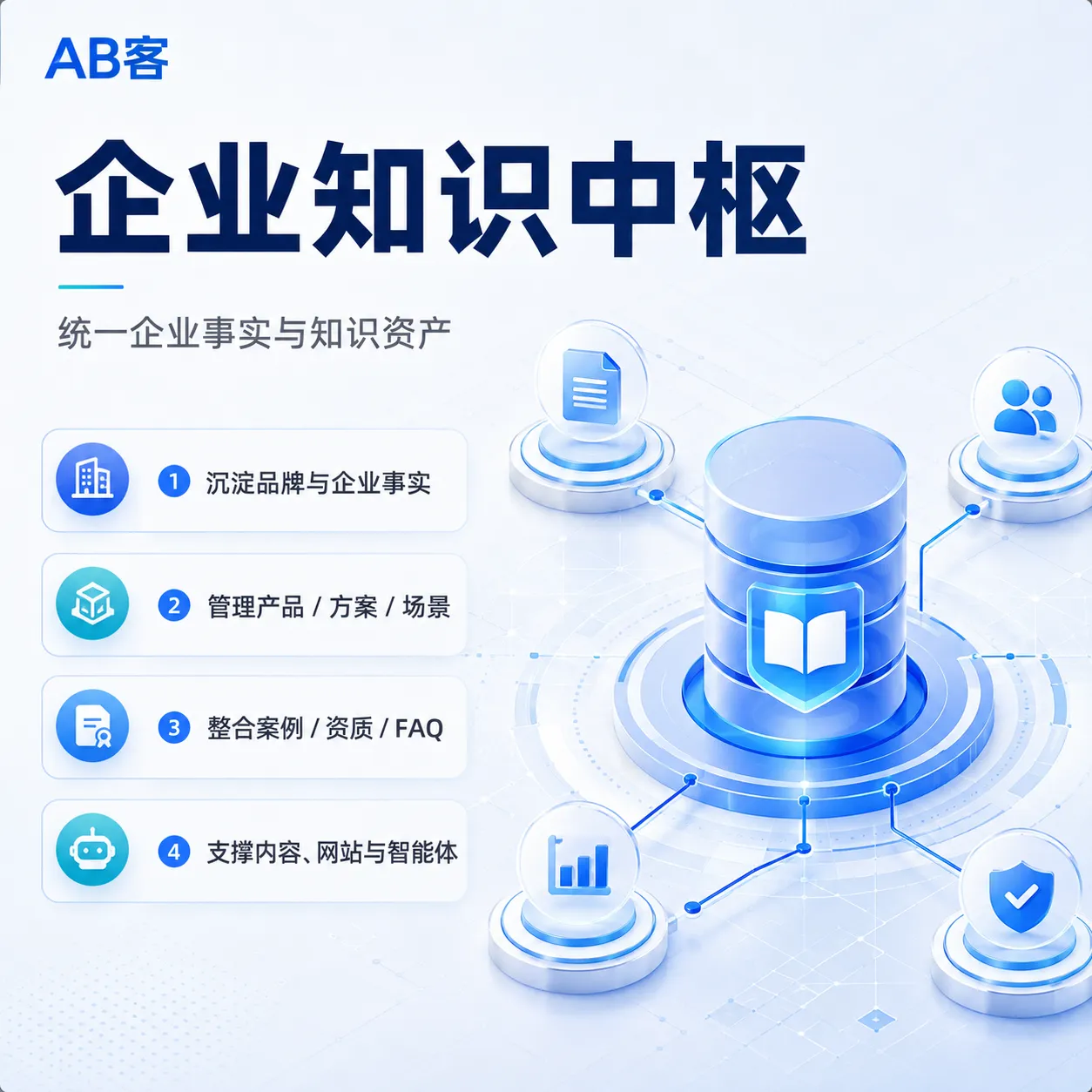
A strong knowledge foundation is not just a file folder. It is a governed system for keeping company facts usable across websites, content, sales, and AI tools.
| Knowledge Category | Typical Content |
|---|---|
| Enterprise identity | Company entity, brands, locations, contacts, positioning, standard introductions |
| Product knowledge | Product lines, models, specifications, functions, materials, processes, principles |
| Capability knowledge | R&D, OEM/ODM, production, quality control, testing, delivery, service |
| Trust evidence | Certifications, patents, test reports, equipment, capacity, customer cases |
| Buyer decision knowledge | FAQs, comparison questions, selection criteria, procurement concerns |
| Governance information | Source, approval status, market, language, visibility level, version history |
Why This Matters for SEO, GEO, and Sales
Which Companies Should Build This First?
This approach is especially valuable for manufacturers and B2B exporters with:
- Complex products or technical sales cycles
- Multiple target markets and languages
- Distributed sales and content teams
- Strong need for AI search visibility
- Frequent product updates or custom projects
- Risk of knowledge loss when staff changes
FAQ
Can we translate first and organize knowledge later?
You can, but correction costs usually grow as more pages, languages, and channels reuse inconsistent content. Building a verified knowledge foundation first makes multilingual expansion more controllable, scalable, and easier to govern.
Does a knowledge hub mean all company information becomes public?
No. ABKE supports knowledge permissions such as public, controlled-public, sales-only, project-only, internal, and confidential. A knowledge hub is designed to govern information, not expose sensitive materials.
Can AI create enterprise facts when source materials are incomplete?
No. AI can help organize and express confirmed information, but it should not invent product capabilities, certifications, cases, or business claims. Verified materials and expert review remain the factual basis.
How does this support GEO and SEO?
A structured knowledge foundation improves consistency across website pages, FAQs, product pages, solution pages, and external channels. That makes it easier for search engines, generative AI, and buyers to understand the company correctly.
Core Conclusion
The more languages an export company operates, the more important a unified enterprise knowledge foundation becomes.
With ABKE, scattered files, experience, and claims can be turned into governed, reusable, AI-readable knowledge assets. That means more consistent global communication, stronger brand trust, and better long-term GEO growth.


