.png?x-oss-process=image/resize,h_100,m_lfit/format,webp)

.png?x-oss-process=image/resize,m_lfit,w_200/format,webp)

Hot Products
.png?x-oss-process=image/resize,h_2000,m_lfit/format,webp)
.png?x-oss-process=image/resize,h_2000,m_lfit/format,webp)

Popular articles
How ABKE Helped GO Biotech Build a GEO Smart Website for Plasticizer Selection
Turn Customer Cases, Project Records and Technical Experience into Market Assets
Case Study: A Precision Parts Custom Manufacturing Factory Clarifies Machining Boundaries Through an Enterprise Knowledge Hub and Reduces Invalid Inquiries
Build Localized Multilingual Websites for Multi-Country B2B Market Expansion
Recommended Reading
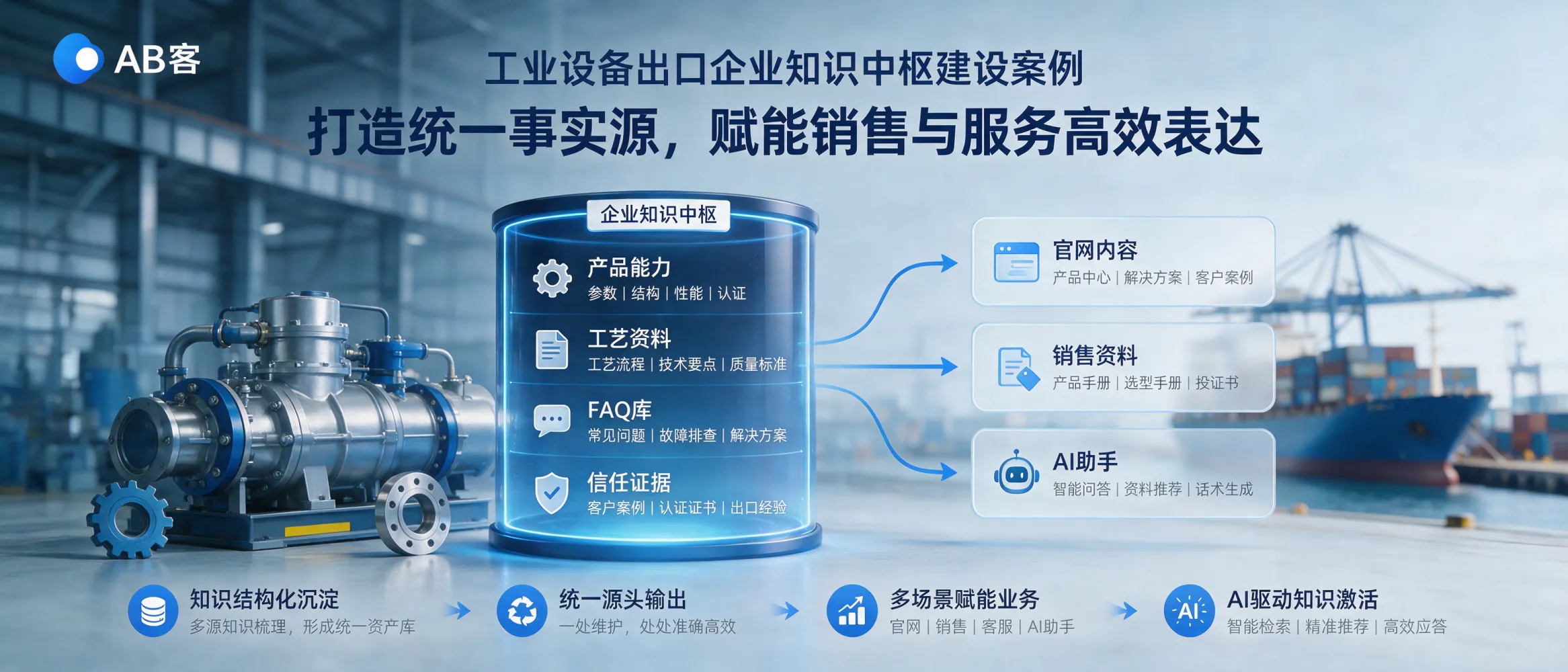


How ABKE Builds Multilingual Solution Content for New Energy Equipment Companies
ABKE explains how a new energy equipment company moved from translated English content to multilingual solution content built around target markets, buyer roles, application scenarios, and AI visibility optimization.
For export-oriented new energy equipment companies, multilingual content is no longer a simple translation task. Overseas buyers need to understand where the equipment can be used, how it fits project conditions, what information must be confirmed before selection, and whether the supplier can support implementation and long-term communication.
In this project, ABKE helped a new energy equipment company move from directly translated English materials to a multilingual solution content structure built around target markets, buyer roles, application scenarios, case signals, and procurement questions. The work focused on creating content that can support overseas buyer evaluation, website conversion, sales communication, and long-term AI visibility optimization.
Project Context
The client is a new energy equipment company preparing to enter multiple overseas markets. Its business involved equipment export promotion, project-based customer communication, and market development across different target countries. The company already had English content on its website and in sales materials, but most of it was translated directly from Chinese source documents.
These materials could explain product names and basic specifications, but they did not fully answer how overseas procurement teams evaluate equipment suppliers. In particular, the content lacked local purchasing context, application-based explanations, role-specific decision support, and clear connections between product information, solution pages, project experience, and frequently asked questions.
Core challenge: the company did not only need multilingual words. It needed a multilingual content system that could explain product capability in the way overseas buyers search, compare, ask questions, and make procurement judgments.
From Product Translation to Procurement-Oriented Content
New energy equipment products usually involve technical specifications, project environments, installation conditions, service expectations, and application differences across markets. Overseas buyers rarely make decisions based on model names and parameters alone. They also need to know whether the equipment fits local project scenarios, how selection should be evaluated, what conditions must be confirmed, and how the supplier supports communication before and after purchase.
ABKE therefore treated the project as a content architecture upgrade rather than a translation project. The goal was to transform product-introduction content into multilingual solution content that could support discovery, understanding, comparison, and initial decision-making.
Key Problems Identified
Direct translation without local purchasing context
The English content followed the logic of Chinese source materials. It was understandable, but not close enough to how overseas buyers ask questions, compare suppliers, and assess project fit.
Product pages and solution content were disconnected
Product pages described equipment, while project materials showed experience. However, there was no clear bridge explaining application scenarios, selection logic, and solution relevance.
Buyer roles were not clearly addressed
Procurement, technical, project, and management stakeholders care about different issues. The previous content did not provide layered explanations for these roles.
Multilingual expansion lacked a stable framework
If every new market required temporary translation, terminology and page structure would become difficult to maintain, compare, and optimize over time.
AI visibility foundations were limited
The content did not clearly connect company identity, product capability, application scenarios, customer questions, and evidence signals, making semantic understanding weaker for search engines and generative AI systems.
Project Objectives
Based on the diagnosis, ABKE defined the content work around a practical B2B growth objective: help the company build multilingual content assets that can be understood by overseas buyers, reused by sales teams, indexed by search engines, and better interpreted by AI systems.
- Build a multilingual content planning framework for target markets.
- Extend product content from specification display to scenario-based solution explanation.
- Map common questions across different procurement decision stages.
- Connect product pages, solution pages, application scenarios, case signals, and FAQs.
- Improve semantic clarity for SEO and AI visibility optimization.
- Provide reusable multilingual communication materials for sales follow-up.
ABKE’s Content Building Process
1. Structuring enterprise knowledge before writing
ABKE first reviewed the client’s existing materials, including product introductions, parameter documents, application notes, project experience, common customer questions, and sales communication records. Instead of translating these documents directly, the team broke them down into structured knowledge units.
The knowledge structure covered company information, product series, core functions, typical application conditions, target-market concerns, reusable project signals, recurring sales explanations, and the boundaries of what could be publicly stated. This created a factual base for multilingual content production and reduced the risk of vague or unsupported claims.
2. Planning content from target countries and buyer roles
Multilingual content becomes useful when it reflects how buyers think. ABKE helped the client organize content themes around target countries, buyer roles, and procurement decision paths. The topics were not limited to product names and technical specifications; they also included application scenarios, selection guidance, project fit, supplier evaluation, installation considerations, maintenance questions, and common misunderstandings.
Supplier reliability, delivery coordination, quality control, communication efficiency, and cooperation risk.
Product parameters, operating conditions, compatibility boundaries, and technical clarification.
Application process, site requirements, implementation considerations, and maintenance support.
Company capability, market experience, cooperation value, and long-term supplier confidence.
3. Building a connected solution content structure
To solve the problem of isolated pages, ABKE designed a content structure that links product pages, solution pages, application scenario content, case signals, and FAQs. Each type of content plays a different role in the buyer journey.
- Product pages explain what the equipment is, its main functions, and essential specifications.
- Solution pages explain how the equipment can be applied to industry or project needs.
- Application scenario content explains selection logic and configuration considerations in different operating environments.
- Case signals present relevant project experience, application conditions, and credibility cues within approved factual boundaries.
- FAQ content responds to common questions before, during, and after procurement.
- Multilingual pages adapt terminology, information order, and purchasing context for target markets.
4. Localizing expression instead of mechanically translating
In the project, localization meant more than grammar correction. ABKE transformed product strengths, equipment features, and project experience into buyer-oriented explanations. The content clarified where the equipment may be applicable, what technical conditions should be confirmed, what information the supplier can provide during communication, and which situations require further evaluation.
AI-assisted writing was used within a controlled workflow, but the content remained bound by confirmed enterprise facts. ABKE did not create unsupported case data, third-party endorsements, guaranteed rankings, fixed inquiry numbers, or unverifiable performance promises.
5. Enhancing semantic clarity for AI visibility optimization
In generative AI and search environments, content needs to be clear enough for systems to understand who the company is, what equipment it provides, which application scenarios it serves, what customer problems it answers, and what evidence supports the company’s claims.
ABKE optimized the semantic structure by strengthening the relationships between products, industries, application scenarios, buyer questions, and case signals. This does not guarantee that a specific page will be cited or recommended by an AI system. The purpose is to build a stronger long-term content foundation that is easier for search engines, AI systems, overseas buyers, and sales teams to interpret and reuse.
Facts and Project Boundaries
The project was based on the client’s actual business background and content status. ABKE’s work followed a factual and controlled content-building approach, with emphasis on what could be verified and maintained.
- The client is a new energy equipment company planning to expand into multiple target markets.
- The original English content was mainly translated directly and lacked local purchasing context.
- The client needed to upgrade from product introduction content to solution-oriented content.
- The content plan was organized around target countries, buyer roles, and application scenarios.
- The content structure connected products, solutions, application scenarios, case signals, and FAQs.
- ABKE used an AI content growth system to support multilingual content building, content structure optimization, and AI visibility optimization.
- The project did not use fabricated data, guaranteed rankings, fixed inquiry results, or guaranteed AI recommendations as delivery promises.
Stage Results and Practical Value
After the project, the company established a clearer foundation for multilingual content and overseas market communication. Market performance still depends on many factors, including competition, channel operations, product positioning, website experience, and sales follow-up. From the perspective of content assets, however, the project created several practical improvements.
Multilingual content became more localized
The company began to organize content around target-market procurement questions instead of relying only on direct English translation.
Solution explanations became clearer
Application scenarios, buyer roles, and project needs were used to explain where the equipment may fit and what should be evaluated before procurement.
Website and sales content became more reusable
Product pages, solution pages, application content, case signals, and FAQs could support website reading as well as email replies, sales explanations, and follow-up materials.
The content system became easier to expand
When new markets, products, or approved project materials are added, the company can extend content based on the same knowledge structure and topic matrix.
AI visibility foundations became stronger
Clearer semantic relationships and buyer-question coverage made the content more suitable for search engine understanding and generative AI interpretation over time.
What New Energy Equipment Companies Can Learn
This project provides a practical reference for new energy equipment, industrial machinery, and other B2B manufacturing companies that want to enter overseas markets. When products are technical and procurement decisions are complex, multilingual content should not be treated as a final-stage translation task.
- Build the content structure before expanding languages. If the original content lacks solution logic, direct translation will only reproduce the same weakness in another language.
- Localize around procurement questions. Useful localization answers how buyers evaluate fit, risk, supplier capability, and project requirements.
- Use case signals to support solution credibility. Even when full project details cannot be disclosed, approved project types, application conditions, and experience signals can support buyer understanding.
- Keep AI-generated content under factual control. Technical content must be reviewed against product facts, application boundaries, and business commitments.
- Continue reviewing content after publication. Page indexing, visit behavior, AI mentions, inquiry quality, sales feedback, and target-market changes should guide ongoing optimization.
How ABKE Supports Similar Projects
ABKE works with export-oriented B2B companies to build GEO-oriented growth infrastructure. In multilingual solution content projects, ABKE combines enterprise knowledge structuring, buyer question mapping, SEO and GEO content planning, AI-assisted content production, professional review, and website content architecture optimization.
The objective is not to create generic multilingual pages, but to help companies build content assets that can explain their product capabilities, application fit, supplier value, and decision-support information in a way that is easier for overseas buyers, search engines, and generative AI systems to understand.
Frequently Asked Questions
Is multilingual content building the same as translating a website?
No. Translation converts language, while multilingual content building also includes target-market analysis, buyer role mapping, procurement question planning, solution explanation, case signal organization, and content structure optimization.
Why do new energy equipment companies need solution content?
New energy equipment often involves technical parameters, operating conditions, project scenarios, and service expectations. Solution content places product capability into real application contexts, helping overseas buyers make more informed initial judgments.
What role does ABKE’s AI content growth system play?
It helps transform verified enterprise knowledge into content assets that can be published, reused, indexed, and understood by search engines and generative AI systems. In this project, it supported buyer question mapping, topic planning, multilingual structure design, solution content creation, review, and optimization suggestions.
Can AI-generated content be used directly for overseas markets?
It should not be used without review. B2B equipment content involves product facts, technical boundaries, application conditions, and procurement judgment. ABKE uses AI assistance together with professional review to reduce vague, inaccurate, or overextended expressions.
Can multilingual content guarantee more inquiries?
Multilingual content can improve market communication, content coverage, and the foundation for customer acquisition, but it cannot independently guarantee a fixed number of inquiries. Inquiry results are also affected by market demand, competition, pricing, channels, website experience, and sales follow-up.
What materials should a company prepare for this type of project?
Useful materials include product documents, technical parameters, application scenarios, project experience, common customer questions, sales communication records, images or videos, and review support from business or technical staff.
Is this approach suitable for other manufacturing exporters?
Yes, with industry-specific adjustment. Industrial equipment, machinery, electronic components, electrical products, and other B2B manufacturing exporters can use a similar path: enterprise knowledge structuring, buyer question mapping, solution content building, multilingual localization, and continuous optimization.


