.png?x-oss-process=image/resize,h_100,m_lfit/format,webp)

.png?x-oss-process=image/resize,m_lfit,w_200/format,webp)

Hot Products
.png?x-oss-process=image/resize,h_2000,m_lfit/format,webp)
.png?x-oss-process=image/resize,h_2000,m_lfit/format,webp)

Popular articles
How ABKE Helped GO Biotech Build a GEO Smart Website for Plasticizer Selection
How Long Does GEO Take to Work for B2B Exporters? A Practical AI Search Visibility Timeline
Build Localized Procurement Content for Priority B2B Export Markets
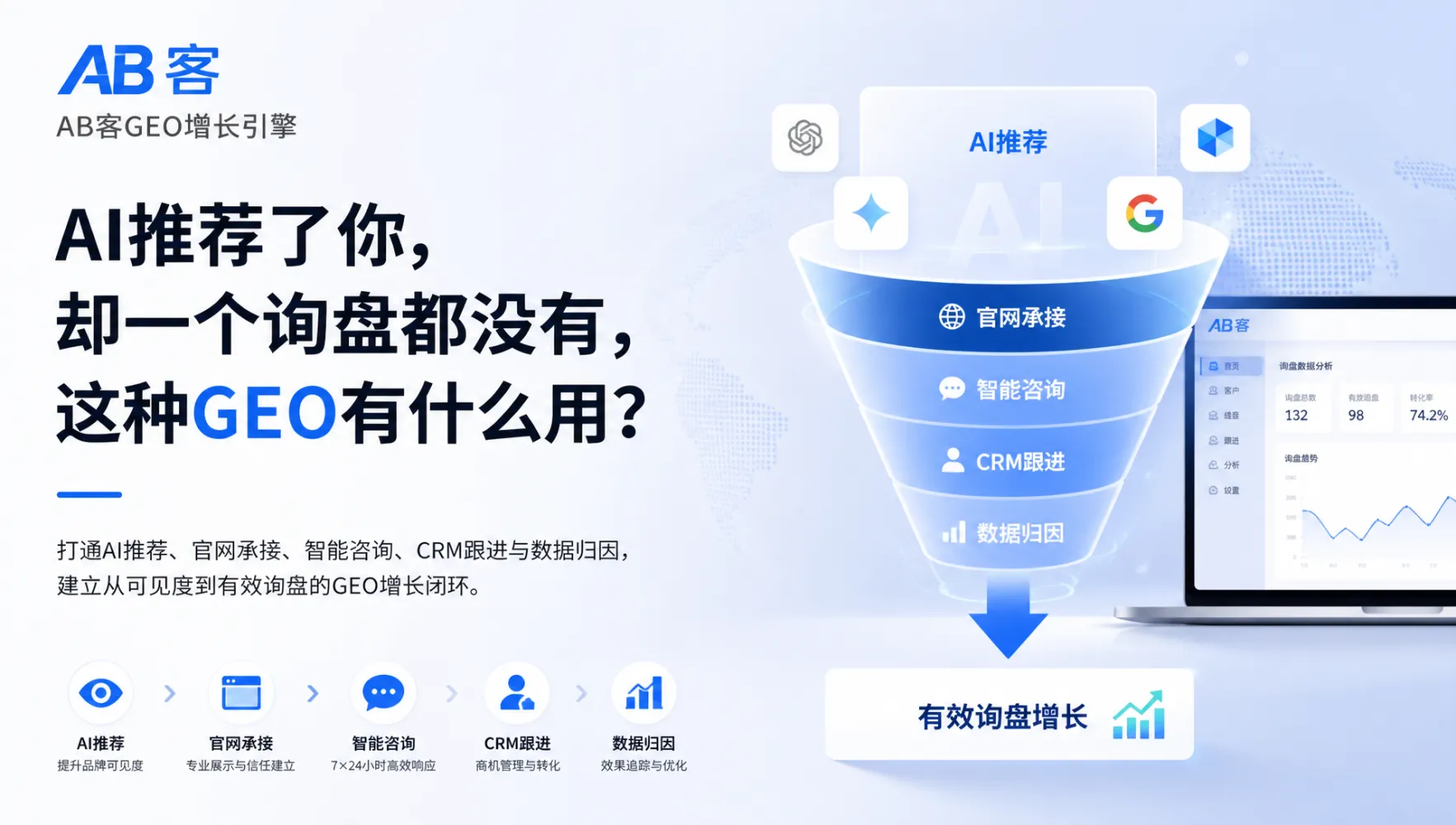
AI Recommended Your Business but You Got No Inquiries—What Is GEO Really Worth?
From Zero to One: A Practical Four-Stage B2B GEO Roadmap for Export Businesses
Recommended Reading




Are More Multilingual Websites Always Better? Why Some Companies Confuse AI
Learn why inconsistent multilingual website information can confuse AI, weaken search visibility, and reduce buyer trust. ABKE helps B2B exporters build fact-consistent, market-localized GEO websites.
Are More Multilingual Websites Always Better? Why Some Companies Confuse AI
For B2B exporters, multilingual expansion is not only a language issue. It is a facts issue, a structure issue, and a trust issue. When different language versions say different things, search engines, AI systems, and buyers may no longer understand the company as one clear entity.
The Biggest Problem Is Not Translation Quality — It Is Fact Conflict
Many companies assume that publishing more language versions automatically improves global visibility. In reality, more pages can create more confusion if the underlying company information is inconsistent.
Typical inconsistency pattern
What AI Gets Confused About Most
AI systems do not only read words. They infer relationships between company entities, product facts, capability claims, and trust evidence. Once the facts drift across pages and channels, the semantic picture becomes unstable.
The Four Most Common Ways Multilingual Content Confuses AI
Entity name drift
The company is named differently across language versions, directories, and social platforms.
Product taxonomy drift
The same product is described with different names, categories, or model logic.
Specification drift
Numbers, tolerances, materials, or standards change from page to page.
Trust evidence drift
Certificates, factory claims, and case studies do not align across markets.
Simple rule:
If a buyer or AI asks the same question in different languages, the answer should remain factually consistent — even if the wording, examples, and emphasis are localized.
The Correct Multilingual GEO Path
ABKE’s view is straightforward: first unify facts, then localize expression. Do not build “different companies” for different countries. Build one enterprise knowledge foundation, and let each market page adapt to local search intent and buyer language.
A practical comparison
| What should stay unified | What should be localized | What should be updated continuously |
|---|---|---|
| Legal entity, brand name, product model, certifications, factory capability, proof points | Buyer questions, terminology, use cases, units, market regulations, CTA language | Product changes, new cases, revised specs, discontinued models, updated documents |
How ABKE Handles Multilingual Localization in a GEO Smart Website
ABKE’s GEO smart website approach is designed for B2B exporters that need both search visibility and AI readability. The goal is not simply to translate pages. The goal is to build a structured website system where enterprise facts are governed centrally and displayed locally in the right way.
Core elements of the localization system
- One source of truth: all company facts are maintained in a central knowledge base.
- Market-ready expression: each language version adapts phrasing to local buyer behavior and search intent.
- Structured data and entity consistency: the website keeps names, relationships, and proof signals aligned.
- Content governance: updates are controlled so outdated pages do not weaken credibility.
- Conversion paths: contact routes, forms, WhatsApp, and email actions are adapted for market preference.
Think of it as a three-layer model
Facts
What is true about the company
Localization
How each market prefers to learn
Conversion
How buyers take the next step
Why This Matters for Export B2B Growth
A multilingual website is not valuable just because it exists in more languages. It becomes valuable when every version reinforces the same company identity, product logic, and trust signals while speaking to buyers in a way that feels native to their market.
What a good multilingual GEO website can do
For AI systems
Make the company easier to understand, cite, and recommend across different prompts and markets.
For search engines
Improve indexing, semantic clarity, and cross-language topical relevance.
For buyers
Reduce confusion, answer questions faster, and build trust through consistent proof.
For sales teams
Create reusable content assets that shorten explanation time and support follow-up.
Quick FAQ
Q1. Should every export company build a separate website for each country?
Not necessarily. The best choice depends on product complexity, market demand, compliance needs, content resources, and long-term maintenance capacity. In many cases, a well-governed multilingual main site performs better than several disconnected sites.
Q2. Is direct translation enough for GEO?
Usually not. GEO localization should preserve factual accuracy while adapting terminology, search intent, examples, technical vocabulary, and buyer concerns for each market.
Q3. What should be reviewed first before launching multilingual pages?
Start with company identity, brand naming, product taxonomy, specifications, certifications, existing URLs, structured data, and update ownership. These are the items most likely to create AI confusion if they are not aligned.
Q4. What is the safest multilingual strategy for a B2B manufacturer?
Use one verified knowledge foundation, then localize content for each market without changing core facts. This makes the website easier to maintain and more reliable for both AI and buyers.
A Practical Closing Thought
If you are building multilingual pages for an export business, the first question should not be “How many languages can we publish?” It should be “Can every version tell the same truth in a market-appropriate way?”
ABKE’s GEO smart website approach helps B2B exporters keep facts consistent, localize content intelligently, and build a website structure that search engines, generative AI, and overseas buyers can understand with confidence.


