.png?x-oss-process=image/resize,h_100,m_lfit/format,webp)

.png?x-oss-process=image/resize,m_lfit,w_200/format,webp)

Hot Products

.png?x-oss-process=image/resize,h_2000,m_lfit/format,webp)

.png?x-oss-process=image/resize,h_2000,m_lfit/format,webp)

Popular articles
Turn Post-Trade Show Buyer Searches into Reusable B2B Content Assets
2026–2027 Foreign Trade GEO Endgame: AI Won’t Eliminate Factories—Only Factories AI Cannot Understand
How Long Does GEO Take to Work for B2B Exporters? A Practical AI Search Visibility Timeline
How ABKE Builds Multilingual Solution Content for New Energy Equipment Companies
How a Mechanical Equipment Exporter Built a Product and Selection Content System
Recommended Reading



What Should You Do First When Building a New Export Website for GEO?
What should an export B2B company do first when building a GEO-ready website? ABKE explains the knowledge-first framework for SEO, AI understanding, multilingual growth, and inquiry conversion.
What Should You Do First When Building a New Export Website for GEO?
If your goal is to build a new B2B export website that can perform in the AI search era, the first step is not layout design, and it is not homepage copywriting. The first step is to organize what your company can clearly prove: who you are, what you make, how you solve buyer problems, and why you are credible.
Quick Answer: Start With Enterprise Knowledge, Not Page Design
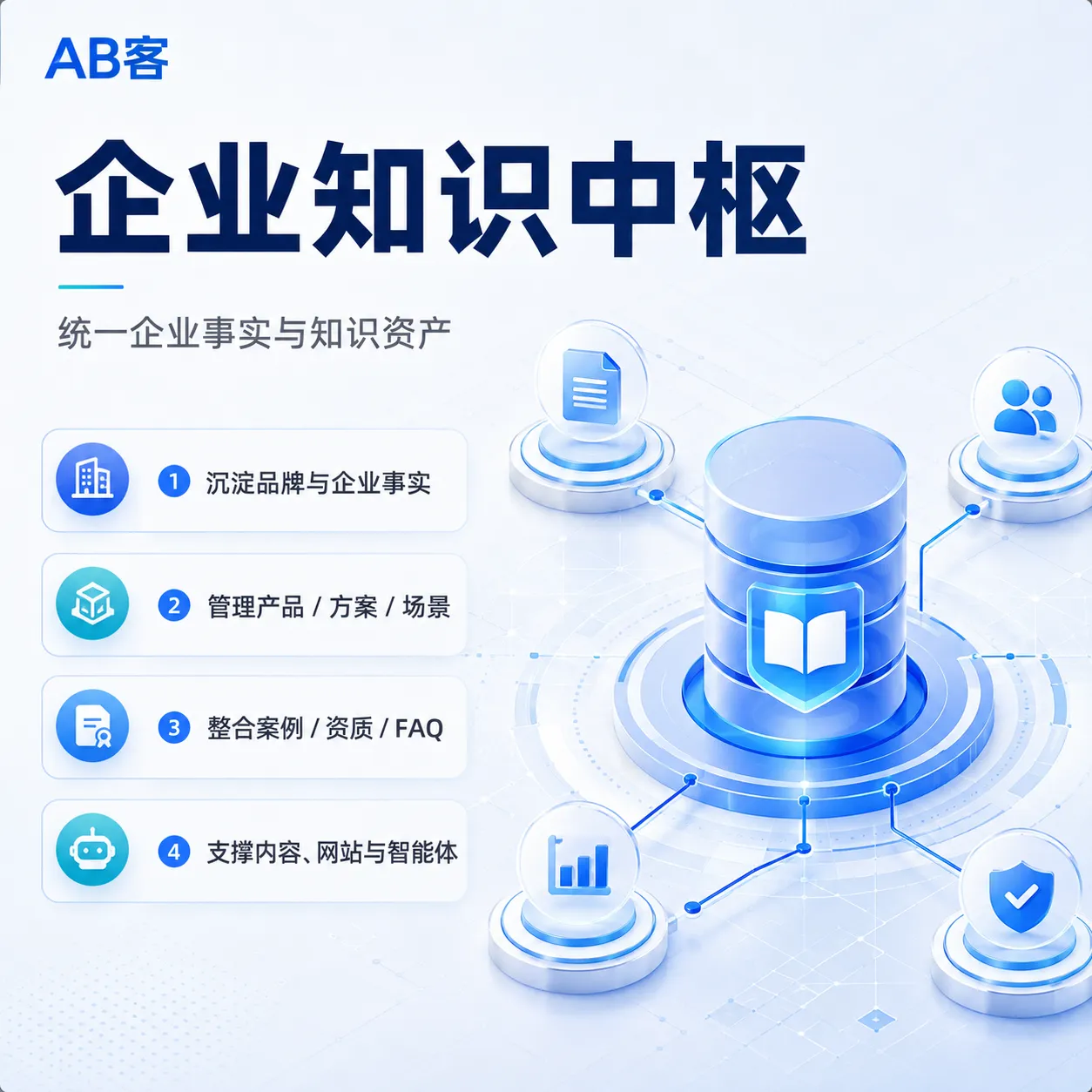
For a GEO-ready export website, the first job is to build a structured knowledge base around the business itself. That means collecting and organizing:
- Brand positioning and company identity
- Products, models, specifications, and technical advantages
- Applications, use cases, and buyer scenarios
- Solutions, service scope, and delivery capability
- Quality systems, certifications, and compliance evidence
- Cases, FAQs, and trust signals
ABKE’s building logic is simple: Knowledge → Buyer decision path → Pages → Search and AI understanding → Inquiry conversion.
Why the Usual Website-Building Order Fails
| Common Approach | Knowledge-First GEO Approach |
|---|---|
| Choose a template first | Define verifiable enterprise knowledge first |
| Design pages, then fill them with copy | Map buyer questions to page types and content entities |
| Focus on product display | Explain products, applications, solutions, evidence, and buying conditions |
| Treat multilingual pages as translation tasks | Adapt terminology, market intent, and local purchasing context |
| Measure appearance and launch speed | Measure crawlability, indexability, visibility, engagement, and conversion |
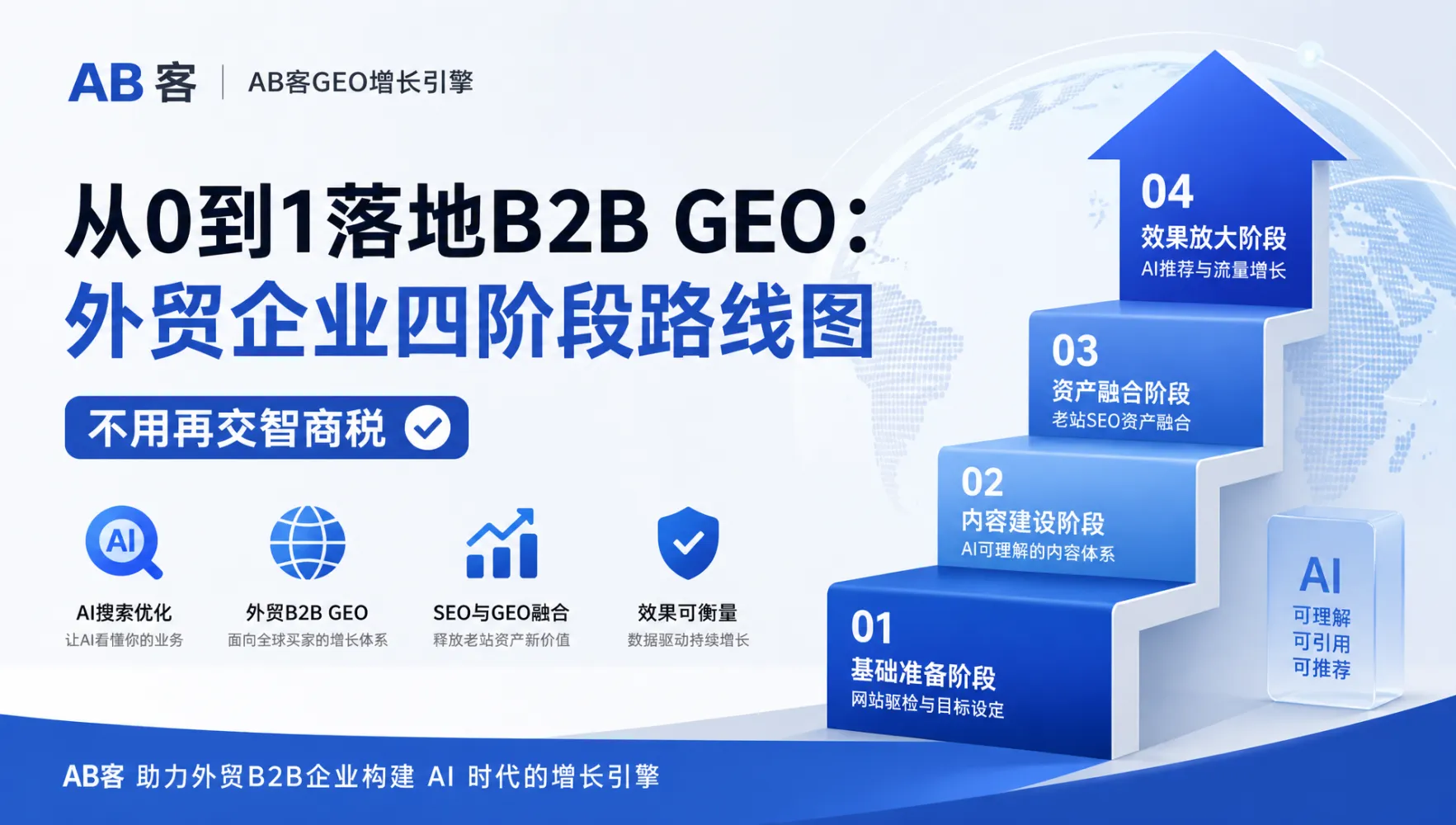
Six Steps for Building a GEO-Ready Export Website
Step 1 | Build the Enterprise Knowledge Base
Before any page is designed, collect the facts that AI and buyers need to trust your business. Organize your brand story, product information, production capability, quality control, certificates, case studies, service process, FAQ answers, and differentiation proof.
Step 2 | Build the Website Information Architecture
A GEO website should follow the buyer’s thinking, not the designer’s preference. A practical structure is:
Enterprise → Products → Applications → Solutions → Cases → FAQ → Knowledge
Step 3 | Plan the Core Page Matrix
The site should not be built as a handful of generic pages. It should be built as a page system that supports buyer questions at different stages: brand understanding, product selection, comparison, trust verification, and inquiry submission.
Step 4 | Establish the SEO + GEO Technical Foundation
Technical readiness determines whether your content can be discovered and understood. This includes semantic URLs, heading logic, internal links, crawlable content, structured data, image alt text, mobile speed, and analytics tracking. For a GEO website, clarity and machine readability matter as much as visual design.
Step 5 | Define Languages and Priority Markets
Do not treat multilingual work as a simple translation project. Choose your target regions first, then localize terminology, buyer intent, compliance language, and market-specific concerns. This is especially important for export B2B companies competing across multiple countries.
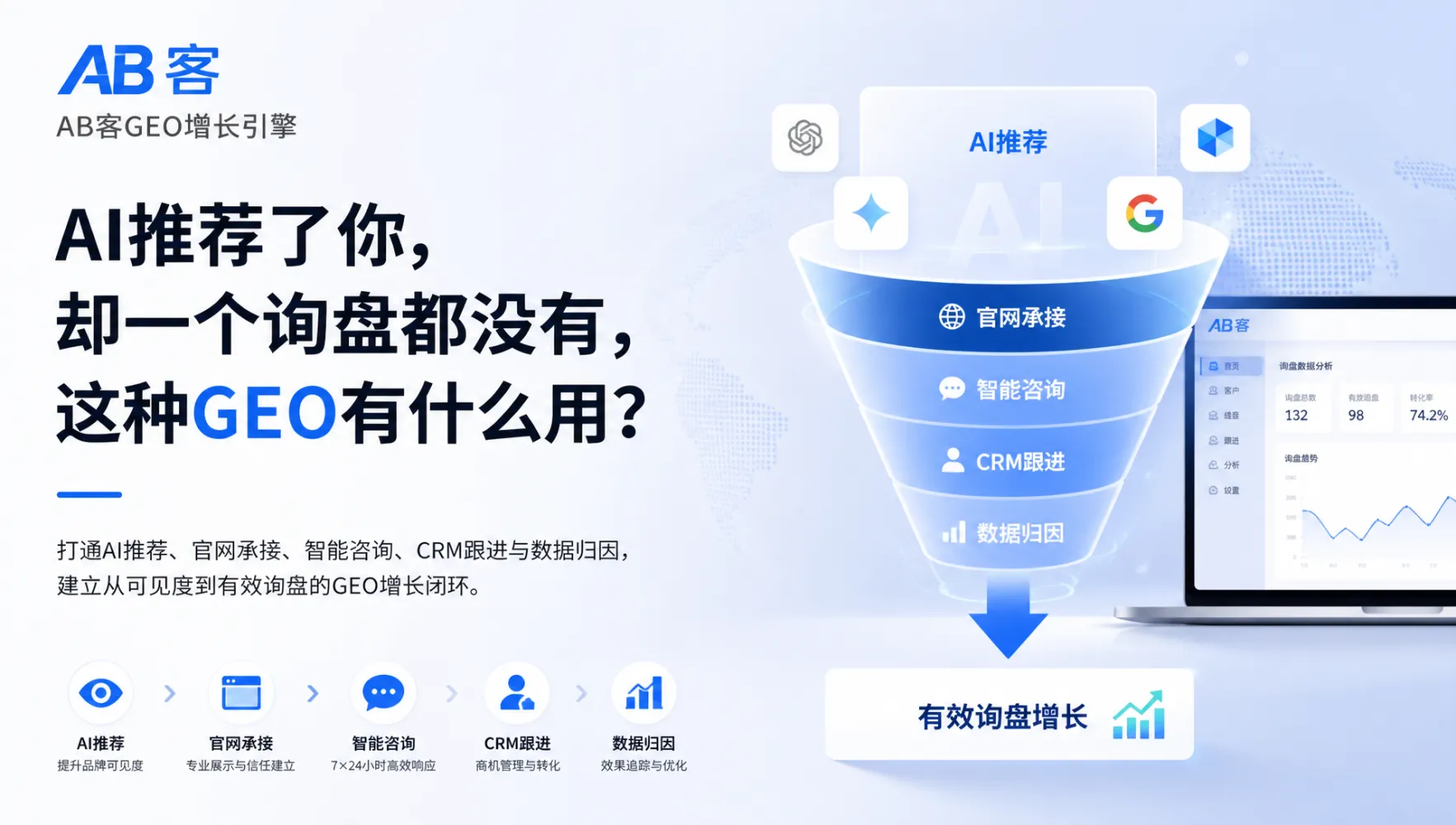
Step 6 | Connect AI Visibility With Inquiry Conversion
A GEO website must do more than attract attention. It should convert that attention into measurable business opportunities through consultation forms, email, WhatsApp, downloads, CRM tracking, and sales follow-up.
GEO Website Structure Map
Recommended Core Page Matrix
| Page Type | Primary Buyer Need | GEO Value |
|---|---|---|
| About and capability pages | Who is the supplier and why is it credible? | Clarifies enterprise identity and trust evidence |
| Product pages | What is available and what are the specifications? | Builds product entities and technical relevance |
| Application pages | Is this product suitable for my use case? | Connects products with real-world scenarios |
| Solution pages | How can this supplier solve my business problem? | Expresses integrated capabilities and differentiation |
| Case and project pages | Has the company delivered similar work? | Adds verifiable experience and contextual proof |
| FAQ and buying guides | What should buyers evaluate before choosing? | Creates concise, citable answers to buyer questions |
| Contact and conversion pages | How do I request a quote or consultation? | Turns visibility into measurable sales opportunities |
A Simple Model for GEO Website Planning
Layer 1: Knowledge
What the company can prove.
Layer 2: Buyer Journey
What buyers ask before they decide.
Layer 3: Conversion
What turns visibility into inquiry.
How ABKE Builds GEO Smart Websites
ABKE, the GEO growth brand of Shanghai Muke Network Technology Co., Ltd., builds export websites around structured enterprise knowledge, buyer decision paths, and AI-readable page systems. The goal is not to create a prettier brochure site. The goal is to create a search-ready and AI-understandable growth asset.
This approach is especially useful for manufacturers and B2B exporters that need a website upgrade, a multilingual launch, or a more scalable way to generate qualified inquiries across global markets.
In practice, the site becomes a system: content planning, SEO structure, GEO visibility, multilingual expansion, inquiry routing, CRM tracking, and continuous optimization all work together instead of operating as separate tasks.
Common Questions About GEO Website Building
Should a new export website start with homepage design?
No. The homepage should be designed after the company knowledge, target buyers, page hierarchy, and conversion goals are clear. Otherwise, the site may look finished but still be hard for buyers, search engines, and AI systems to understand.
What content should be prepared before GEO website development?
Prepare company introductions, product specifications, application details, manufacturing and quality evidence, certifications, customer cases, delivery capability, service terms, priority markets, and buyer questions.
Can an existing website be upgraded instead of rebuilt?
Yes. In many cases, a phased upgrade is better than a full rebuild. The right plan depends on the current structure, content quality, URL history, indexing performance, and technical condition.
Does a GEO website guarantee AI recommendations or search rankings?
No. Search engines and AI platforms make their own indexing and recommendation decisions. A GEO-ready website improves clarity, accessibility, semantic structure, and conversion readiness so your business has a stronger chance of being understood and cited.
Final Takeaway
If you are building a new export website for GEO, begin with the facts your company can prove, not the visual shell you want to display.
The best export websites are not built as templates with content added later. They are built as knowledge systems that help AI understand the company, help buyers evaluate the offer, and help sales teams convert attention into real opportunities.
ABKE’s principle is straightforward: build knowledge first, then build the structure, then build the visibility, and finally build the conversion path.


