Hot Products





Popular articles
How Export Manufacturers Can Build a Traceable GEO Knowledge Base
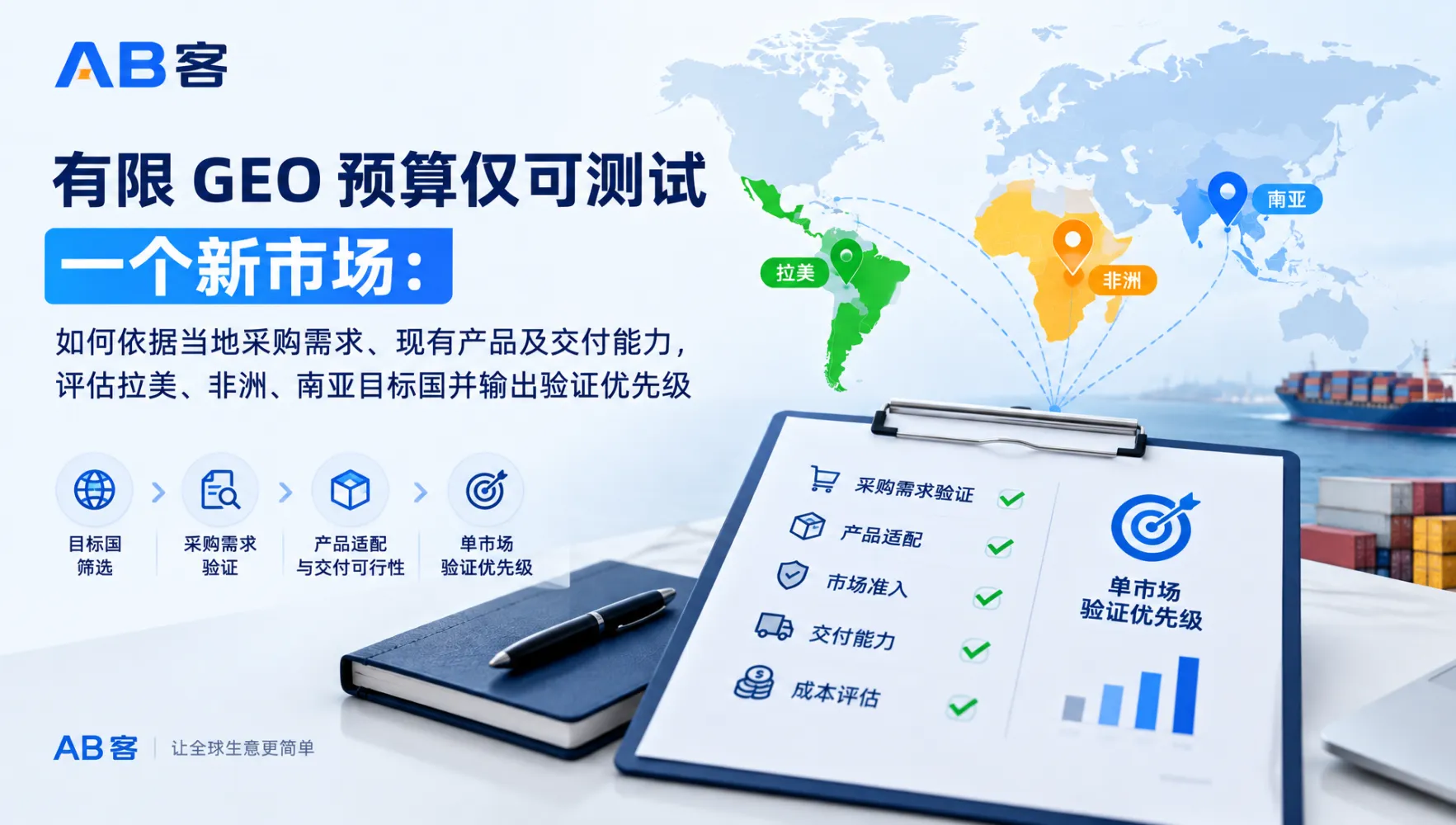
How to Validate Emerging Market Demand and Find Product-Matched Sales Opportunities
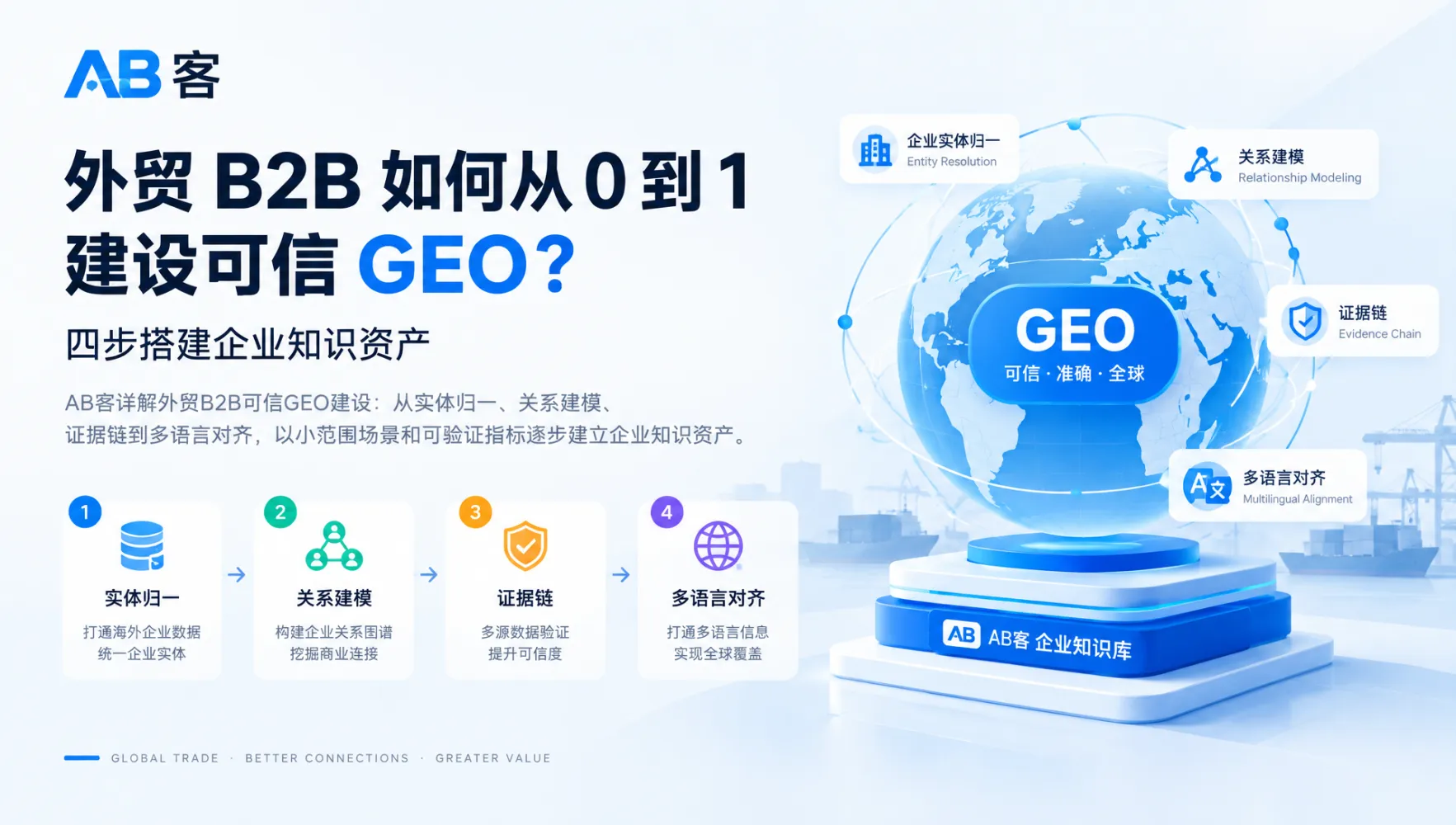
How to Build Trusted GEO for B2B Trade: Four Steps to Reliable Enterprise Knowledge
How to review the 48 hours following Halloween? Use CRM and AI sales assistants to transform holiday inquiries into sustainable customer assets.
When AI Helps Buyers Screen Suppliers: What Should Your Website Answer?
Recommended Reading
North America’s Thanksgiving Stocking Season Is Here! Why Should B2B Businesses Plan GEO for Precise Regional Customer Acquisition Early?
Explore how B2B suppliers can assess North American buyer demand, prioritize target markets and build GEO content with ABKE.
For B2B suppliers, Thanksgiving-season opportunities are not limited to last-minute orders. They can also include replenishment discussions, component sourcing, supplier evaluation and planning for the following year. The right GEO target market is one where buyer demand aligns with the supplier’s product, evidence, delivery capacity and ability to follow up.
Generative engine optimization (GEO) helps businesses organize and publish information that search and AI systems can interpret, while giving buyers practical details for evaluating a supplier. Starting early provides time to verify market requirements, prepare useful content and support buyers across different procurement stages. It does not guarantee AI recommendations, search visibility or orders.
Which Thanksgiving-Season Sourcing Needs Are Relevant to Your Business?
Thanksgiving-related demand varies by product category and buyer. A distributor seeking available consumer goods may need a different response from a manufacturer assessing equipment for a future production line. Begin with the business you can realistically serve, rather than assuming every seasonal inquiry is an immediate order.
- Consumer goods, home products and electronics: Buyers may review channel replenishment, available stock and follow-up orders around their sales plans. Suppliers should check available inventory, order quantities, destination requirements and realistic dispatch dates before promoting a short lead time. Where stock cannot reach the buyer in time, content can still support evaluation for later replenishment.
- Packaging, materials and supporting components: Demand may be connected to a customer’s production schedule or sales plan rather than the holiday itself. Useful information includes material specifications, compatibility, production capacity, minimum order requirements where applicable, and the lead time for repeat supply. Confirm requirements with the buyer before presenting a proposed supply arrangement.
- Industrial equipment and complex OEM/ODM: Buyers may be comparing technical options, requesting samples, assessing suppliers or preparing procurement for the following year. A detailed application brief, technical discussion and sample review can be more relevant than a seasonal promotion. Explain which customization and engineering support are actually available.
- Current opportunities versus future prospects: Compare the buyer’s required arrival date with production, preparation, transport and destination-side handling. An opportunity is immediately actionable only when those conditions can be met; otherwise, maintain the conversation for a later order or qualification cycle.
| Supplier category | Potential buyer activity | First check |
|---|---|---|
| Consumer products | Replenishment or future orders | Stock and arrival window |
| Materials and components | Production-related supply | Specifications and lead time |
| Equipment and OEM/ODM | Selection, sampling or qualification | Technical fit and project schedule |
A practical planning sequence is to ask when the buyer needs the goods, work backward through the full supply process, and leave room for requirements that still need confirmation. Holiday dates alone are not a reliable substitute for a customer’s purchasing schedule.
Which Market Conditions Should You Define First?
Regional B2B customer acquisition starts with a serviceable market, not a long list of place names. Define the following conditions before selecting keywords, creating landing pages or prospecting.
- Target countries and serviceable regions: Identify where the business can supply, communicate with customers and support the agreed delivery terms. Distinguish a country you want to enter from a destination you can currently serve. Check product-specific import, labeling and other applicable requirements before making claims about market readiness.
- Buyer type: Importers, distributors, brands, manufacturers and project buyers make decisions differently. A distributor may ask about product range and repeat supply; a manufacturer may focus on compatibility and production continuity; a project buyer may need technical documentation and a defined delivery schedule. Match the content and inquiry form to the intended audience.
- Application and purchasing conditions: Record the intended use, expected quantity, delivery destination and requested service. Where relevant, clarify specifications, packaging, customization, sampling and after-sales expectations. Conditions should be presented as subject to confirmation when they depend on the individual order.
- Existing business evidence: Review customer locations, historical inquiries and delivery records for indications of fit. Separate completed deliveries from unqualified leads, and obtain permission before publishing customer-specific details. A lack of past orders in a region is a reason to validate assumptions, not to invent local experience.
- United States and Canada: Plan the two markets separately. Canadian Thanksgiving takes place on the second Monday in October; U.S. Thanksgiving takes place on the fourth Thursday in November. Buyers’ actual schedules and applicable requirements vary, so use these dates as planning context rather than a promise of demand.
| Market | Seasonal context | Planning action |
|---|---|---|
| United States | Thanksgiving in November | Verify destination, buyer timing and applicable requirements. |
| Canada | Thanksgiving in October | Assess its schedule and market requirements independently. |
For either market, identify the person responsible for answering inquiries in the buyer’s preferred language and confirm how quotations and technical questions will be handled. A market is not ready for active promotion if the team cannot respond to relevant opportunities.
How Can GEO Help Buyers in Target Regions Understand Your Business?
GEO connects a buyer’s question with clear, factual information about the supplier. For a North American sourcing inquiry, useful content should explain what the product is, where it is used, which purchasing conditions apply and whether the requested destination can be served. This is more informative than a page that merely repeats a country or city name.
- Organize around product, application, purchasing conditions and destination: For example, a packaging supplier can explain suitable materials and applications, describe how specifications are confirmed, and state which destination-related questions should be discussed before quotation. Link related product details and buyer questions where those pages exist.
- State actual supply and service boundaries: Describe the products and regions currently supported, available delivery arrangements and the information needed to evaluate an order. Avoid presenting variable production or shipping times as fixed guarantees. If installation, local support or a particular delivery term is not confirmed, do not imply that it is included.
- Use public, verifiable evidence: Where available and approved for publication, support claims with product documentation, applicable certificates, company information or descriptions of relevant capabilities. Identify the product and scope to which a document applies, and keep evidence current. Private customer records should not be disclosed without authorization.
- Make regional references meaningful: Use a location when the page contains relevant information about service coverage, destination requirements or a documented application. Do not generate numerous near-identical pages by replacing city names; a smaller set of accurate pages can be easier for buyers to assess and maintain.
A useful content path follows the buyer’s decision:
Each step should answer a real question and lead naturally to the next. An inquiry form can ask for application, quantity, destination and required timing, while allowing the buyer to describe requirements that are not yet finalized. Search and AI systems decide independently what to index, cite or recommend; clear content improves usability but does not control those outcomes.
How Do You Build a Market Prioritization Matrix?
Use the same criteria for each proposed market or buyer segment. Record the evidence behind each assessment and mark unresolved points for follow-up. The matrix is a decision aid, not a numerical forecast of demand or conversion.
- Demand fit: Is there a relevant application and a buyer type that could use the product? Check available inquiry history and credible market information rather than treating seasonal interest as proof of demand.
- Product fit: Can the available specifications meet the buyer’s stated needs and applicable market requirements? Identify documentation or technical questions that still need review.
- Delivery fit: Can quantity, production schedule, destination and transport arrangements be agreed on? Include the time needed for sampling or customization where relevant.
- Evidence fit: Can the business substantiate its product and capability claims with materials that are current and suitable for publication or buyer review?
- Follow-up fit: Are suitable language, technical, quotation and sales resources available to manage inquiries and maintain communication?
| Criterion | Evidence to review | If unresolved |
|---|---|---|
| Demand | Buyer applications and inquiry history | Validate the buyer segment. |
| Product | Specifications and applicable requirements | Confirm technical suitability. |
| Delivery | Quantity, timing and destination | Review capacity and transport options. |
| Evidence | Approved product and company documents | Collect or update supporting material. |
| Follow-up | Language and sales coverage | Assign responsibility before promotion. |
Prioritize a market when the conditions align and the supporting facts are available. If demand appears promising but a critical requirement remains uncertain, retain it for further research rather than presenting it as ready. Revisit the matrix when products, delivery arrangements or sales resources change.
How Can ABKE Support Target-Market and Knowledge Planning?
ABKE, a brand of Shanghai Muke Network Technology Co., Ltd., provides GEO growth solutions for B2B businesses. Its approach combines enterprise knowledge, buyer questions and website content planning, helping suppliers connect their actual capabilities with market-facing information.
- Buyer discovery: Help identify relevant company types and potential prospects using the supplier’s product and target-market information. Candidate fit should still be verified against application, purchasing needs and delivery conditions; a prospect list is not evidence of purchase intent.
- Enterprise knowledge base: Organize product specifications, supply coverage, service boundaries and evidence into a consistent source for content planning. The supplier should review facts, document permissions and updates so that published claims reflect current capabilities.
- GEO growth solution: Use the existing website, business materials and buyer questions to decide which products, pages and topics should be addressed first. Depending on the agreed scope, the wider approach can include SEO and GEO website content, multilingual planning, distribution and inquiry follow-up. Specific deliverables and responsibilities should be confirmed for each project.
Assess markets, website and available business facts. Prioritize
Match buyer questions with products and serviceable regions. Build and refine
Prepare accurate content and review its performance over time.
For a productive initial discussion, prepare a product list, target customer types, known destinations, relevant technical documents and examples of past inquiries that can be shared. ABKE can then discuss the gaps and an appropriate sequence for market and content development; outcomes depend on market conditions, implementation and sales follow-up.
FAQ
- Can we build target-market content without North American customer cases?
Yes. Start with accurate product specifications, applications, manufacturing or service capabilities, and delivery information that the business can substantiate. Explain which details require confirmation for a specific order. Do not imply local experience or publish a customer endorsement that does not exist; add approved evidence as it becomes available. - Should we cover as many regions as possible?
Not necessarily. Begin with regions where buyer needs, product requirements, delivery arrangements, supporting evidence and follow-up resources are most closely aligned. Broader coverage is useful only when each market can be supported with meaningful, accurate information and a workable response process. - If we start GEO now, which purchasing stages can it support?
It can support immediate sourcing when stock and delivery are feasible, as well as product comparison, supplier qualification, sampling and future procurement. Prioritize content according to the buyer’s actual timeline and your ability to fulfill the request, rather than assuming every inquiry must convert during the holiday season.
Discuss your North American target markets with ABKE. Share your product capabilities, serviceable destinations and current content materials to identify practical priorities for buyer research, enterprise knowledge and GEO content.


