.png?x-oss-process=image/resize,h_100,m_lfit/format,webp)

.png?x-oss-process=image/resize,m_lfit,w_200/format,webp)

Hot Products

.png?x-oss-process=image/resize,h_2000,m_lfit/format,webp)
.png?x-oss-process=image/resize,h_2000,m_lfit/format,webp)

Popular articles
Still Publishing Articles at Full Speed? What You’re Doing May Not Be GEO at All
Google Has Rankings—Why Doesn’t ChatGPT Recommend You?
Built Websites for 20 Languages but Still No Inquiries?
How Do You Know Whether a GEO Website Is Working After Launch?
How Can You Optimize GEO If You Don’t Know What Buyers Are Asking?
Recommended Reading

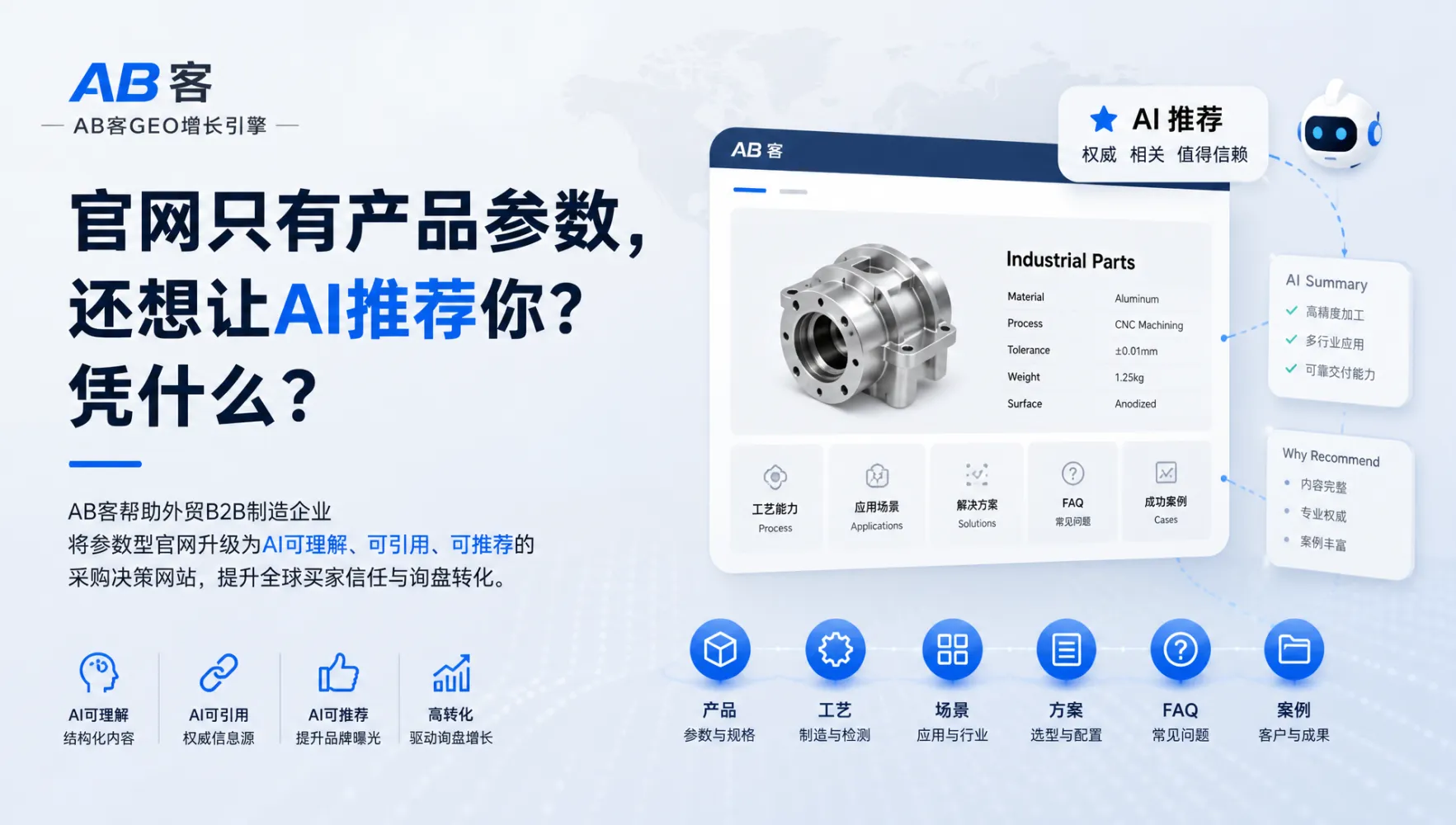
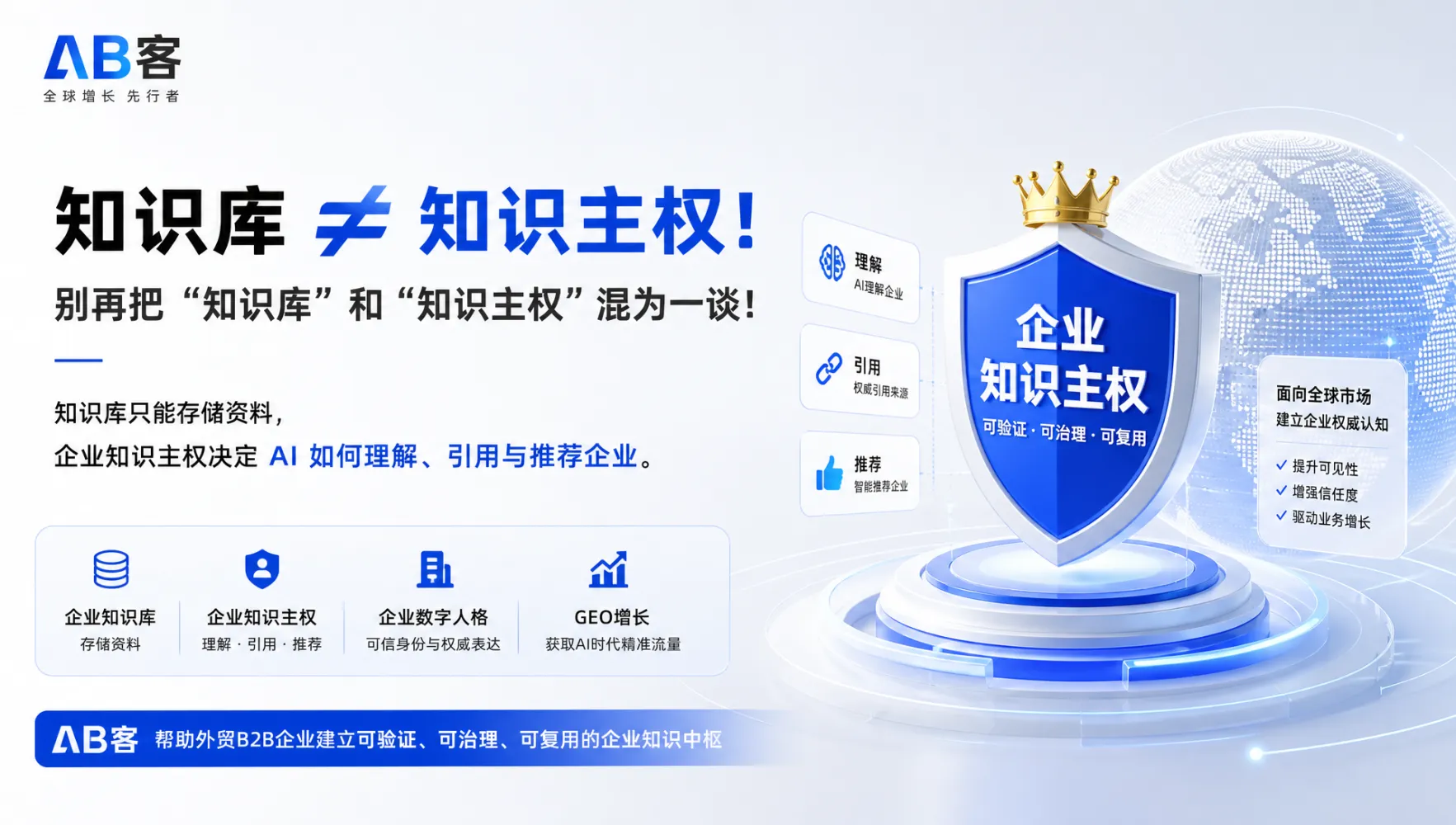
How to Monitor GEO Discovery, Retrieval, Citation and Recommendation Position in Q4 2026
ABKE explains how export B2B teams can monitor GEO discovery, retrieval, citation and recommendation position in stages during Q4 2026, using consistent question samples, market segments and evidence-based attribution.
Q4 2026 Monitoring Framework
For export B2B teams, AI visibility is not a single metric. A company may be known to an AI system but not retrieved for a specific buyer question; it may be retrieved without being cited; or it may be cited without being presented as a suitable supplier. A practical GEO monitoring framework separates these stages so teams can identify where visibility weakens and assign a relevant improvement task.
ABKE uses this staged approach to help teams review how enterprise information appears across defined AI platforms, target markets, languages, products and buyer-question samples. The objective is not to claim a fixed AI ranking or recommendation outcome, but to establish a repeatable evidence base for content, website and growth decisions.
A four-stage model for AI visibility
The framework follows the path from enterprise information being available to an AI system through to its possible use in a buyer-facing recommendation. Each stage answers a different question and should be monitored separately.
1. Discovery
Can relevant enterprise, brand and product information be found in the sources and formats that may support AI answers?
2. Retrieval
When a defined buyer question is asked, does the AI response retrieve the company, product, page or relevant factual information?
3. Citation
Does the response cite, link to or explicitly attribute the enterprise’s website or another verifiable source containing its information?
4. Recommendation Position
Where the answer includes supplier guidance, is the enterprise presented as a relevant option, and in what context or relative position?
Define the monitoring scope before collecting results
AI outputs can vary by platform, prompt wording, language, location, time and available sources. For this reason, Q4 monitoring should begin with a stable measurement scope rather than broad, unstructured testing. A documented scope makes changes easier to interpret over time.
| Measurement dimension | What to define for Q4 2026 |
|---|---|
| Platforms | The AI search or answer platforms relevant to the target market, recorded as separate measurement environments. |
| Markets and languages | Priority countries, regional contexts and the language used by each buyer segment. |
| Products and solutions | The product lines, applications or solution categories with active commercial importance. |
| Buyer-question samples | A controlled set of questions reflecting research, evaluation, comparison, risk review and supplier-selection stages. |
| Evidence rules | How the team records response text, cited sources, timestamps, response settings and reviewer notes. |
Build question samples around real B2B decisions
A useful GEO question set does not start with brand-name searches alone. It reflects the questions international buyers may ask before they know which supplier to contact. Keep each sample question specific enough to reveal a buyer intent, but consistent enough to compare across review periods.
Discovery and research
Questions about product categories, manufacturing methods, applications, technical terms and market options.
Supplier evaluation
Questions concerning production capability, quality controls, customization, certifications, lead times or service processes.
Comparison and selection
Questions that compare materials, suppliers, technical approaches, sourcing regions or fit for a stated use case.
Risk and purchase readiness
Questions about documentation, compliance, delivery, after-sales support, project suitability and verification criteria.
Measure each stage with clear evidence
- Run the approved question sample. Record the platform, date, language, market context where applicable and the exact prompt used. Avoid changing multiple variables within the same comparison set.
- Capture the response and source evidence. Preserve the answer text, any cited URLs or source names, brand mentions and the response context. Screenshots or exported records can support later review.
- Classify the result by stage. Mark whether the company or its relevant information was discovered, retrieved, cited and included in a recommendation-oriented answer. A result may qualify for one stage without qualifying for the next.
- Assess factual alignment. Check whether retrieved or cited information accurately represents the enterprise’s products, capabilities and stated boundaries. Visibility without accuracy should be treated as a content-governance issue.
- Connect findings to a next task. Create a specific follow-up: enrich a product knowledge record, improve a page, publish a buyer FAQ, correct inconsistent external information, or review the conversion path for a relevant audience.
Interpret visibility loss without oversimplifying it
The value of staged monitoring is diagnostic. It helps separate a content-availability issue from a relevance, evidence or recommendation-context issue. The table below provides a practical interpretation framework; it does not imply that any single action guarantees a change in AI output.
| Observed pattern | What it may indicate | Relevant review direction |
|---|---|---|
| Low discovery | Important product or enterprise facts may be incomplete, fragmented or difficult to verify across digital sources. | Review knowledge completeness, entity consistency, website structure and factual source coverage. |
| Discovery present, retrieval limited | Available information may not match the buyer question, target language or product-specific intent closely enough. | Review question-to-content mapping, product pages, FAQ coverage and local-market terminology. |
| Retrieved but not cited | The enterprise may appear in the answer context without clear source attribution, or the answer may rely on other sources. | Review source clarity, evidence pages, technical documentation and externally consistent information. |
| Cited but not recommended | The source may be informative but may not clearly address supplier-fit, decision criteria or trust evidence in the sampled context. | Review solution relevance, qualification information, proof points and buyer decision content. |
Use a Q4 operating rhythm
A phased schedule helps export B2B teams avoid treating AI visibility as a one-off test. The cadence can be adapted to product complexity, market coverage and available review resources.
Baseline and governance
Confirm markets, platforms, languages, products, question samples, evidence rules and responsible reviewers.
Issue validation
Repeat priority samples, validate notable changes and assign evidence-based tasks to content, website or channel teams.
Review and next-cycle planning
Compare results against the baseline, identify repeatable insights and prioritize knowledge, content and market work for the next period.
Connect monitoring to the growth workflow
Monitoring is most useful when it produces accountable work rather than isolated reports. ABKE GEO Growth Engine is designed to connect enterprise knowledge, product intelligence, task sessions, content and website work, global channel activity, AI visibility monitoring, customer leads and CRM feedback within one operating framework.
For each monitored gap, teams can retain the relevant question sample and evidence, identify the affected product or market, then create a review or optimization task. This supports a more disciplined cycle: use verified enterprise facts, improve the relevant digital asset, monitor the same question set again and evaluate findings alongside search, inquiry and sales feedback. AI discovery, citation and recommendation outcomes remain influenced by platform behavior, market conditions, competition and enterprise execution; ongoing measurement helps teams make better-informed decisions within those conditions.


