.png?x-oss-process=image/resize,h_100,m_lfit/format,webp)

.png?x-oss-process=image/resize,m_lfit,w_200/format,webp)

Hot Products
.png?x-oss-process=image/resize,h_2000,m_lfit/format,webp)
.png?x-oss-process=image/resize,h_2000,m_lfit/format,webp)

Popular articles
Case Study: How an Industrial Building Materials Exporter Built a Project Knowledge Hub to Support Middle East Infrastructure Deal Conversion
AI Citations Don’t Equal Inquiries: The Real B2B GEO Advantage Is a Complete Conversion Loop After AI Recommendations
Which Type of GEO Solution Should Different Businesses Choose? A Real-World Decision Guide
Why Do Overseas Buyers Still Not Choose You When Your Enterprise Knowledge Graph Is So Complex?
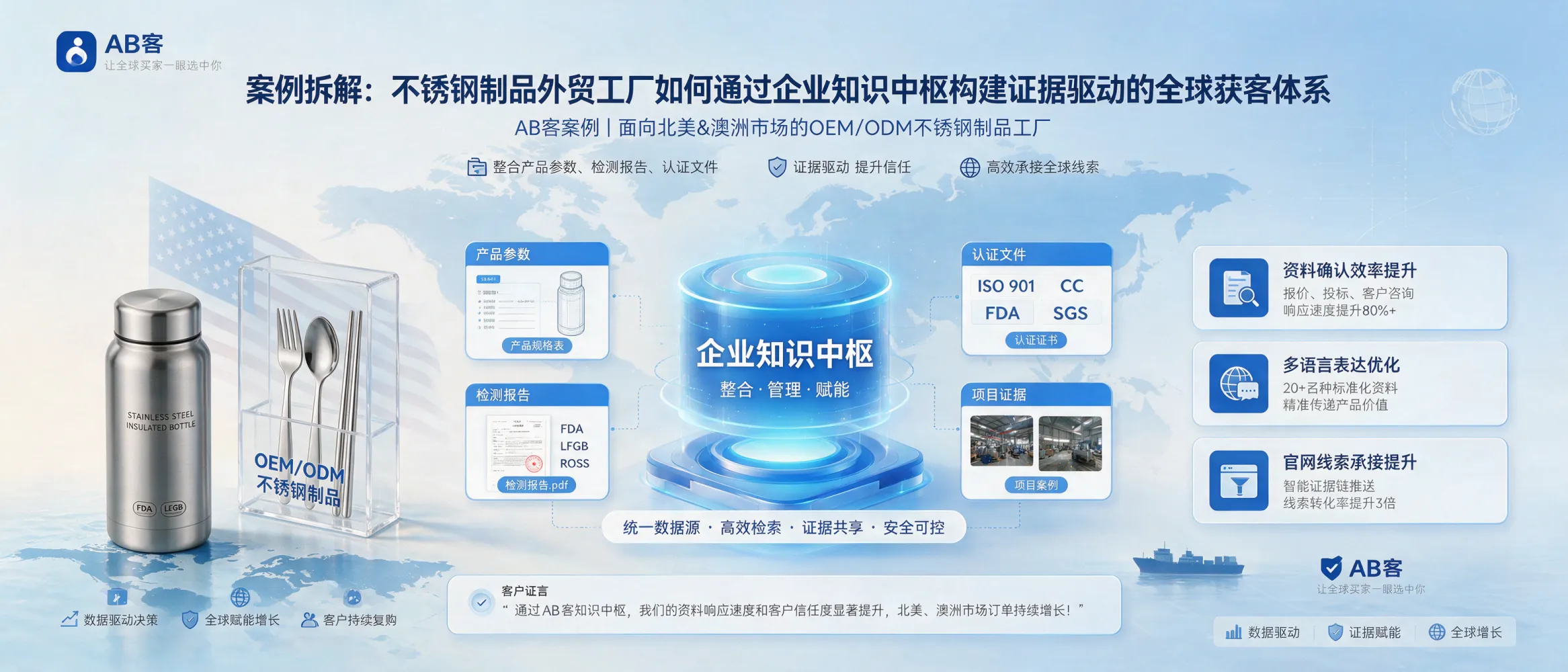
How an Industrial Equipment Exporter Built a Unified Enterprise Knowledge Hub
Recommended Reading


How QIE GROUP Rebuilt Its Edible Oil EPC Lead Generation System with a GEO Smart Website
ABKE rebuilt QIE GROUP’s equipment-focused website into a multilingual GEO website that connects edible oil processing applications, process modules, EPC capabilities, project evidence, and structured inquiry collection.
For global edible oil processing projects, buyers rarely evaluate a supplier on equipment specifications alone. They need to understand which oilseeds can be processed, how process stages connect, what engineering scope is available, and whether relevant project experience supports the proposed direction.
Working with QIE GROUP, ABKE transformed an equipment-oriented website into a GEO smart website designed to communicate whole-plant edible oil EPC capabilities. The project organized verified company knowledge into a connected multilingual structure of oilseed applications, processing technologies, equipment, EPC solutions, project evidence, and structured inquiry paths.
The challenge: an equipment catalogue could not fully express EPC capability
QIE GROUP serves the global edible oil processing market. Unlike a straightforward purchase of a standard machine, an edible oil processing project may involve feedstock characteristics, production objectives, process routing, capacity planning, site conditions, auxiliary systems, and implementation requirements.
Its previous website could introduce the company and display equipment, but it did not consistently answer the questions that overseas engineering buyers often ask during early research: Which oilseeds can QIE GROUP process? Which process capabilities are relevant? What EPC scope can be supported? How can project experience be assessed? What information should a buyer provide for an initial engineering discussion?
A website architecture built around real buyer evaluation paths
ABKE began by reviewing and structuring QIE GROUP’s business information, engineering knowledge, process materials, application scope, and project records. Rather than treating products as isolated pages, the website was planned as a connected knowledge system that helps users move from a production need to an informed project inquiry.
- Oilseed applications: explore processing needs and solution considerations by feedstock.
- Processing technologies: understand process stages, technical purposes, and related equipment.
- EPC capabilities: assess the scope of engineering, integration, and project support.
- Project cases: review contextualized evidence of relevant implementation experience.
- Structured inquiries: provide project information that supports a more meaningful initial discussion.
What the GEO smart website brings together
12 oilseed application paths
Application pages help prospective buyers enter through their own feedstock context. Each path connects oilseed characteristics, processing goals, relevant process stages, related equipment, and applicable engineering considerations.
6 processing technology modules
Processing knowledge was organized into six distinct yet connected modules. These pages clarify the role of each process stage, the equipment involved, and its place within a complete edible oil production line.
Project evidence with business context
Project records were developed beyond simple image galleries or project names, using relevant background, feedstock type, project objectives, process scope, system configuration, and implementation information where suitable for publication.
From isolated pages to connected engineering knowledge
The rebuilt structure establishes clear relationships between the core subjects that matter in edible oil EPC evaluation. This helps visitors navigate according to their project needs while giving search engines and AI systems clearer context for interpreting QIE GROUP’s capabilities.
| Knowledge area | Website role | Buyer value |
|---|---|---|
| Oilseed applications | Organize needs by raw material and production context | Start research from a familiar feedstock or processing objective |
| Processing technologies | Explain process functions and related system components | Evaluate technical relevance beyond individual machines |
| Equipment and solutions | Connect product information to process and engineering logic | Understand how equipment may fit into a broader project scope |
| Engineering project cases | Provide structured evidence linked to relevant subjects | Review experience with clearer operational and project context |
A six-language foundation for global B2B communication
QIE GROUP’s GEO website was built across six languages to support communication with international edible oil processing markets. The multilingual approach is based on one consistent company knowledge model rather than independent page-by-page translations.
This supports consistent terminology for the company, oilseed applications, equipment categories, process technologies, EPC services, and project content. It also preserves the relationship between corresponding pages, helping each language version maintain a coherent path from technical research to inquiry.
Structured inquiries for more complete project conversations
For an EPC opportunity, a standard contact form containing only a name, email address, and message may not provide enough context for meaningful project assessment. On key QIE GROUP pages, ABKE introduced structured requirement forms that guide prospective buyers to share relevant initial information without replacing later technical communication.
Information the inquiry path can help collect
Market or country, oilseed or raw material, target product, expected capacity, project stage, required service scope, and contact details. This gives sales and technical teams a clearer starting point for identifying whether an inquiry relates to a single machine, a production line, or a whole-plant EPC project.
SEO, GEO, and buyer experience working from the same knowledge base
The website was designed to support three connected needs: discoverability in conventional search, intelligibility for generative AI systems, and clarity for buyers evaluating an engineering partner. Clear heading structures, crawlable content, semantic internal links, multilingual relationships, and structured page organization provide the technical and editorial basis for this work.
QIE GROUP’s digital presence is no longer limited to showing available equipment. It provides a structured way to communicate edible oil processing knowledge, engineering scope, project evidence, and the information required to begin a relevant EPC discussion.
A reusable direction for engineering-led manufacturers
For manufacturers serving complex industrial projects, an international website should reflect how buyers actually evaluate suppliers: by material, application, process objective, technical capability, evidence, and project fit. ABKE’s work with QIE GROUP demonstrates how verified business knowledge can become a maintainable digital asset that connects engineering expertise with global communication, inquiry collection, and ongoing content development—without making fixed promises about rankings, AI recommendations, or inquiry volume.


